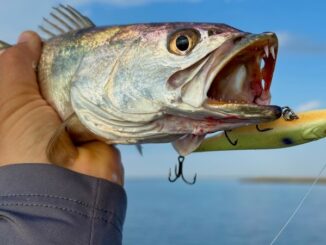
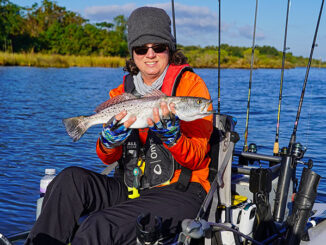
It’s springtime in Louisiana and Lake Pontchartrain’s artificial reefs are coming alive. After a winter of cold fronts and brutal winds, spring brings a steady rhythm back to the lake’s hard-bottom reefs. For anglers willing to focus on structure, April offers the best opportunity to catch a limit of big, thick speckled trout.
Lake Pontchartrain is, for the most part, a giant bowl of flat bottom. Outside of the bridges and a few scattered areas of relief, there simply isn’t much structure across the lake. That is why artificial reefs and shell pads matter so much. When you drop hard structure onto an otherwise featureless bottom, it doesn’t just attract fish, it becomes the only game in town for bait looking for protection.
Matthew Harding of Covington fishes Lake Pontchartrain and has narrowed his attention to an artificial reef located in the eastern section of the lake.
Lemo’s Reef sits roughly two miles south of the mouth of the Tchefuncte River. Its coordinates are 30 18.348N and 90 9.000W. Upon construction in 2009, the reef was marked with a buoy, but that marker is long gone and now it takes a little effort to find it.
A refuge for baitfish
The reef is one of the lake’s 13 designated hard-bottom reef sites. It was built through a partnership between the Louisiana Department of Wildlife and Fisheries and the Lake Pontchartrain Basin Foundation as part of a larger effort to add structure to an otherwise barren bottom.
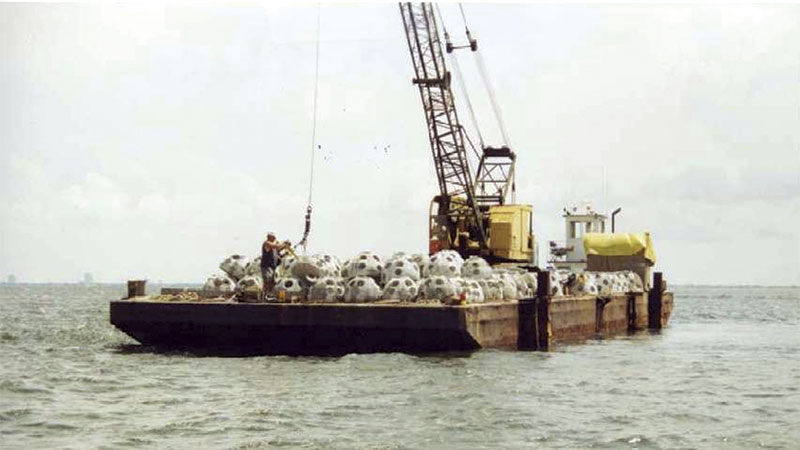
While some artificial reefs are made from limestone or crushed concrete, Lemo’s is made of concrete reef balls. If you’ve never seen one, picture a giant concrete wiffle ball. They’re hollow, round structures with multiple holes designed to let water flow through them. Once placed on the bottom, they provide hard substrate that serves as refuge for baitfish.
The individual reef balls themselves are typically 3 to 4 feet tall, but the overall reef spreads horizontally across the bottom rather than stacking vertically.
Harding said spring is when Lemo’s Reef really shines.
“As soon as the water temperature starts climbing into the 60s and low 70s, the baitfish stack up on that reef,” he said. “If the winds cooperate and you can make it out there, you can catch a quick limit of big speckled trout.”
Midday at the reef
Lemo’s Reef has always been one of those spots that can surprise you. I have fished it on days when the bite never materialized and I have also seen trout stack up so thick that a limit came quickly. With the lake looking better than it has in years, I made a trip with Harding to see if any trout were on the reef.
We met at the Madisonville launch at 10 a.m. The water was clean with a slight green tint. Harding said clean water is one of the key components to putting together a good trip at the reef. Another component is light winds. Harding said anything over 10 mph makes it really tough to fish the reef, not to mention it makes for a brutal boat ride. Luckily for us, the winds had died down under 5 mph on this day.
Approaching the reef
After launching, we made the short run toward the reef. Harding followed waypoints on his electronics and eased up on the throttle about 50 yards from the reef.
“I’m always mindful of others fishing here,” he said. This is not the place to come barreling in while other boats are on fish. If you do, don’t worry, they’ll let you know.”
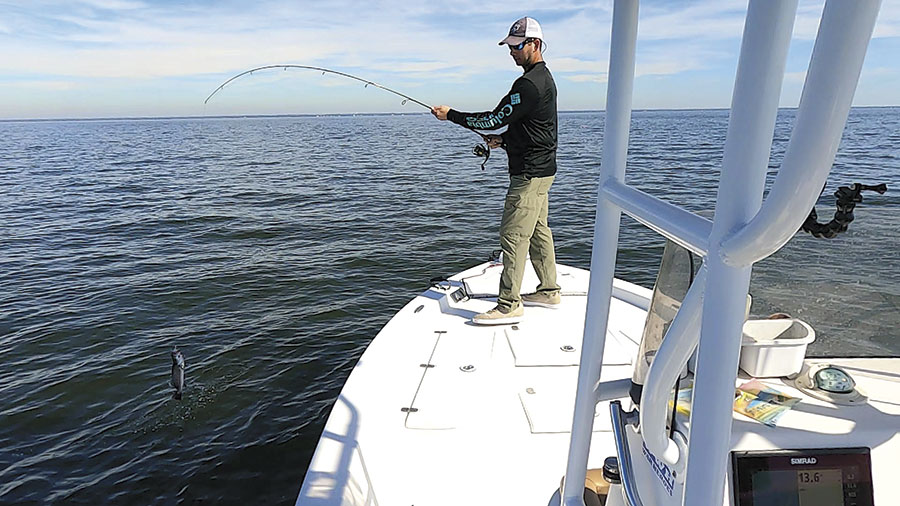
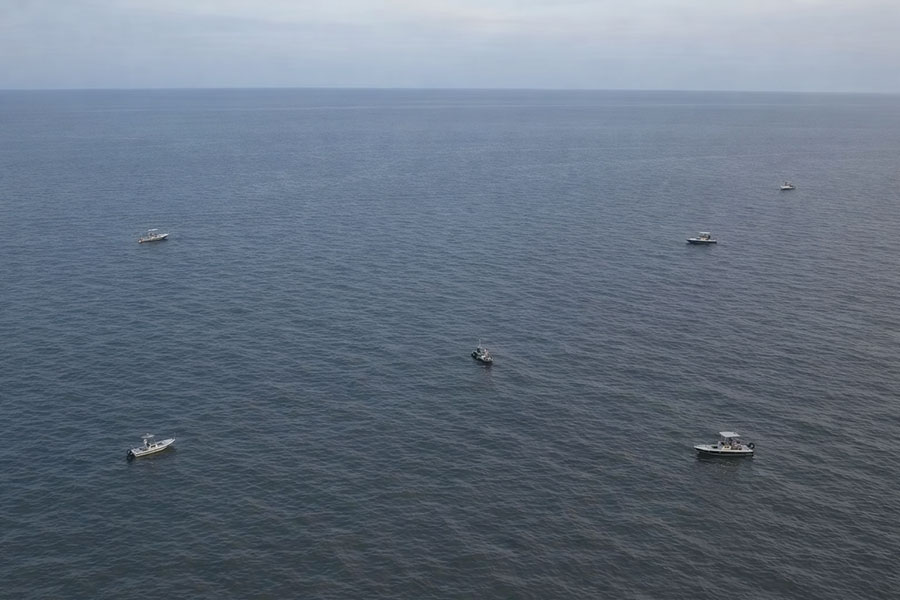
As we idled closer, we spotted two other boats on top of the reef separated by about 30 yards.
“That’s always a good sign,” he said.
As Harding eased off the throttle, he positioned the boat near a waypoint where he had caught trout on a previous trip in December. The plan was to drift until we picked up on a pattern, all without getting too close to the other boats.
Reef technique
We started working soft plastics slowly along the bottom. About 10 minutes into the first drift, Harding felt the thump. He set the hook and a few seconds later a keeper speckled trout broke the surface.
“Oh yeah, there he is,” he said, as he swung the fish onto the bow.
Harding reached for the remote hanging from his neck and set the spot lock. We started casting to the same area where he caught the fish.
“It’s important to keep track of exactly where you catch your fish because it’s more than likely that there are more there,” he said. “When the bite dies in that spot then it’s time to move on to the next reef ball.”
Contact with the bottom
A few casts later, he put another trout in the boat. Harding was throwing a ½-ounce GoldenEye jighead paired with a Saltwater Assassin in Opening Night with a chartreuse tail. I was throwing the same lure in the 10W40 color but I was using a 3/8-ounce jighead. After Harding put another fish in the boat he suggested that I put a heavier jighead on to get down to the bottom, so I switched over to a ½-ounce jighead.
“This place fishes similar to the bridges in Lake Pontchartrain in that you always want to make sure that your lure is making contact with the bottom,” he said.
The adjustment paid off immediately. My next cast produced a 15-inch speck, and then a 13-inch fish.
For the next two hours the action wasn’t particularly fast, but it was steady. During the two hours we did manage to get snagged on the reef balls a few times. Harding recommends using monofilament or fluorocarbon line so that when this happens you can easily break it off and re-tie quickly.
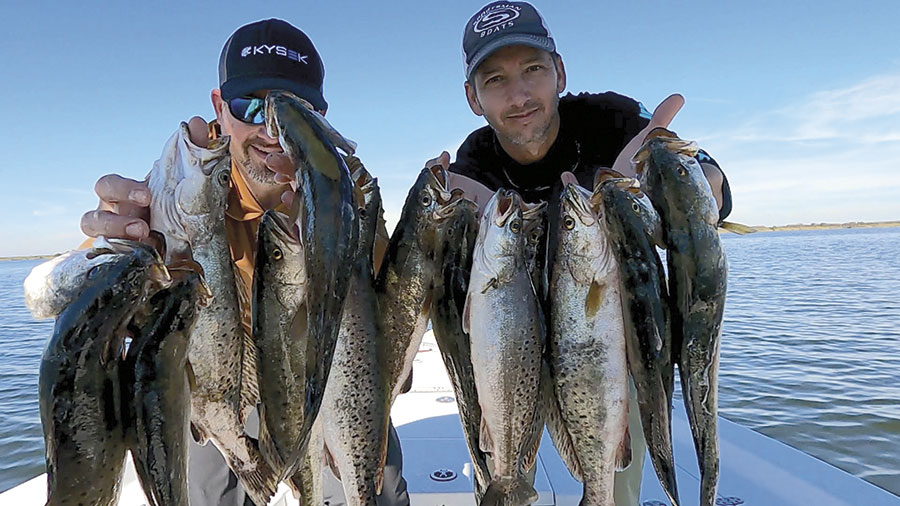
The trout ranged from 14 to 16 inches and had shoulders. The biggest being a thick 18-inch fish. As the fish neared the boat he debated on whether or not to boat-flip it, but I made his decision easy by grabbing the net and scooping it up.
“Man, look how thick this fish is,” he said, holding it up before hurling it into the box.
While I don’t catch many white trout in April, there was a 15-minute interval where I put three 12-inch white trout in the boat. I added those to the box as well.
Feast or famine
By 1 p.m., we had 19 fish in the boat and the reef had clearly produced.
Then, in typical Lemo’s fashion, the bite shut down.
“It can be feast or famine here,” Harding said. “I’ve learned through the years when the fish are biting it’s best to get on them hard and make the most of the bite because you never know when it’s going to shut down.”
We worked different angles, drifted across nearby reef balls and fan casted the area, but the school had moved or gone inactive.
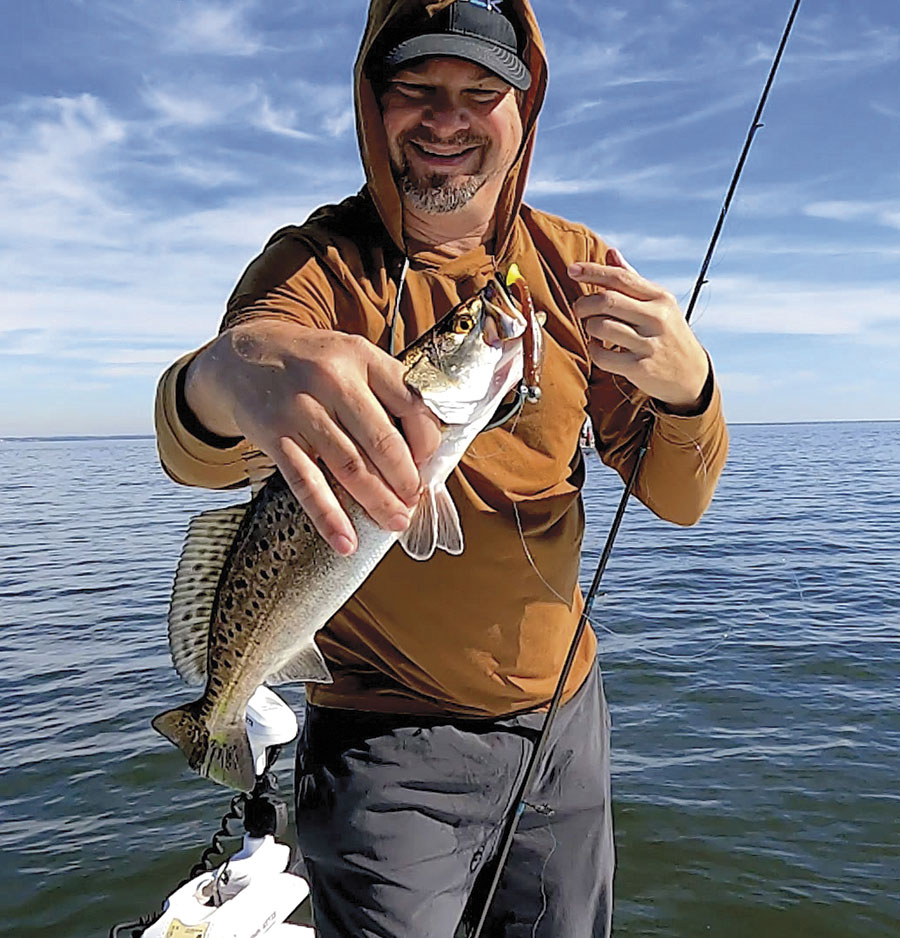
Harding shook his head and laughed.
“Well, it was fun while it lasted,” he said.
As we move deeper into spring, Lemo’s Reef should only get better as the water warms. Baitfish will continue to pile into the reef for refuge, turning the concrete reef balls into a feeding destination for speckled trout. For those who can time their trips right, the reef can supply an easy limit. Historically, the reef produces through April and May before things begin to taper off in June. By summer, catching specks can become more challenging and, at times, a little aggravating as hardhead catfish move in and take over the place. But during this spring window, Lemo’s Reef remains one of the most reliable hard-bottom stops on Lake Pontchartrain for anglers looking to box quality speckled trout.