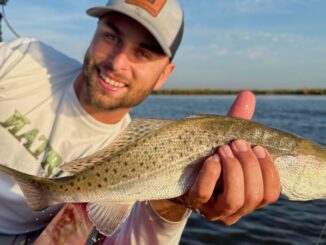
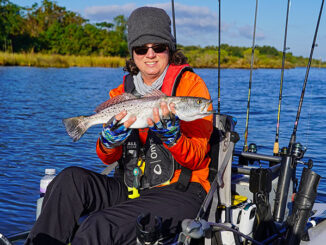
March fishing is a process instead of a pattern
As the calendar changes to March, speckled trout anglers across the state are dealing with strong winds, muddy water and downright unpredictable conditions. Danny Hunter of New Orleans Best Charters (985-288-9630) has been fishing in Southeast Louisiana for over 25 years and year after year deals with the unpredictability that March brings.
“One of the biggest factors that makes March a challenge in my opinion is the weather,” Hunter said. “March is usually pretty windy, which affects both the ability to fish and the water clarity. Weather north of our state plays a role too. Heavy rains and melted snow push water south, dirty things up and drop salinity. When that happens, the fish leave to find better water.”
Ideal conditions
March speckled trout fishing starts with accepting that everything is in motion. Trout are leaving winter patterns behind but have not fully committed to their spring pattern. Finding fish means reading conditions before you ever make a cast.
Clean water is the first box Hunter checks. It does not have to be perfect, but it has to be good enough for trout to feed. If the water is muddy or lifeless, he keeps moving.
Once the water passes the eye test, Hunter looks for movement. Hunter said he doesn’t care if it’s falling or rising, but he wants water that is doing something.

“I just want good water movement,” he said. “That’s what positions the bait and gives the fish a reason to be there.”
Bait is the next clue. In March, shrimp are not always thick, especially after a cold winter, but this year Hunter said shrimp are still moving through Lake Pontchartrain. When shrimp are present, trout will key on them. When they are not, trout turn to baitfish like shad and pogies.
Hunter pays close attention to what the fish are actually eating.
March setup
By mid to late March, Hunter spends a lot of time around bridges and reefs in Lake Pontchartrain. Most of the fish he targets are still holding near the bottom in 10- to 16-feet of water. His rods are 7-foot medium heavy Bubba Rods matched with Penn reels. He spools his reels with 20-pound chartreuse Daiwa 8X J-Braid and ties on a 3-foot, 20-pound fluorocarbon leader finished with a 2/0 kahle hook.
When it comes to lures, Hunter keeps lure color and profile simple.
“I like to match the hatch,” he said. “If a trout spits up a pogie or shiner, I’ll throw something similar in size, shape and color. If there are shrimp popping or they are spitting up shrimp, I’ll throw something that looks like a shrimp.”
To reach them, he relies on a simple setup.

Hunter fishes a 3/8-ounce jighead paired with a Lost Coast Bait Storm Minnow, or he switches to a drop-shot rig with a 1-ounce Cannonball weight from Sinkers By The Pound, LLC and a smaller Lost Coast Bait like the 3-inch shrimp or 3-inch jerk shad.
Trestles in the transition
In March, the bridges in Lake Pontchartrain begin to produce speckled trout. Hunter primarily targets the Trestles train bridge because it’s a natural stopping point for trout caught between winter and spring. The bridge offers everything fish need during the transition. Deeper water for stability, structure that breaks current, and nearby feeding opportunities when conditions improve.
“The fish are not locked into one pattern this month,” Hunter said. “They want access to deep water, but they are ready to move up and feed when things line up.”
That is why the bridge is so important in March. The water around the Trestles ranges from roughly 10- to 16-feet deep, and trout often hold close to the bottom or just off it. When water temperatures start creeping into the mid-60s and bait begins moving, those fish do not have to go far to find shad or shrimp.
Firebreaks
Hunter pays close attention to firebreaks along the bridge. While many anglers only fish those openings, he works the entire span, knowing trout can show up anywhere along the structure.
“I’ve found fish stacked up on firebreaks sometimes,” he said. “I’m not exactly sure what holds them there versus other places. Maybe it’s debris on the bottom, the pilings, or rock that’s fallen off the bridge. All I know is they can be good spots.”
Sun also plays a role, especially after a cold night. Sections of the bridge that warm quicker can attract baitfish first, and trout are usually close behind. It does not mean the bite will be fast, but it often means the fish are willing to eat if the bait stays in front of them long enough.

Patience is what separates successful March Trestles trips from frustrating ones.
“March trout are scattered,” Hunter said. “You might not sit in one spot and load the boat.”
Instead, he works methodically, fishing slow along the structure, then moving when a stretch does not produce. One firebreak might be empty while the next one holds fish. Hunter said some days he’ll catch them right up against the bridge. Other days it happens off the back side, where fewer anglers bother to cast.
“In March, you just have to keep an open mind,” he said. “If the conditions are right and you keep moving, you can put together a solid trip.”
Back of the boat
March is also the month that punishes assumptions. Anglers tend to lock onto where trout were yesterday or where they think they should be, especially around obvious structure. In reality, March trout are moving by the minute, and sometimes the best bite is happening in places most people ignore.

Hunter said that lesson has been driven home more than once over the years, including one March trip that completely changed how he approaches the Trestles.
Hunter had a buddy fly in from out of town with a lady friend who had never been fishing before. With no time to spare, they headed straight from the airport to the boat and ran to the Trestles on an incoming tide. Hunter and his buddy did what they had always done, casting toward the bridge and working the structure. The bite was slow and the specks were few and far between along the pilings.
Meanwhile, the lady friend chose to fish out the back of the boat, away from the bridge, simply because it was easier for her to keep her line tight. She kept saying she was getting bites but came up empty every time.
“I finally told my buddy to cast out the back and see what was going on,” Hunter said.
It turned out the trout were not holding tight to the bridge at all. They were set up behind the boat, and once they adjusted, it was every cast until they had their limit.
“That trip taught me you never really know where they’re going to be in March,” Hunter said.
For Hunter, it was another reminder that March trout reward anglers who stay observant, flexible and willing to fish beyond the obvious.
Moving into April
Hunter said the transition does not end when March does. The push from winter to spring will continue through April, and the trout will keep adjusting right along with it. As water temperatures climb, bait becomes more consistent and fish spread out farther from their winter haunts, but the same fundamentals still apply. Clean water, movement, structure and patience remain the keys. Anglers who accept that March is a process instead of a pattern and are willing to slow down, move when necessary and let the fish show themselves will stay connected through the transition until it finally settles toward the end of April.