Fifty-eight-year-old John Pellegrin grew up on the water in Chauvin, just 9 miles from where he has been taking clients out to fish for the past 28 years. He said when things slowed down in the oilfield, where companies were in the throes of downsizing, he took a voluntary layoff when he was in his early 30s.
Pellegrin said he loved to fish so much he just decided to go fishing to make a living for him and his family, where early on he started out as a fish cleaner. The owner of the lodge he was working for at the time decided to give him an opportunity to take some customers out one day.
Pellegrin said he did so well, the lodge owner paid him to go to school to get his captain’s license. It turned out to be a little pot of gold at one end of the rainbow in the unincorporated town of Cocodrie, a place where
fortunes are more about luck than wealth. Moreover, they are dribbled out as dividends when a boatload of anglers come home with a box full of fish and smiles on their faces.
That was nearly three decades ago and Pellegrin is now much further down the road and works for Topwater Charters in Cocodrie, owned and operated by Capt. Bryce Michel. Pellegrin has learned a lot since those early days, and that knowledge often spills over in shared conversations with clients excited about catching fish.
Knowing your location
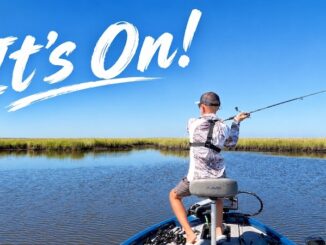
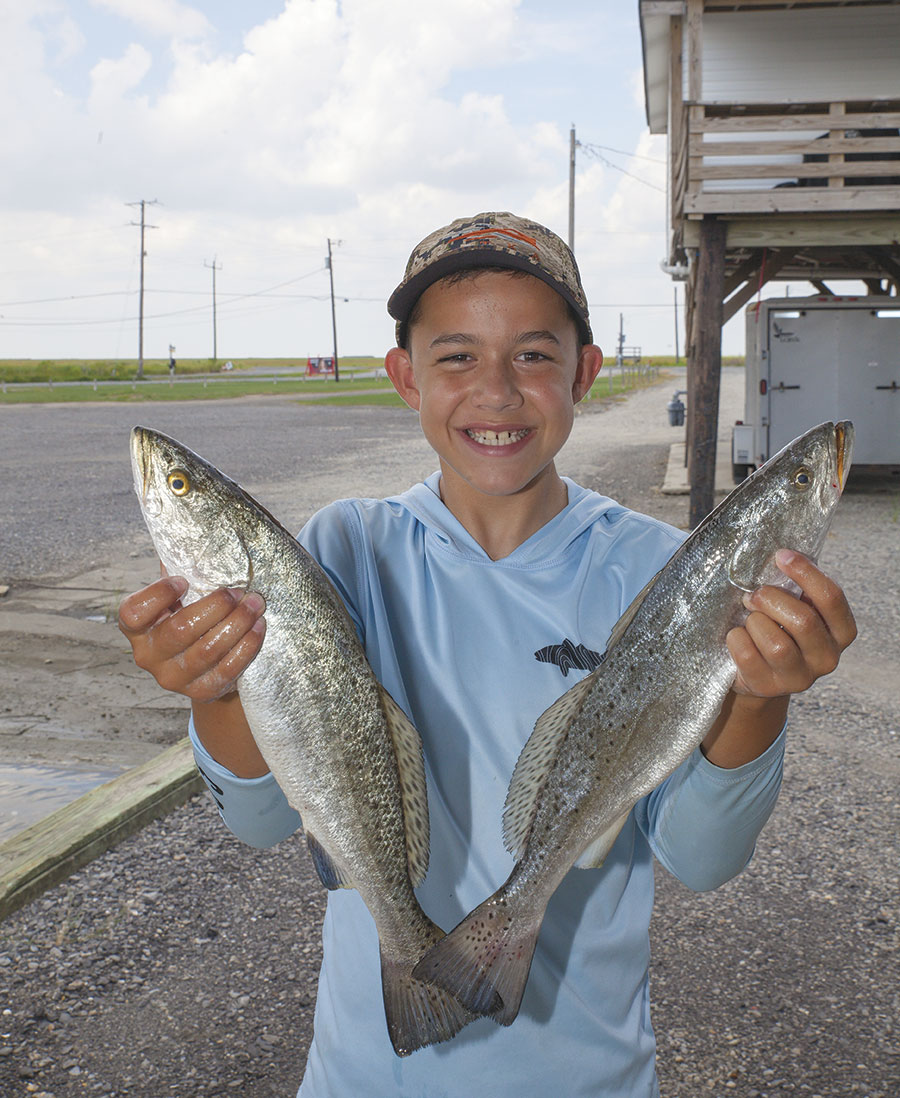
Last summer, my son-in-law, one of his co-workers, my 9-year-old grandson and I made a trip to Topwater Charters to fish for speckled trout. The weather wasn’t being very cooperative in the days leading up to the trip, and the fish hadn’t been super cranked up, but we decided to make the most of it anyway. The plan was to fish Sunday afternoon and follow up on Monday with a morning trip.
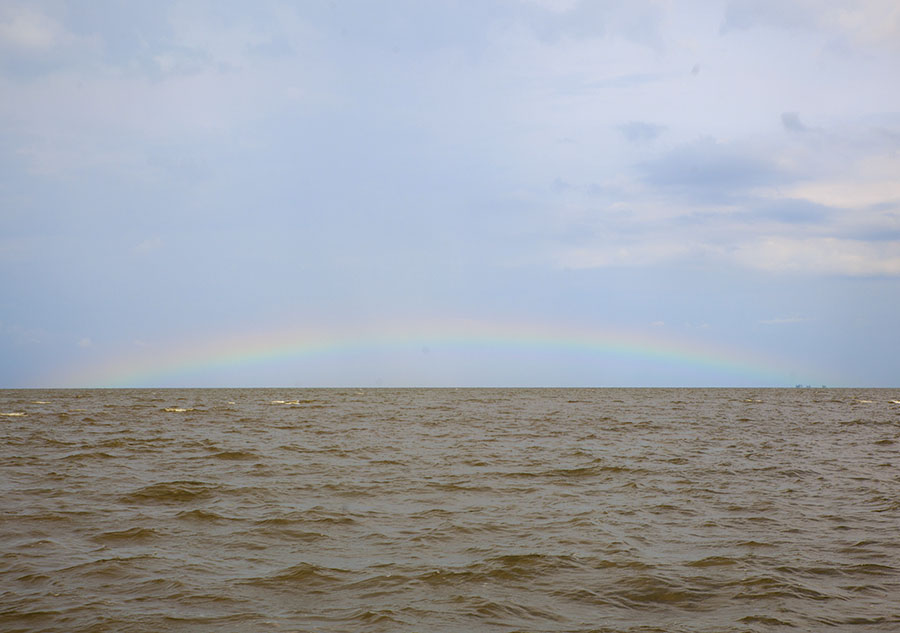
When we left the dock Sunday afternoon, the weather radar on Pellegrin’s electronics showed us surrounded by afternoon squalls like Custer at Little Bighorn. The shallow water was also a little choppy and a bit murky from the agitated atmosphere, but there was a rainbow from the afternoon sun that stretched from inshore to well offshore. If there was ever a good omen, that was it.
Our afternoon boat run was only about 20 minutes from Topwater Charters, and it wasn’t long before we came to a full stop in what appeared to me was open water. Here’s where we would make our afternoon stand with hopes of putting some trout in the box.
What was interesting is we were in approximately 4 feet of water, and you could see behind the boat where the tide was running over what looked like a reef.
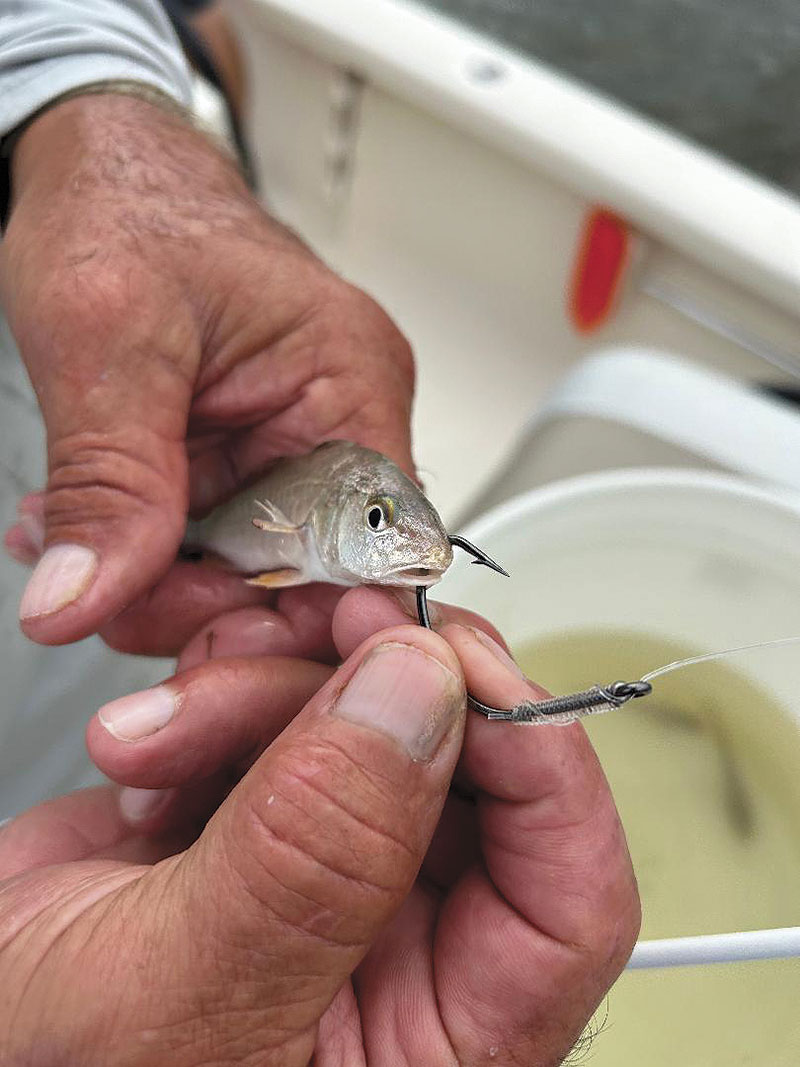
Pellegrin, while tying a hook to a fishing rod, nodded and looked slightly northeast from the boat’s fixed position, where there was no mistaking the direction he wanted us to take notice of.
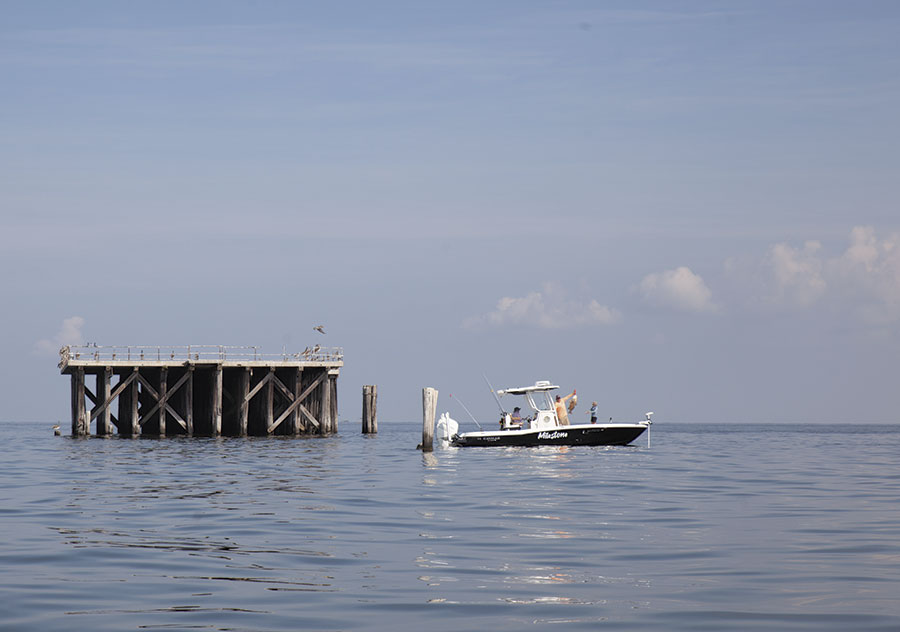
“Where we’re fishing is actually a bank of Bayou Terrebonne,” he said. “It disappeared in the last five to seven years. When I was in my teens it was a defined bayou all the way or pretty close to those rigs you see out there.”
No doubt coastal erosion and tropical storms have had their way with this region. What’s more, I could see from the location that it would be difficult for the regular guy who owns a bay boat to find tiny spots like that without following a guide, friend, or growing up in the area fishing.
That said, there’s also no doubt today’s electronics have mitigated some of the guesswork. Additionally, don’t rule out Hook-N-Line Longitude waterproof maps. These maps may not put you on the proverbial “X” where fish are stacked up for the taking, but they can get you close.
Water depth
Despite the squalls, where the conditions were less than ideal, the shallow underwater reef location paid off.
“Lately, it’s been pretty dirty water because of the thunderstorms,” Pellegrin said. “It’s sort of a brownish-green color and has been falling pretty hard over that reef, but we’re still catching fish and we’ve caught a good box of fish.”
The next morning, Pellegrin briefed us over a light breakfast that we would be fishing a couple of rigs further offshore. The first thing I thought of was how that rainbow the previous afternoon had stretched for miles in the direction we would be heading. Again, we would be targeting speckled trout.
There were several differences between fishing the more inland shallow water reef location and the offshore rigs.
The rigs we fished were at a 13-foot water depth, where fishing the reefs the water depth was approximately 1 ½-feet deep.
Secondly, the water temperature under the rigs was about 5 degrees different than the reefs we fished.
“The difference between fishing the reef and fishing the rigs was not just water depth, it was also the conditions,” Pellegrin said. “We were fishing windy, murky water using the same setup with live bait. What transpired was in the shallower reef water the fish had to come look for the bait and were responding to the vibration of the bait.
“In the deeper water, the water was much clearer. They could actually see the bait.”
What it boiled down to was Pellegrin’s knowledge of locations that often go unnoticed. They can make a huge difference when it comes to putting fish in your ice chest.
Tackle and baits
Over the years, Pellegrin has honed his skills and determined what rigs, tackle and baits work best for him and his clients, which range from novice to seasoned. What you’ll immediately notice fishing with Pellegrin is he ties all of his hooks with a snell knot.
There are a lot of adjectives when this knot comes up in conversations. Versatile, strong and reliable all come to mind. Moreover, those that use this knot-tying method say you’ll get an improved hook set and less line twist.
For Pellegrin, its versatility might be one of the biggest reasons he ties his hooks with a snell knot. We never changed rigging fishing both shallow water reefs and the deeper water production platforms.
While fishing with Pellegrin, all of us used 13 Fishing rods and reels. All were packed with 20-pound test braided line with a 2/0 Kahle hook and 1-ounce egg sinker.
Artificial baits have been around forever and always will be. They are credited with catching tons and tons of fish, but there’s just something about fishing with live bait, when you can get it. Pellegrin is a live bait man.
Proven results
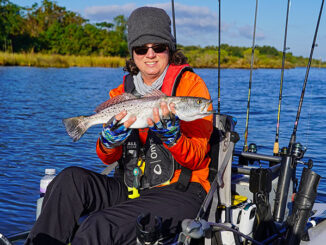
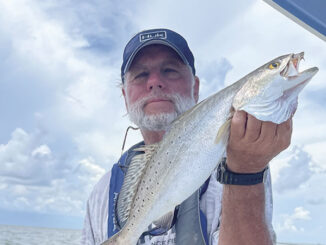
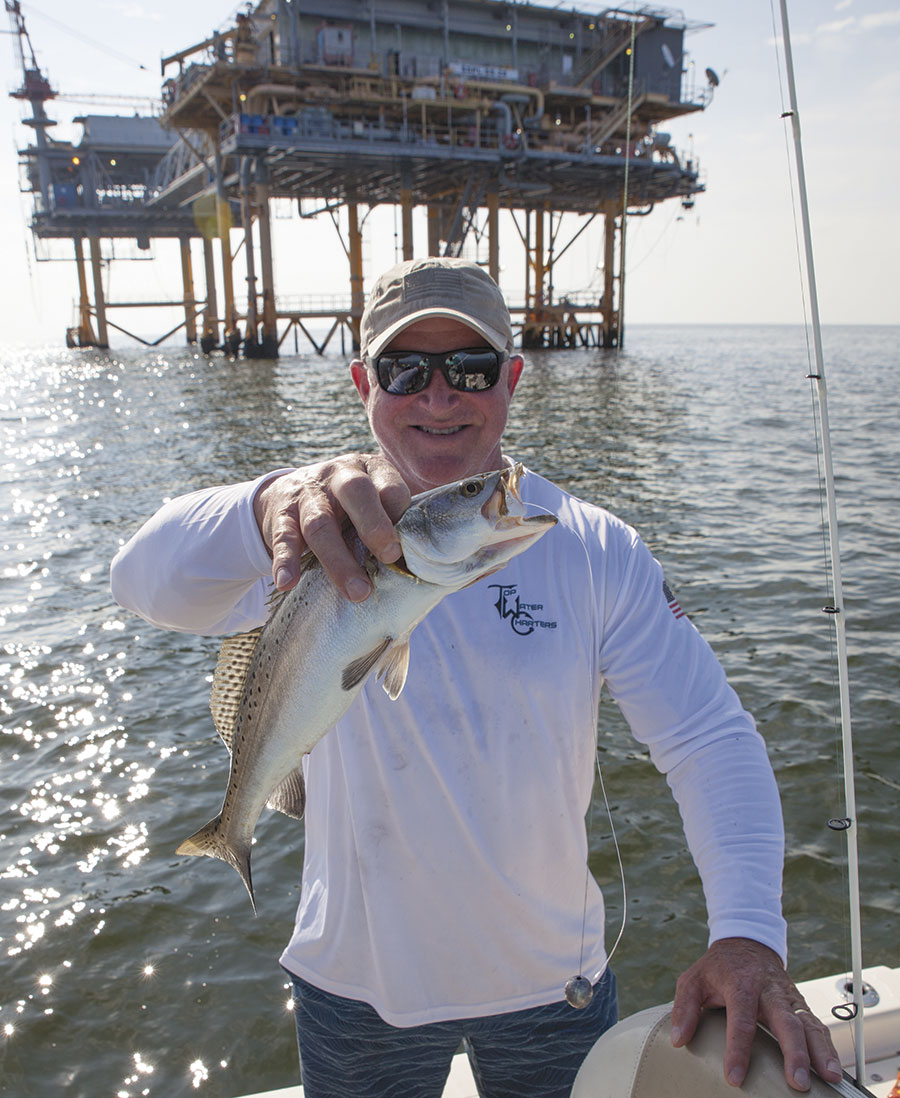
During our trip to Cocodrie, we utilized both live croakers and minnows. Our afternoon trip with poor conditions was productive, and though we didn’t limit, we placed a good number of fish in the box. Plus, caught and released a couple of large redfish.
During our morning trip the next day, fishing the rigs, we were all able to get our limits.
“It’s not an everyday thing nowadays, where you can catch 60 fish, but we fished the right place with the right bait on both ends of the rainbow, fishing reefs and rigs,” Pellegrin said.
Cocodrie is a community of people who fish both recreationally and commercially. Moreover, the businesses there depend on people. You’ll find locals friendly and helpful in getting you oriented to the region — all you have to do is ask.
The early summer months are prime time for good to excellent speckled trout fishing in this region. What’s more, whether your trip to is to explore and learn new fishing grounds or hire an outfitter like Topwater Charters, if you’ve never been to Cocodrie, it needs to be put on your bucket list. There’s nothing quite like fishing both ends of the rainbow — reefs to rigs.