The scene has been played out many times before my eyes — and yours, too.
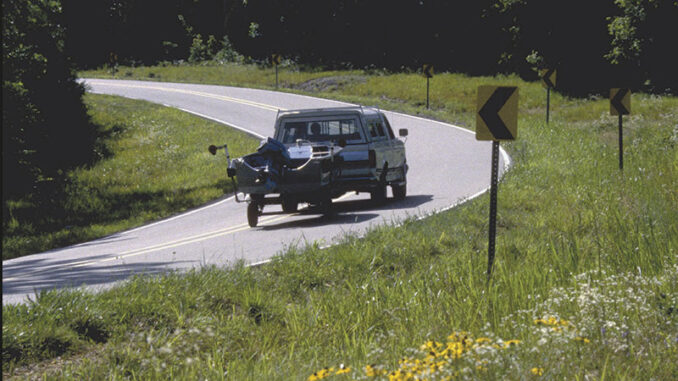
An older man was towing his bateau down Airline Highway south of Baton Rouge. Speed limit there is 65 — or maybe, these days, we should more properly name it “speed suggestion,” because lots of folks drive faster than the posted limit.
Traffic near 11 a.m. that morning was moderate, but with the speed involved and him wanting to turn right, there appeared to be a disaster unfolding through my windshield.
See, his trailer had no lights, no brake lights and no signal to let the drivers behind him know his intentions. All I could see was this man’s tragic loss of his 15-footer, a 40-horse outboard and batteries, and everything else he coveted about fishing laying in a lump on the side of this busy thoroughfare.
Thank the good Lord the folks behind him had good brakes, slammed as they were, and leaving a bit of a smoke trail in their wakes.
I don’t know if this gray-haired fisherman knew how lucky he truly was.
So, now that the fishing season is in full swing, maybe it’s time for us sportsmen in the Sportsman’s Paradise to make sure our boat trailers are properly prepared to get on the road — safely — with all lights working and ready to get into traffic. And, this is most important when we’re traveling in low or no light conditions.
Life jackets
While we’re at it, it’s time to inspect what’s in our boat, things like suitable life jackets, a working fire extinguisher, a throwable life ring or something similar, some signaling device like an air horn or a whistle and all the other Coast Guard requirements needed for a boat the size you own and use.
All this is in the interest of safety off and on the water.
When it comes to safety on the water, it’s more than a mere suggestion that you wear a life jacket — something the safe boating folks call a personal flotation device, a PFD.
It’s always heartbreaking to hear our state’s Enforcement Division report fatal boating accidents. In most cases, the fatality involves drowning and is not the result of injury sustained in a crash.
Even worse, in the majority of these deaths, the victim is found not wearing a life jacket, which is required for most folks piloting their boat with a tiller-operated outboard — and required for all youngsters when the boat is underway.
Drowning deaths in our state get even worse when warm weather decides to descend on us.
Under the influence
The 2019-2023 Wonder Report from the federal Center for Disease Control shows Louisiana has more than 613 drowning deaths, the third-highest level per 100,000 residents from among the 50 states.
Although this report targeted spring break, the message was clear. Yes, boating incidents were included but so were drownings at beaches, bayous, rivers and backyard pools.
Want to know a main contributing factor?
Alcohol! Like one in four drownings involved alcohol. So did the majority of fatal boating incidents.
Which is one of the reasons why Wildlife and Fisheries and so many sheriff’s water patrol crews spend so much time on the water during major holidays like Memorial 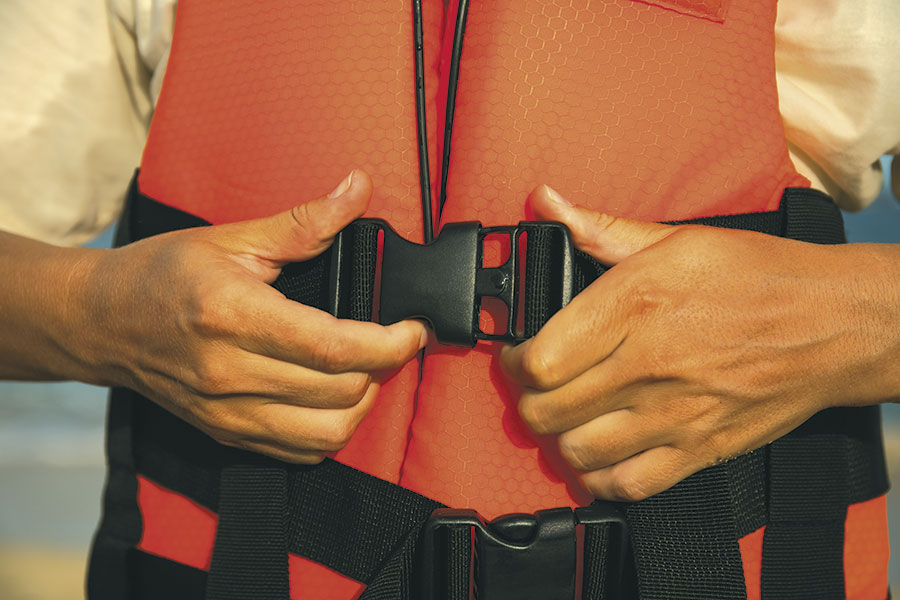 Day, the Fourth of July and Labor Day. From the arrests made during the last decade, it’s not wise to have a person drinking alcohol and driving a boat. Just know, the same penalties apply for a DWI conviction on the water as they do for DWIs on the road.
The risk of undertow
The drowning numbers are increased in recent years by swimmers and surf fishers being caught in undertows.
With rocks placed in front of Grand Isle and Fourchon beaches, the risk of undertow has increased.
The water funnels through breaks in these rock piles and on a falling tide or wind direction change the water has to have a place to run, and it’s the spaces between the rocks. This increases the speed of the water and, just last summer, was the cause of two drowning deaths on Grand Isle.
It’s imperative to limit wading in on these beaches — and others — to avoid getting in water over knee deep, and, if needed, to have younger children wear life jackets when wading in the surf.
If feeling the urge to cool off by jumping from a boat, dock or pier into the water, make sure you know the water’s depth and what’s under the water before taking the leap to avoid serious injury, which, in some cases, leads to drowning.
And, if you want to know which states are ahead of Louisiana in this accounting, then No. 1 is Alaska with 5.02 deaths per 100,000 (184 total) and Hawaii is second with 3.88 deaths per 100,000 (277 total). Mississippi is 10th on the list with 2.0 deaths per 100,000 (295 total).
From here, this is a plea to keep our spring, summer and fall — winter, too — safe on the road and around water.
It’s up to us sportsmen to lead the way.
Let’s do it.