Successful dove hunts are the result of proper planning, hard work and fast shooting
The old AM radio crackled with the sounds of LSU football, while on the late summer air the smell of charcoal slowly made its way to each of the 50 or so hunters gathered beneath the metal tractor shed. There was a time in Louisiana when the first Saturday in September was reserved for two things; college football and the opening day of dove season. More than just a hunt, these were some of the largest social gatherings of the year for many rural communities around the state. Sadly, with the rise in popularity of deer hunting, especially early season archery hunting, the traditional Louisiana dove hunt has fallen on hard times.
However, with a little hard work and time, you can start your own dove hunting tradition and introduce the next generation to some of the greatest fun you can have while afield.
Setting the table
One of the great things about dove hunting in Louisiana is the fact that regardless of location, with a little effort you can attract doves. Once you’ve decided on the area you’d like to hunt, begin in early April by applying herbicide, killing grasses and weeds. If you’re unfamiliar with any of the following processes, reach out to your local Louisiana Cooperative Extension Service, or hit the internet where you can find some great examples of how to best prepare your field.
Once the herbicide has done its job, you will need to be ready to plant from mid-April to mid-May. Sunflowers are without a doubt one of the most popular plantings, and they require well drained soil. Also high on the list of plantings is brown top millet, which can be broadcast at a rate of 25-30 pounds per acre.
Just as important as what you plant is how you manipulate the field once your plantings mature. Doves are what we refer to as “weak scratchers,” meaning they generally avoid areas of thick or heavy ground cover. Therefore, you’ll want to mow or disk your plantings into strips. On smaller fields, these strips are best to be 30-90 feet in length. This stripping will provide clean ground for doves to feed in.
In addition to plantings, dove hunters can also utilize native grasses such as crab and barnyard. Doves love both and will readily consume the seeds.
Hunting strategies
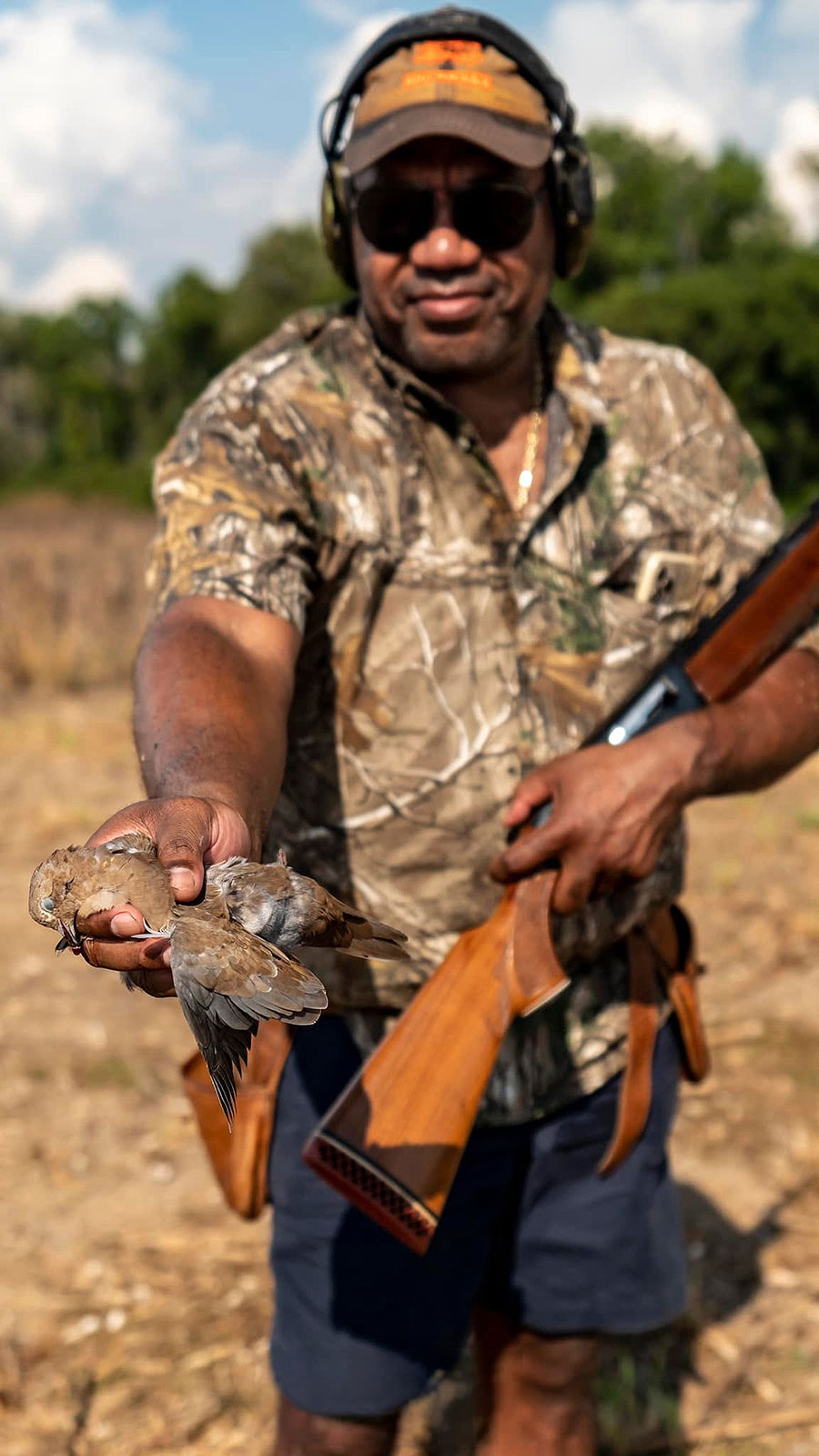
Doves are birds of habit and will use the same flight path coming into fields. With a little scouting you can easily identify that path and set up accordingly. Try and sit near edges, where a field meets timber or power lines. Be still and wear colors that match your surroundings. Muted or drab colors are best, and if you decide to wear camo, make sure it matches your surroundings. Look for shady areas or back into brushy spots. Taller sunflowers also make a great spot to hunker down. In the end, you want to be sure and break up your human silhouette.
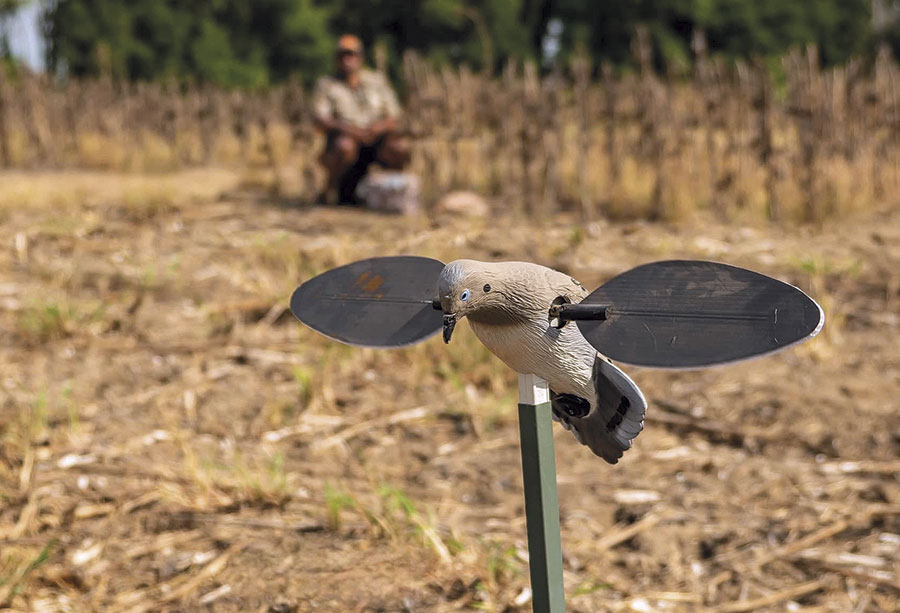
Spinning wing decoys are great for giving approaching birds confidence, and it doesn’t take but a couple to really improve your odds of a successful hunt. The spinning wings mimic the light and dark covered wings of a dove as it prepares to land. These decoys can usually be purchased for around $30 and are easy to find either at sporting goods stores or online.
Fire power
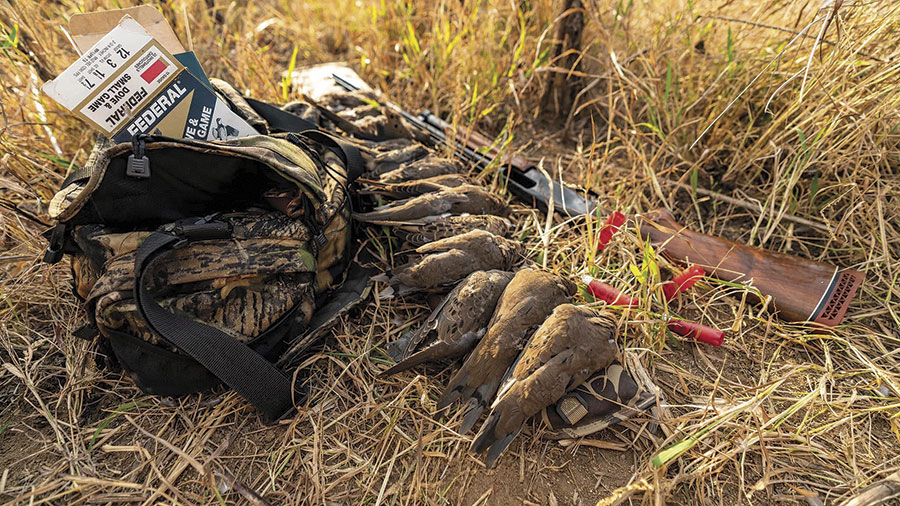
Most experienced dove hunters recommend using either an improved or modified choke, which creates a wider pellet range. While doves may not be the fastest game bird, their erratic flying nature makes them plenty sporting, with the majority of hunters shooting many more shells than collecting birds. Regardless of whether you choose 12 or 20 gauge, try to use 7, 7.5 or 8 shot.
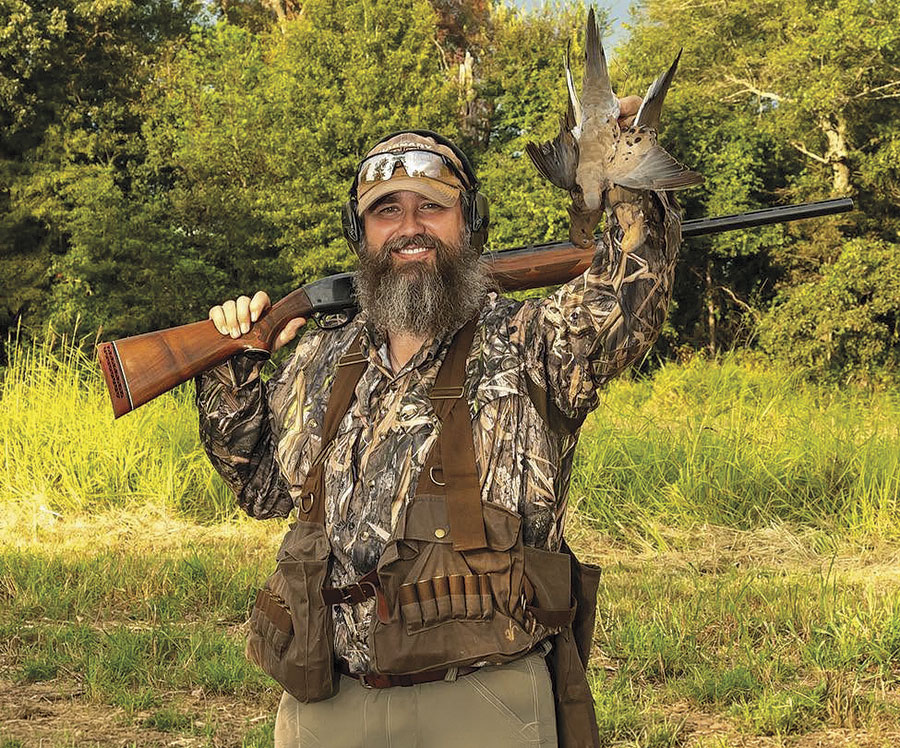
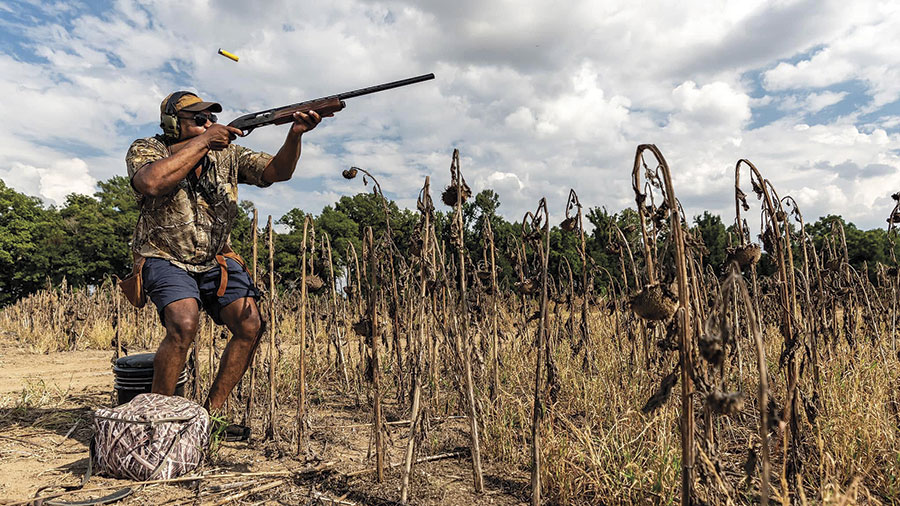
Making contact with doves can be frustrating, especially if you don’t shoot throughout the season. Be sure to swing through the shot, not stopping your swing once you decide to pull the trigger. Also, it’s a necessity to lead doves, something that is much more important than most hunters believe. Experts agree, the main reason shooters miss doves is because of the lack of lead time. Be sure to keep your head down on the stock of your gun, which will provide you with good point of aim, point of contact. The last thing you want is for your gun to be moving in one direction and your head in another.
Know the law
Each dove season we all hear stories about Louisiana Department of Wildlife and Fisheries enforcement agents ticketing hunters for a myriad of reasons. Be sure you read and learn Louisiana laws regarding the hunting of doves. Planted crops must fall under the guidelines of the Louisiana Cooperative Extension Service. Hunting doves over a baited area is illegal. However, you can legally hunt over lands or areas where seeds or grains have been scattered due to normal agricultural operations, normal harvests or planting of prepared seedbeds following standard guidelines. Mowed or harvested fields are generally legal, provided they are not artificially baited.