These finicky fish can be tougher to catch in warm water temperatures
The normally busy boat ramp appeared totally vacant as Kenny Dyess stepped from his truck to pay the launch fee. Sworn to secrecy over our location, the Monroe angler had made it clear I wasn’t allowed to share anything but tactics for the story I was writing. And if there’s one thing the best crappie fishermen have in common, it’s the secrecy in which they operate, treating “holes” like Cold War secrets.
“When the weather gets this hot, I pretty much have the run of the lakes here in Northeast Louisiana,” Dyess said. “Most folks simply aren’t going to put the effort into it once it gets up into the 90s.”
It was early July when I reached out to Dyess, my longtime friend, about the possibility of helping with my story, and honestly, I was surprised when he agreed to allow me in his boat with my camera. While Dyess has long been a hunting mentor, I also know him as one of the best crappie fishermen in our area, so I was anxious to pick his brain about hot weather crappie tactics.
Know the water
Dyess began by pointing out the obvious structural differences between man-made lakes, such as Toledo Bend or D’Arbonne, and natural lakes, such as Black Bayou or the oxbow lakes along the Ouachita and Boeuf rivers.
“A lot of how I approach the summer is determined by the lake I’m on,” he said. “In man-made lakes, crappie are going to pull out and get on deep brush. In natural lakes, I find the fish in grass and underwater structure, such as old duck blinds or tree tops.”
Dyess went on to add that crappie in natural lakes often don’t have deep water to retreat to once temperatures begin warming up.
Know the fish
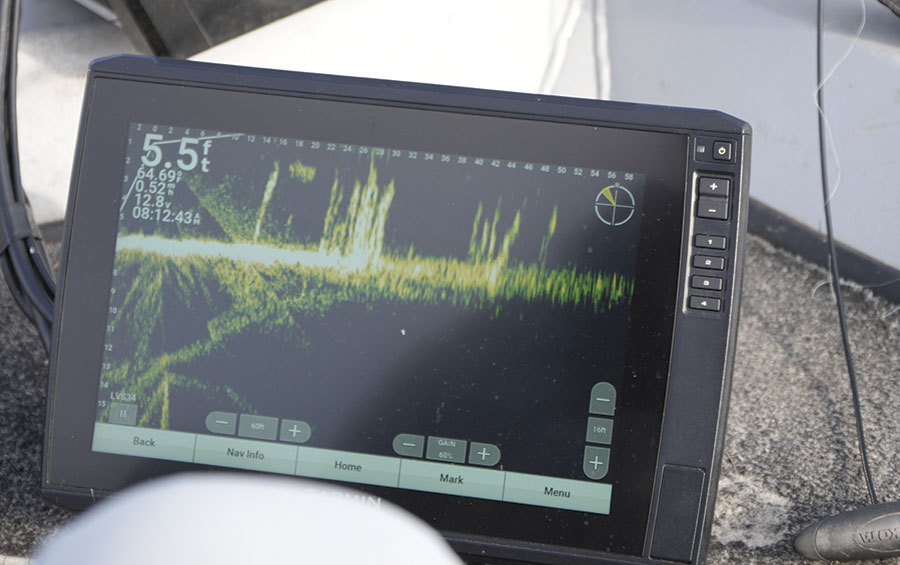
White and black crappie respond differently to warming water temperatures, however, both will group up. Dyess pointed out that in his experience the white crappie will often suspend in open water, moving up and down in the water column with the shad, while black crappie will almost always be associating to some kind of wood structure. He was also quick to point out how much forward-facing sonar has taught him about crappie since he began using it.
“LiveScope has totally changed the way I fish,” he said. “I’ve learned some things about the fish that I may never have been able to figure out on my own. Primarily, how fish relate to structure or the way they suspend.”
For Dyess, the magic water depth for white crappie in the summer is around 16 feet.
A great example of learning crappie and their habits is Dyess’ thoughts on catching grouped-up summer crappie.
“Crappie can be notoriously finicky, but throw in warm water temps and they can get even tougher to catch,” he said. “One thing I’ve noticed about them is if I locate a group holding tight on deep water cover and I catch several, they may suddenly shut down. I mean, to the point that even a live minnow won’t catch them. I firmly believe crappie give off some type of signal to the school when they’re being caught that causes the remainder of the group to stop biting. Sometimes the school will move away and sometimes they stay put but simply shutdown.”
Know how to downsize
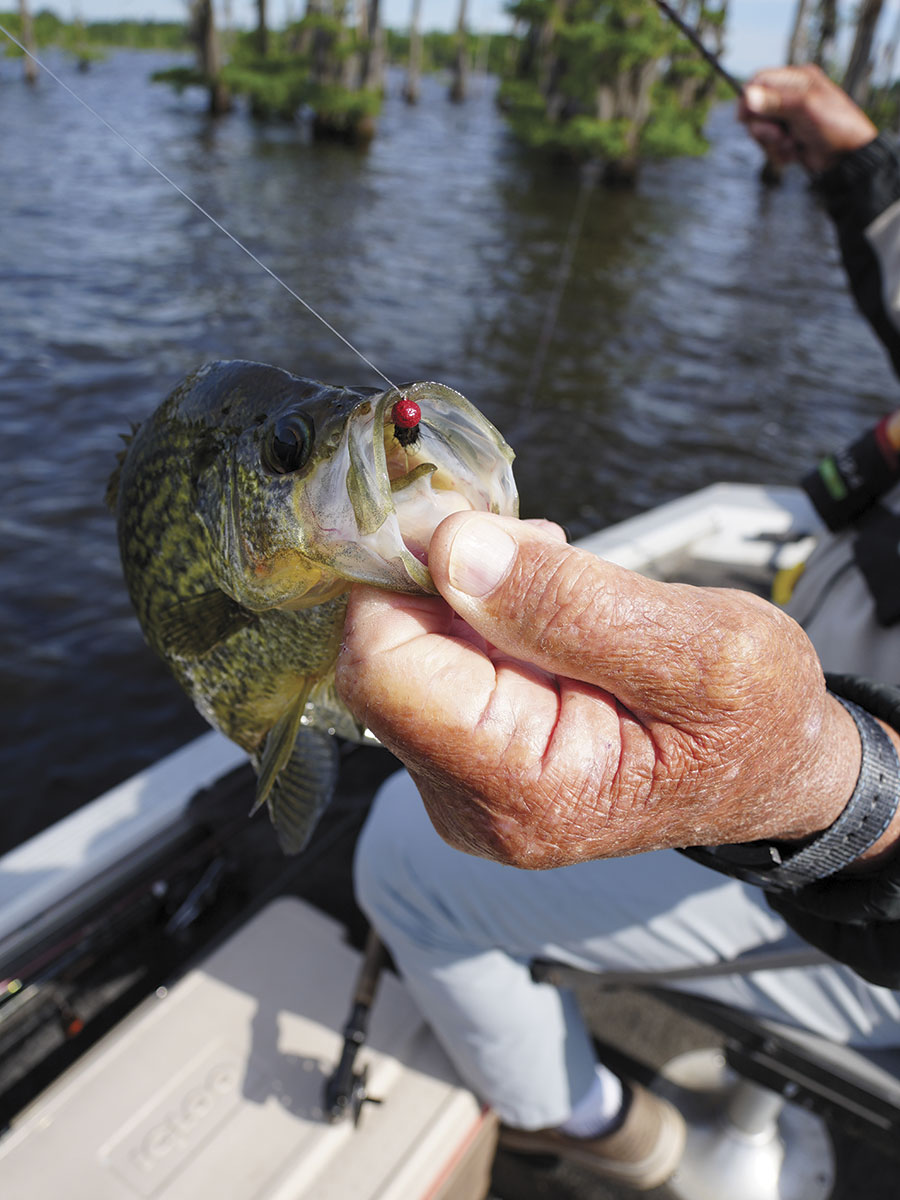
Crappie are notorious for being super selective about artificial baits, and summertime normally only makes the fish even more difficult to catch. Dyess said he finds success by downsizing his offerings.
“The way I do that is by taking a small egg type sinker using 6-pound line,” he said. “I’ll then place the sinker about 18 inches above my jig, just to get the bait down to the fish.”
Dyess then pairs that with a 1/16-ounce jighead and a No. 8 hook.
“I get a lot of folks who tell me the No. 8 is too small of a hook, but I’m here to tell you it’s plenty strong enough and will hold a big crappie,” he said.
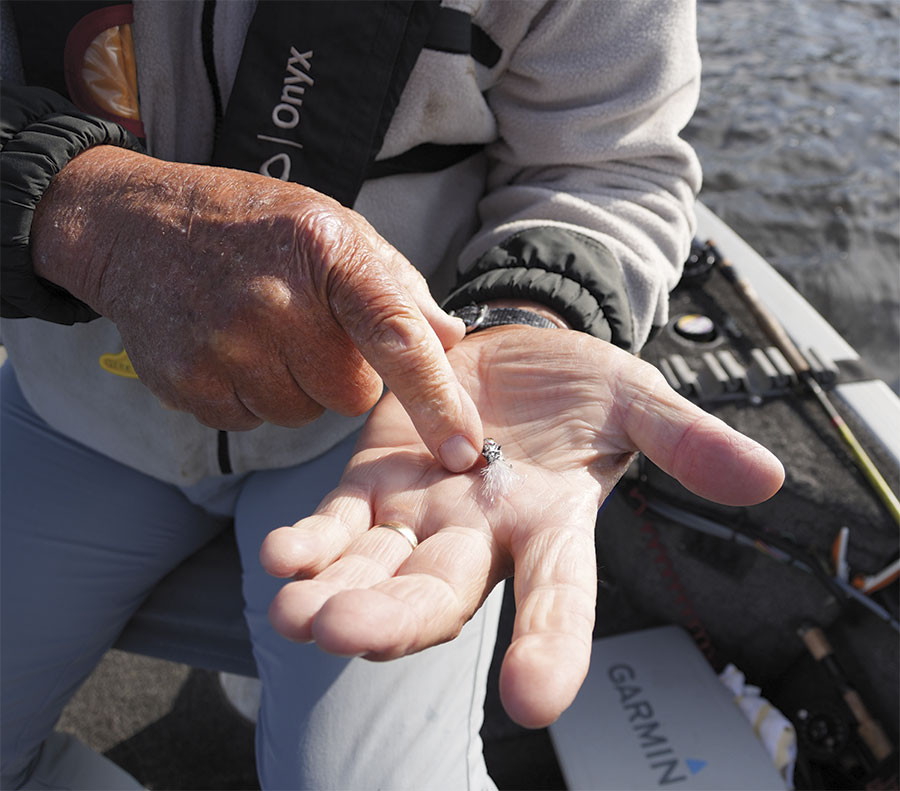
Dyess warned that most tackle stores do not carry that combination of jighead and hook size, which has forced him to make his own.
I can tell you the No. 8 hook is plenty strong after watching Dyess hook and land two large gar using it. When asked about his decision to add weight to his offering, he responded, “If I’m fishing below 10 feet, I’m almost always going to have a weight added.”
Know how to present the bait
Dyess is bullish on bait presentation during the summer months, going as far as to point out that by using forward-facing sonar, so much of what he thought was gospel about catching crappie has been proven wrong time and time again.
“One of the first things I noticed about crappie while using LiveScope was the importance of keeping the jig slightly above the fish and the need to “dead stick” the bait,” he said. “Hold the jig as still as you can and let the bounce or natural movement of the boat do the work.”
Even as we fished, Dyess would oftentimes catch himself jigging the bait up and down.
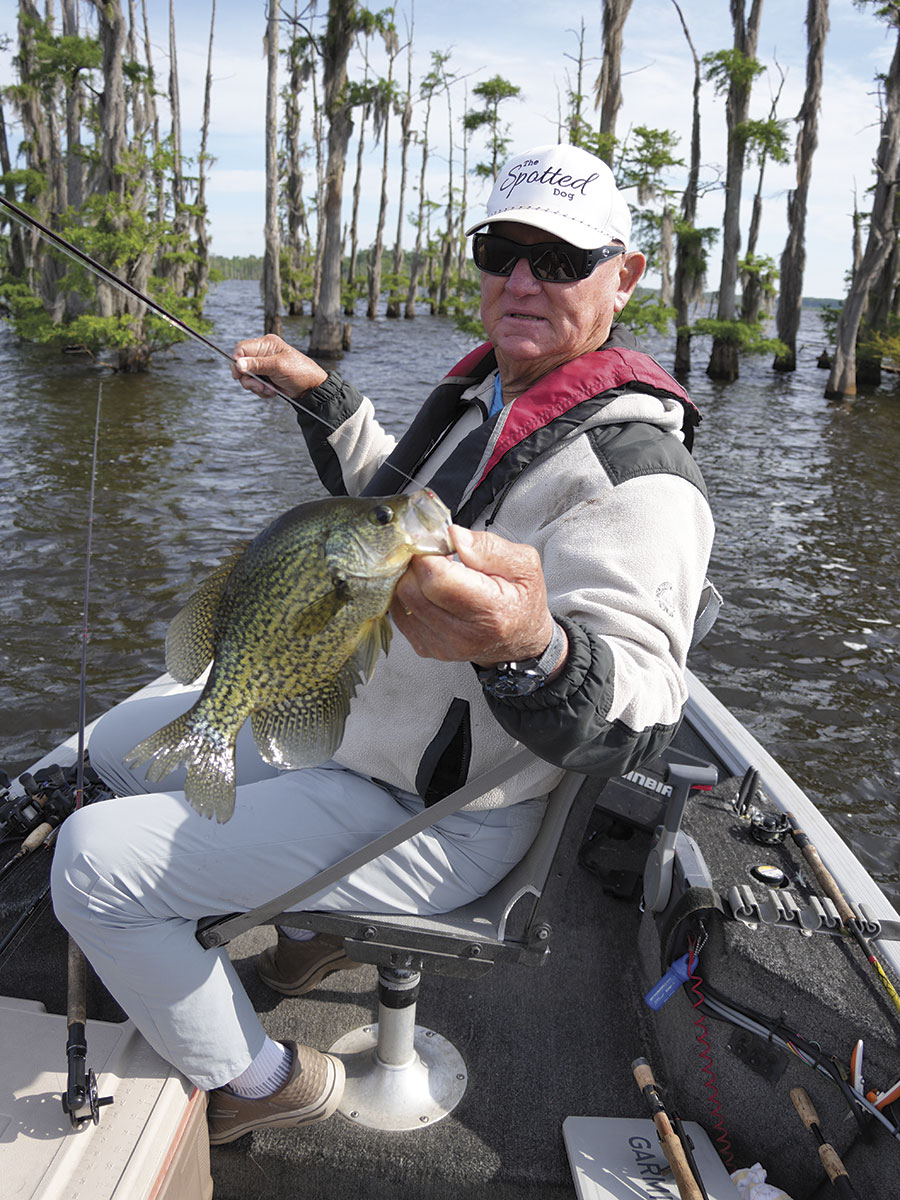
“See that, it’s an old habit that I did for decades and it’s hard to stop doing it,” he said.
In addition, Dyess also shared that another LiveScope lesson he learned was to slowly move the bait away from the fish in some situations.
“If that fish begins coming up to my bait slowly, I will begin slowly pulling the jig away from him,” Dyess said. “Make him run the bait down, because if he approaches the jig slowly and you don’t move it away, chances are he’s going to turn away from it.”
Finally, Dyess said he lets the fish dictate whether he uses a “nibble” or not.
“I’ll use something like Berkley PowerBait, but only if I’m not getting bit without it,” he said.
Know your myths
Dyess warned that many crappie fishermen he knows personally still believe that fish head for the main lake channels during the summer months.
“I find most of my summer crappie in the deeper water sloughs with the most cover,” he said. “Don’t be fooled into thinking that majority of the fish head to the deeper main lake creeks during those hot summer months.”
The last bit of advice Dyess offered dealt with boat positioning.
“I see lots of fishermen who don’t understand how important proper boat positioning is when dealing with tough summertime crappie,” he said. “One day while fishing I began to notice fish on the left side of my boat were running much more than fish on the right side.”
Today, Dyess is completely convinced the shadow being thrown by the boat was the reason.
“When I started turning my boat and making sure that shadow was being thrown away from the fish, I began catching more fish,” he said.