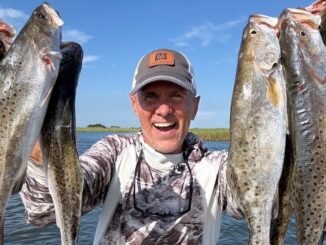
Bay Joe Wise. Bird Island. Bay Adams. These aren’t the kind of places that were on Kelly Welch’s radar when he was young. Welch grew up in Metairie, close to Bucktown, and the water that shaped him looked a lot different than the remote marshes and bays of lower Plaquemines Parish.
As a kid, he spent countless days fishing the Bonnabel boat launch, chasing sheepshead under Fitzgerald’s Restaurant at West End, and fighting with alligator gar at the point. But like any South Louisiana boy, it was speckled trout that ultimately garnered his full attention, and the pier at West End is where he got his education.
“I did most of my speckled trout fishing at night on that pier with shad rigs,” he said. “I was probably about 12 years old.”
Welch recalled one particular stretch of water in the city where he caught specks. It wasn’t far from the old wooden bridge that crossed the 17th Street Canal.
“I actually caught speckled trout in the 17th Street Canal,” he said. “I know that sounds crazy but it’s true.”
As the years passed, Welch’s boundaries expanded and he began learning spots farther south, including Grand Isle. He soon fell in love with fishing the coast and eventually started learning spots farther east after studying Google Earth. Welch found an area that was more conducive to fishing from his 18-foot flatboat — Bastian Island.
“No matter which way the wind was blowing, I could fish it,” he said. “Grand Isle really only gives you one side. Bastian gives you options.”
Where is it?
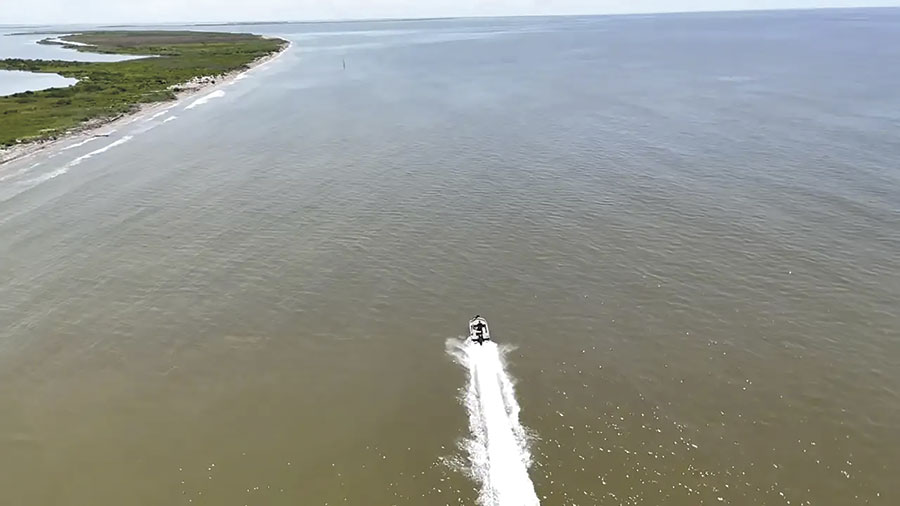
Bastian Island sits on the southern fringe of Plaquemines Parish, tucked along the outer edge of Bastian Bay where the marsh begins to break up and the Gulf takes over. It’s a barrier island in the true sense of the word, with no road access and no way to get there without a boat. The island is not a quick run for most anglers, but for those launching out of lower Plaquemines Parish it is well within reach. Welch uses either Empire or Buras as his jumping off point, depending on conditions.
“Empire is a closer boat ride,” he said. “But if the locks are closed, I go to Buras.”
What separates Bastian from more well-known destinations, like the Chandeleur Islands or Breton Island, is its proximity to the mainland. It sits close enough that a flatboat can make the run comfortably, and unlike Grand Isle, which puts anglers at the mercy of a single stretch of beach, Bastian offers fishable water on multiple sides. The south side of the island alone stretches for roughly 8 miles of Gulf-facing beach, while the north side offers a mix of marsh, protected bay and a secondary beach for those days when the wind has other ideas.
Reading the island
What makes Bastian Island different from most speckled trout destinations in South Louisiana is its versatility. Surrounded by water on all sides, there is no such thing as a blown-out day. No matter what the wind is doing, there is a fishable side of the island, and Welch has learned to let the conditions tell him where to set up.
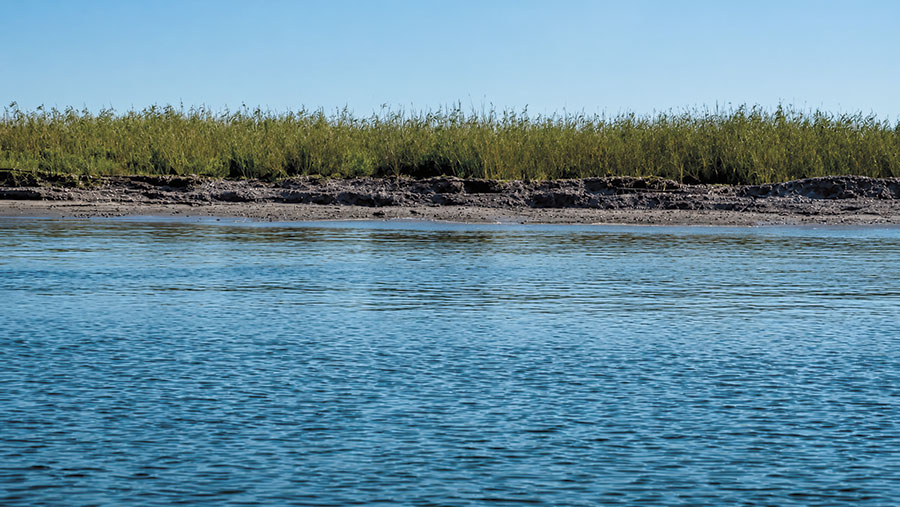
On days when a light south breeze is pushing in off the Gulf, Welch works the south side, positioning his boat about 75 feet off the beach. When the south wind stiffens past 10 mph, he simply crosses to the north side, where a combination of marsh, beach and protected bay absorbs the blow and keeps the water manageable. East winds send him to the north and west sides, and west winds, the most notorious wind direction for muddying water across coastal Louisiana, are the one condition that tests his patience.
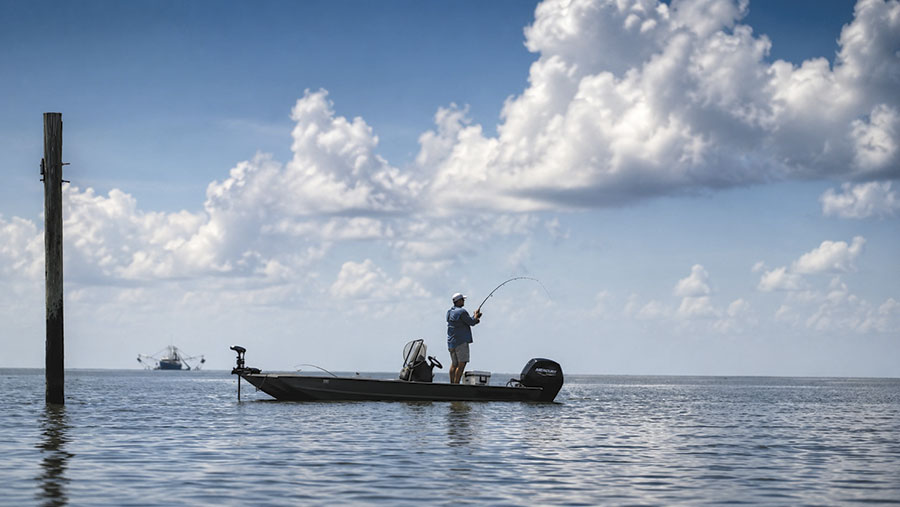
“I have caught trout during a west wind on the north side and in the east pass,” he said. “But it’s not as productive.”
Once Welch gets to the island, he doesn’t just pick a spot and start casting. He’s looking for signs. And the one that gets his attention most isn’t diving birds, it’s dolphins.
“Most fishermen don’t want to see dolphins because they feed on the specks,” he said. “But I use them as a gauge. On some of the calmest days, when there’s no wind and no bait busting the surface, dolphins guide me to the fish.”
Diving birds, on the other hand, are a decoy he has learned to ignore no matter how tempting they look.
“In midsummer, it’s nothing but big gafftops and undersized school trout under those birds,” he said. “I pass them up every time.”
Other species
While speckled trout are the primary target, Welch has learned that Bastian has a few surprises. Bull reds cruise the north side regularly and have a habit of showing up uninvited.
“They have busted up my popping cork on more than one occasion,” he laughed.
And at least once a trip, a mangrove snapper finds its way to the boat on the north side, a bonus that comes with the territory this far south.
One thing Welch does not do is get out of the boat to wade the south side beach, despite how inviting that long stretch of sand can look on a calm summer morning. He learned that lesson the hard way.
“I’ve had a couple of really spooky shark encounters while wading out there,” he said. “I keep my butt in the boat.”
Tide is king
Of all the variables that Welch considers when he pulls up to Bastian Island, tide is the one that carries the most weight. Wind will dictate which side of the island he sets up on, but tide is what determines whether the fish are going to cooperate.
“I have the best success on an incoming tide,” he said. “Not a falling tide.”
When the tide is pushing in, Welch said he has found success on both the north and south sides of the island. When it turns and starts falling, he makes a move to the north side and stays there.
“If there is an incoming tide, I have success on the north and the south side,” he said. “If it’s a falling tide, I go to the north side. The wind direction doesn’t really matter.”
It’s a simple rule, but one that has saved him plenty of wasted casts over the years on a stretch of coast where the conditions can change quickly and the fish have no shortage of places to be.
The setup
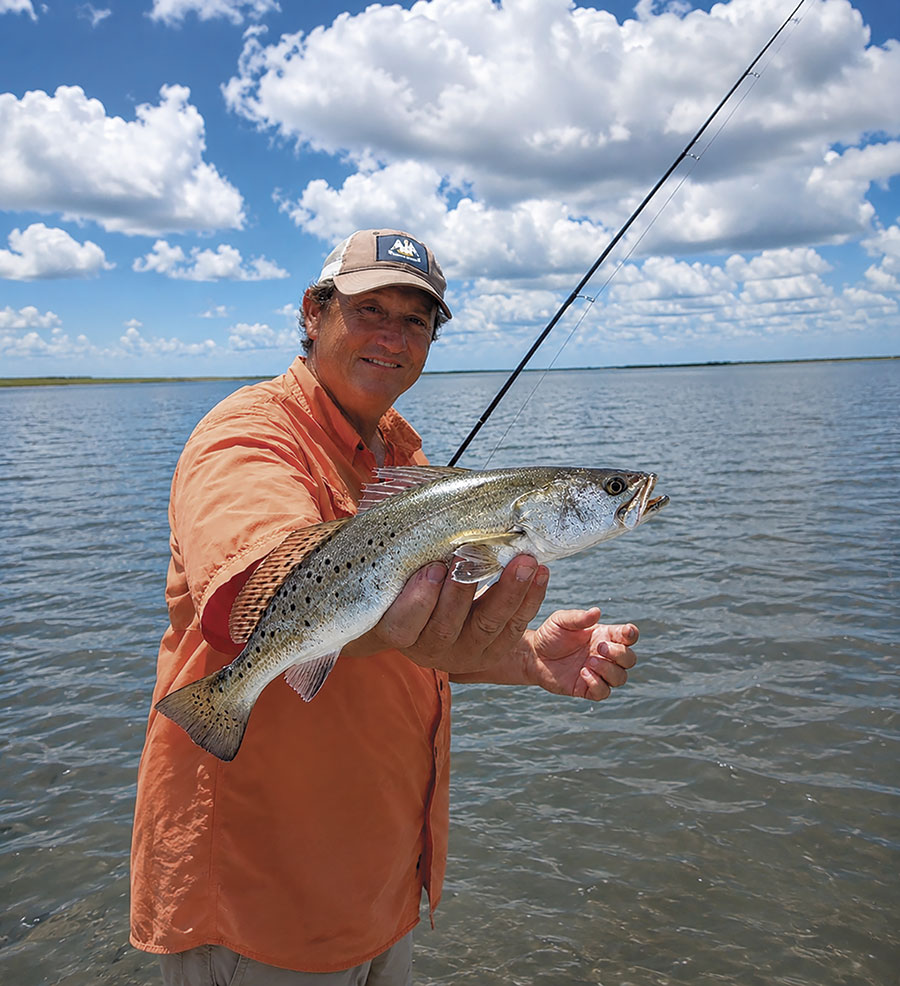
When it comes to gear, Welch keeps things simple. He reaches for a 7-foot medium action spinning rod and doesn’t put much stock in brand names when it comes to the reel.
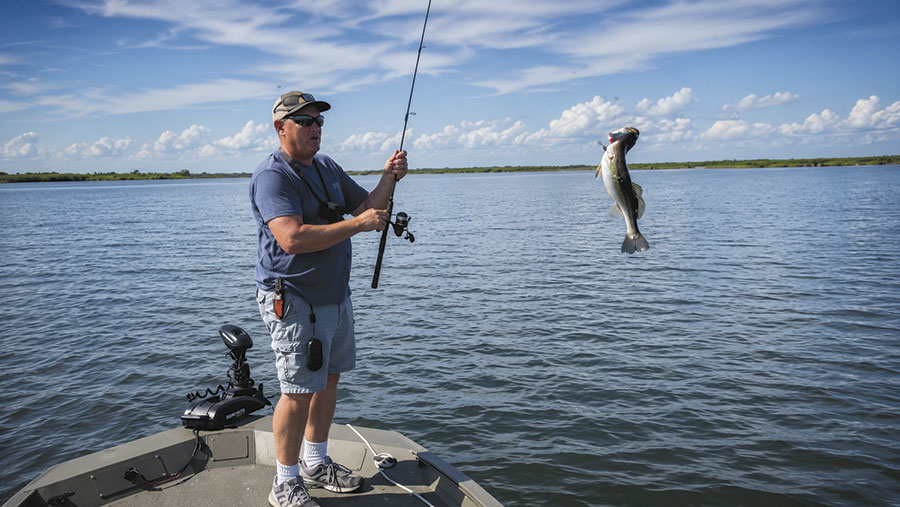
“I don’t fish with baitcasters,” he said. “They seem to hate the salty water out there.”
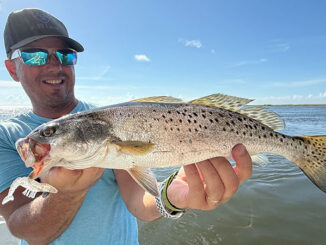
As for what lures, Welch has tried just about everything over the years and keeps coming back to the same bait that has never let him down. His go-to presentation is a popping cork rigged with a 4-foot leader tied to the original H&H clear split-tail Sparkle Beetle.
“If the trout are there, they will hit it,” he said. “I have had more luck with that simple setup than any other.”
When he wants to cover more water and put the cork away, Welch switches to tandem sparkle beetles and works them with a straight retrieve. The tandem rig has a way of doubling his catch in a hurry.
“Quite often I will catch two at a time,” he said.
On calm summer mornings, Welch said he’s had some success throwing topwater MirrOlures along the south side beach at dawn, and every now and then a yellow lemon head tandem rig will get the job done. But those are the exceptions, not the rule.
“Ninety percent of the time I use good ole sparkle beetles,” he said. “If they are there, that lure will get them.”
For videos on how to fish the Island, check out Welch’s YouTube channel: https://www.youtube.com/@