These early season strategies will help you fill your deer tags
I moved to coastal Louisiana in 1984 from New Mexico. The change environmentally and culturally came as quite a shock, but for a guy who was a hunter, trapper and fisherman, how could I go wrong? The state was known for being the Sportsman’s Paradise. I have to say that I was overly confident I would adapt and, what’s more, flourish in the Bayou State.
That is until I made my first whitetail deer hunt in the marsh. My father-in-law trapped nutria along Leopard Bayou, and when I asked him for a little guidance, he pointed me to a canal near his camp as a place to start.
About all he said to me was, “Walk that spoil bank towards the back of the canal and you’ll see where those deer are walking that old flotant coming out of the myrtles.”
That made absolutely no sense to me, since I didn’t know what flotant was and he didn’t have time to show me or explain further. During trapping season, he made it clear that he didn’t “have time to play,” like we did.
My brother-in-law Kirk asked if he could come along with me, to which I said sure, thinking he might be able to shed some light on what I was looking for.
I found tracks and deer sign along the canal bank that led out into the marsh, so I followed it, and that’s where my first lesson in navigating this new terrain occurred.
Difficult terrain
Under my feet I could feel the sloshy vegetation that was more like walking on a waterbed — if you’re old enough to remember that bedroom furniture fad. And, after walking a couple hundred yards, I suddenly busted through the vegetation and sank up to my chest. The only thing that saved me was my shotgun, which I used to push myself up and out of the muck.
My brother-in-law was of no help. He was several yards behind me.
When I got out of the predicament, I was somewhat turned around in the tall vegetation and myrtle patch. I asked Kirk, “Where are we at?” To which he replied, “I don’t know. I thought you did!”
It was then I realized that this country wasn’t like the mountains of New Mexico, nor the farm fields I grew up hunting in Michigan. Another thought was how could a deer live in something like this?
I could hear an outboard motor running off in the distance and figured the Leopard Bayou runs east and west and if I walked south toward the sound I’d run right into it. And we did, winding up right behind the camp where we were staying.
It’s been 42 years since that first deer hunt in the marsh, but it’s the “one” I’ll never forget because it was the foundation for learning how to be successful hunting marsh deer in perhaps the most difficult terrain in all of the United States.
I’ve often said to friends around the country, “If you can successfully hunt whitetails in the marsh, you can be successful hunting them anywhere.”
Here’s five tips to help you find success when hunting marsh deer:
-
Finding the right location
Much of Louisiana’s coastal marshes, particularly in Deer Areas 7, 9 and 10, are made up of bayous that are crisscrossed with canal spoil banks cut years ago for oilfield exploration and production. As a result, the higher ground provides natural habitat and cover for not just whitetail deer but other fauna such as black bears, rabbits, raccoons, bobcats and nutria to name several.
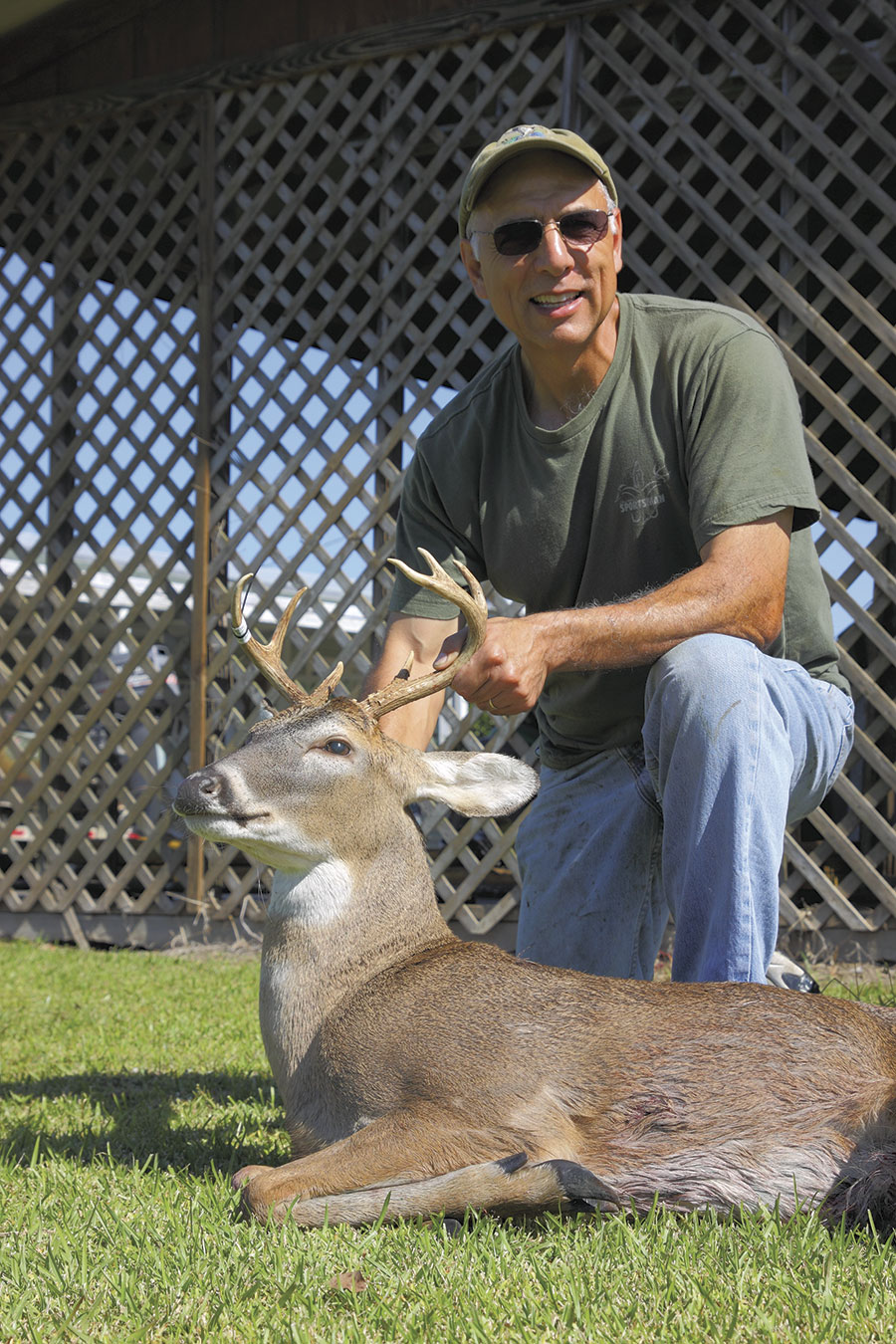
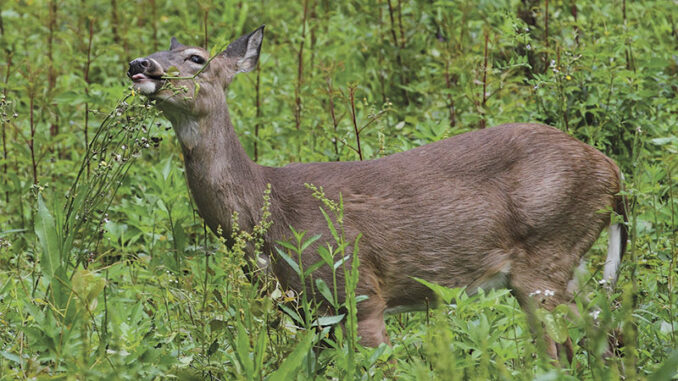
Deer feed and propagate in the marsh and canal spoil banks, often becoming butterball fat during the year, especially prior to the rut. One of the keys is finding the right location to place a stand. That location has to have a combination of sign in the form of tracks, food and cover, where they can rest and chew their cud in safety during the day.
Calumet resident Kiefer Liner has hunted both public and private land in coastal St. Mary Parish. He said years of hunting marsh whitetails has taught him to spend more time scouting than you do in the stand.
Liner credits Warren H. Womack DVDs he studied and applied.
“Don’t ever be afraid to pass up mediocre sign in search of the kind of sign you cannot walk away from,” he said. “That term from Womack served me well over the years, where in the back of my mind I’m searching for the perfect spot.”
Deer tracks
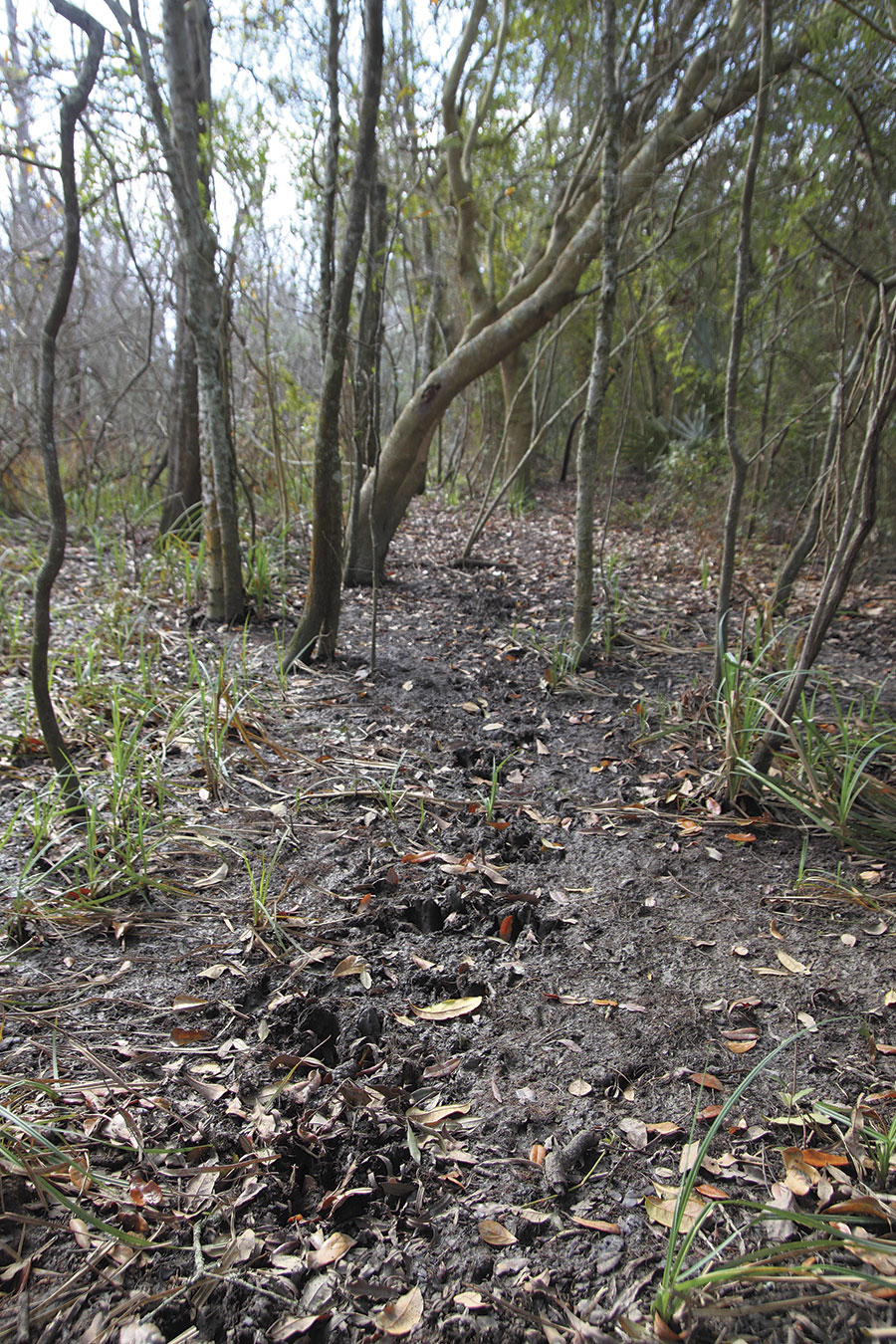
One of the things you’ll find in the marsh, like anywhere, is deer tracks. That’s where the distinction begins. There are deer tracks and beaten down deer roads in the marsh. At times, along the spoil banks, it seems like you can’t put another track on the trail. The tracks are both coming and going.
It’s the same out in the open marsh. The tracks traverse the marsh in every direction as deer go from feeding locations to canal spoil banks and back browsing. It’s one thing finding tracks. It’s another thing finding beaten down roads where it’s pretty much a guarantee that if you spend three days overlooking that kind of trail morning and evening, you’re bound to harvest a deer. That is barring you’re not super selective.
That location should be close to preferred food sources. Marsh deer hunters should get familiar with deer peas (Vigna luteola). These peas flower July through October and last right up to the first frosts in late fall.
The old timers on a cold night would say, “I’ll bet the deer are breaking the peas tonight!”
What they were referring to was how the marsh deer would literally be busting trails through a pea patch (vines) as they fed. From a deer tower stand, the trails through the peas looked like veins.
-
Spotting marsh deer
Deer in general are often hard to see, unless baited with feeders in open fields or coming into open cultivated food plots. In the coastal marshes, the vegetation is regularly above a deer’s shoulders and often over its head. Flora like roseau cane, cattails and cut grass are like walls of vegetation that deer roads lead into and leave you wondering when and where they’ll come out.
Even the large patches of deer peas hide deer. Some land companies that lease lands to deer hunters along the coast allow hunters to flatten vegetation with airboats that are akin to hunting rights-of-way across the country. But many companies don’t or are explicit to where hunters can break these roads in the vegetation. Where not allowed, nothing is more valuable than a pair of good binoculars to help spot deer in the marsh.
“One of the main things I learned is don’t look for deer,” said Ross Dugas, Centerville resident and marsh deer hunter. “Look for parts of deer, like tails or ears flickering, or maybe just the head. When I stopped trying to see the whole deer while scanning the marsh and started staying in my binoculars looking for parts of deer, I realized there were more deer in the area and I was just missing them the whole time. I wasn’t looking for the right things.
Dugas went on to say that looking for deer in elevated stands is one thing. Getting a shot is another. Therefore, he likes to get down from the stand and look closer at those heavily used trails. In the tall peas and grass he can get a closer look at where low spots are.
Dugas said sometimes you have a very small shooting opportunity. By knowing where those low spots are, it allows him to concentrate and possibly get a glimpse at deer before they disappear into thicker brush.
-
Hunt the early rut
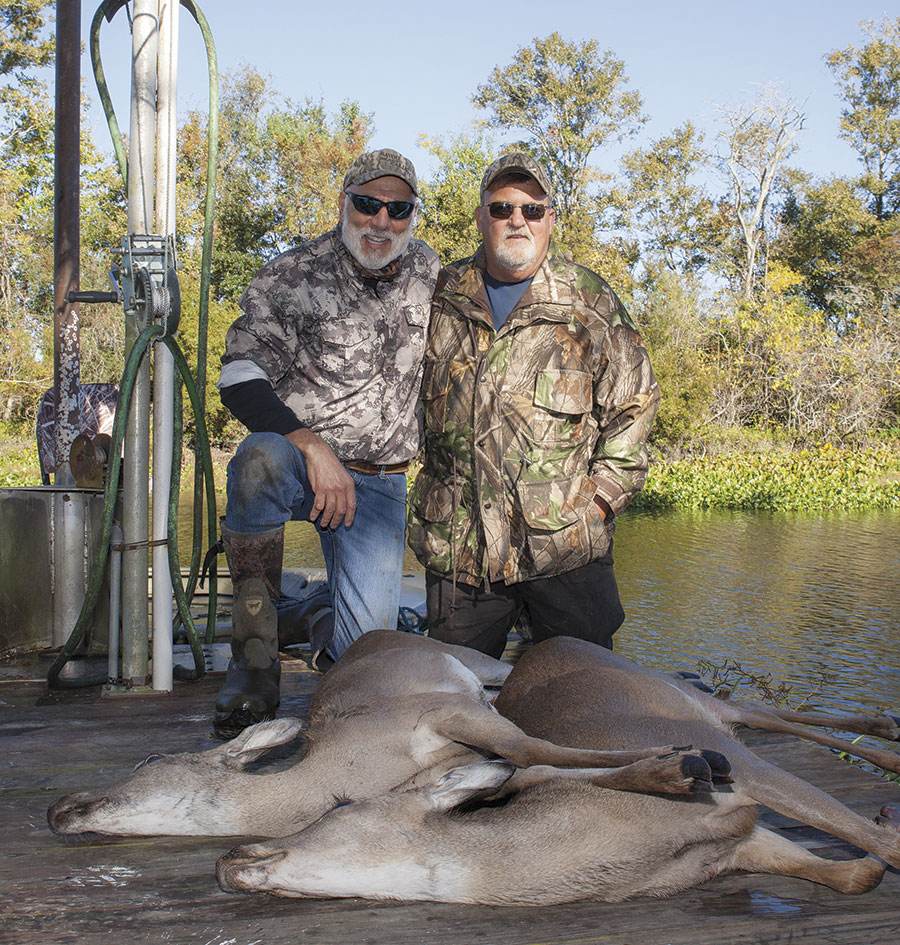
Hunting the rut goes without saying. However, coastal Deer Area 7 has one of the earliest ruts in the state, where often you’ll see rubs during the latter part of September, with the peak of the “first” rut around the third week of October.
The rut is when whitetails across the country are on the move and brake off their routines. In the marsh, you don’t hear of guys rattling bucks in. I know guys that have used scents to attract deer to their stands, including me, but after 42 years of hunting the marsh, I can say there was only a couple of occasions where they actually were effective in drawing deer to my location.
Hunting the rut in the marsh in October is one of those “must be there” things. Simply put, if you’ve done your work and put in the time in locating your stand near heavy trails, cover and feeding locations, the deer will be moving in those locations more than any other time during the season.
-
The need for patience
Centerville resident and avid deer hunter Jimmy Wilson prefers to sit on his stand and be patient.
“My reason is pretty simple,” Wilson said. “You increase your odds of seeing deer the longer you’re on the stand. Deer in the marsh move at different times during the day and are sometimes hard to pattern. If you did your homework and there is deer sign, you just need to be there when they pass.
“Over the years, I’ve killed deer at first light but killed just as much at 9:30 a.m. and killed a few at 10:30 a.m.”
-
Pinch points
The way canals cut into the coastal marshes, and the way bayous run in various directions in those marshes, there are always pinch points where hunters can utilize this to their advantage.
For years, I have sat on a stand between two canals that paralleled each other for the most part but eventually came at an angle towards one another forming a funnel. I have had more success hunting pinch points than any other locations in the marsh.
Bayous will also form pinch points in conjunction with these canals. I’ve seen deer cross little peninsulas and swim a bayou just to get to a canal bank. As previously stated, scouting long and hard will help you locate these places. And when you find them, you’ll hunt them every year.
Things to consider
In Louisiana, hunting in October can be brutally hot weather-wise. Unless a cold front has moved through, daytime temperatures often reach the low 80s. Be sure to stay hydrated when scouting and even more hydrated when dragging a deer out of the marsh.
There’s also the mosquito issue. The mosquitos can be so antagonistic you can’t think straight. Be sure to bring mosquito repellent when sitting on your stand.
Marsh deer hunting is some of hardest deer hunting you’ll ever do. Rest assured, if you kill a deer in the marsh, you’ve done something difficult and special. Hunting Louisiana’s coastal marsh is like hunting no other place in the U.S.