Anglers should take advantage of the shrimp migration to land more speckled trout
For fishermen across Louisiana, speckled trout is king. And when it comes to feeding that king, nothing satisfies his appetite like shrimp.
It’s May in Louisiana, and the brown shrimp are beginning their move out of the marsh, setting the stage for some of the best trout fishing of the year.
Rudy Lightell of Slidell knows a thing or two about shrimp and how much of a role they play when it comes to finding speckled trout.
“My father’s side of the family had a relative who trawled for a living,” Lightell said. “He had a small boat when I was growing up and took me trawling on occasion. I looked forward to going because
once we finished trawling he would let me fish. I would try and save a few live shrimp for fishing.”
Since then, Lightell has graduated from live shrimp to exclusively using artificial baits.
“My fishing techniques have completely changed over the years from live bait to totally artificial,” he said. “I find one of the arts of fishing, and a challenge, is to simulate live bait with artificial. There is a different feeling of accomplishment when catching great fish on an artificial lure.”
While he may not use live shrimp, Lightell is always cognizant of what the shrimp are doing underneath the water. And in May, it’s all about finding choke points.
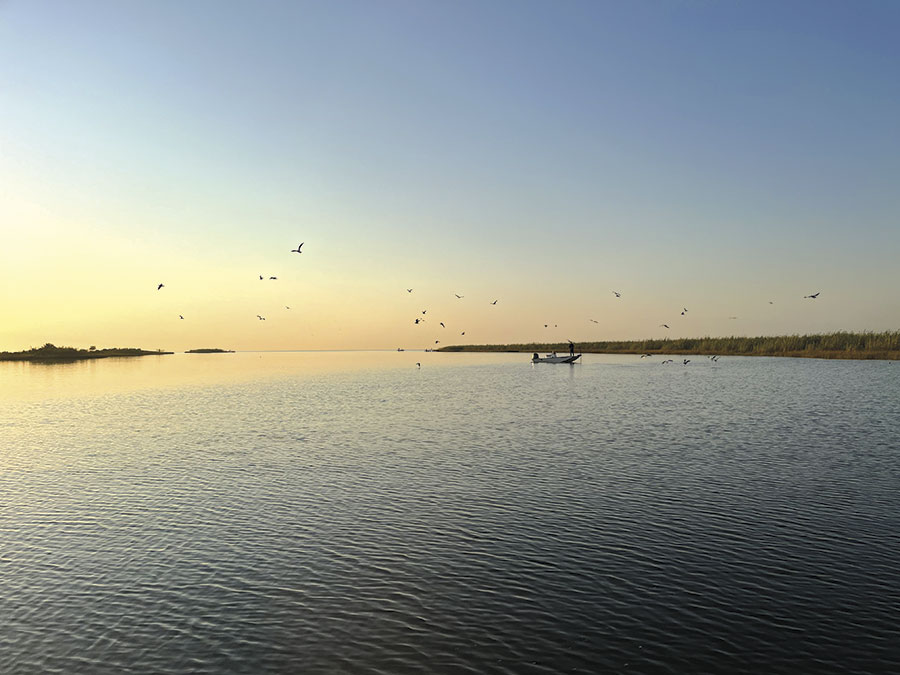
“During this time of the year, the brown shrimp have begun there migration to the Gulf, so one of the main things I focus on are choke points from large bodies of water leading into another large body of water,” he said.
May migration
For most anglers, it’s enough to see shrimp skip across the water with a hungry trout busting the surface, but it helps to understand what those shrimp are actually doing under the water.
According to the Louisiana Department of Wildlife and Fisheries, brown shrimp spend the early part of their life buried deep in the marsh, using duck ponds and flooded grass as a nursery. That’s where they grow and stay protected before ever making a move toward bigger water.
Fisheries biologist Dr. Bob Thomas, who spent much of his career studying Louisiana’s estuaries and teaching at LSU, has long described the marsh as a nursery for shrimp, with larger individuals eventually moving into bigger bodies of water where they become available to predators. He has also noted that tidal movement funnels those shrimp through drains, cuts and bayous, concentrating them in predictable areas along the way.
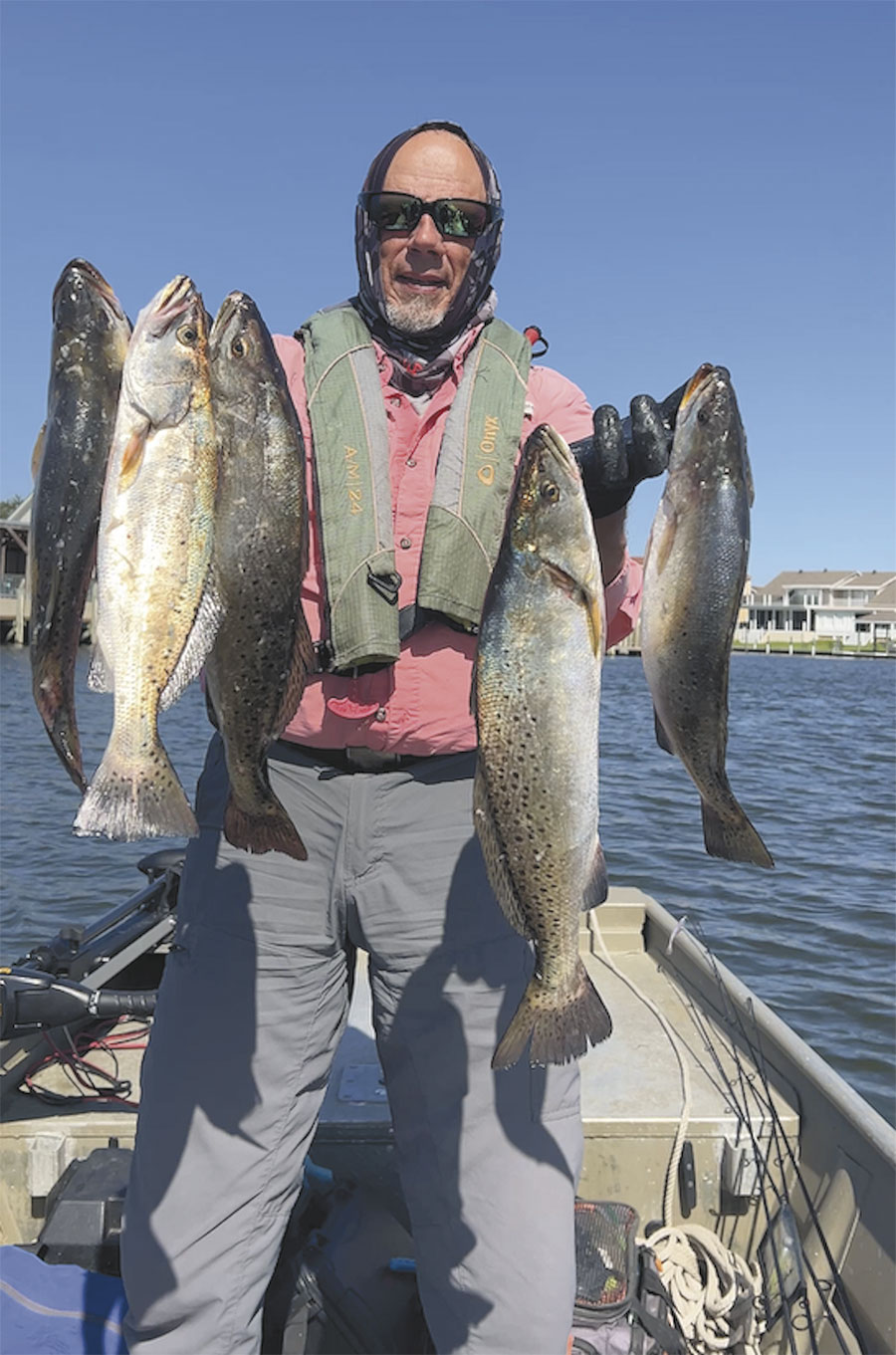
By May, that process begins to show itself across the marsh. As the shrimp grow, they start easing their way out of those duck ponds and into nearby canals and lakes. It doesn’t happen all at once. It’s a steady movement that’s heavily influenced by the tide. A falling tide is what really gets things going. Water drains out of the marsh, pulling shrimp along with it and dumping them into the nearest cuts and bayous. From there, they continue working their way through the system, following deeper water and stronger current until they eventually reach larger bays and, ultimately, the Gulf. Everything gets funneled through the same drains, points and channels along the way. And anything caught in that flow doesn’t have many places to hide. That’s what makes certain areas so consistent this time of year.
The Trestles
Lightell said the Trestles is one of the first places he looks when shrimp start making their move in May. The area between the north and south shore acts as a natural funnel, pulling water out of Lake Pontchartrain and all of its surrounding tributaries toward the Rigolets. That moving water carries shrimp with it, and anything getting swept through becomes an easy target.
“It’s a choke point for Lake Pontchartrain and everything feeding into the Rigolets,” Lightell said. “You’ve got a lot of shrimp heading through there this time of year.”
On top of that, the structure itself gives trout everything they need. The bridge pilings break current, create ambush points and give fish a place to hold without burning energy.
When fishing the Tresles, Lightell prefers to cover water, using his trolling motor to cruise the pilings while throwing plastics on the bottom. A falling tide is ideal when that water is pulling shrimp through the system. Wind can quickly become a factor in such an open area, but on the right day the Trestles can produce along its entire five-mile stretch. Lightell tends to favor the north end, but said fish can set up anywhere along the structure, depending on conditions.
MRGO Long Rocks
The MRGO rocks offer a similar setup, just on a larger scale.
“It’s another major highway leading to the Gulf,” Lightell said.
As shrimp move out of the interior marsh, they’re funneled through this area, hugging the rocks and getting pushed along with the current. The jetties create endless ambush points, with trout tucked into the gaps waiting for bait to come to them.
Water clarity is usually a strong point in the MRGO, giving anglers the chance to work artificials effectively. And unlike some areas that rely on a specific tide, this one produces as long as water is moving.
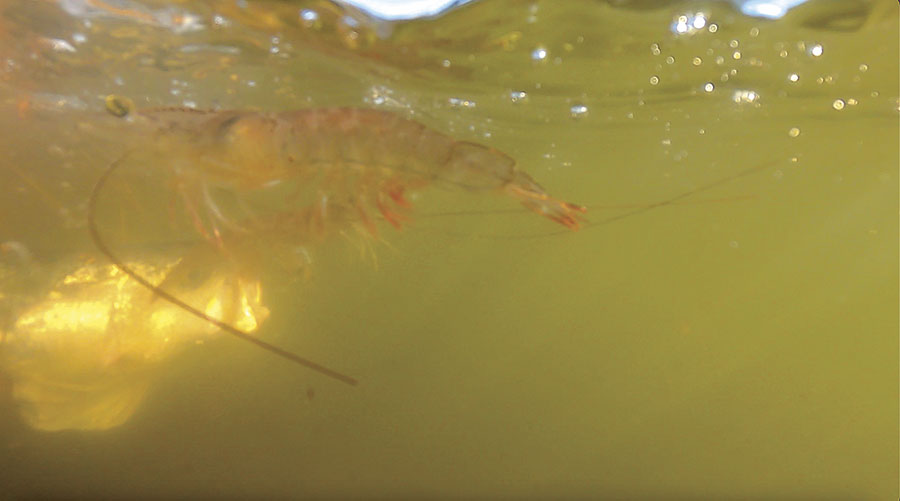
Lightell said this stretch is known for producing quality fish in May, as larger female trout make their way out and feed heavily along the rocks.
Before switching primarily to artificial baits, two of Lightell’s personal best trout came from this area in early May, both caught under a cork with live shrimp. These days, he leans more on suspending jerkbaits, but the approach still centers around the same concept. Stay around moving water and let the fish come to you.
Delacroix marsh
While Lightell focuses mainly on the Trestles and MRGO, he sometimes fishes the Delacroix marsh. He said it offers a more protected version of the same pattern.
This is where the shrimp begin. The shallow ponds and grassy flats serve as a nursery, holding juvenile shrimp for months before they ever start pushing toward bigger water. By May, that movement is well underway, and it doesn’t take long to find where it’s happening.
Lightell said the key is still finding moving water in the marsh.
“When I’m fishing the marsh, I’m focused on areas where bait is being funneled through,” he said.
Drains, cuts and small bayous all become highways for shrimp leaving the ponds. On a good tide, you can actually see them popping along the surface as trout and redfish push them out of the shallows.
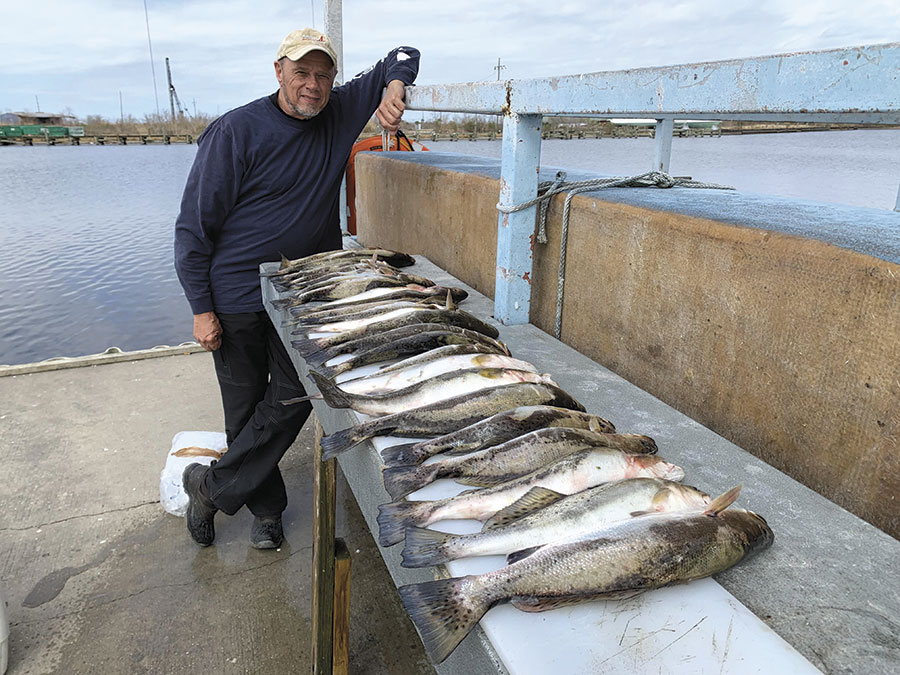
Clean, moving water is the biggest factor here, regardless of tide direction. And when the weather turns rough, the marsh offers a place to get out of the wind and still stay on fish.
Lightell’s go-to in this area is a popping cork paired with an artificial shrimp, but when shrimp are actively being pushed to the surface, he won’t hesitate to switch to a topwater.
“Birds will usually give them away,” he said. “If you find the birds, you’ll usually find the shrimp.”
While Lightell concentrates on choke points in May, as the summer progresses the pattern begins to spread out. Instead of shrimp being tightly concentrated in a few key choke points, they become more scattered across bays, sounds and nearshore waters. You can be sure the specks won’t be far behind, feeding on shrimp around reefs, rigs and deeper structure as water temperatures continue to rise through the summer months.