This area offers plenty of opportunities to catch spot-tailed marauders this month
In 1699, Pierre Le Moyne d’Iberville searched for the Mississippi River hoping to establish a French colony at its mouth. Iberville sailed into Lake Borgne, named for the French word for “one-eyed.”
Thinking he located the Mississippi River, Iberville then sailed up two deep passes. He named one “the Rigolets” from the French word “rigole” for “trench.” Frustrated at not finding the river, he dubbed the second pass Chef Menteur, meaning “chief or big liar.”
Iberville named the huge lake at the western end of the passes for Louis Phélypeaux, the French Minister of the Marine, better known to history as Comte de Pontchartrain. Today, these passes and the lakes offer excellent fishing opportunities for various species.
“In the entire Rigolets area, people can find many places to catch redfish,” said Mike Gallo with Angling Adventures of Louisiana (985-781-7811, aaofla.com) in Slidell and the new president of the 1,200-member Louisiana Charter Boat Association (louisianacharterfishing.com). “We look for clean moving water with bait, especially in the summer.”
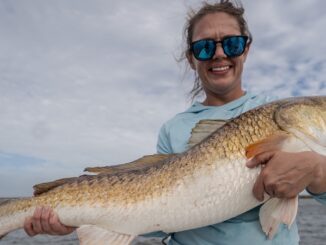
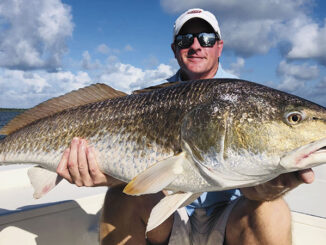
From late August to about mid-November, monster spawning redfish move in from offshore. They pass through Lake Borgne and proceed through the Rigolets and Chef into eastern Lake Pontchartrain. When ravenous reds churn through an area, they devour anything they could gulp.
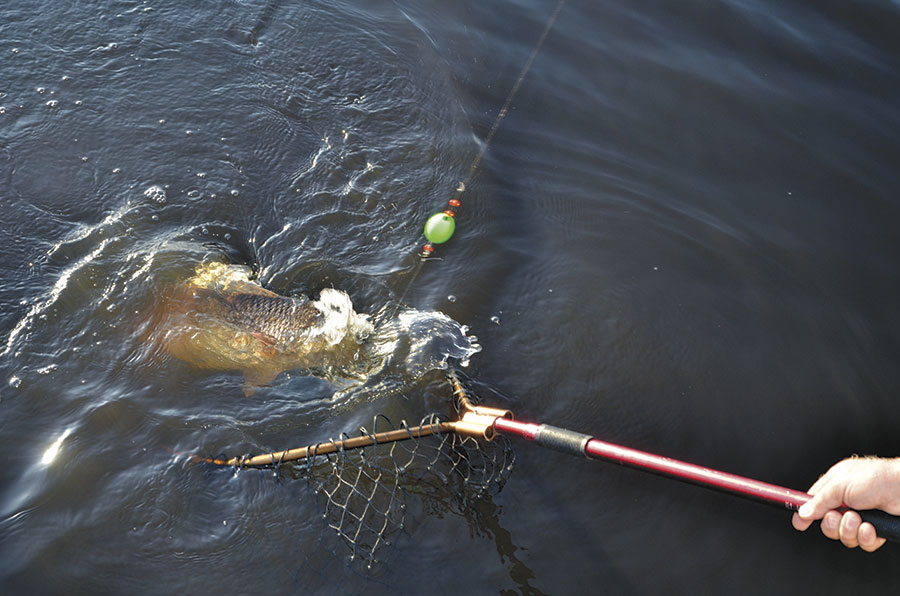
“When the bull reds come into Lake Pontchartrain, we ride around looking for big seagulls and pelicans diving,” said Kenny Kreeger with Lake Pontchartrain Charters (985-643-2944, www.lakepontchartraincharters.com.) “When we see big gulls and pelicans diving, that’s the place to fish. After we land the fish, we start looking for the birds again. They might be half a mile away. Then, we do it again.”
Drop-offs
Separating St. Tammany and Orleans parishes, the Rigolets runs about 8.5 miles between the lakes. It averages about 30 to 35 feet deep but drops deeper in places. The Chef runs much shallower but still holds some deep water. Several bayous flow into the passes. Close to Lake Pontchartrain, the U.S. Highway 90 bridge crosses both passes. Near Lake Borgne, an old railroad trestle spans the passes. The bridges can provide good fishing for various species.
“In late summer, look for bull reds by the railroad trestle or in the bigger passes,” said Brad D’Alfonso with Speck Dat Charters (985-259-9170, www.speckdatcharters.net) in Slidell. “I like to fish a spot right off the Rigolets with a steep drop-off. The ledge drops from 3 feet deep to 8 feet quickly, then goes to 15 feet and more. I put my boat right over that 8-foot spot and fish with a drop-shot rig and a live shrimp.”
Many people love to fish shallow ponds for redfish, but shallow water heats quicker and loses oxygen in the summer. Current brings cooling relief. When fish can’t breathe, they go where they find more comfortable temperatures and oxygen. Prey species do the same thing. Redfish go where they can breathe and eat.
“When water gets really hot, redfish go a little deeper and look for current,” Gallo said. “In August, I like good tidal movement, either in or out as long as it’s moving. When water gets hot, redfish pull off the shorelines to the first drop-off in 3 or 4 feet of water.”
Great spots to fish
In a deep pass like the Rigolets, fish don’t necessarily drop to the deepest levels. They might hang on ledges or around drop-off edges. In deeper water, fish Carolina rigs baited with shrimp, crabs, cocahoe minnows, pogies, live croakers, mullet or mullet chunks. For vertical fishing, use a drop-shot rig.
“Redfish usually stay on the ledges,” D’Alfonso said. “I use my electronics to find the ledges and where the fish want to stay. In August, I like water about 10 to 20 feet deep. In deep water, I use a drop-shot with a 1-ounce weight.”
In Lake Pontchartrain, many people fish under Interstate 10, commonly called the Twin Bridges. The old U.S. Highway 11 bridge and a nearby railroad trestle also hold fish. In addition, people can fish several artificial reefs.
The old “Hospital Wall” south of where the Rigolets enters Lake Pontchartrain near Fort Pike holds various fish including reds. Fort Pike served as an active military outpost during the 19th century. A hospital on the lake shoreline served soldiers stationed at the fort. Over the years, the shoreline receded. Now, little remains of the old hospital, except rocks, rubble and other debris under several feet of water.
To the east, Lake Borgne averages about 7 to 10 feet deep. The grassy shorelines from the mouth of the Chef to the Pearl River Delta hold redfish. A few petroleum platforms dot Lake Borgne. Old shell pads where platforms once stood still hold fish. In addition, reds cruise the shoreline of several bayous and deeper passes flowing in the lake. Unknown Pass contains some deep water.
“In August and September, I typically stick to the bigger, deeper waters,” D’Alfonso said. “During late summer, I fish Lake Borgne whenever the weather allows. The Lake Borgne shorelines hold good redfish. People can find many ponds, small bayous and passes along the Intracoastal Waterway between the Rigolets and the Chef to catch redfish.”
Little drains
Between the Rigolets and the Chef, marshes punctuated by ponds and bayous surrounding Lake St. Catherine and associated waters create outstanding redfish habitat. Anglers can fish ponds or deeper waters along the Intracoastal Waterway. Try the Marquez Canal, St. Catherine Pass, Counterfeit Pass, the Little Rigolets, Miller Bayou and other waters.
Look for little drains coming out of the marsh. During a falling tide, dropping water levels dislodge shrimp, crabs, minnows and other forage from their hiding places. Redfish congregate where these drains feed into larger waterbodies waiting to pounce on anything delicious that the tide brings them.
At the Louisiana-Mississippi state line, East Pearl River flows into Lake Borgne. West Pearl splits into two mouths. One flows directly into the Rigolets, the other into Little Lake, also called Mud Lake. Little Lake connects to the Rigolets. The two main rivers further subdivide into three main channels and numerous other interconnected bayous, creating a rich delta marsh that mimics the Mississippi River Delta on a much smaller scale.
“I like to fish the Pearl River Delta,” D’Alfonso said. “It has some deeper spots where fish get in slightly cooler water. I look for cuts 4 or 5 feet deep coming off a big ledge. That’s a good ambush spot for redfish to grab prey. We fish those areas with popping corks and live shrimp.”
Submerged grass
Cooling river currents nourish numerous ponds and bayous in the marshes. In addition, fresh water encourages profuse vegetation growth. In late summer and fall, rivers tend to run lower, so salty water goes farther up the system.
Redfish can live in fresh water. Bass can tolerate some salinity. Bass and redfish commonly attack the same prey and hit the same lures. For fishing submerged grass beds, throw spinnerbaits, buzzbaits, bladed jigs or Texas-rigged worms. A weedless jig sweetened with a soft-plastic craw trailer mimics a crawfish or crab. Reds and bass eat both.
“I look for areas with abundant submerged grass, especially grass close to deeper water,” Gallo said. “That’s where baitfish hide. Submerged grass also adds oxygen to the water and filters it. Any feeder bayous with submerged grass would be good places to find redfish.”
Best lures
A shelf usually extends out from river channel shorelines. Thick weeds grow on these shelves. When grass mats on the surface, throw unweighted soft-plastic jerkbaits, lizards or similar creature baits. Insert the hook point into the soft plastic bodies to make the lure weedless.
Fish creature baits in short spurts. As the enticement flits from grass clump to grass clump, bass or redfish might erupt through the vegetation to attack it. At openings in the grass, pull it off the edge. Let the bait fall a couple feet before resuming the retrieve. Predators frequently hit baits as they sink like a dying creature.
“Usually, we find a small gap between the grass and the shoreline,” D’Alfonso said. “That’s where we find the fish. Redfish often get in that little gap between the grass and the shoreline. We work soft plastics over or through the thick grass mats. A weedless gold spoon makes a great option for fishing thick grass. A weedless jig with a crawfish trailer is another good bait.”
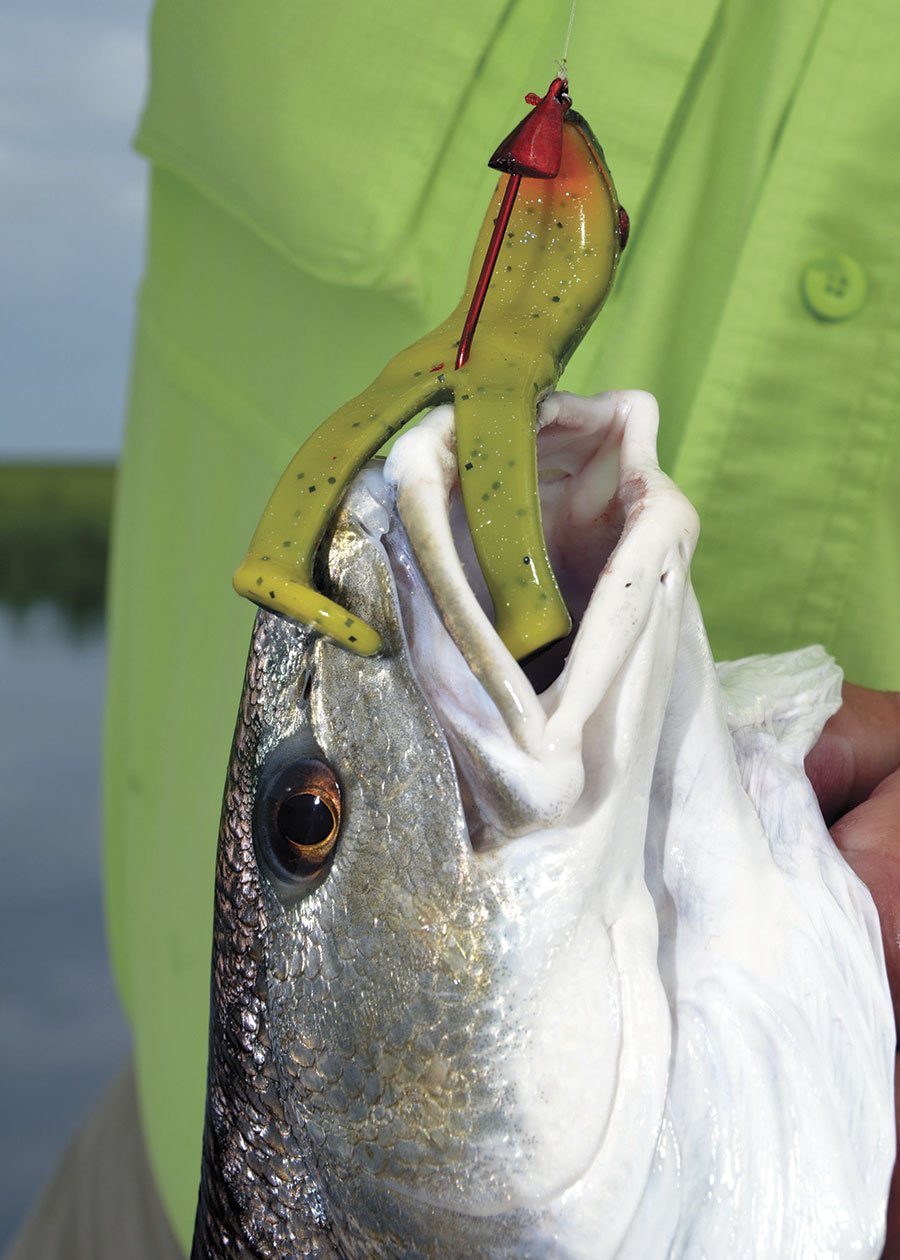
Few people think to use plastic frogs to tempt redfish, but a redfish might hit just about anything that looks edible. Run buzzing frogs steadily over the grass or with a “stop and pop” jumping action.
“Frogs are not on the everyday menu for redfish, but a redfish will eat just about anything it can swallow,” Gallo said. “Redfish are opportunistic feeders. Reds are not specifically targeting frogs, but if they see something that looks good to eat, they will attack it.”
This area offers unlimited opportunities and places to catch fish. After catching a bull red, especially on a hot day, make a strong effort to revive it in good shape before releasing it. Those big reds produce future generations.