Giant redfish move inland in late summer, early fall
Water seethed with activity as coppery torpedoes slashed through a writhing school of terrified baitfish. From above, sharp-eyed birds swooped for their share. We moved closer for our share of the action.
“In the fall, we get a big run of bull redfish that come into Lake Pontchartrain from the Gulf through Lake Borgne,” said Kenny Kreeger of Lake Pontchartrain Charters (985-643-2944, www.lakepontchartraincharters.com) in Slidell. “When the bull reds come into the lake, we ride around looking for big seagulls and pelicans diving. When we see big birds diving, that’s the place to fish. The schools move fast. After we land the fish, we start looking for birds again.”
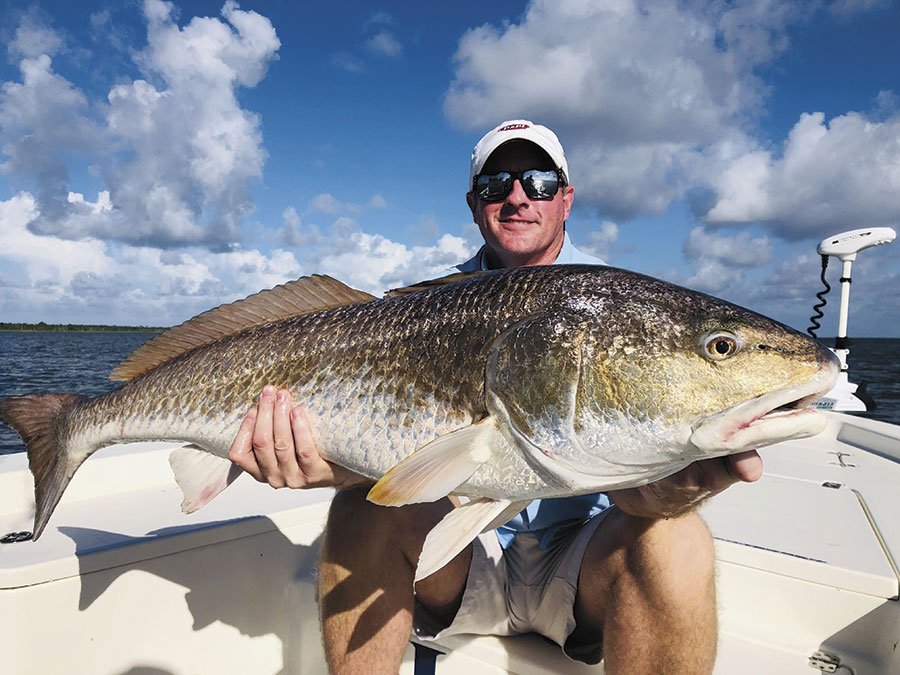
The same scenes repeat numerous times along the Gulf Coast in late summer and fall when redfish spawning season arrives. Reds spend their first few years in the marshes and estuaries eating and growing. A female reaches sexual maturity at about 3 to 9 pounds, and males about 2 to 6 pounds. When they reach sexual maturity, most redfish migrate out to deeper water.
“In Louisiana, redfish generally spawn from mid-August through mid-November with the peak in September and October,” said Jason Adriance, a Louisiana Department of Wildlife and Fisheries biologist. “Redfish form massive spawning aggregations in nearshore or offshore waters around tidal passes.”
Spawning schools
After exiting the marshes and estuaries, adult redfish spend the rest of their lives in the Gulf, but come closer to shore or enter passes and coastal bays to spawn. When spawning, bull reds gather in immense schools terrifying anything that swims.
“From August through early October, bull reds school up outside the passes,” said Tommy Pellegrin with Custom Charters (985-851-3304, Facebook) in Cocodrie. “Some reds push 40 pounds or more. When we see a big school, we call it the ‘Red Sea’ because there are so many redfish packed together.”
Also called red drum, redfish do not make nests. Males drum to call the females to them. Batch spawners, females drop their eggs and males fertilize them. When the eggs hatch in a couple days, the tiny redfish make their way into the marshes to grow.
“Males start drumming around sunset to attract the females,” Adriance said. “Many females spawn every seven days, perhaps as often as every two to four days. On average, one female will produce about 1.5 million eggs per spawn. She could potentially produce 20 to 40 million eggs per season, but the eggs have high mortality.”
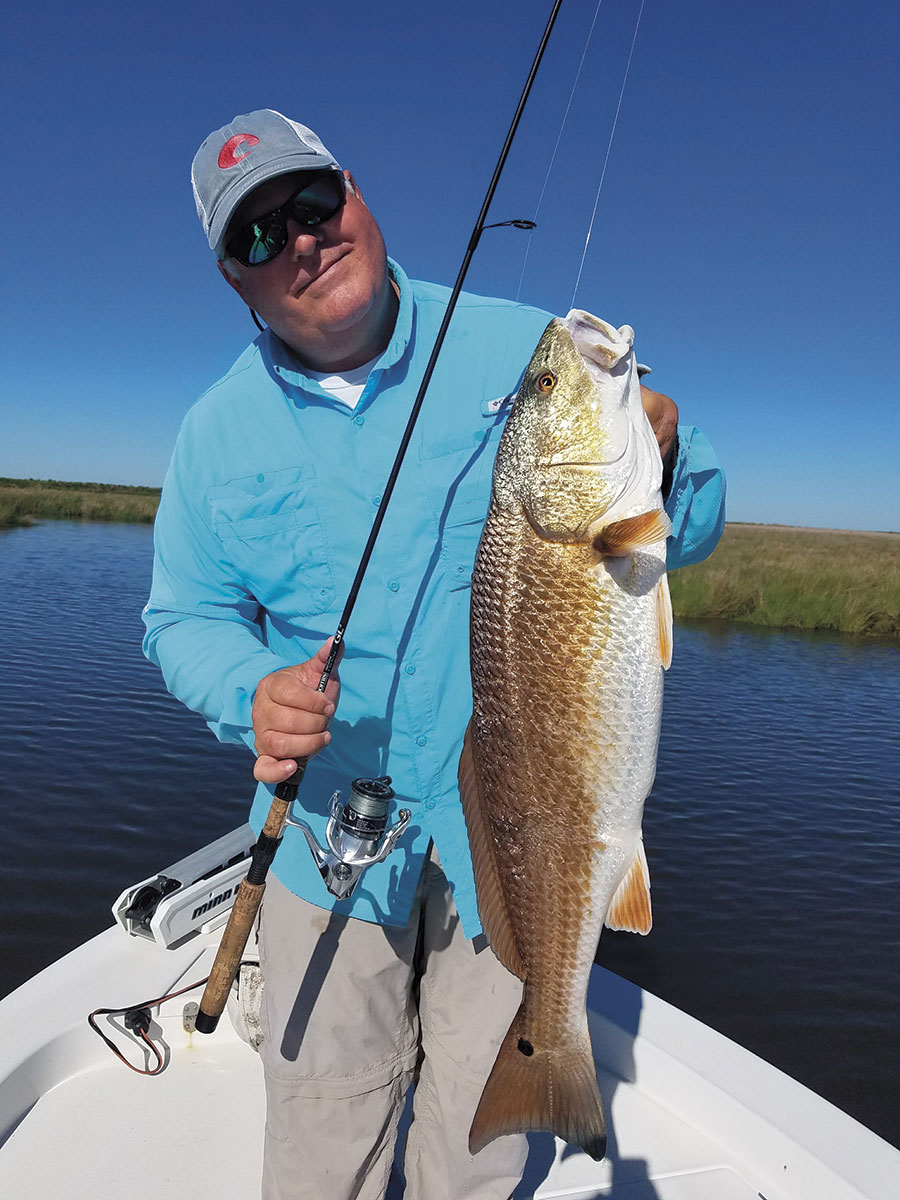
Most people call any large redfish a “bull,” but both adult males and females congregate together in gigantic schools during spawning season. Spawning takes a lot of energy, so both male and female “bulls” need substantial amounts of protein. They gobble shrimp, crabs and small fish like pogies, mullet and croakers.
“On the Mississippi Coast, we’ll see the ‘running of the bulls’ from about mid-July through the first cool snap in late October,” said Mark Wright with Legends of the Lower Marsh Charters (228-324-7612, legendsofthelowermarsh.com) in Gulfport, Miss.
Topwater baits
When enormous schools of huge, powerful fish rampage through shallow bays, they gulp anything they can catch. Full of energy-producing oils and protein, mullets and pogies rank high on the menu for bull reds. When colossal spot-tails terrorize baitfish on the surface, nothing provides more adrenaline-pumping excitement than topwater temptations. Bull reds explode on topwaters like tossing dynamite into the water.
“In late summer and into the fall, we might see schools of 300 to 400 bulls,” said Brian Hanchey with Louisiana Backwater Charters, (337-660-6594, louisianabackwatercharters.com) in Hackberry. “When they school like that, they’ll hit just about anything, but we throw topwater baits at them. My favorite is a Rapala Skitter Walk (www.rapala.com) in pink or chartreuse day glow.”
Topwaters come in many varieties and they all work. Poppers displace water with curved blades or concave nose surfaces. Simple to use, poppers create significant commotion when the angler jerks the rod.
Easy to master, prop baits come with nose and/or rear propellers. The harder one jerks the rod, the more the propellers thrash the surface. Fish these with a pop-and-stop method or a constant retrieve like a floating buzzbait.
“Redfish scavenge things off the bottom, but they are also predators,” said Billy Jordan with Cajun Comfort Charters (225-806-3719, Facebook) in Montegut. “Redfish might strike anything that moves. My favorite topwater bait is a MirrOlure She Dog (www.shopmirrolure.com ) walking bait.”
Most saltwater anglers prefer “walk-the-dog” baits like the She Dog and others in the Top Dog family of baits. Worked with short, brisk wrist flicks, walking baits slide across the surface in a scintillating zigzag motion. This mimics wounded mullets sticking their noses out of the water. What bull redfish can resist a crippled mullet?
“We do a lot of topwater fishing for reds in the fall,” said Bill “Wild Bill” Hancock with Reel Outlaw Charters (601-807-5811, reeloutlawcharters.com) in Gulfport. “My favorite topwater bait is a Matrix Mullet ( matrixshad.com) walking bait in prom night, which is pinkish, or Bengal tiger. It’s green on the sides with an orange belly.”
How to work your lure
These heavy lures really sail, so anglers can make long casts to avoid spooking fish. Watch where the schools head and try to get ahead of them. Toss a topwater about 10 feet in front of the school. Let it rest a few seconds. Then, start working it. Sometimes, a slight pause provokes a vicious strike.
Redfish hammer topwaters, but they don’t always make a solid connection. With mouths better suited for slurping mussels off the bottom, redfish must maneuver to strike a topwater enticement. Resist the temptation to set the hook immediately. That could pull the lure from its mouth. Often, a red smacking a topwater hooks itself. Wait to feel the fish on the line.
“A redfish is mostly a bottom feeder with his mouth turned toward the bottom of his face,” Hancock said. “He can come up and get a topwater bait, but he doesn’t open his mouth as much as a bass or trout. Sometimes, he has trouble getting the bait in his mouth. The good thing, they are very aggressive fish and might come up to hit that bait again.”
If a redfish misses, most people instinctively slow down or pause to let the fish catch up. No baitfish stops with a hungry redfish hot on its tail! If a redfish doesn’t make a good connection, keep moving the bait, perhaps a little faster. Nothing infuriates a marsh marauder like a delicious meal escaping its grasp.
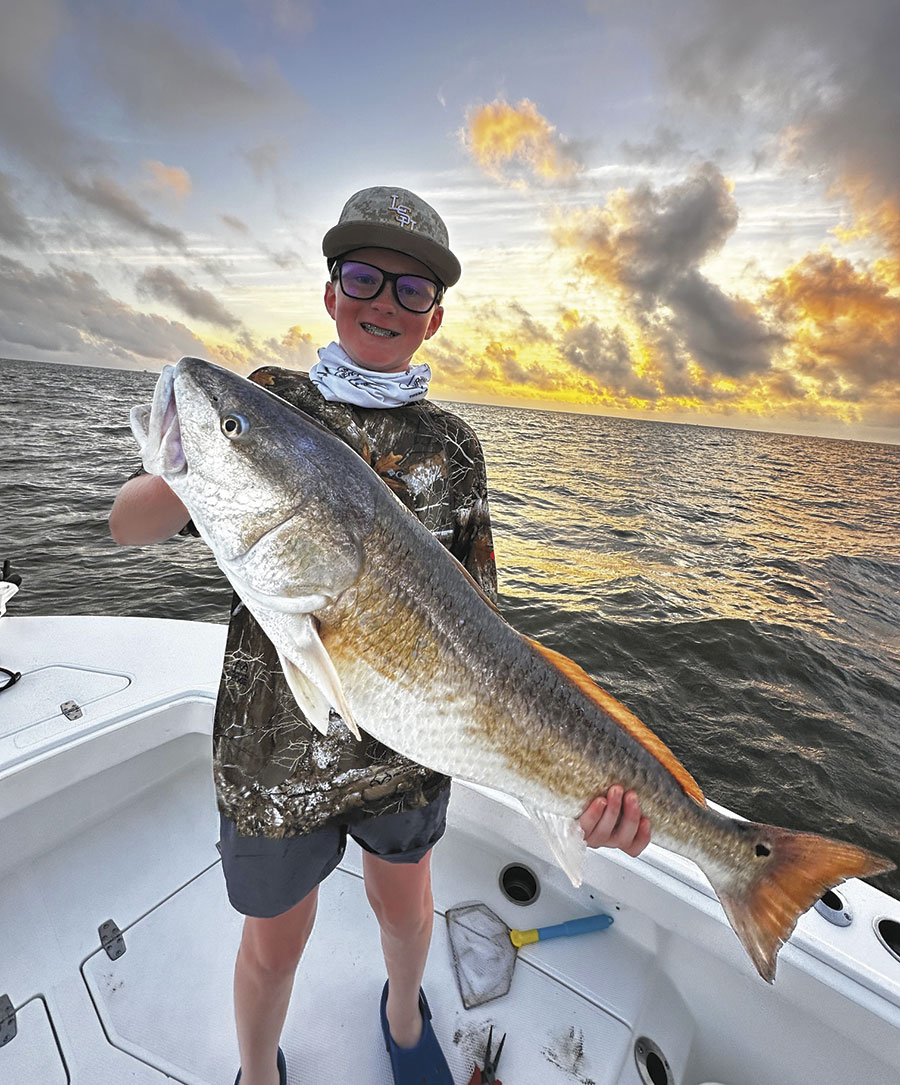
Moreover, some schools cover acres of water with perhaps thousands of fish all hunting the same prey. That redfish or another could strike again. Frequently, several other redfish follow a hooked fish trying to steal the morsel from its mouth. If another angler reacts quickly enough with good lure placement, that’s almost a guaranteed vicious strike.
Deeper fishing
In deeper waters just offshore or in deeper bays, throw sinking lures. Old favorites like gold spoons work. Crankbaits, suspending or slow-sinking jerkbaits in mullet, pogie or croaker colors interest big reds hovering under the surface. Lipless crankbaits entice rampaging reds in a frenzy.
Spinnerbaits can work through the entire water column. Buzz them across the surface or wake them just beneath it. In deeper water, try a “helicopter” retrieve. Pause the retrieve so the bait sinks. As the lure descends, the blades continue flickering and giving off flash. Most saltwater anglers throw spinners with gold or silver Colorado blades. Nearly round, these blades displace the most water and give off thumping vibrations like crabs swimming.
Live bait
Of course, old-school standbys like live or fresh bait work. Bull reds can’t resist a wriggling pogie, finger mullet or croaker. Fish these under a cork or on a free line. For deeper fishing, sweeten a Carolina rig with a live baitfish. Use only as much weight as necessary to keep the squirming bait on the bottom.
Bull reds also slurp fish chunks or strips. To make a fish strip, fillet off a side of a baitfish. Leave the scales and ribcage intact. Run the hook twice through the ribcage for better support. As the strip undulates in the tide, it resembles a swimming fish.
“We catch a lot of big bull reds by the jetties,” Hanchey said. “We’ll catch ladyfish and cut them up for bait. Redfish love them! We fish them on a Carolina rig with a ½-ounce egg weight, a bead and a 5/0 kahle hook. For redfish, I like an outgoing tide.”
Bull reds can’t resist a crab. Use a whole blue crab, but crack the top shell so savory juices ooze out. Anglers can also break crabs in half to make two baits. Remove one of the legs from a half. Run a hook through the meaty part and out the leg hole. Fish a crab with a 7/0 circle hook on a Carolina rig.
When waters churn red as the temperature begins to cool in the fall, hit the passes for hot action, and that’s no bull. Correction, it might mean a boatload of bulls!