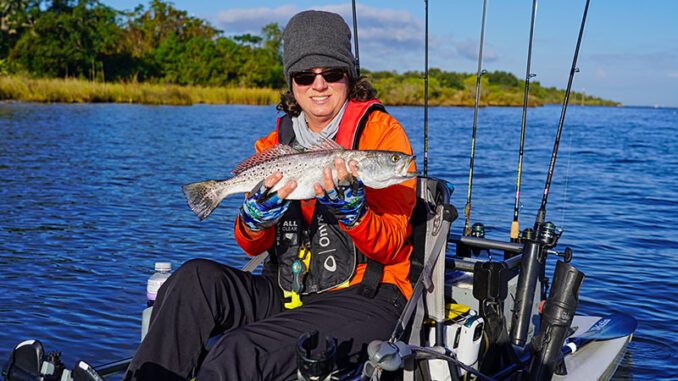
Fall is here. The days are getting shorter and daylight savings time will soon end. There is no better time to be a kayak angler chasing speckled trout in coastal Louisiana. The transition is on and hungry schools of trout are continuing their move from the outer reaches of the coast into the marshes. Marked by milder days and shorter paddles, limits of trout are easy this time of year for the plastic boat armada.
The new trout size and creel regulations have been in effect for just under three years. The jury is still out on what results they have had, but it appears many of those 12-inch throwbacks have now surpassed the new 13-inch minimum length regulation.
While trout caught this month are generally smaller, they are concentrated and easier to catch, and there are always those bigger ones mixed in.
Kicked off by lower water temperatures and less daylight, the trout concentrate in areas of the marsh where they may have been scarce during the summer. The marshes are now also filled with shrimp, menhaden, cocahoes, mullet and a variety of other bait fish.
Live shrimp remain available until later in winter when severe cold fronts finally empty them from the marsh. Once they are gone, the only viable live bait option becomes cocahoes. However, the good news is that both hard and soft plastic lures work well during the fall and live bait is not a necessity. Trout are active and hungry and can easily be caught using a wide variety of artificial lures and techniques. While artificial baits work well, scented soft plastic baits, like Gulp, help fill the gap between the live bait and regular plastic lures.
Expect subtle bites
While certainly aggressive fish can be found, the fish generally hold a bit deeper and the bites can be subtle due to lowering water temps. While popping corks instantly show a bite, tight-lining techniques take a little more finesse. Watching your line, especially fishing the bottom, shows minor changes that can signal a bite. A sudden twitch or line movement may visually signal a strike that would otherwise go unnoticed. When in doubt, set the hook and you may be pleasantly surprised.
Many of the areas are shallow marsh and using a stake-out pole (Cajun anchor) allows you to quietly position the kayak without spooking the fish. Always be on the lookout for signs of feeding fish, like disturbed water, slicks and even feeding birds. A jumping shrimp is a sure sign of fish feeding nearby. Set up and work the area 360 degrees around the kayak before moving on.
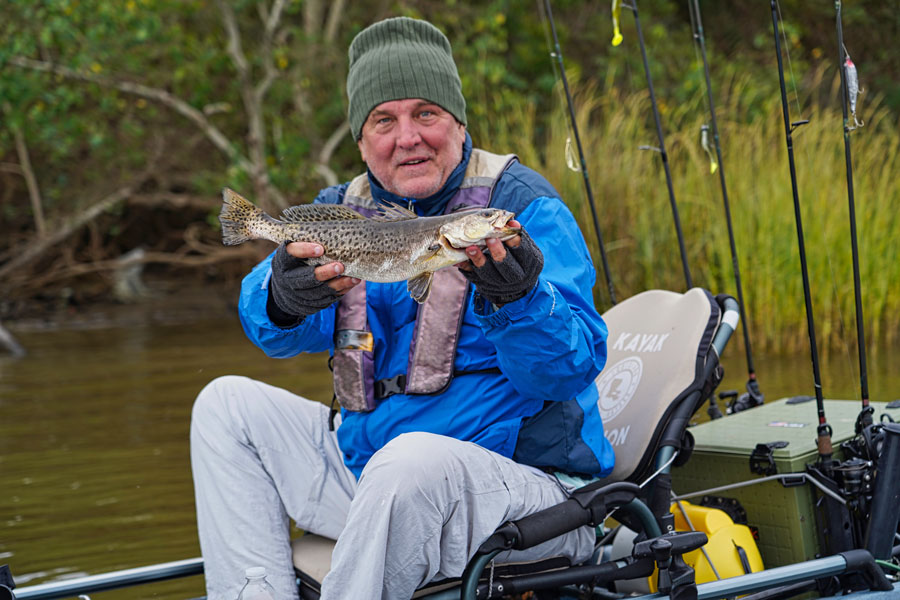
While speckled trout may be your targeted species, many others will be available in the same area, using the same techniques and baits. Redfish, white trout and flounder are all readily available. Many brackish areas have also seen an increasing availability of freshwater catfish to add to your bag.
There is always that urge to cover ground and head deeper into the marsh. However, many times you do not have to go far from your launch spot to find fish. Since they are generally more concentrated, fish your way along as you head towards your intended destination to avoid passing up fish.
Finding what works
A soft plastic tail under a popping cork is a great way to locate fish. You can cast in all directions as you move along. Once you locate fish, try a variety of baits and methods. Having a couple rods rigged with a variety of baits allows you to impart different techniques and fish different levels of the water to see what works best.
Depending on the particular day’s conditions, trout can be caught trolling, tight-lining, popping corks — and, yes, even on topwater. It is not unusual for all of these methods to be successful on the same trip. Subsurface hard baits like MirrOdine are also deadly on hungry fall trout.
Trolling is a highly effective but often overlooked method for catching fall speckled trout. Dedicated trolling with one or two lines out works well. Establish a grid pattern to cover specific areas. When a fish is caught, it is easy to repeat a pass in the same area. Also, when moving from spot to spot, always have a lure trolling in the water. When a fish is caught, quietly set up in the general area and see if you can repeat the action.
Another factor that makes fall kayak fishing so great is the predictability of the weather. The pop-up thunderstorms of summer are long gone. Cool fronts are more accurately forecasted and easy to avoid. Stay away from strong frontal systems. Pick the good weather days and you can have a safe and pleasant trip on the water.
This is the time of year kayak anglers dream of: mild weather, short paddles and limits of hungry trout make for a great day on the water.