We anchored where a river flowed into an estuary. Dropping dead shrimp to the bottom near some old pilings in 15 feet of water, my friend’s line sizzled as if it snagged a submarine, stripping 14-pound monofilament off the screaming reel.
Fearing the fish would spool his reel or break the line, I lifted anchor while he battled the beast. The fish pulled the very heavy 18-foot boat around for more than 45 minutes before we could land the 50-pound leviathan.
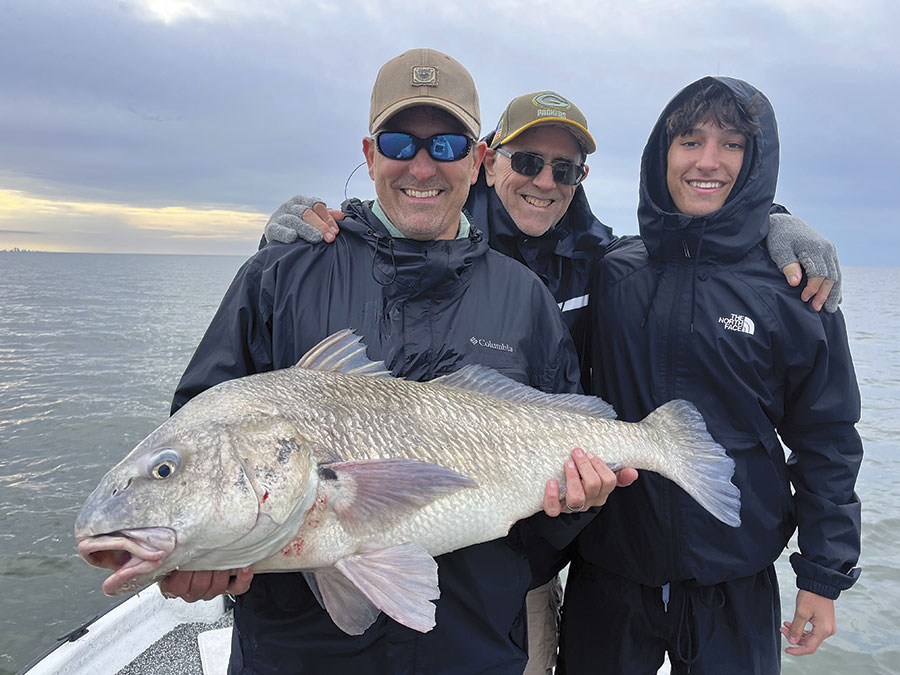
Most Louisiana anglers probably catch more black drum by accident while fishing for redfish, speckled trout or something else, but these big ugly fish with chin barbels can provide big-game action for little cost. Regularly ignored or even maligned by many anglers, these pugilistic powerhouses can challenge even the toughest tackle and strongest anglers.
“Black drum are generally a secondary target, if not an afterthought, for many anglers, but a big drum can create incredible sport,” said Jason Adriance, the Louisiana Department of Wildlife and Fisheries marine finfish program manager. “They can live up to about 60 years old, grow big and give people a great fight.”
Powerful bruisers
Not everybody can afford to buy a big boat or hire a charter captain for an offshore adventure, but anglers don’t need to run miles offshore to catch humongous fish. When it comes to inshore sport fish, nothing outweighs a drum. The largest member of the drum family can exceed 100 pounds. The Louisiana state record stands at 79.50 pounds.
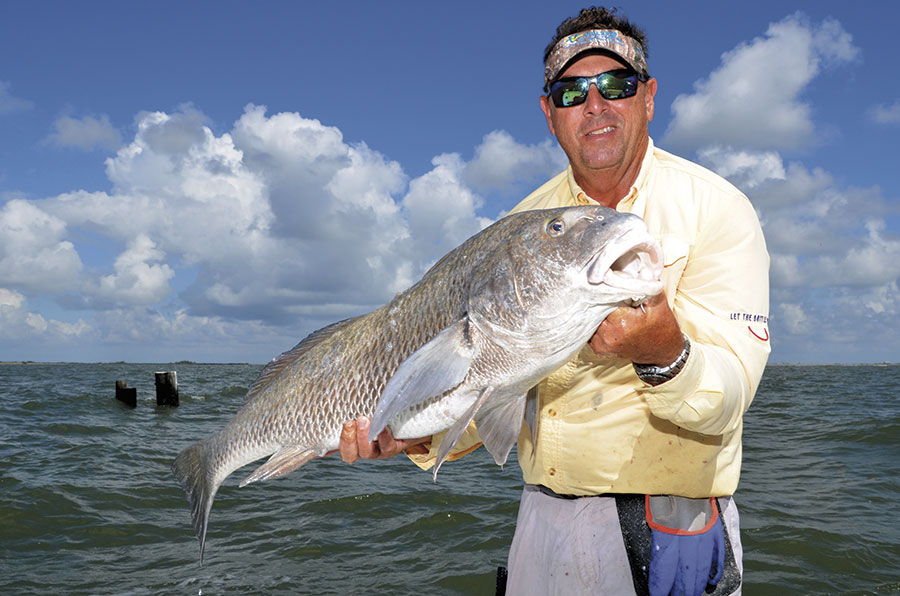
“My first personal best was a 30-pound black drum when I was 6 years old,” said Mackie Bellott with Wicked Fishing Charters (985-710-2882, www.wickedfishinglouisiana.com) in Mandeville who fishes the Lake Pontchartrain Basin. “I caught him on 15-pound monofilament while fishing by the Lake Pontchartrain train trestle with a dead shrimp on a jighead.”
Many people disparage drum because they want to catch redfish or trout and consider drum a nuisance, but trophy drum can generate a fantastic adventure, especially for youngsters or novice anglers. Abundant, huge and powerful, they give any youngster who battles one quite a memory.
“Many people come from all over the country to fish for big drum,” said Tommy Pellegrin with Custom Charters (985-851-3304) in Cocodrie. “When we have a kid on the boat who has never caught many fish before, we try to hook into a big one. Many people have never caught a fish that big before. That kid will talk about that big fish forever.”
Drum like hard structures, such as bridge pilings, docks, sunken boats and jetties. Gas wells and nearshore petroleum platforms can hold mighty bruisers. Even anglers without boats frequently catch massive fish off beaches, seawalls, docks and public piers.
Opportunistic feeders
Often, anglers spot enormous drum swimming around cleaning stations. When cleaning fish, anglers toss heads, backbones, scraps and entrails into the water. That attracts crabs, shrimp and small fish. Drum cruise through looking to gobble the scraps, crabs or shrimp.
Bait doesn’t need to break the bank either. Drum sometimes hit spoons, spinnerbaits and other lures. Bass anglers fishing tidal marshes might catch drum on jigs tipped with soft-plastic craw trailers that mimic crabs. Some fly fishermen sight-fish for drum and tempt them with flies that mimic shrimp or crabs, but the bottom-feeding behemoths prefer natural baits. They occasionally eat squid, fish chunks or live baitfish but favor crabs, shrimp, oysters, clams and other crustaceans or mollusks.
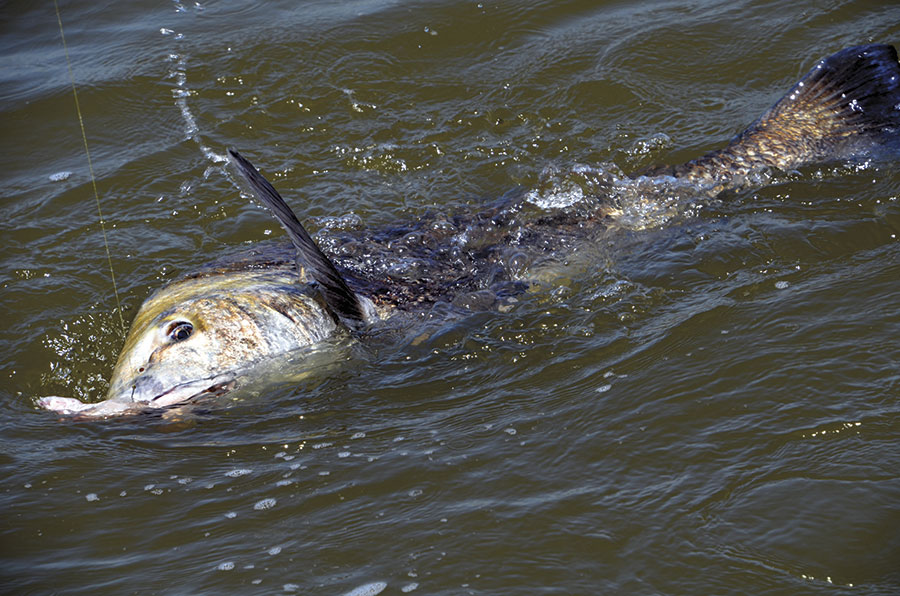
“Drum are opportunistic feeders, but they mostly eat live or dead natural baits,” Adriance said. “Drum have well developed crushing teeth and hard palates to crush oysters and other shellfish or crustaceans.”
Anglers can catch drum in any brackish to salty Louisiana waters. Like redfish, they even enter tidal rivers, giving anglers in small boats opportunities to catch monster fish. Rocky jetties regularly hold colossal drum. Crabs crawl over the rocks. Shrimp and small baitfish hide in the crevices. Oyster reefs also make great places to catch drum.
“Drum are an underappreciated species,” said Tom Adams with Fishing Tom Guide Service (318-675-9114, FishingTom.Net) in the Lake Charles area. “We catch many big drum around the Calcasieu Pass jetties. The biggest drum like the deeper water near the jetty tips. Drum hold tight to the rocks.”
Deep bayous
As water cools in the fall, shrimp leave the marshes and head to the Gulf to spawn and spend the winter. Crabs also become scarce in the bays and estuaries. Cooling water sends large drum into deep holes. Tidal currents scour out deep holes around the bends in marshy bayous and coastal rivers. In the fall and winter, drum also drop into ship channels and canals.
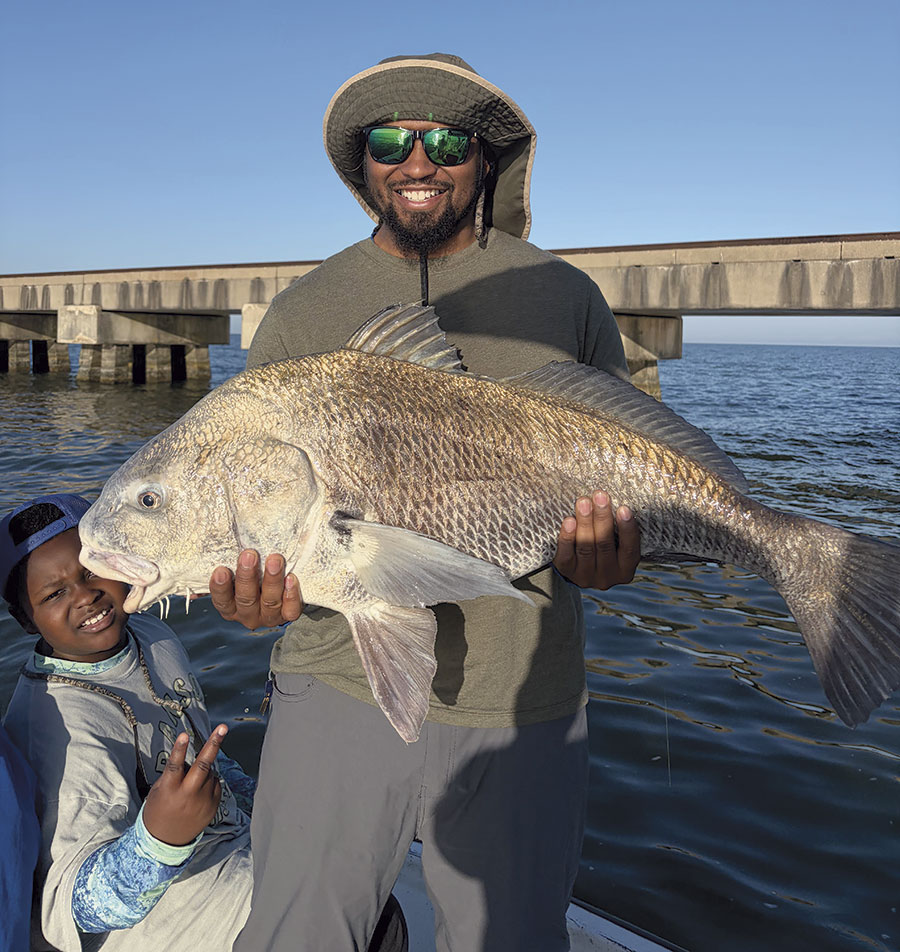
“November is a great time to catch drum in the deep bayous,” Pellegrin said. “We get some in the 30- to 60-pound range, but most weigh 15 to 20 pounds. When drum want to feed, they come up onto the flats to feast upon crabs and shrimp. We put the bait where the shelf comes up and flattens out next to holes 6 to 15 feet deep. In a good spot, we can keep catching drum until we get tired.”
In deeper water, just a fresh shrimp on the bottom works. Shrimp normally entice smaller drum, but sportsmen can catch tidal titans on small baits.
“I catch most of my drum off smaller baits, especially shrimp,” Bellott said. “We hook some on Fish Bites. If I specifically wanted to catch big drum, I’d hit some areas with shell pads. I would use heavier tackle and half a blue crab for bait. If I didn’t have any crabs, I’d use cut bait fished on a Carolina rig with 40- to 50-pound braid, a heavy monofilament or wire leader and a 5/0 kahle hook.”
Cracked crab is hard to beat
Drum might eat anything, but the barbeled beasts can’t resist succulent blue crabs. When fishing for giants in the Gulf or the passes, use a whole crab. Leave the top shell attached, but crack it so irresistible juices exude from it.
For more bites, use a crab half. Insert a circle hook into the soft joint where the rounded paddle or swimmer fin connects to the body and push the point out a leg hole. Drum might also gulp small live crabs.
“It’s hard to beat a cracked crab for catching huge drum, except with a soft-shelled crab,” Pellegrin said. “We’ll get faster action on half a crab than a whole crab. During the summer, we keep the top shell on and cut the crab in half. By November, we won’t have as many little nibblers eating all the meat out the shell, so we take the top shell off and fish it like that.”
Toss the temptation to a likely spot and place the rod in a holder. Catching huge drum requires patience. Smaller fish might pick at the meat, but anglers will know when a mammoth creature gulps down a bait.
Don’t set the hook immediately. Drum commonly “mouth” a bait to taste it before swallowing. Wait until the fish moves off with it before setting the hook. When fishing with circle hooks, simply begin reeling after feeling the fish on the line. A circle hook allows anglers to release trophy drum more easily, even with the fish still in the water.
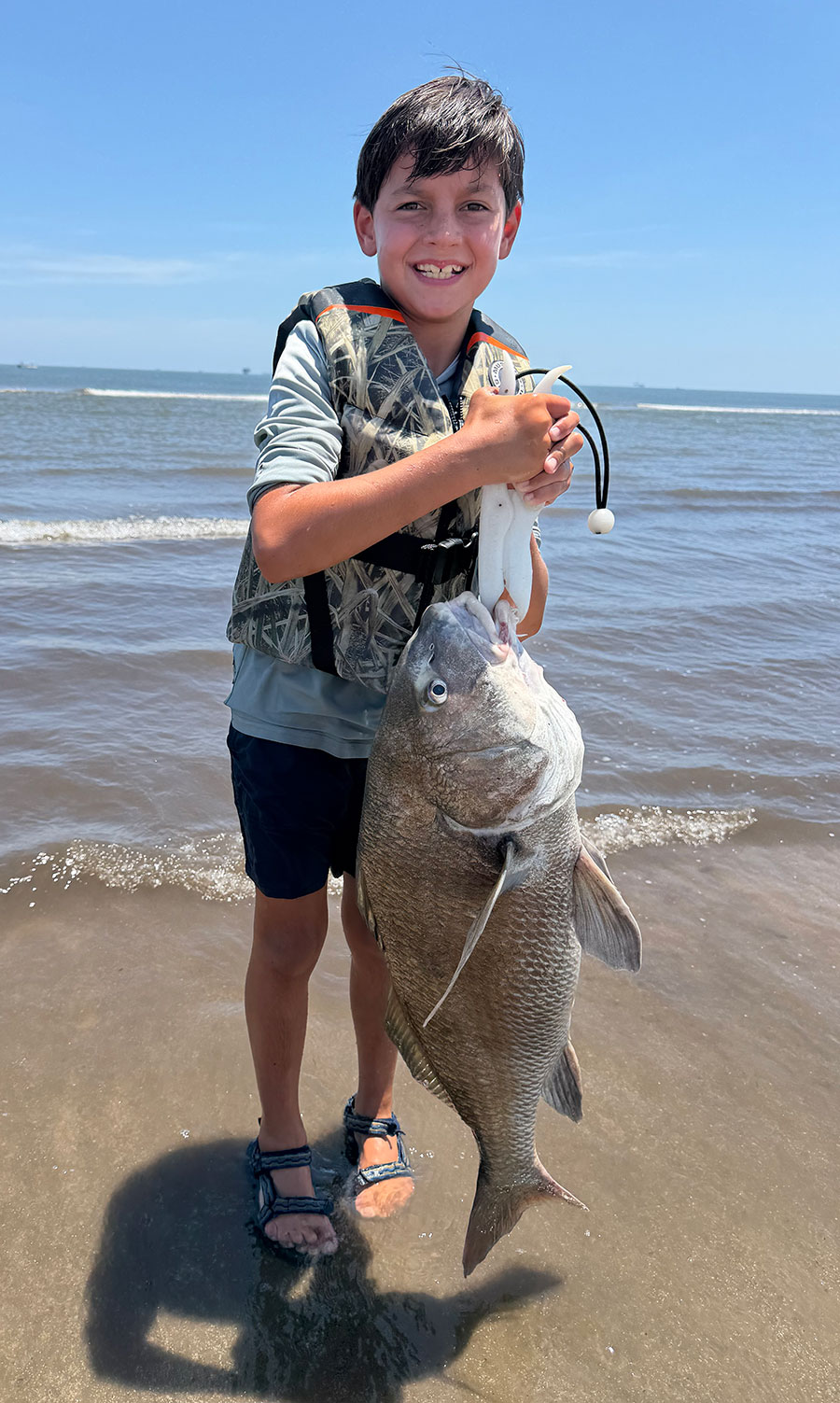
“When fishing with crabs, I use a Carolina rig with 1.5-ounce sinker, 2 feet of 60-pound leader and a 7/0 circle hook,” Pellegrin said. “I bait it with a cut crab half hooked through the paddle fin muscle. I usually don’t fish with live crabs, but I make sure the crab is alive when I cut it in half. Dead crabs turn mushy. The meat falls out and all the little critters eat it.”
If fishing a spot with mostly smaller drum, cut crabs into quarters. Smaller drum might pick at a crab half but not take it into its mouth as easily as it could a quarter. Fish might nibble at the bait and pull on the line, but when the angler sets the hook, nothing happens.
Crab pieces also make excellent chum. When cutting a crab in halves or quarters, toss the claws, legs, top shell and other pieces over the side. Leave the paddle fin intact. Some people put several crabs into a chum bag and smash them. Hang the chum bag over the side so enticing juices and small meat pieces ooze out.
Small drum make great table fare
Many people consider smaller black drum better tasting than redfish. People can fry them or prepare them “on the half shell.” Fillet off a side. Keep the scales intact and put the scales down on a hot grill. The heat causes the scales to coagulate. People can eat the meat right off the scales.
“Large drum tend to have parasitic tapeworms called spaghetti worms,” Adriance said. “They look ugly but are harmless to people.”
When it comes to stretching lines, a trophy drum can beat almost anything in inshore waters and rivals many offshore fish. Any tug on the line could result in the fish of a lifetime!