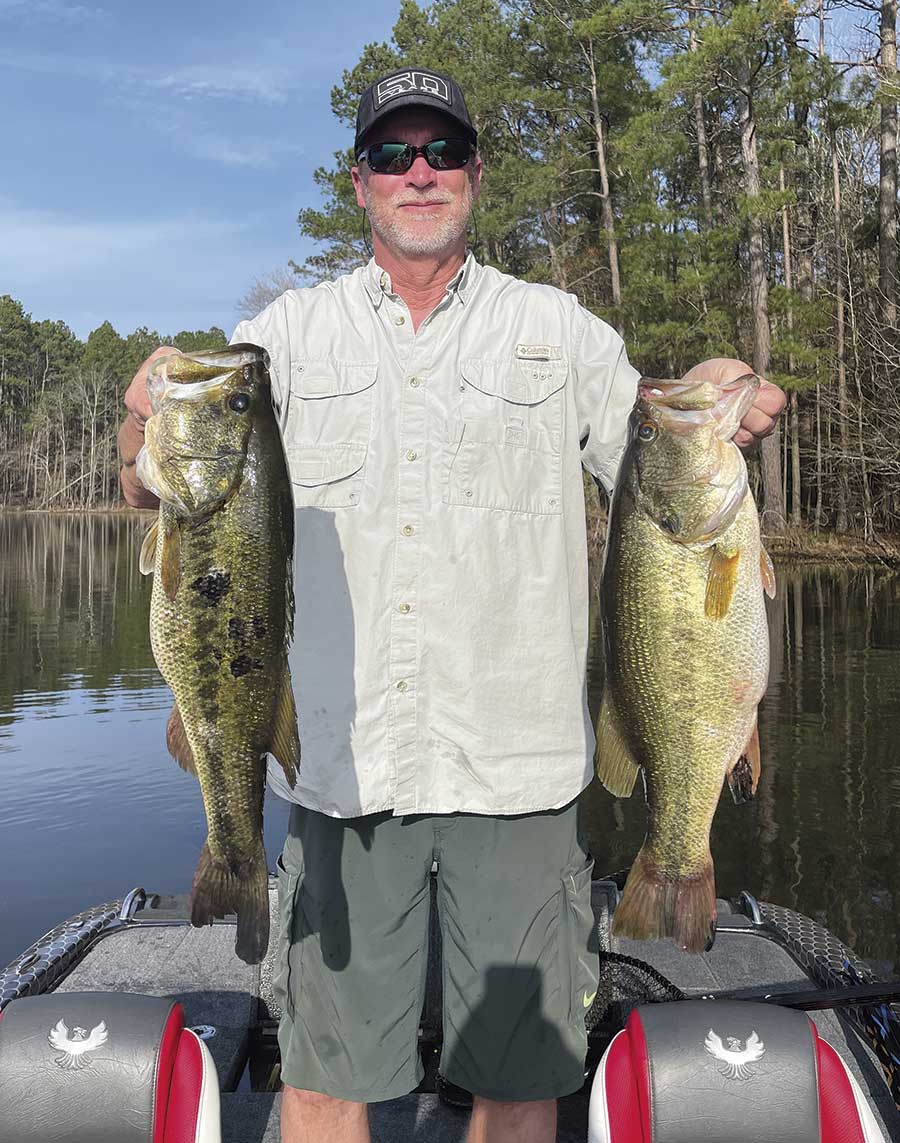
You’ll find largemouth bass following schools of shad in the lake’s creek arms
The equation for catching fall largemouth bass on Caney Lake is an easy one.
Shad = bass.
Find the shad, and you’ll find the bass, at least according to bass pro and guide Jake Ormond of Sterlington.
As October wanes and November approaches, Ormond has a simple approach to filling his livewell at Caney, a 5,000-acre lake in Jackson Parish between Chatham and Jonesboro.
“Bass are starting to go straight to shad,” Ormond said. “Everywhere a shad can be found, the (bass) will be found.”
And that can make for some excellent fall fishing on a lake known to produce some of the Sportsman’s Paradise’s biggest bass, the prime example being Greg Wiggins’ 15.97-pound state record caught in 1994 — and four other fish among the 10 biggest ever caught in Louisiana waters.
In October, Ormond said, “Bass will start pushing shad in the backs of the creeks, pushing them up against the grass and lily pads. There will be wolf packs of fish pushing them.
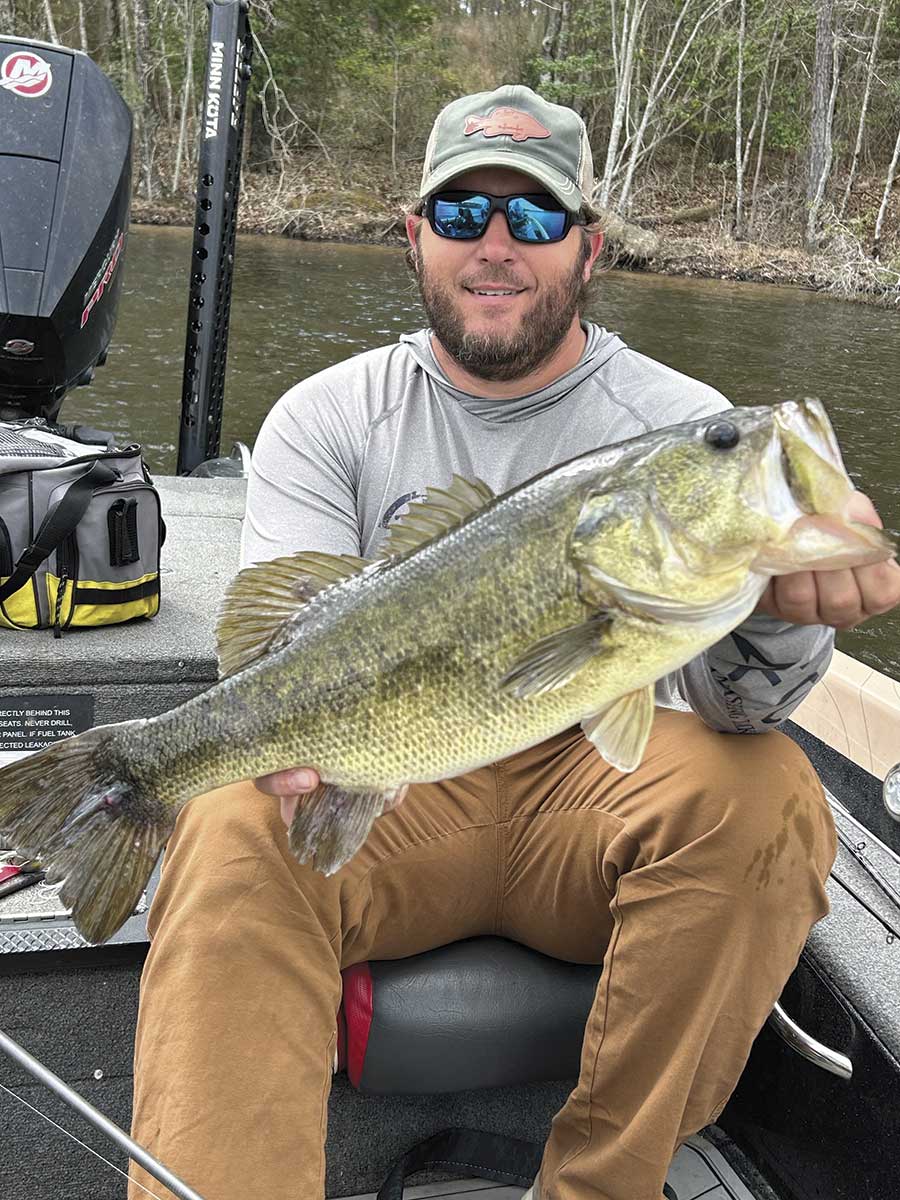
“I do a lot of forward-facing sonar, and I’ll look for schools of shad on side-imaging while I’m moving. There will be a lot of schooling fish, especially in the evenings. They really like to come up. I think they school better here than anywhere else.”
Plenty of small creeks
Caney isn’t a huge lake, and the creeks that feed it — except for Caney Creek, which was impounded in 1986 — aren’t particularly long, but there are plenty of them, most on the lake’s northern shoreline, and the shad and bass don’t seem to be too particular about where they spend the autumn months.
“A lot of fish will hang out at the mouth of Hancock Creek, in the mid-lake area, and when they go up the creeks, they will split up and go,” he said. “They will get in all the creeks. I have my favorites, but it’s not because of how many fish they hold; the main thing is the way the creeks fish.”
Boggy Creek and Clear Branch have more defined channels, according to Osmond. Boggy has plenty of grass in its back end, and Clear Branch has some grass and dollar pads, the smaller-sized lily pads that are natural bass magnets.
“They’ll push shad to the outside edges of pads or grass in Clear,” he said. “Cypress and Hancock have the same grass as Boggy.”
The best fishing will begin in October when temperatures begin to fall, really recognizing the change in seasons. It will last through November, often in December as far as Christmas, before lower water temperatures drive fish back into deeper water and toward the main lake.
Look for irregularities
The first parts of most of Ormond’s fall bass trips are really hunting trips — before he really starts devoting time to deer season. He hunts for the shad, either with his electronics or using his eyes to see the tell-tale movement of baitfish.
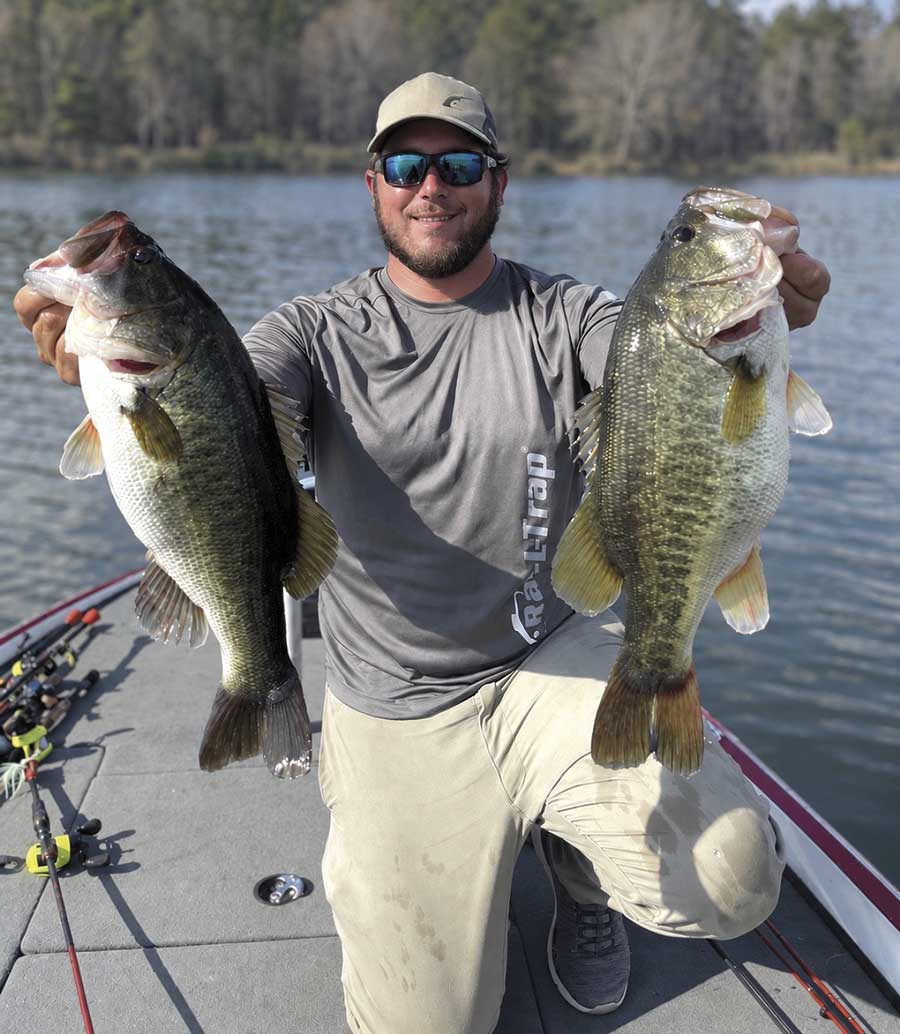
“I start out usually looking for them in the middle of the creek, then I’ll work my way to the back, and if I’m not doing anything, I’ll turn around and go back the other way,” he said. “With forward-facing sonar, you find them, and the bass are going to show up wherever the shad are.
“Fish can be scattered all the way up the creeks. Some stay close to the main lake, but that’s not really all that far from the back of the creek. You can catch them all the way up.”
When he finds a promising looking stretch of bank, whether it’s covered with pads or grass, Ormond is looking for anything out of the ordinary — those kinds of spots can really produce.
“I’m looking for any irregularity — little, tight clumps of pads or grass, holes, anything different. I look for pads that are moving, because fish may be swimming around them,” he said. “If you see schools of shad in front of the pads, the bass will be there. It can get harder when they get back in where it’s thick, because they’ll be hard to see with your electronics.
“You usually catch multiple fish from one spot — maybe a hole in the pads or grass, or a hard spot on the bottom. They may gather around that kind of place in numbers. I feel like the smaller schoolies will be outside, running the shad back in there, and the bigger fish are just sitting there, waiting for the little ones to bring them something to eat. Usually, you can catch five or six in a spot.”
How Jake Ormond chooses his baits at Caney
Jake Ormond is likely to have three or four different baits tied on when he’s fishing Caney in the fall: a spinnerbait, a Rat-L-Trap, a frog or a medium-running crankbait. When he uses them is dictated by where the fish are located and what the vegetation looks like.
“I will fish a Trap in a little deeper water, like the edges of hydrilla or eel grass, really, wherever I can set up and throw it,” he said. “I like a 1/2-ounce Trap in some kind of shad color. Some of the same places I throw a trap, I’ll throw a medium-diving MRS crankbait. I can get it down about 8 feet on 12-pound test.
“In places where you can’t throw a Trap, a spinnerbait or a Chatterbait will work. It’s really good when there’s a few inches of water above the grass; you can really burn a spinnerbait across the top.
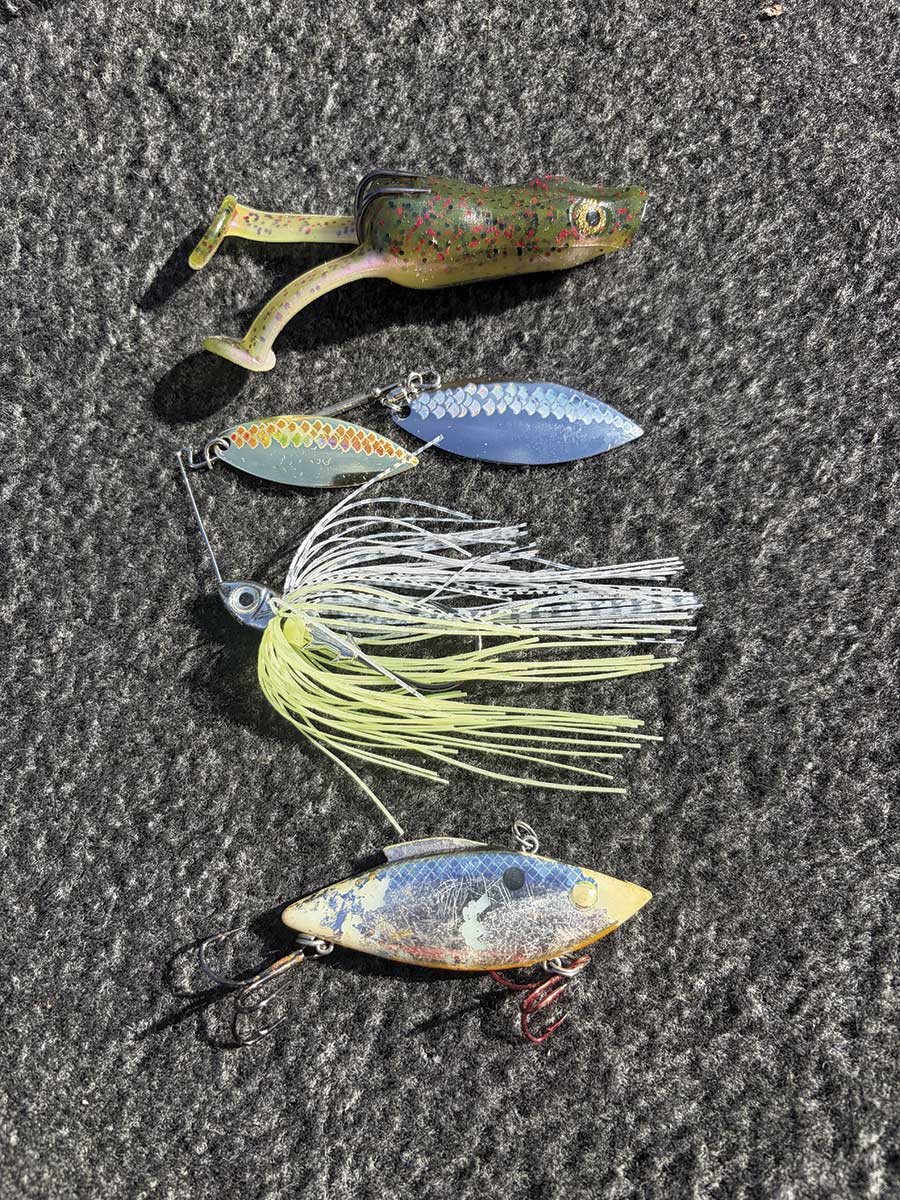 “I like to fish a 1/2-ounce Spot Remover spinnerbait with double willow-leaf blades — one gold and one silver. I really like sparkly, glittery skirts in chartreuse or white — any color that looks like shad.”
When he finds shad and bass back in the cover, he loves to throw a frog bait, either a Ribbit frog or a Ribbit Poppin’ Toad.
“I like to throw a frog bait a lot,” he said. “I like a Poppin’ Toad more than a walking frog. You can work it a little more, jump it up and down. You can walk ‘em, and you can pop ‘em and twitch ‘em back.”
Ormond fishes Traps and blades on a 7-foot-4, medium-heavy action KastKing baitcasting rod. For frogs in thicker cover, he goes to a 7-foot-3, heavy action KastKing.
One bait Ormond can’t wait to try out this month at Caney is an urchin-style bait, in his case, a Coike.
“I’m curious to see how they’ll bite a Coike,” he said. “It’s worked well all year for me; I don’t see why it won’t work in the fall. It’s such a reaction-type deal. I fish it like a jerkbait, twitching it along.”