Coastal Projects
The blame game
They say a picture is worth a thousand words or, in the case of New Orleans attorneys Gladstone Jones and Jim Swanson, untold damages that are well into the millions.[…]
They say a picture is worth a thousand words or, in the case of New Orleans attorneys Gladstone Jones and Jim Swanson, untold damages that are well into the millions.[…]
State officials heard concerns over fresh water diversions and future local development as the state presented its annual plan for coastal restoration for the 2014-15 fiscal year that starts July 1.[…]
Coyotes aren’t the first animals that come to mind when Louisianians think about species benefitting from coastal restoration. Nonetheless, South Lafourche Levee District President Windell Curole said the 40-plus-mile stretch of levee that runs from Larose to Golden Meadow and back is inundated with them.[…]
While the South Lafourche Levee District managed to orchestrate a marsh creation project for only $20,000 an acre, the reality of restoration work in Louisiana is that such undertakings are usually more expensive.[…]
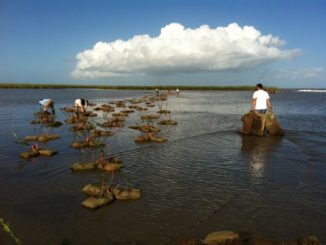
They arrived by barge to Raccoon Island, just south of Cocodrie, tall white sacks weighing in 2,000 pounds filled with what many of us might otherwise mistake for sandbags.[…]
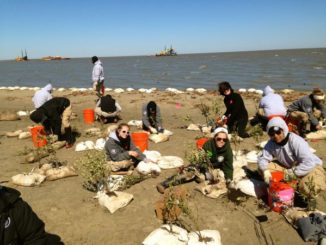
While most of Louisiana’s coastal nonprofits get involved with beach cleanups, plantings and the like, nearly all of them dedicate at least part of their mission to education.[…]
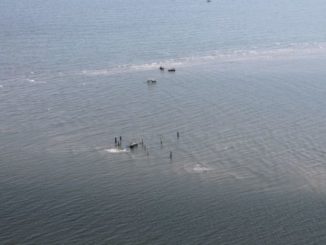
It’s a rather simple matter to underestimate the worth of Louisiana’s barrier islands. When the freshwater river flow slacks off a bit and shrimp are able inch closer to the coastline, barrier islands attract anglers and guides like moths to a flame.[…]
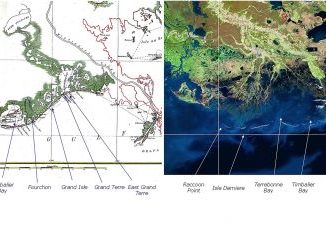
Louisiana’s Master Plan for coastal restoration, hurricane protection and flood control has a massive $50 billion budget that will be spread out over the next 50 years or so.[…]
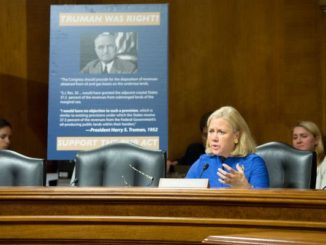
While all of the manpower and dirt-turning is located on Louisiana’s coastline and in the Gulf of Mexico, some might argue that the real grunt work of coastal restoration takes place some 1,200 miles away in Washington, D.C. — where the state expects to get the lion’s share of the $50 billion needed for its 50-year Master Plan that has been approved by the Louisiana Legislature and Coastal Protection and Restoration Authority.[…]
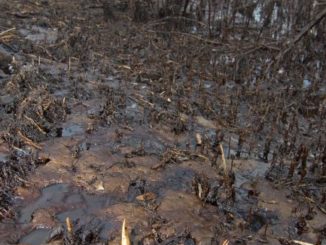
The level of cancer-causing pollutants left behind in Gulf waters by the BP oil spill was greater than reported by the federal government, according to a report issued this week by a group of independent scientists.[…]
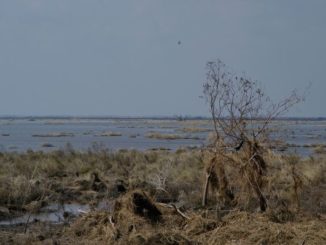
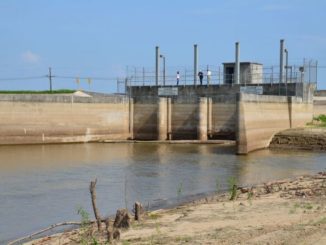
There’s widespread agreement that puncturing levees and diverting sediment-rich Mississippi River water into adjacent wetlands is key to saving the southeast Louisiana coast.[…]
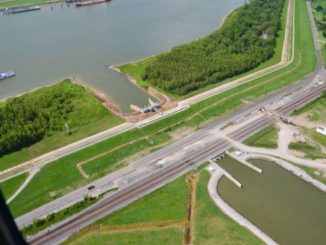
Louisiana’s planned and existing diversion projects continue to yield controversy, but they’re not a one-size-fits-all approach.[…]
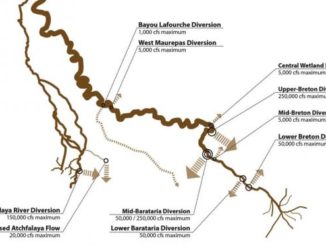
Over the course of the 50-year Master Plan, officials say the sediment diversion projects in the document could create up to 300 square miles of new marsh at a cost of $4.1 billion, using a mix of funding ranging from federal dollars to offshore energy royalties.[…]
The first loads of sand have arrived for the Caminada Headland beach restoration that will help fortify parts of Lafourche against storm surge, parish officials said Monday.[…]
According to Dr. E.L. Corthell, former president of the American Society of Civil Engineers, the breakdown of the Mississippi River Delta’s coastal wetlands is in part a debate of commercial use and flood control versus conservation. It’s about short-term benefits versus long-term benefits and finding a way to battle a rising sea and disappearing earth.[…]
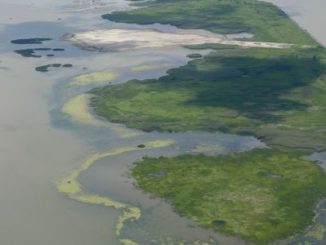
If there’s one underlying assumption that’s been used to justify the $50 billion cost of Louisiana’s Coastal Master Plan, it’s this: We actually have a chance to prevent Southeast Louisiana from drowning in the Gulf because the Mississippi River carries the mud and sand necessary to keep pace with sea-level rise.[…]