It’s December in Louisiana, and when it comes to the weather, that doesn’t tell us much. It can be 80 degrees one day and 50 the next. Fortunately for Capt. Jimmy Corley, he’s learned how to put speckled trout in the box through it all. But it’s those colder days that give him his best chance at catching what he refers to as the “big girls.”
Born and raised in St. Bernard Parish, Corley has operated Waterfowl Specialist Guide Service out of Shell Beach for more than 18 years. He’s spent enough time fishing the marshes around Shell Beach and Hopedale to know that colder weather calls for a change in approach.
“In my opinion, December is one of the most overlooked months for catching quality trout in southeast Louisiana,” he said.
Go deep in December
For Corley, the advantage of cold weather is that it helps narrow down where to look. Instead of chasing scattered trout across open bays, he concentrates on deeper channels and canals. If there’s a big barge pushing through it in December, there’s a good chance Corley’s fishing it.
That doesn’t mean every trout he catches in December is going to be a big one. But finding those areas gives him confidence that he’s putting his bait where quality fish are likely to be.
As the water cools, Corley pays close attention to bait and how the trout position themselves around it. A spot that offers deeper water and a steady supply of food gives those fish a place to feed without having to chase down every meal.
“One thing I’ve learned over the years is that big winter trout don’t always want to chase their food,” he said. “Sometimes you’ve got to put that bait right in front of their face and give them enough time to eat it.”
For Corley, one of his favorite places to do that is along the rocks in the Mississippi River Gulf Outlet (MRGO). He concentrates on water 12 to 18 feet deep, paying particular attention to the shelves and ledges formed where the rocks slope down into the channel.
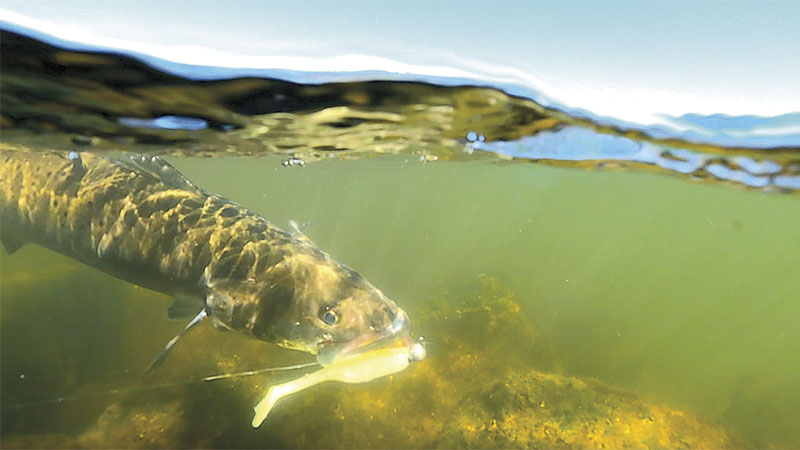
Those changes in depth give trout a place to hold near deeper water while waiting for bait to move through. Sometimes Corley finds them tight against the rocks. Other times, they’re farther out along the drop-off. Finding that combination of depth, structure and moving water is what gives him confidence in an area.
Keep it moving
While the rocks and ledges give Corley a place to start, he wants some tidal movement before getting too comfortable in a spot.
“I would rather fish an area with good moving water than sit on a great-looking spot with a completely dead tide,” he said.
Corley pays attention to both incoming and outgoing tides. The direction isn’t as important to him as having enough movement to carry shrimp and baitfish around the rocks and through the channel. Trout can hold near a break in the current and wait for food to come past.
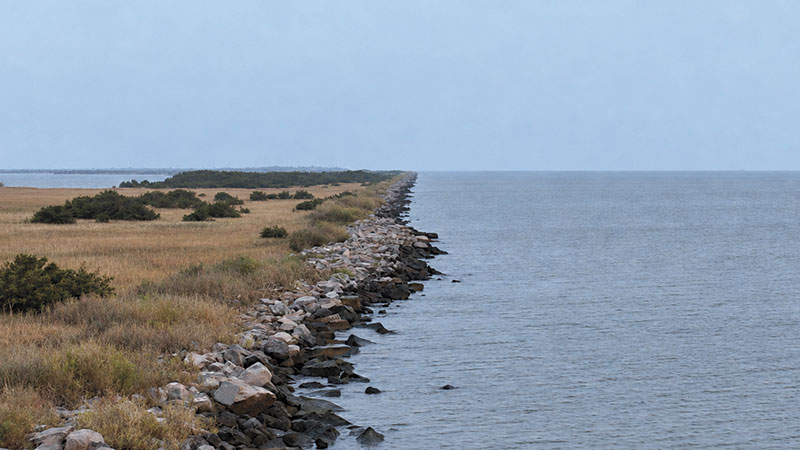
Along the MRGO, Corley pays particular attention to where the rocks meet the deeper bottom. Those transitions create feeding lanes, and he positions his boat so he can work his lure through them in 12 to 18 feet of water.
“You might be fishing the right location but bringing your bait through the wrong part of the current,” he said.
Sometimes a slight adjustment in boat position changes the path of the lure enough to make a difference. Corley wants his bait to stay near the bottom and move naturally with the current as he works it through the area where the trout are holding.
Corley’s technique
When fishing in December, Corley ties on a Matrix Shad in the shrimp creole color. He threads it on to a 3/8-ounce jighead.
“Sometimes I’ll go heavier if there is a strong current,” he said.
After making a cast, he lets the lure sink all the way down before starting his retrieve. From there, he gently lifts the rod tip just enough to give the bait some action, then allows it to settle again. He works it back slowly, keeping it close to the bottom.
“Sometimes I’m barely moving the bait,” he said.
That’s an adjustment for anglers who are used to aggressively popping their rod (the Pontchartrain Pop) and quickly working their plastic back to the boat. Corley is constantly reminding his clients to pay attention to where their bait is throughout the retrieve.
“If you’re fishing in 15 feet of water and your bait is swimming 5 feet below the surface, you could be passing right over fish that are holding near the bottom,” he said.
Corley also watches for clues in how the trout take the lure. Some strikes come as it falls back toward the bottom. Other fish pick it up when it’s barely moving. Once he figures out which presentation is producing bites, he sticks with it.
Those bites aren’t always easy to feel. While some trout hit hard, others give only a slight tap or make the line feel a little heavier. Taking his time with each cast helps Corley stay aware of what’s happening at the other end.
The setup
In December, Corley switches over to his Zook rod paired with a PENN reel. He spools it with 30-pound Power Pro Super Slick braid. When working a bait along the bottom in 12 to 18 feet of water, he likes the sensitivity that braid provides.
“Sometimes those fish absolutely hammer your lure, but other times you may only feel a slight tap or notice a little extra weight on the line,” he said.
Corley connects the braid to a fluorocarbon leader, which provides a less-visible connection to the lure and helps resist abrasion around the rocks.
On the business end, Corley favors a Matrix Shad in shrimp creole. He likes its natural appearance and the action of the paddle tail, even when he’s barely moving the bait. A 3/8-ounce jighead is his starting point, but he adjusts the weight as needed to maintain bottom contact. For Corley, having confidence in that combination allows him to concentrate on how he’s fishing it.
“You don’t need to constantly change colors and baits if you’ve got something that’s producing,” he said.
A winter heavyweight
While Corley has caught tons of mules over the years, there is one particular catch that he will always remember. It was during a trip to the MRGO rocks.
He made a long cast towards the rocks with a Matrix Shad on a 3/8-ounce jighead and waited until he felt it hit the bottom. Then he began softly bumping the bait down the ledge, working it back at a slow pace. Corley felt a tap. The line tightened, and he set the hook. But this fish was different than the ones he caught previously.
“That fish had some weight to it, and I knew it wasn’t your average speckled trout,” he said.
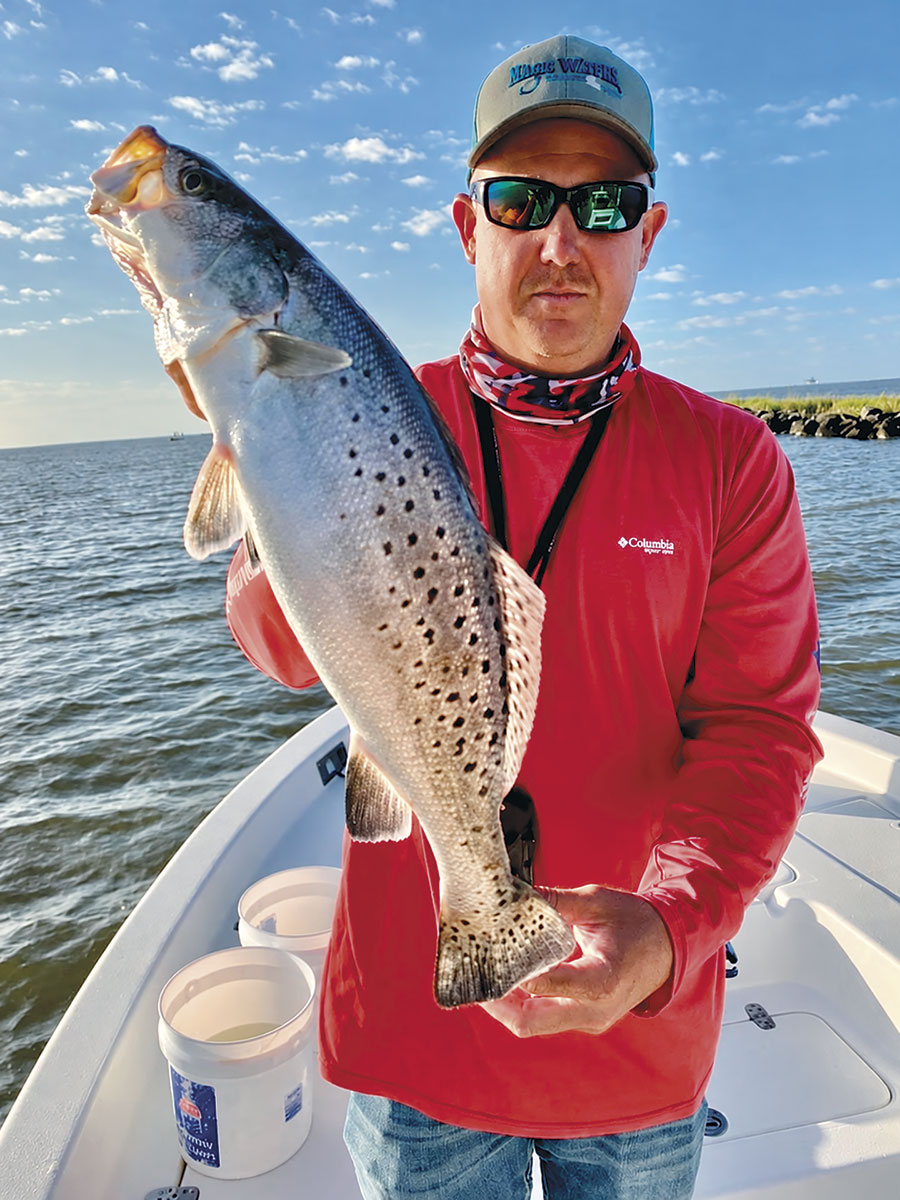
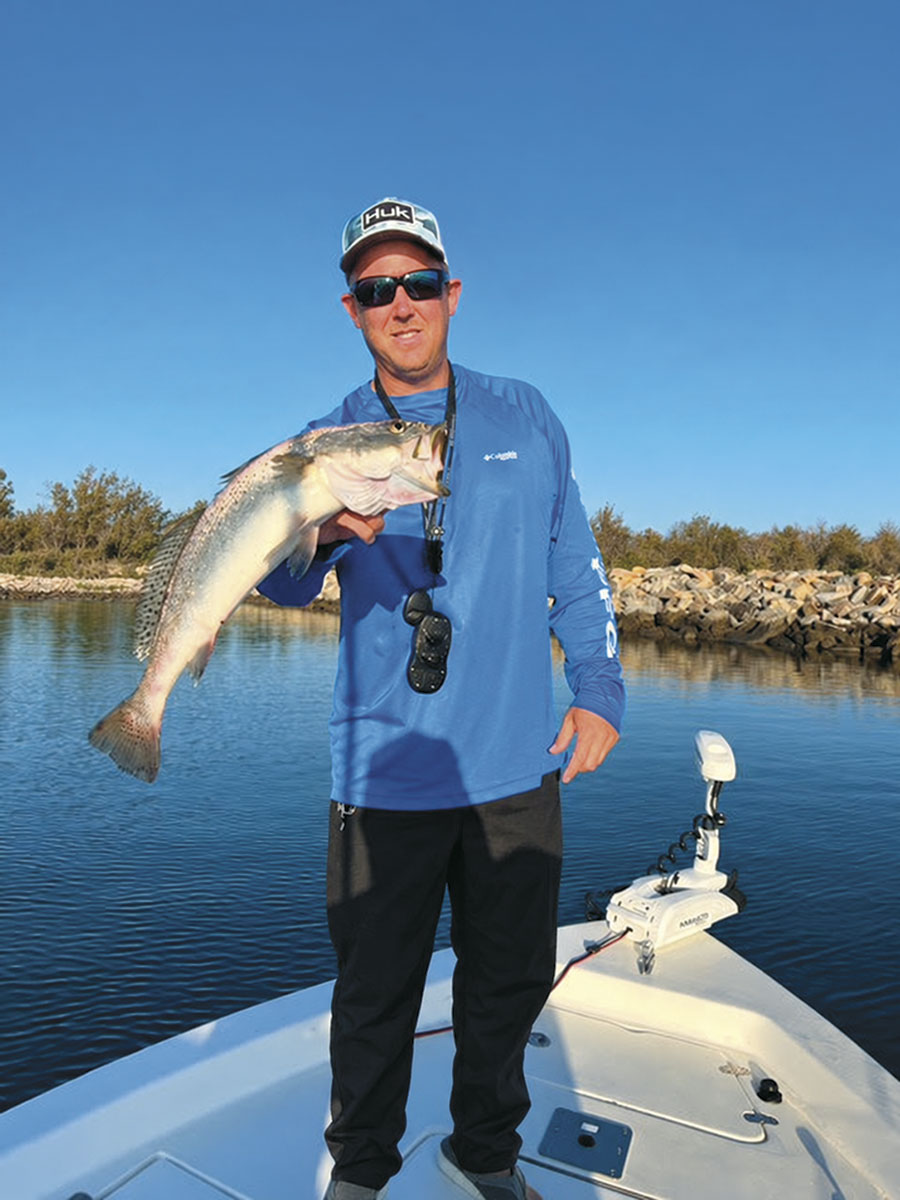
Corley kept steady pressure on the fish and patiently worked it to the boat. When he finally brought it aboard, the trout weighed a little over 6 pounds. After admiring the trout, Corley had no intention of adding it to the ice chest.
“I’ve always believed in letting the big girls go,” he said.
Corley carefully released the fish, hoping it would survive to spawn again. For the longtime southeast Louisiana fisherman, the chance to catch a trout like that was enough.
“I don’t keep trout that big,” he said.
As the cold fronts continue to roll in, Corley said there are plenty more opportunities for anglers to catch the trout of a lifetime. December is just the start, with January and February offering even more cold-weather opportunities. If you’re willing to get out there and take your time working a bait, your next trip could end with a “big girl” on the other end of the line.