LDWF biologists give public land hunters their outlook for the upcoming season
As stewards of 1.6-million-plus acres of wildlife management area nestled within the Sportsman’s Paradise, Louisiana Department of Wildlife and Fisheries (LDWF) biologists and staffers dedicate their efforts to conserve habitat and wildlife populations for current and future outdoorsmen and outdoorswomen.
They manage 53 WMAs west to east from Lake Charles to Hammond and south to north from the Atchafalaya Delta WMA near Morgan City to Bodcau WMA near Benton. Naturally, the spotlight shines brightest on those public lands during the hunting seasons for deer, waterfowl, small game and turkey.
 Men and women who work as biologist managers, biologist supervisors and specialists for the state agency also take time during the summer to compile reports for Louisiana Sportsman on the condition and hunting outlook for WMAs across the state.
Coastal Lafayette Region
Natural browse and small manmade food plots in open areas are deer favorites that, along with other habitat improvements by LDWF staffers, will carry the deer herd into the 2026-27 season on the Atchafalaya Delta WMA.
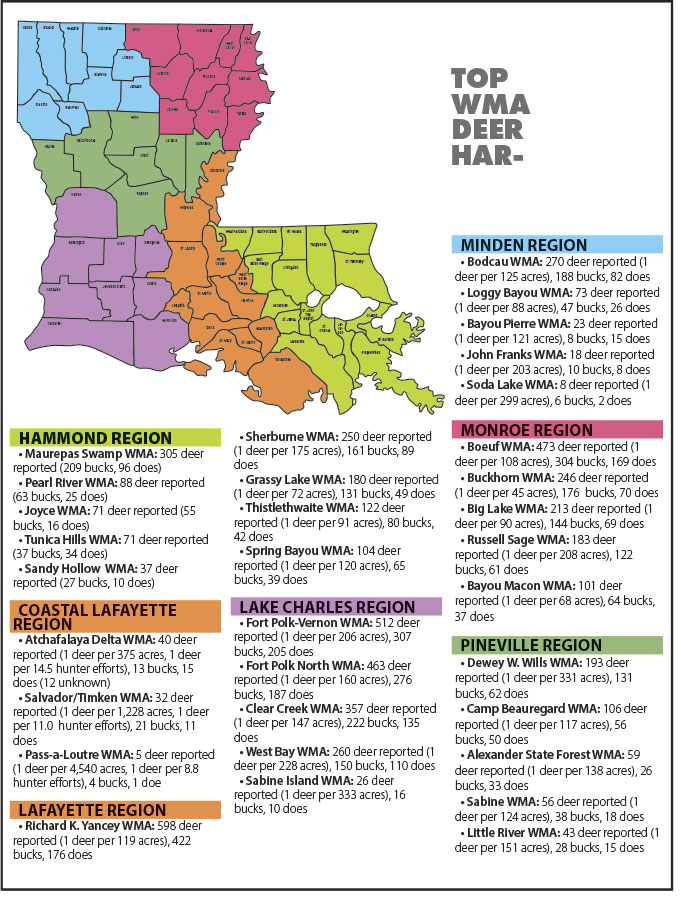
Hopefully, Mother Nature and those efforts lessen the sting of losing deer to Epizootic Hemorrhagic Disease (EHD). According to Coastal Lafayette Region biologist manager Tyson Crouch, the 2025-26 deer harvest on the Atchafalaya Delta WMA was lower than the previous season. Deer hunters harvested 40 deer in 2025-26 compared to 50 in 2024-25.
 “I’m hoping it will be an improvement from last year, especially at the Delta. St. Mary Parish was hit particularly hard,” Crouch said. “It’s not going to have a lasting effect on the population and deer that survived the infection are immune now.”
Cameras monitoring the public land this summer showed “a lot of fawns, a lot of deer,” plus positive recruitment, he said.
LDWF staffers’ mechanical work created openings and soil disturbances, which along with prescribed burns started growth of more desirable plants and forbs and knocked back the blackberry briars to stimulate growth, Crouch said.
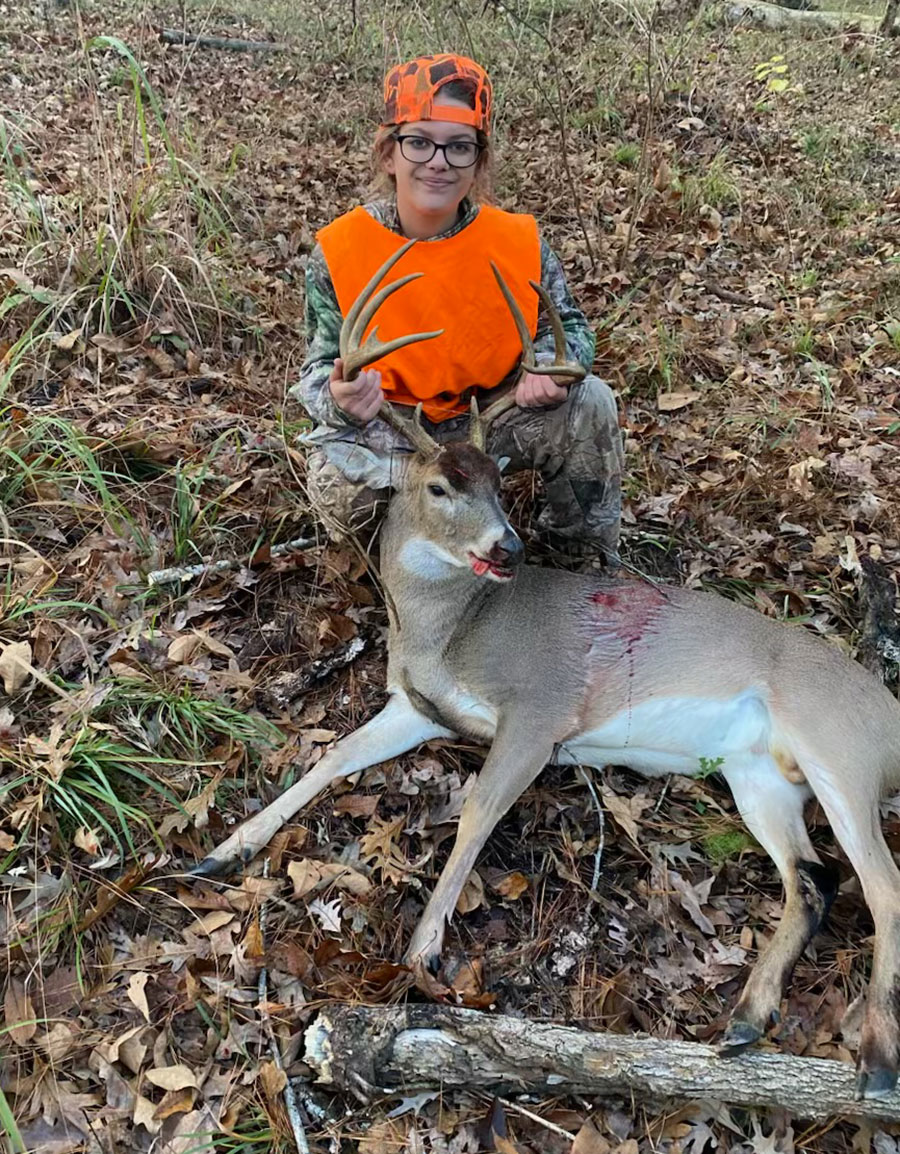
Salvador WMA’s deer harvest increased from 18 deer in 2024-25 to 32 deer in 2025-26.
“Salvador/Timken WMA had large acreages burned during the previous winter and early 2025 that may have contributed to better hunter success this past season,” Crouch said. “Otherwise, little had changed regarding habitat conditions.”
While deer hunting opportunities exist at two other Coastal Lafayette WMAs, the harvests are minimal. Pass-a-Loutre WMA had five deer harvested last season but boasted the highest hunter effort per deer at 8.8.
“Heading into the 2026-27 season, we expect similar or better habitat conditions provided we don’t experience any major tropical event,” Crouch said. “Even though there have been a few more reported cases of EHD, hopefully the habitat improvements on Atchafalaya Delta WMA will facilitate any potential recovery in numbers.”
Hammond Region
According to Forest Burks, some of the most successful deer hunting on a WMA in the Hammond Region could be attributed to less pressure because a majority of the Maurepas Swamp WMA is difficult to access.
The Hammond Region’s WMA biologist supervisor pointed that out in his annual report for Louisiana Sportsman, as he referenced the 305 deer harvested on the Maurepas Swamp WMA in 2025-26. Burks wrote that “deer on the WMA do not receive as much pressure as they would on smaller, more accessible WMAs.”
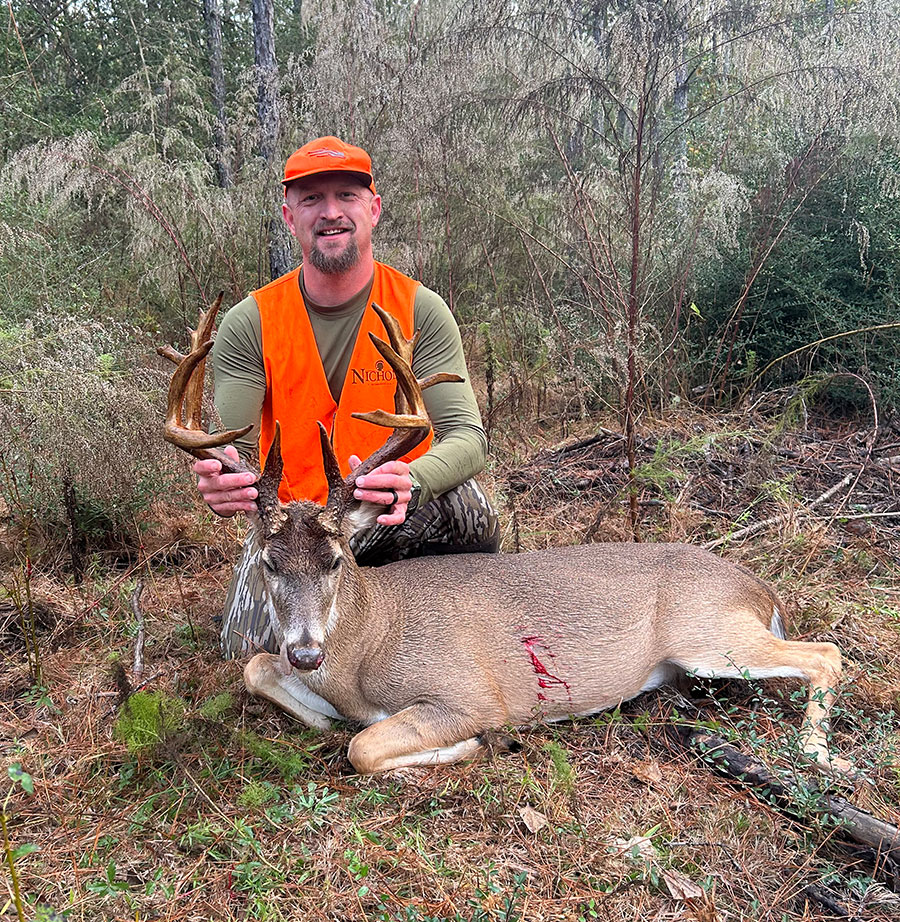
Last season’s harvest there was higher than it was in 2024-25, when deer hunters took 287 deer. That reflects a deer herd recovery following extensive hurricane damage a few years ago that resulted in the restriction of antlerless harvest to the youth weekend and archery-only during the 2021-22 and 2022-23 seasons, Burks reported.
Maurepas Swamp, Joyce and Pearl River remain the top three WMAs in the southeast area of the state. Maurepas Swamp WMA and Joyce WMA are the largest areas, with 112,615 and 42,292 acres, respectively, and both offer multiple access points. Browse can be found along spoil banks and natural ridges in the swamps.
The 35,618-acre Pearl River WMA’s upper third is bottomland hardwoods, while the middle third is swamp that also harbors deer. In his report, Burks noted Pearl River had the region’s second-highest harvest with 88 deer in 2025-26, an increase from the previous season’s 65. However, he noted, mast surveys in fall 2025 indicated a below-average amount of acorns available for deer.
Burks reported Joyce WMA’s 2025-26 deer harvest was 71 deer.
“Though the habitat is very similar to Maurepas Swamp, the deer harvest at Joyce WMA fell off a little from the 87 harvested in the previous year,” he said. “Deer browse is still plentiful. The mast crop available for deer in the 2025-26 season was plentiful.”
Lafayette Region
While Richard K. Yancey and Grassy Lake WMAs still reign as the most promising public lands for deer hunting this upcoming season in the Lafayette Region, there’s another WMA that typically doesn’t get enough attention and that’s Spring Bayou WMA.
Lafayette Region veteran biologists Arthur Hebert and Schuyler Dartez point out the 12,506-acre WMA in north central Avoyelles Parish might be overlooked by deer hunters because much of it can be reached only by boat. Nevertheless, 104 deer were harvested there in 2025-26.
Deer hunters brought home 65 bucks and 39 does — one deer per 120 acres — last season from the WMA along the low-lying backwater system of the Red River. Nearly 40 percent of it is covered by open lakes, bayous and sloughs.
With 598 deer harvested last season, Richard K. Yancey WMA easily paced the region and also led all WMAs in Louisiana. The 70,000-acre-plus WMA in Concordia Parish was ahead of Sherburne WMA with 250 deer and Grassy Lake WMA with 180.
Not surprisingly, Dartez said Richard K. Yancey WMA and Grassy Lake WMA “have the most promise for deer harvest in 2026-27.”
“Recent harvest records, quality of harvest and habitat conditions lead us to believe that they will both provide quality deer hunting opportunities in 2026-27 for Louisiana public land hunters,” he said.
Mother Nature helped habitat on both WMAs, Dartez said, noting the 2023 drought killed many sugarberry trees that created favorable deer browse conditions across significant acreage. Also, browse surveys conducted on both WMAs this year based on the three-year harvest schedule are encouraging, as Grassy Lake WMA saw marked increases in available browse and browse utilization by deer when compared to 2023. Richard K. Yancey WMA, meanwhile, experienced only moderate utilization of available browse, but there was a significant increase over 2023.
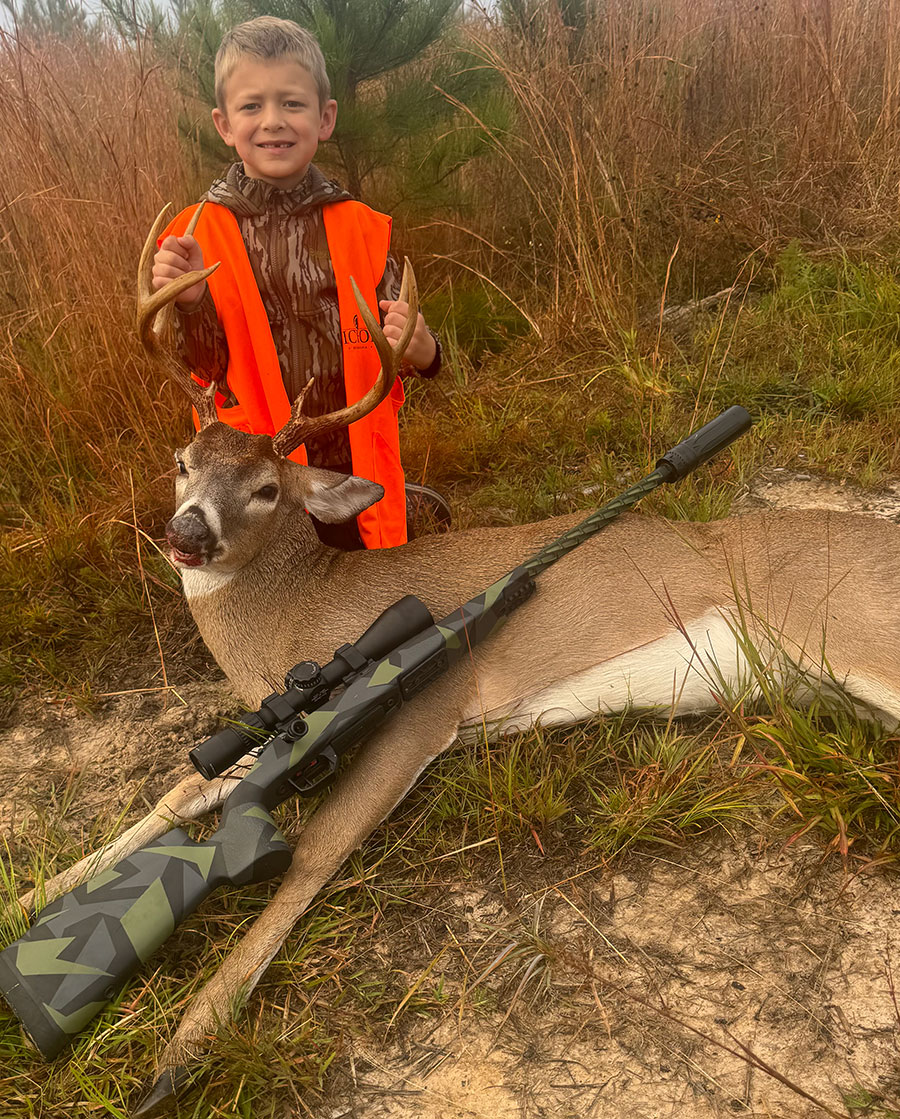
Hebert and Dartez advised deer hunters that Richard K. Yancey and Grassy Lake WMAs are in the LDWF’s “CWD management zone” this season, so be aware of deer carcass transportation guidelines.
Lake Charles Region
When Lake Charles Region biologist manager Kori Legleu-Buxton talked about the region’s deer harvest totals on WMAs, she pinpointed the numbers for Fort Polk-Vernon and Fort Polk North.
The most reported kills were on Fort Polk-Vernon WMA, where 512 deer were harvested for the second-highest total in Louisiana, followed by Fort Polk North WMA with 463. However, there’s a “what could have been” at Fort Polk North WMA that more than likely benefitted Clear Creek WMA and West Bay WMA.
Legleu-Buxton, who has worked in Lake Charles 19 of her 20 years with the LDWF, said Fort Polk North was closed three weeks, starting in the middle of the primitive weapons season, due to the federal government shutdown. It reopened in time for either-sex hunts.
“I think that contributed to hunter success (elsewhere) because we did see a little higher hunter harvest for Clear Creek and West Bay than previous years,” Legleu-Buxton said from her Lake Charles office.
She believes during the three-week closure that deer hunters who frequent Fort Polk North WMA went to Clear Creek WMA and West Bay WMA, where deer hunters harvested 357 and 260 deer, respectively. (Legleu-Buxton emphasized it’s a personal opinion.) Clear Creek WMA’s harvest two seasons ago was 267 while West Bay WMA’s harvest was 212 in 2024-25.
Fort Polk North also boasted one deer per nine hunter efforts (five hunter efforts per deer during either-sex hunts in November) in 2025-26, Legleu-Buxton wrote in her report. Fort Polk North WMA generally gives up more quality deer than other public lands in the region, also due to its being closed more often than Fort Polk-Vernon WMA.
Hunters should always check for closures before visiting the Fort Polk WMAs.
Both Fort Polk WMAs feature actively managed upland pine habitat with many creeks and stream bottoms. While spring 2026 conditions were somewhat dry, normal summer rains generated plenty of desirable browse and soft mast forage, Legleu-Buxton said.
The region’s deer hunting outlook shines bright for 2026-27, she said, adding, “We had a pretty severe drought last year … this year it’s a little better. I think we’re in good shape.”
Minden Region
Two Minden Region WMAs consistently yield the largest harvest numbers, lower numbers of acres per deer harvested and the highest two hunter success rates.
There are several reasons for the higher average hunter success rates on Bodcau WMA and Loggy Bayou WMA. They have some gun season portions during the season unlike the archery-only deer hunts on the region’s three smaller WMAs. Jarrod Hughes, Minden Region biologist manager, said as much in his annual report for Louisiana Sportsman.
The table’s being set for more successful deer hunting this season on Bodcau WMA, where 270 deer (1 per 125 acres) were harvested last season, and Loggy Bayou WMA, which had 73 deer (1 per 88 acres) taken off in 2025-26. Two seasons ago, deer hunters harvested 250 deer on Bodcau WMA and 102 deer on Loggy Bayou WMA.
“We had plenty of rain through June and a fair amount through July,” Hughes said. “It’s starting to get dry in the latter half of July, but that’s not abnormal for this region… If we get a few showers off and on until season, browse should stay in decent shape.”
The veteran game biologist noted a late freeze in March defoliated many oak trees and soft-mast species, which delayed acorn development and might affect the red oak crop next year. He expects a fair to good mast crop in the region’s woods this season.
Habitat conditions are looking very good overall on both Loggy Bayou WMA and Bodcau WMA, he said.
“LDWF has continued to make habitat improvements on those areas, including prescribed burning and timber stand improvements, which should benefit deer forage and overall habitat quality,” Hughes said.
Monroe Region
Going into the 2026-27 deer hunting season, the Monroe Region’s deer are healthy, with body weights and population indicators at or above their 10-year averages, a veteran game biologist reported.
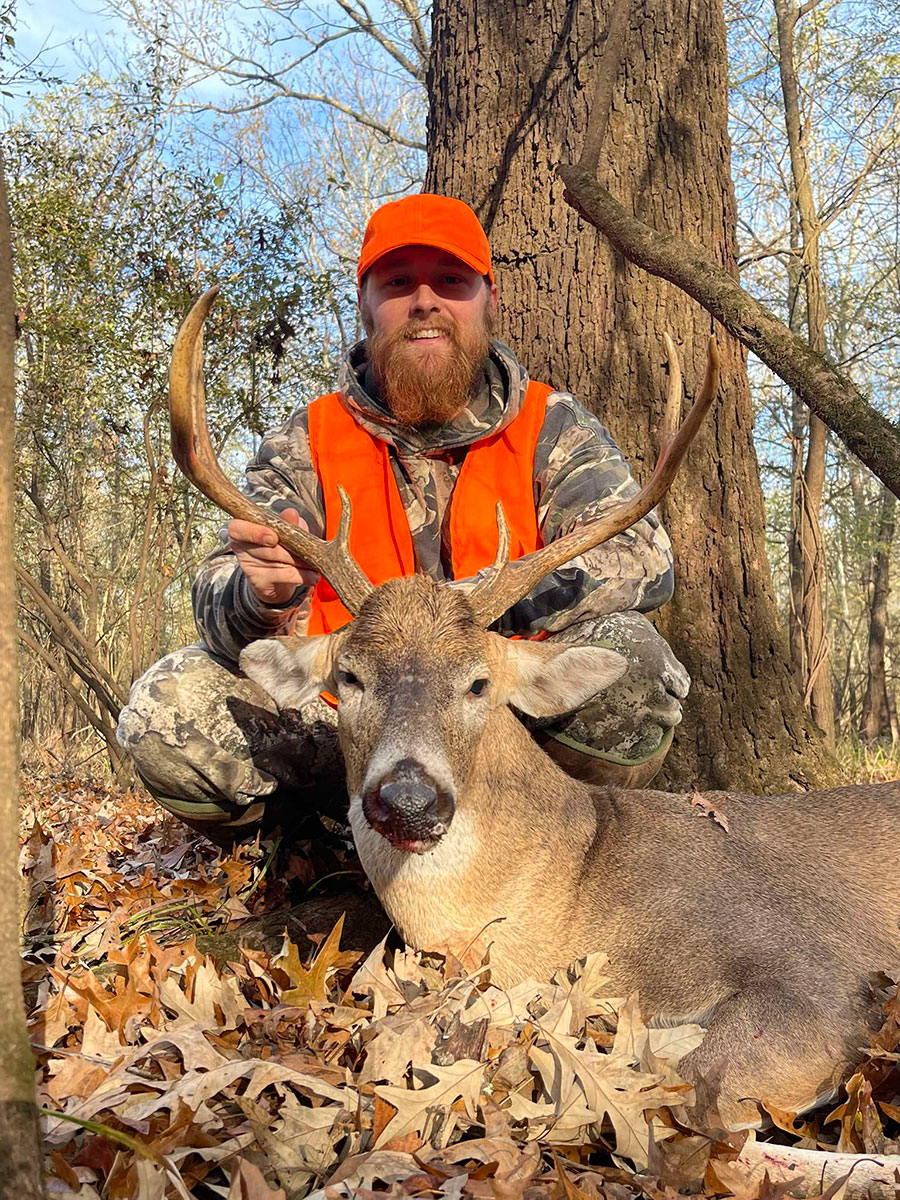
That’s the positive news from Aidan Caruso, who also reported promising habitat conditions in the approaching months thanks largely to a historic ice storm in January. The weather system knocked down trees and created canopy gaps across the areas, gaps that allow additional sunlight to shine on the ground.
As a result, native browse growth has flourished, according to Caruso. What’s more, habitat conditions have improved through numerous timber stand improvement projects on Boeuf WMA and Buckhorn WMA, which boasted the top two deer harvests in the region last season. Boeuf WMA checked in with 473 deer reported taken at one deer per 108 acres and Buckhorn WMA with 246 deer harvested at one deer per 45 acres.
“Timber improvement projects increase sunlight reaching the forest floor, stimulate growth of native vegetation and create more diverse forest habitats that benefit deer and a wide variety of species,” Caruso said.
Her mast report proved to be just as encouraging. She pointed out that last season the region experienced an above average mast crop that, while it provided challenges for deer hunters trying to pin down deer movements, also provided extra nutrition during a time when other resources were limited.
Pineville Region
Dewey W. Wills WMA reigns as the top deer harvest public land in the Pineville Region going into the 2026-27 season, according to biologist manager Vaughan McDonald.
The 193 deer killed there last season was slightly lower than the 206 deer harvested in 2024-25 on the nearly 64,000-acre WMA in LaSalle, Catahoula and Rapides parishes. Peak rut this season for Dewey W. Wills WMA is Jan. 2-15, McDonald wrote in his report.
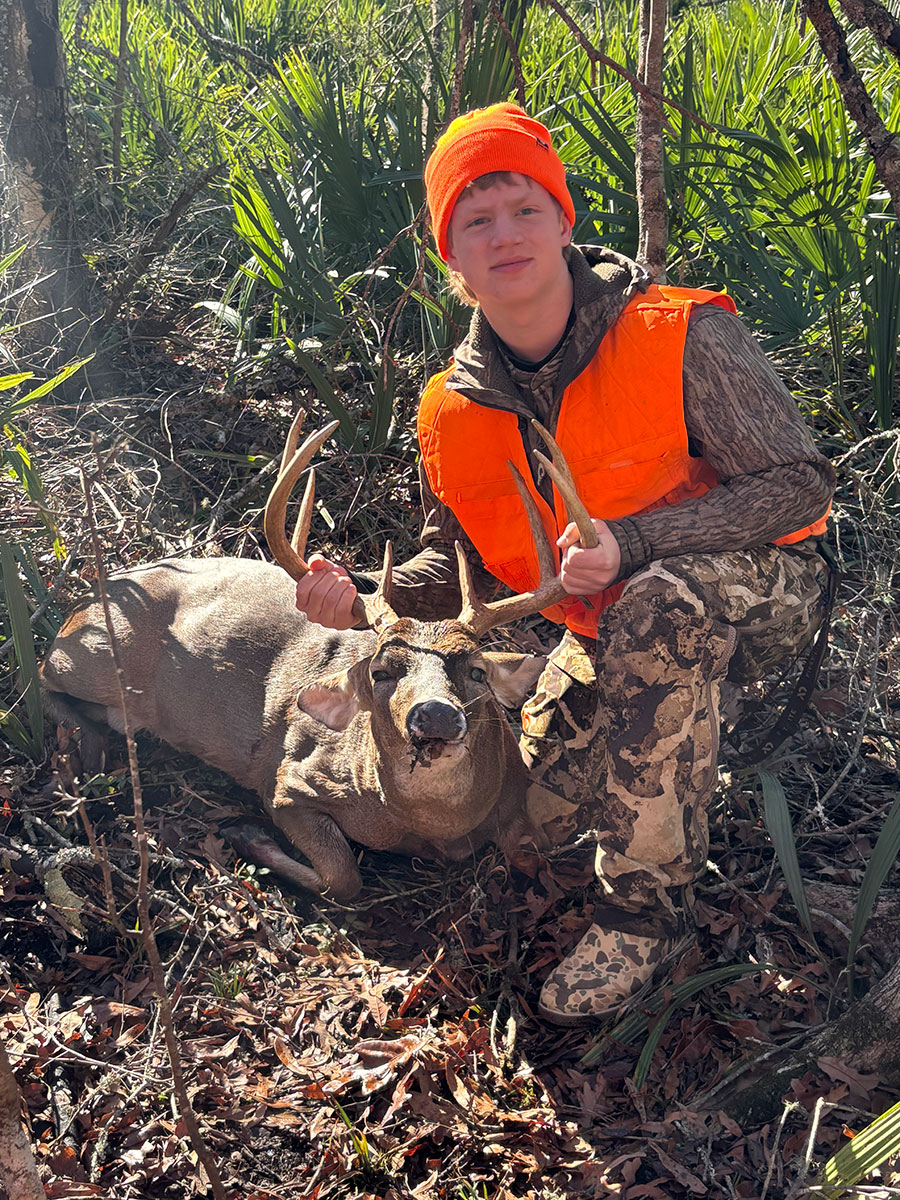
Camp Beauregard WMA in Rapides and Grant parishes ranked second in deer harvest total last season with 106 and apparently is primed for another successful campaign in 2026-27, based on browse conditions there going into October. McDonald credited regular timber stand improvement activities and prescribed fire burns on the 12,500-acre area for the favorable rating he gave the WMA.
McDonald wanted to remind everyone that U.S. Army training closes a portion of Camp Beauregard WMA, which is near Alexandria/Pineville, during the season. Those closed units are open only for a few days each season during the primitive and modern firearm seasons, but hunter success generally is high. It also offers archery-only hunting when bowhunters are undisturbed from small game hunters and deer hunters with firearms.
For deer hunters who prefer hunting in a mixture of pine and hardwood, Alexander State Forest WMA should be right up their alley. The 8,158-acre WMA in Rapides Parish features a network of mowed walking trails throughout the area to provide easy hunter access, McDonald pointed out. Youth lottery hunts and handicapped hunting opportunities are available, as well as archery-only units.
Alexander State Forest WMA gave up 26 bucks and 33 does last season for a total of 59 deer compared to 47 deer in 2024-25.