The dog days of summer might not seem like the best time to catch a big largemouth, but these three anglers know how to get big-fish bites
Caney Lake, 93. Atchafalaya Basin, 92. Toledo Bend, 94. Delacroix, 91. These aren’t mile markers on the side of the interstate. They’re the daytime highs bass fishermen are dealing with this month. By now, most anglers are sick of the heat and waiting for that first cool front to arrive to deliver sweet relief.
But not Will Henry of Mandeville. While most anglers are watching the radar for the first blast of cool air out of Canada, Henry is in the middle of some of his best fishing of the year. He just waits for the sun to go down to do it. Henry learned to night fish from his uncle, Coleman Cochran. Henry started doing this as a teenager and it’s something that he’s perfected over the years. The 59-year-old angler said he’s lost count of the studs he’s pulled out of the water in the dark. He’s caught plenty of 5- and 6-pounders, several over eight, and one of the three double-digit bass of his life came after the lights went out.
“The dog days of summer are the best,” Henry said. “The larger bass like to feed at night, and it’s not as hot.”
He’s cashed a few checks doing it, too. Henry has fished plenty of night tournaments where two fish over 7 pounds were enough to take the money.
Big meals after dark
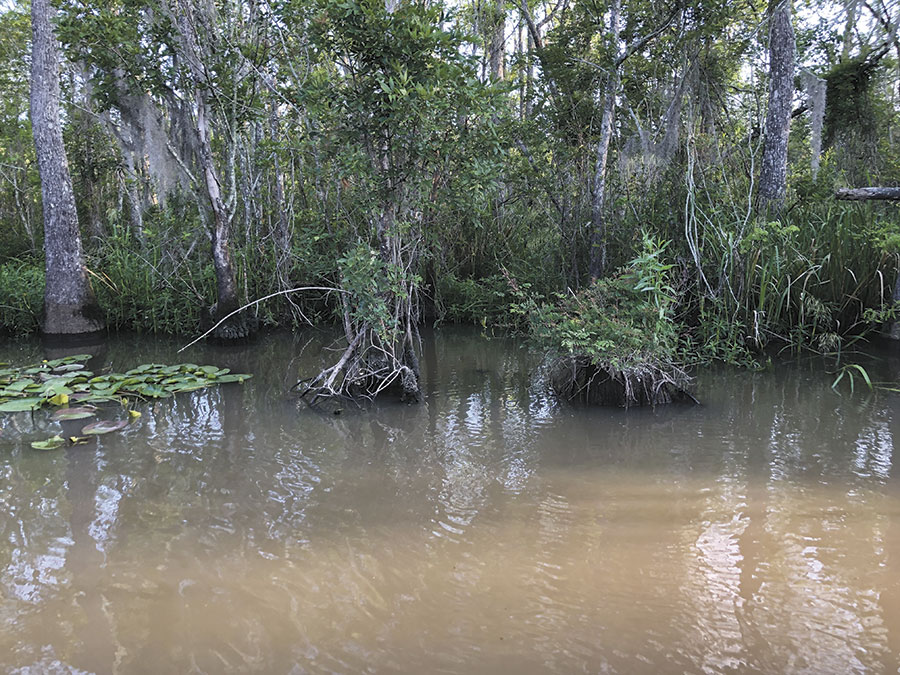
Henry said a big August bass is chasing three things: food, comfortable water and oxygen. Its metabolism runs faster this time of year than at any other, which means it feeds and it feeds big. He keys on deeper, cooler water close to shallow points, bars and humps, the kind of spots where schools of shad gather offshore while bream hold tight to the bank.
“Big bass like big meals,” Henry said.
Because running big water in the dark can be a challenge, Henry does most of his late-summer fishing on smaller water like community lakes, subdivision lakes and oversized ponds. Some of his favorites are the lakes tucked inside Louisiana’s state parks, where a giant can be landed right from the bank. Henry said he’s had plenty of success waiting until the sun goes down when camping.
“Next time you and your family go camping in our state parks, don’t just fish in the day,” he said. “Stay up and fish 9 p.m. to midnight.”
Keep it simple
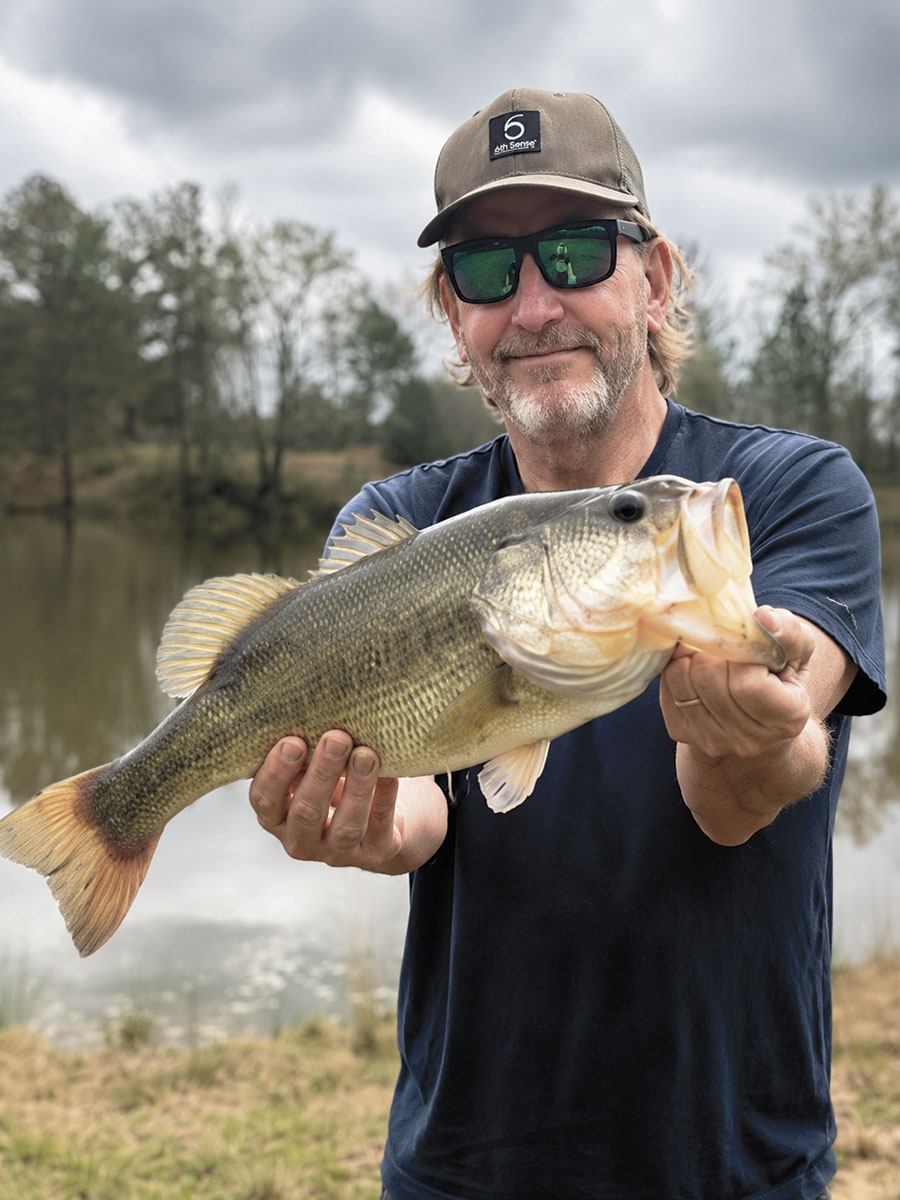
After dark, Henry pares his tackle down to a few baits which are all big. His go-to is a 12-inch worm in red plum, plum or black, rigged on a 3/8-ounce tungsten weight and a 5/0 Gamakatsu G Finesse hook. He uses a 7-foot-4 heavy-action rod spooled with 20-pound Sunline Shooter. To cover the rest of the water column, he keeps two more rods ready. An 8-inch Magdraft swimbait gets slow-rolled through the mid-depths for suspended fish.
“I like to count down about a second per foot before the retrieve,” he said.
The third is an old-school black musky Jitterbug, an oversized topwater that gurgles across the surface in the dark.
“If one hits it, it’s like a cannonball hitting the water,” Henry said. “Hang on!”
Shade and moving water
Chris Basey of Covington directs the Bass Assassins Tournament on the Northshore of Lake Pontchartrain, so he knows a thing or two about the value in catching a kicker fish.
Years of tournament fishing taught Basey that a small limit might earn a few points, but it rarely grabs the top spot in a tournament.
“In almost all of the tournaments, the top spot has an anchor fish that helps the bag,” he said.
Basey admits that going after a stud fish is time consuming, but it’s worth it at the weigh-in. When fishing tournaments, Basey goes where he thinks the giants live.
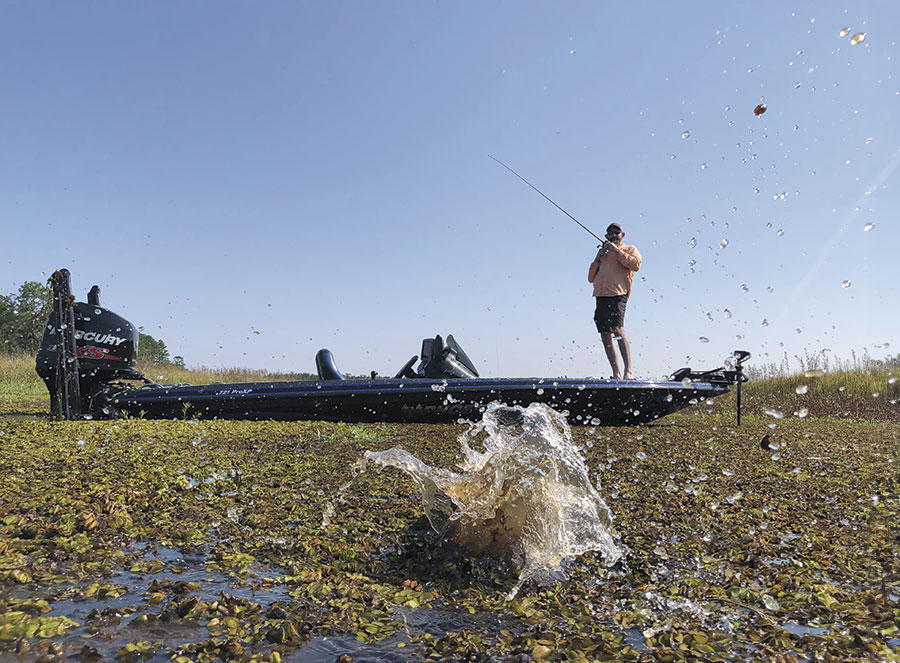
In August, Basey said a big bass wants the most meal for the least effort, and that means shade sitting over deeper water. He looks for mats or docks in at least 8 feet of water, but only where there’s good current pushing through. A fish can tuck into the shade and let the water deliver dinner. The trees do the same job. On the Tchefuncte River, the banks are lined with timber standing in 2 to 3 feet of water, and Basey watches for boat wakes rolling into them.
“As the waves crash against the trees, it knocks bugs off, and the big fish can feast on them,” he said.
Built to winch
Big bass in heavy cover call for heavy tackle, and Basey doesn’t cut corners. He spools 30 to 60-pound braid and leans on stout reels with strong drags, because when he sets the hook he can’t afford a slip.
“Whether I’m fishing a frog in the lilies or flipping a punching rig through alligator grass, I don’t want my drag to slip,” he said. “I need a reel that can winch that fish out of the thick stuff before he gets me stuck.”
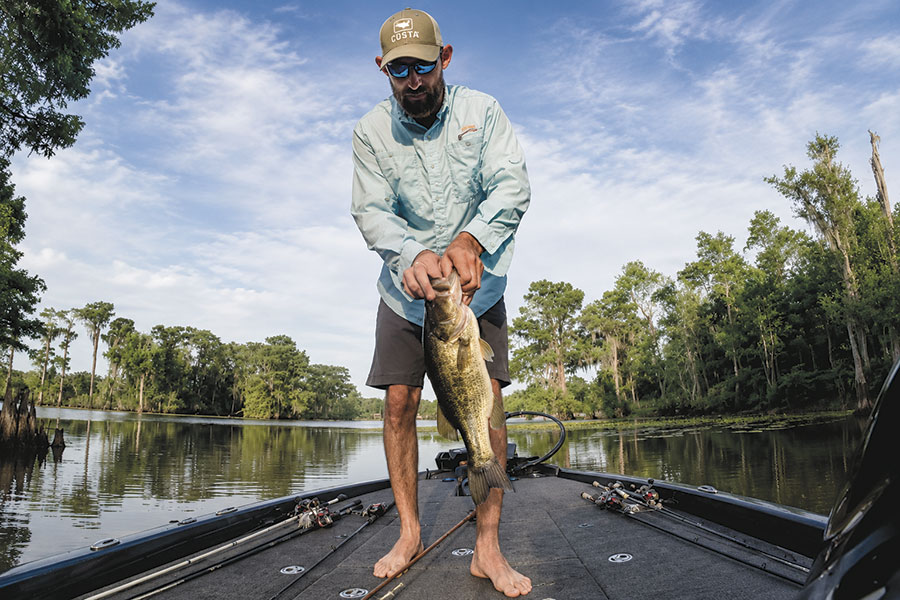
His rods run heavy power with a fast to extra-fast action, though he’ll step down to a medium-power stick for swim jigs. For baits, he keeps it to a few proven big-fish offerings: a full-size hollow-belly frog worked over the lilies, or a Pit Boss or Bandito Bug flipped into the thickest cover he can find.
Basey is the first to admit this isn’t fast fishing. Targeting bigger bass usually means a slow bite, and in the August heat a long day can feel even longer.
“With a lot of patience, it can be very rewarding,” he said.
Throw what giants eat
Sajeo Arguelles came up the same way Basey did, through tournament fishing, where five good fish beat 20 little ones every time.
“It changes the way you think,” Arguelles said. “Instead of trying to get bites, you’re trying to get the right bites.”
That mindset shapes how he approaches targeting bass in August. Arguelles said he likes to get on the water before daylight. Then, he fishes hard until the sun climbs. Arguelles then narrows his focus to the thickest cover he can find or deeper structure with bait bunched up around it. The mistake he sees most often is anglers fishing too fast.
“In the Louisiana heat, big bass aren’t going to chase something very far,” he said. “Slow down, make multiple casts, and be patient. One bite is all it takes.”
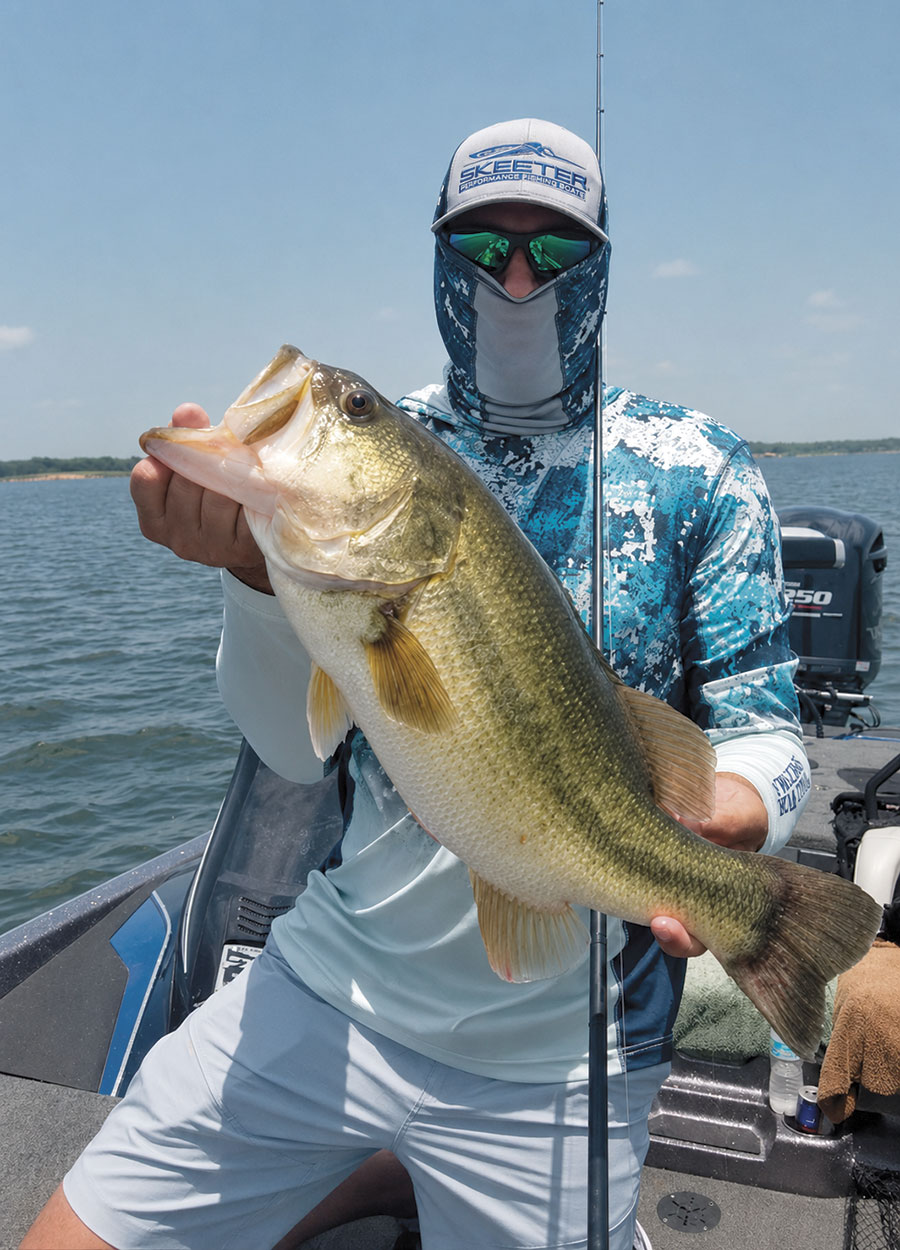
Arguelles keeps it simple when he’s hunting one big bite: a 7-foot-6 heavy-action rod and a fast reel. Around grass he throws 50- or 65-pound braid, and around wood or offshore structure he drops to 20-pound fluorocarbon. His baits run big on purpose, a 10-inch Texas-rigged worm, a flipping jig, a hollow-body frog, a deep-diving crankbait, or, when he’s truly after a giant, an oversized glide bait.
“If you want to catch big bass, you have to throw baits that big bass want to eat,” he said. “You may not get as many bites, but the ones you do get are usually the right ones.”
One bite worth the grind
Arguelles’ personal best, an 8-pound, 3-ounce largemouth, came exactly the way he preaches. He was dragging a Texas-rig through heavy cover when he felt what he figured was a stump. Then the stump moved.
“After a few nervous moments trying to keep her from wrapping me up, I finally got her in the boat,” Arguelles said. “That’s what’s addicting about bass fishing. You can grind all day, and one bite can make the whole trip worth it.”
Arguelles’ three favorite destinations for big bass are Toledo Bend, Caney Lake and Lake Caddo.
“We really are spoiled in Louisiana when it comes to bass fishing,” he said.
August is the hottest time of the year for anglers, and while it may be uncomfortable, using the heat to your benefit can get you that big fish. Whether you’re fishing at night, flipping into shaded cover, or dragging a worm through deeper structure, incorporating these tips will help you put that next toad in the boat.
“At the end of the day,” Arguelles said, “the memories are just as important as the fish.”