
This destination offers world-class sport fishing
Golden Gate Bank, Santa Maria Canyon, The 45. These names may not ring a bell for the everyday Louisiana angler. But after years of fishing what’s referred to as the “Marlin Capital of the World,” these spots have become destinations that evoke excitement inside me every time I hear them.
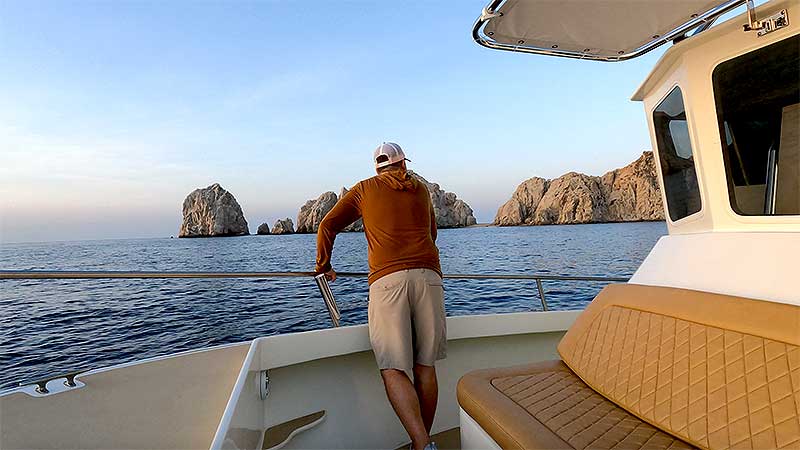
Cabo has been a favorite destination for my family. Over the last decade, I’ve made four trips to the edge of the Baja Peninsula, where Cabo is located. When I came back recently to celebrate our daughter’s destination wedding, my friend Arturo Chacon at Tag Cabo Sportfishing invited me out for another day on the water. What followed was an unforgettable experience that reminded me why I keep returning.
My day began at 5 a.m. when I left the Sandos Finisterra Resort, and after a quick 10-minute walk to the harbor I was at Dock E, where I met Arturo.
After idling out of the harbor, a small boat pulled alongside us, and one of the deckhands, Roberto, carefully selected our bait for the day: fresh ballyhoo and threadfin herring.
The setup
Entering the Sea of Cortez, the crew began their methodical line setup. Two rods carried daisy chain teasers, which Roberto explained create visual and audible disturbances in the water.
“This gets the fish excited,” he said, as he pointed at the surface commotion. “It looks like a school of mullet skipping across the surface.”
Another rod featured a lipless diving plug that resembled a jerkbait without the lip. This thing was a sight to see as it shot left, right, up and down and sometimes it even jumped clear of the water.
The fourth rod carried a traditional hard crankbait, while the fifth held a carefully rigged ballyhoo. One of the crew members wrapped the baitfish’s face with thin wax line, reinforcing it so the hook wouldn’t tear through during the high-speed trolling action.
Fish on!
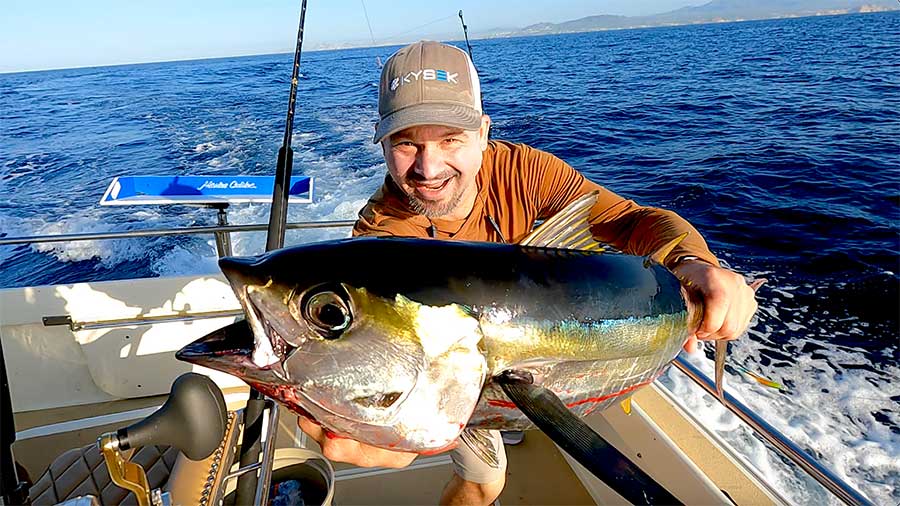
Ten minutes after setting lines, the first rod began dancing. I jumped into the fighting chair and landed a perfect 30-inch yellowfin tuna, not massive but ideal eating size. As we headed toward what the locals call “The 45,” we caught four more yellowfins before the crew switched to skirted trolling lures.
Then it happened. While watching the rods, I looked back to see a marlin exploding from the water behind our farthest lure. The fish was jumping non-stop, sometimes appearing to tailwalk across the surface. Back in the fighting chair, I learned the hard way not to let the reel do all the work.
“Horse the fish with the rod, then reel as the tip comes down,” Arturo said.
On our return trip, another marlin hit, but this one behaved completely differently.
“Sometimes they do that,” Arturo said. “They’ll hit the lure and head straight down.”
This fish never jumped, staying deep throughout the entire fight.
Recommendations
After experiencing Cabo fishing firsthand and talking extensively with local captains, here’s what I recommend for U.S. anglers planning a trip to Cabo San Lucas.
- Book multiple days
Don’t make the mistake of booking just one day on the water. September conditions can vary, and you want options. Three days gives you the best chance to experience different types of fishing. I suggest targeting marlin one day, then focus on tuna the next, and try inshore species on the third. The weather can change quickly, so multiple days ensure you’ll get on the water.
- Choose your charter carefully
Avoid the hawkers along the marina walkway. Legitimate operations like Tag Cabo Sportfishing have established reputations. These operations provide quality tackle, experienced crews and won’t cut corners on fuel to reach the fish.
- Planning your trip
Los Cabos International Airport serves major U.S. cities, including Houston, Dallas and Phoenix, which are all convenient connections from Louisiana. The airport sits roughly halfway between Cabo San Lucas and the East Cape, about 40 minutes to Cabo by shuttle or taxi.
- Where to stay
For fishing-focused trips, I suggest staying near the marina in Cabo San Lucas. This will allow you to walk instead of paying a service for a ride at 4:30 in the morning. Sandos Finisterra Resort or the Marina Fiesta Resort put you steps from the docks, while the Bahia Hotel offers a quieter atmosphere with easy marina access. These spots cater to anglers and understand early morning departures.
- Budget considerations
Full-day charters for six anglers range from $1,200 to $2,500, depending on boat size and amenities. Split among a group, it’s comparable to a good day of offshore fishing in Louisiana when you factor in fuel, tackle and the quality of fishing. Tips for the crew typically run 15-20 percent of the charter cost.
Fighting those two big striped marlin created memories I’ll never forget. The combination of Cabo’s world-class fishing, the expertise of operations like Tag Cabo Sportfishing and the region’s beauty makes this destination unbeatable for any serious angler. The names Golden Gate Bank, Santa Maria Canyon, and The 45 may not mean much to you now, but after your first trip to Cabo, they’ll become part of your fishing vocabulary and maybe even work their way into your dreams.