Noisy, vibrating bass lures can drive redfish nuts
Sunlight flickered off the wobbling metal blade as the bait moved through clear, shallow water. The glint aroused curiosity in a lurking predator, who had seen such flashing and felt similar vibrations before. Creating a V-shaped wake in the water, the large, voracious beast rushed toward a potential meal.
A prototype of a radical new class of artificial baits first hit the water in 2003. Invented by Ron Davis of South Carolina, the odd-looking lure featured a down-turned hexagonal blade on a lead jighead with a skirt. When it moved through the water, the blade caused such vibrations that it made his father Ronnie’s teeth chatter. From that day forward, the Davis duo called it a ChatterBait.
RAD Lures, named for Ronald Anthony Davis, began marketing the lures. The lure first went on sale publicly in March 2004. By 2006, sales of ChatterBaits exploded across the country. Shortly thereafter, Z-Man Fishing Products (zmanfishing.com) bought the rights to manufacture and market the new lure.
Chattering baits
Anglers also call them chattering baits, swimming jigs, swim jigs or bladed jigs. Hoping to capitalize on the “chattering” craze, several other companies created their own slightly different versions of these baits that combine the attributes of weedless jigs, spinnerbaits and crankbaits. The metallic blade causes the lure to shake erratically. Most people add a skirt or soft-plastic trailer. Some chattering baits come with build-in rattles.
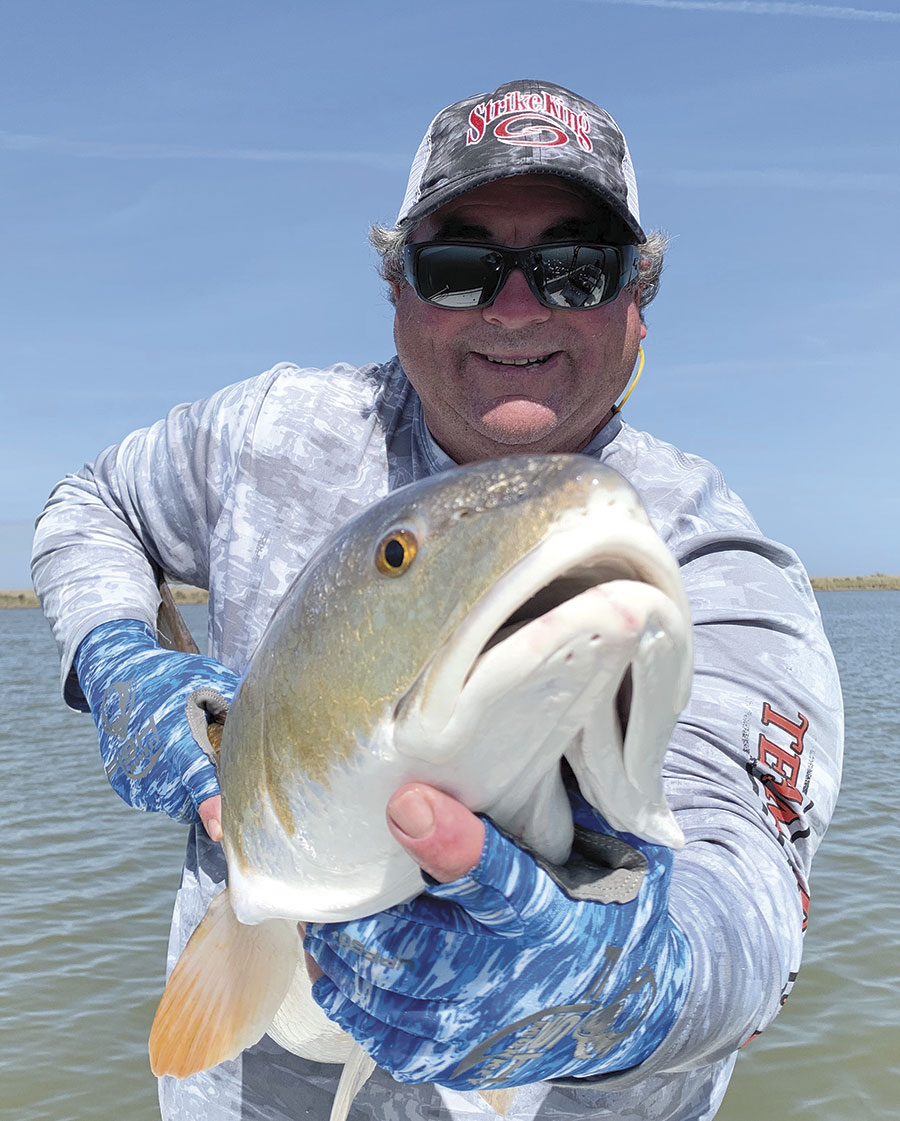
“I always put a plastic trailer on it,” said Mike Frenette, a guide and professional redfish angler (504-782-0924, Laredfish.com) who fishes out of the Redfish Lodge of Louisiana at Venice Marina. “I use the Strike King Thunder Cricket (www.strikeking.com) bladed jig with a Rage Swimmer trailer. I particularly like the Carolina Chrome color. It has ridges down the body and a paddle tail.”
At first, bladed jigs remained almost exclusively in the arsenal of bass fishermen. A redfish and a largemouth will hit the same things, often in the same places at the same time. Some anglers tried bladed jigs in salty waters and discovered that redfish love them.
“Like many bass baits, bladed jigs rolled over to the saltwater market, especially for redfish,” Frenette said. “Probably about 10 years ago, few saltwater anglers paid much attention to bladed jigs, but now they are a go-to bait for many people who regularly fish for redfish.”
Noise and vibration
A spot-tailed marauder primarily hunts by feel, sound and smell, especially in dingy water. The blade on the jighead causes the bait to shake back and forth. This creates significant flash and vibration. The metal blade wobbling from side to side also impacts the jighead. This creates clicking sounds.
“Redfish move up shallow to feed, but in murky water a natural bait sitting still won’t attract as much attention as something making vibrations,” said Troy Nash with South Louisiana Redfishing (337-412-5950, www.southlouisianaredfishing.com), who fishes out of Cypremort Point south of New Iberia. “When we see a rip with a dirty, murky edge that makes a transition area, redfish can’t feed by sight inside that murky water so they feed by sound or scent. I put Fish Bites trailers on bladed jigs for some scent. Redfish love that stuff. I also use Gulp! trailers.”
Crabs swim sideways. They use their two small rounded rear “swimmer fins” to propel themselves through the water. The blade on a swimming jig shimmering in the water imitates those swimmer fins. A shrimp makes a clicking sound and also flicks its tail. Redfish can’t resist a crab or shrimp meal.
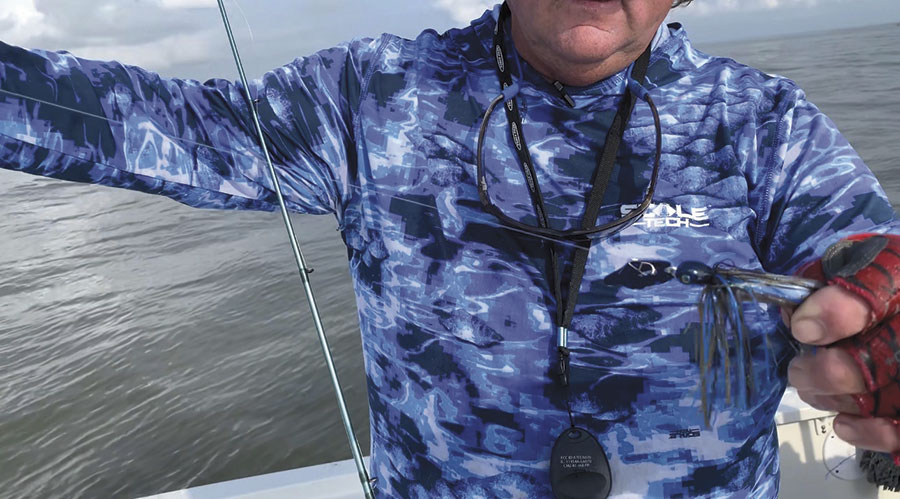
“Fishing a bladed jig is almost like fishing a spoon, jighead and soft plastic all in one,” Frenette said. “Bladed jigs generate strong noise and vibration coming through the water. That absolutely aggravates redfish. When the blade is flickering through the water, it could mimic the little swimmer fin on a crab. It drives redfish nuts and they love to eat crabs.”
Change up the retrieve
Anglers can fish these highly versatile baits many ways from just under the surface to the bottom just by changing the retrieve. Walking it just beneath the surface creates a bulge in the water almost like a spinnerbait. Lowering the rod tip or slowing the retrieve makes it run deeper.
“I change up the retrieve several times until I see what the fish want,” Nash said. “Instead of a slow roll, try giving the bait a little hop off the bottom to keep the redfish interested. I’ll also work it along the bottom, a little off the bottom or burn it fast and stop it. I observe everything happening and always try to do something different that breaks the rules. Experiment to see what works. It all depends upon what the fish want that day.”
Pause the retrieve periodically so the lure flutters down like a dying pogie or other baitfish. With the rod tip held low, run a bladed jig at a slow to medium speed just off the bottom or barely move it so the blade occasionally digs into the bottom. That makes a mud trail like a crab scurrying along the bottom. Try various retrieval speeds and depths to see what works best at that time.
“In some areas, redfish like a real slow roll along the bottom,” Nash said. “Sometimes, I tell people just throw a bladed jig as far they can. Let it sink all the way to the bottom. Then reel it as fast as possible without losing contact with the bottom. In tannic-stained water, those gold blades really stand out. Also, the ticking sound that it makes is what really attracts redfish because that sounds like a crab. Redfish key on crabs or shrimp crawling around on the bottom. That’s where the redfish will be feeding.”
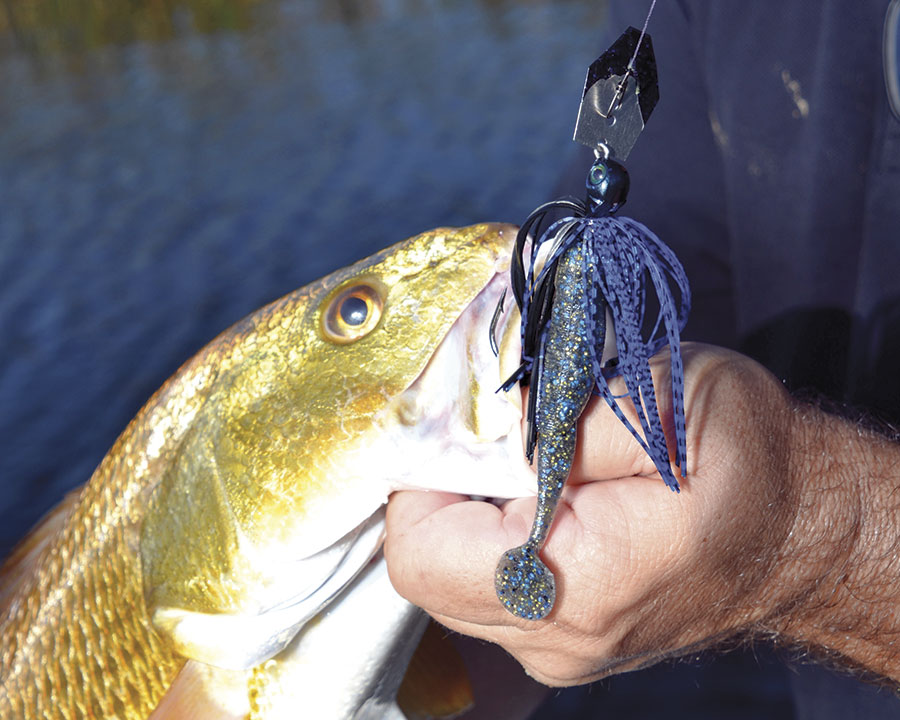
With a soft-plastic trailer, insert the hook point into the body. With this configuration, anglers can run bladed jigs through weedy areas or places with other snagging obstructions. When fishing over submerged grass beds, let the lure sink down to the grass tips. Run it just over the tops of the vegetation. At openings in the grass, let the bait fall deeper and then pop it out of the vegetation to make a commotion.
Color is important
Many redfish anglers fish these relatively snagless baits around bridge pilings, bulkheads, jetties, rocky banks and other hard objects. Retrieve them over sandbars, oyster reefs, artificial reefs, sunken boats and other snagging structures where lurking redfish hunt for their prey.
“I like to throw bladed jigs around grass beds and oyster reefs,” Frenette said. “I also like to fish them around jetties. They also work coming over sandbars. Pop it off the bottom, an oyster reef or a sandbar and the redfish go after it. We can even drop it down in deeper water and hop it slowly off the bottom back to the boat like vertically jigging. Sometimes, I’ll stop the retrieve to let the bait flutter to the bottom. Then, I’ll pick it up off the bottom, move it 15 or 20 feet and stop it again to see if that works.”
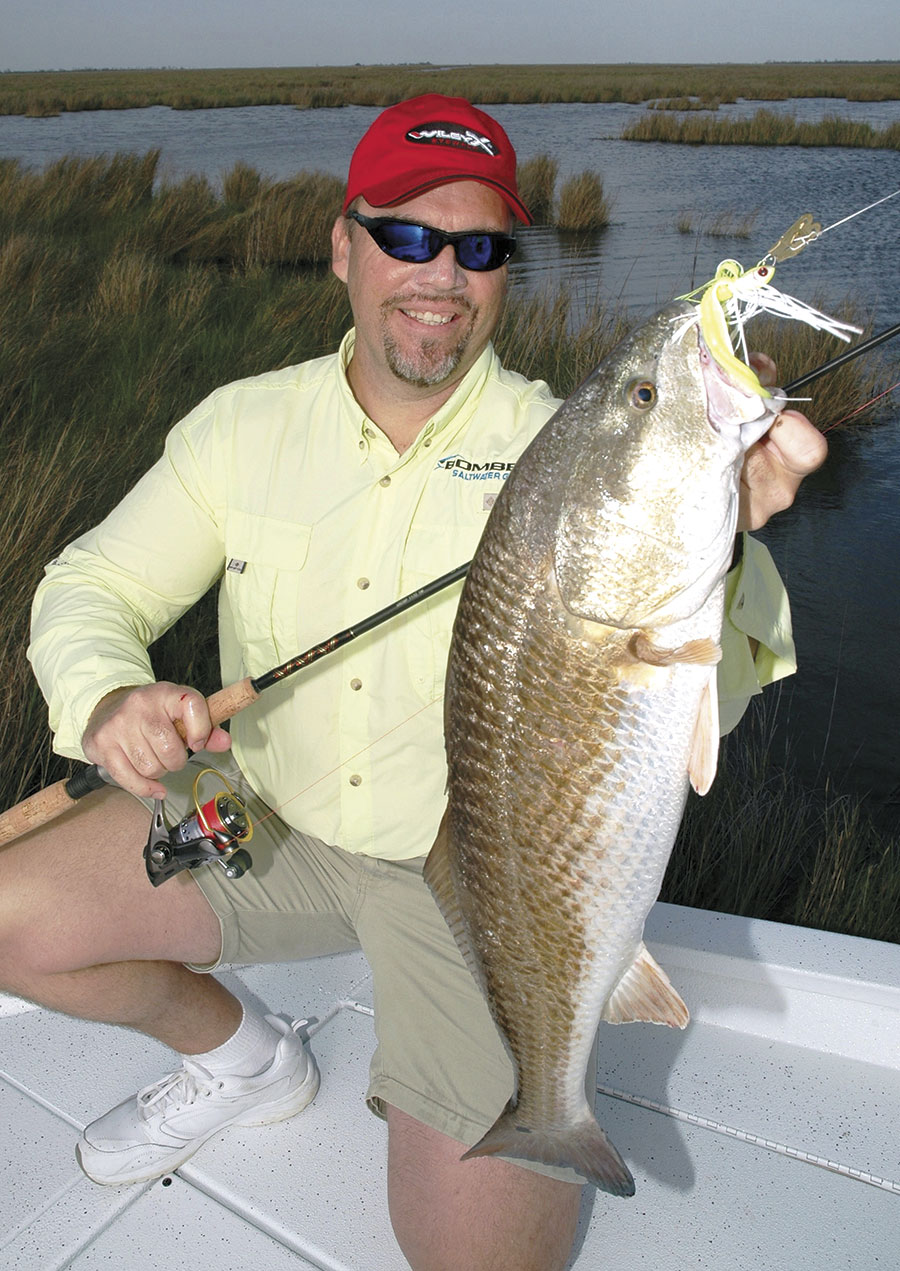
Pay attention to the surroundings. Especially watch for bait activity. Try to determine what redfish want to eat at that time. Many people put redfish in a livewell to see if they spit up anything. They might spit up fish pieces, crab shells, shrimp heads or other foods. If redfish want to chase mullet or pogies, throw whitish or gray baits. During a shrimp migration in the spring or fall, throw gold, beige or brown colors. When crabs make the menu, use brownish or reddish colors tinged with black or blue skirts.
“Colors can mean a lot,” Nash said. “Do the fish want a silhouette or a particular color? Do they want something subtle or more dynamic? A redfish might catch that color or a flash out of the corner of its eye and rush over to see it. In clear water, keep the bait moving so the fish don’t get too good a look at it. I like chartreuse, yellow or white to simulate baitfish. I really like lavender purple with a sparkle. A croaker has an iridescent purple color to it.”
Easy to use
Bladed jigs make outstanding search baits. People can throw them long distances and work them all the way back to the boat. They cover considerably more water than fishing the old standby popping corks with live shrimp.
People in South Louisiana can catch redfish all year long, but after a chilly winter, hungry redfish become more active in the spring. As water warms in April, redfish turn highly aggressive with their hunting and spend more time roaming the marsh ponds, weedy shorelines, oyster-filled bays and sandy beaches looking for food. Since these versatile baits imitate baitfish, crabs and shrimp, they make a great choice for fishing in the spring.
Anyone can catch fish with bladed jigs by simply casting out and reeling it back. The lure itself creates the action. That makes these lures excellent choices for novice or young anglers to use. They don’t need to do much finesse fishing to entice big redfish to bite.