Port Fourchon, usually just called Fourchon, sits in the last dry patch of land in lower Lafourche Parish where Bayou Lafourche flows into the Gulf.
Water nearly surrounds Fourchon. The Terrebonne Estuary spreads across more than 1,712,500 acres of bayous, bays, lakes, swamps and marshes to the west. Eastward, the Barataria Estuary runs about 40 miles from the Lake Salvador system through Barataria Bay to the Gulf.
“We have a lot of places to fish out of Fourchon,” said Kip Plaisance, who grew up fishing these waters and now guides with his son Max for Plaisance’s Tidewater Charters (985-637-7251, fishtidewater.com). “We can catch a variety of species all year long.”
Inshore fishing
In the marshes, numerous bayous and canals form a primordial labyrinth, creating outstanding redfish habitat. Many people use popping-cork rigs to catch reds, trout and other species. Sweeten the hook with a live shrimp and it might catch practically any fish that lives in Louisiana. Anglers can also use dead shrimp, live cocahoe minnows, crab pieces or other natural or artificial baits.
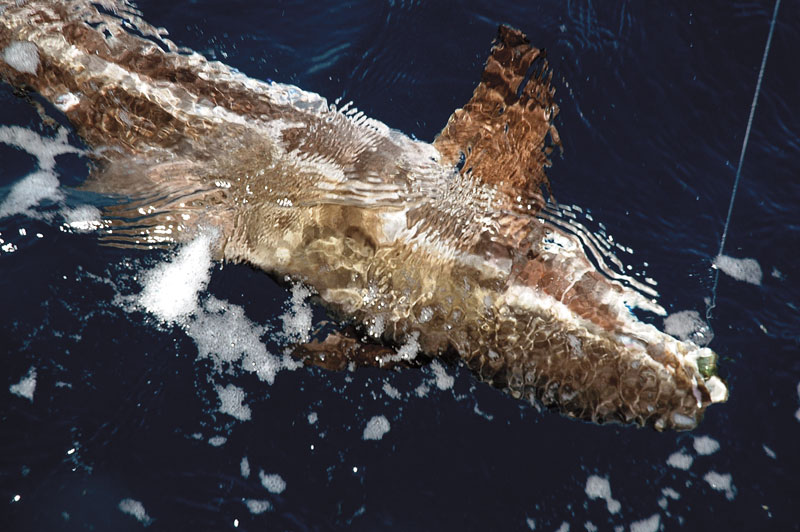
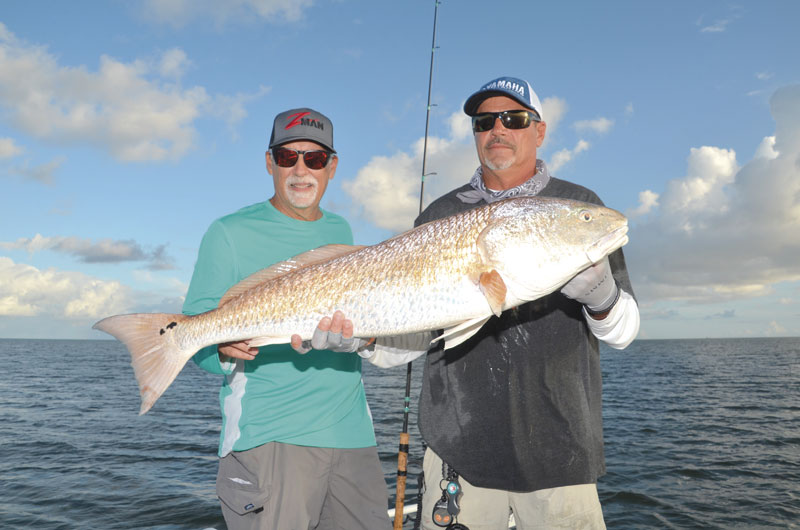
For anglers who prefer to throw lures, a redfish might hit anything that tempts a largemouth bass. Spot-tailed marsh marauders annihilate topwater lures. In the summer, throw walking topwater baits next to weedy shorelines. Spinnerbaits, spoons and shallow-running crankbaits also work.
Bull reds love whole live pogies, mullets and croakers. Fish them on a free line. Redfish also hit fish chunks. Big reds and monster black drum can’t resist a crab. Crack the top shell so it oozes juices or just put a crab half on a hook.
In both the Barataria and Terrebonne estuary systems, a myriad of grassy islands once dotted the lakes and bay. Now, after numerous hurricanes and other factors, many islands eroded away or just pieces still exist. Even completely submerged former islands can still provide good cover for fish, especially for speckled trout.
“We lost numerous islands over the years,” Plaisance lamented. “I remember years ago when the lakes and bays were somewhat separated. Now, Lake Pelto, Lake Barre, Lake Raccourci and Terrebonne Bay all run together between Fourchon and Cocodrie. People who know where those islands were can still catch fish around them.”
Lunker trout
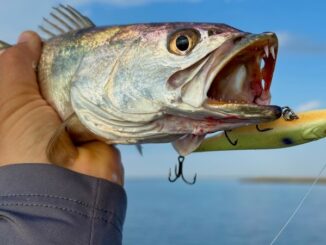
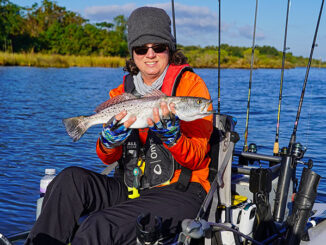
Better known for producing large numbers rather than big trout, the area can deliver some 4- to 7-pound specks and a few bigger ones. Many anglers fish popping corks and live shrimp, but the old standby 1/8- to ¼-ounce jigheads tipped with soft-plastic shrimp or minnow imitations work.
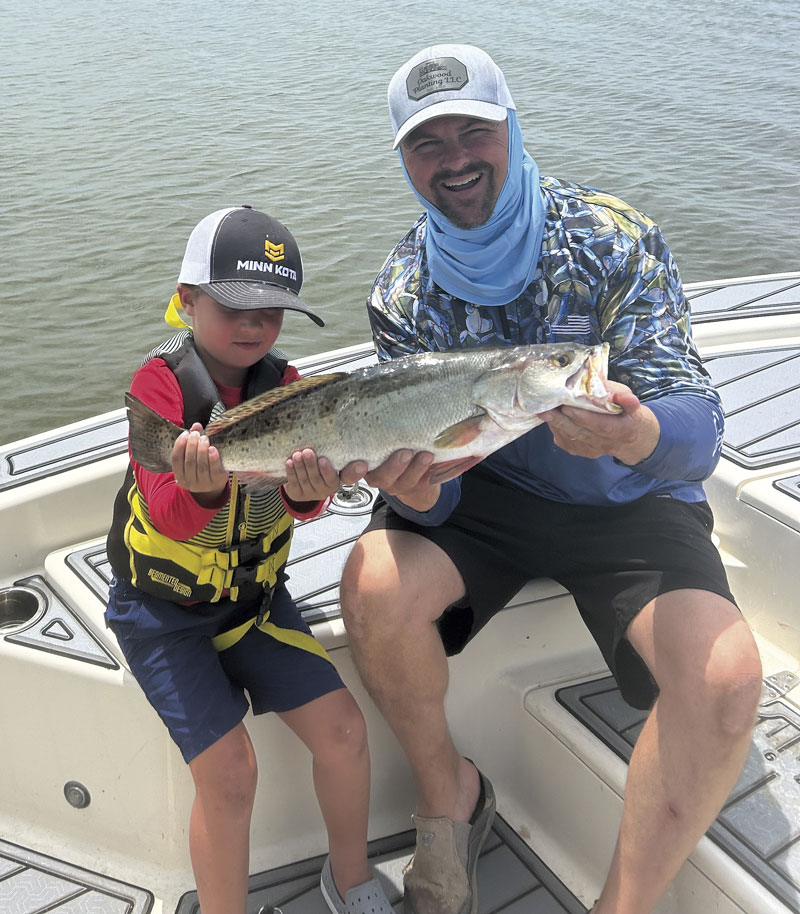
“With the live bait, we’ll catch many other fish besides trout, like drum, sheepshead, croakers and redfish,” Plaisance said. “We get a little better grade of trout with plastics. It’s more of a reaction strike from trout.”
Numerous petroleum wellheads punctuate the bays. Oil companies removed some, but the shell pads that once supported these wellheads remain as reefs. These structures attract trout, sheepshead, black drum, redfish and other species. Many anglers run from wellhead to wellhead trying their luck.
During the summer, the biggest trout typically stay around the oyster reefs in the lower bays or in the Gulf. Watch for diving birds that could indicate trout attacking shrimp or baitfish. Lunker speckled trout feed right along the beaches on the Gulf side of the barrier islands.
“Timbalier Bay is a good place to fish for trout in the summer,” Plaisance said. “In the summer, the bigger specks leave the shallow marshes and head to deeper water in the lower bays. They gather along the barrier island beaches.”
Nearshore fishing
Fourchon sits almost right on the Gulf. Cobia come closer to shore in late August and September. They cruise the lower bays or hunt just off the barrier islands. Cobia might appear around smaller satellite wellheads associated with larger platforms. Pitch jigs or live pogies to them.
Anglers might also catch tripletail, Spanish mackerel, bluefish and other species in nearshore waters. Tripletail like to hover under any floating structures. Watch for tripletail around crab trap floats, buoys, weed patches, driftwood or other flotsam. After spotting a tripletail, toss live shrimp or a crab piece to it. Tripletail might also hit artificial shrimp or minnow imitations.
Jack crevalle terrorize baitfish schools in the bays and nearshore waters during the summer. For pure sport, few finned monsters can approach the savage power, pound for pound, of these tackle-busting brutes. Jacks make extremely fast, powerful runs and can annihilate topwater plugs.
At some closer rigs, people might find mangrove snapper. The notorious bait snatchers routinely slurp morsels while deftly avoiding the hooks. Mangroves hold tight to structure, surrounded by steel legs of a platform. Toss some chum under the platform to get them into a feeding frenzy. Mangroves can’t resist a live croaker or pogie about 2 to 4 inches long. Fish live bait on a freeline with a fluorocarbon leader. Mangrove snapper might also hit realistic-looking lures or cut bait, but hide the hook completely inside the meat.
Offshore fishing
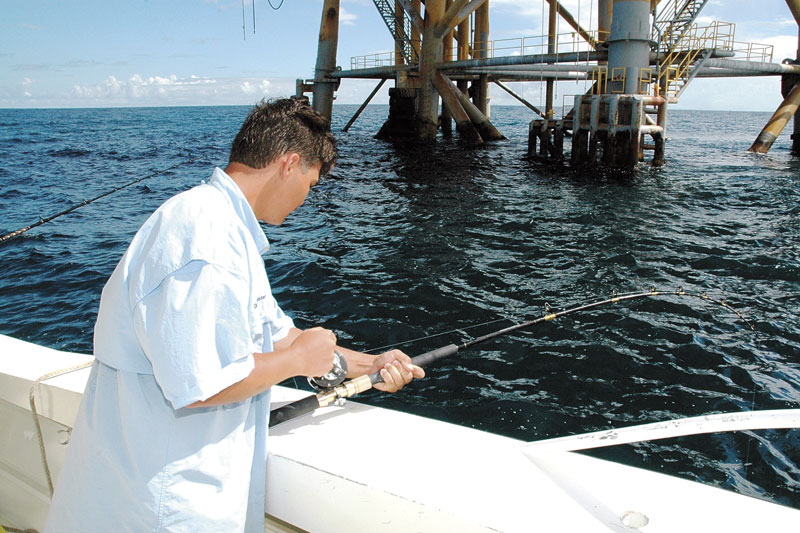
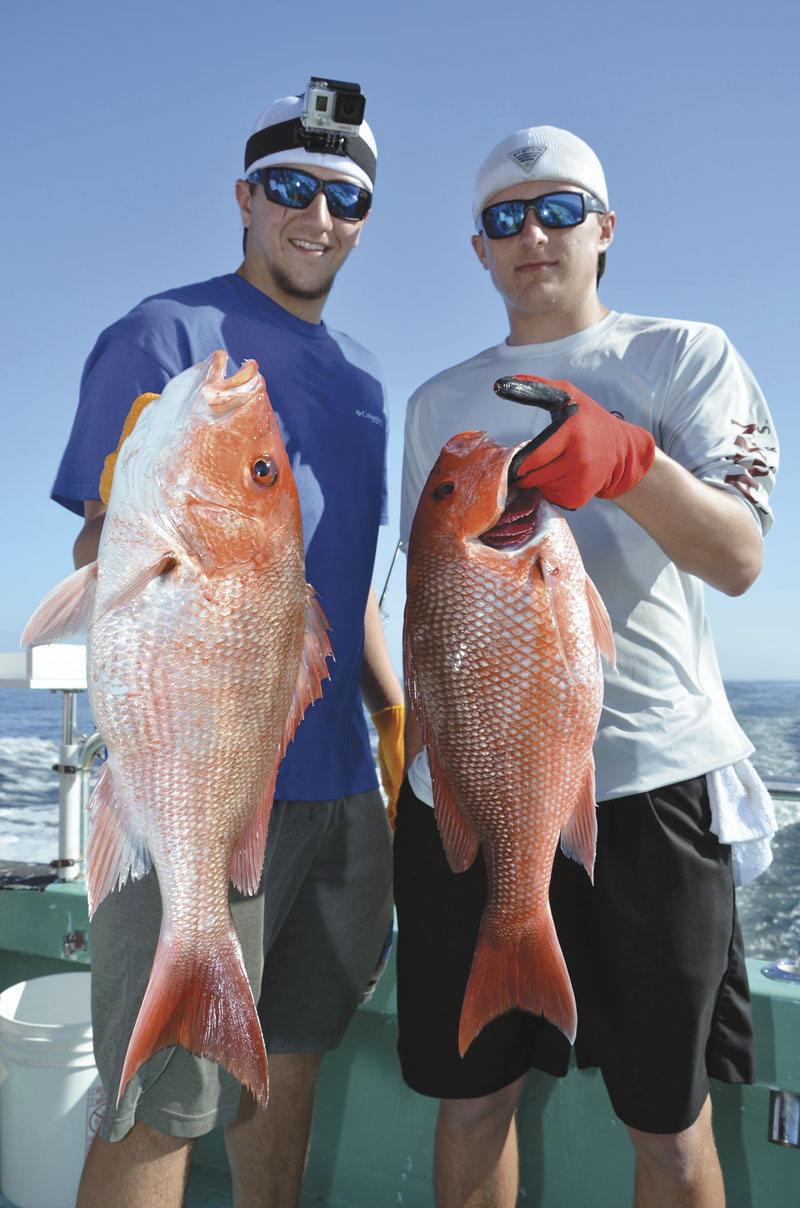
Red snapper dominate the summer offshore fishery off Fourchon. These waters already produced the current world record red snapper. Fishing south of Fourchon, “Doc” Kennedy landed a 50.25-pound snapper that engulfed a bluefish chunk.
“Snapper fishing has been pretty good the last few years,” said Hays Burleigh with All Fins Fishing Charters (225-329-4413, pfmarina.com/marina) at Fourchon Marina. “We catch some snapper in the 15- to 20-pound range. If they just want to target the biggest snapper, it might take a little more time to catch a limit. If we catch a quick limit of 10- to 12-pounders, we go do something else. While bottom fishing for snapper, we might also catch scamps, gag grouper, beeliners, sometimes lane snapper.”
The Louisiana red snapper season began at 12:01 a.m. May 1 with a daily creel of four fish per person. The season will progress until anglers catch the quota of 882,439 pounds.
“The season quota this year is slightly less than the 894,955-pound allocation in 2025,” said Jason Adriance, the Louisiana Department of Wildlife and Fisheries finfish program manager in New Orleans. “We had a ‘payback’ this year because we went slightly over the quota in 2025.”
Dropping succulent baits down to a reef or next to a petroleum platform could yield several other snapper species. Besides reds and mangroves, anglers might also catch vermilion snapper, also called beeliners, lane or candy snapper and other species.
“After catching our red snapper limit, we concentrate on beeliners,” said Jamie Gaspard with Pure Adrenalin Fishing Charters (225-572-5788, www.pureadrenalinfishingcharters.com). “For beeliners, we downsize our hooks. Sometimes when jigging near the bottom, we catch a scamp. When fishing for mangroves, we often catch a couple cobia. Mangroves and cobia are usually up higher in the water column and we see them when the water is clear.”
Attracting multiple species
Curious cobia commonly rise to the surface to investigate any activity. They might appear anywhere at any time, frequently right next to the boat. Keep a jighead tipped with a chartreuse or white curled-tail plastic trailer or a live bait ready to pitch to any cobia that appear.
“We never know when a cobia will show up, so we have to be prepared when it does,” said Joey Maciasz with Down the Bayou Charters (225-226-2781, www.downthebayoucharters.com) in Fourchon. “For cobia, I like a 1- to 3-ounce jig. Sometimes, we freeline a sardine. Normally, when we hook a cobia, two or three others will come up.”
Over deep reefs or platforms, bottom fishermen commonly catch amberjacks, several grouper species or possibly tilefish. Use live bait such as small jacks or other fish. Pulling a monster AJ or grouper off the bottom seems like trying to crank up a refrigerator.
“I don’t build a whole trip around snapper,” Maciasz said. “When we’re fishing a natural bottom for snapper, we might catch grouper and other fish. I’ve caught 14 different species in a single day. We have caught about every species of grouper in the area, several snapper species, amberjack, almaco jack, blackfin tuna and a few other things.”
While probing the bottom, set a drift line baited with a live fish or chunk. A struggling live bait or a delicious fish chunk dancing in the currents might attract king mackerel, cobia or other predators. In deeper water with the right bait, anglers could entice a wahoo, tuna or perhaps even a sailfish or marlin.
While moving from one honey hole to another, troll live or artificial baits. Spoons, plugs and squid lures tempt big Spanish or king mackerel, dolphin fish, blackfin tuna and other large predators. Farther offshore, anglers could attract yellowfin tuna, wahoo, sailfish, blue or white marlin. Some people deep-drop for swordfish.
“After catching our snapper, one of my favorite things to do is go for swordfish,” Burleigh said. “For swordfish, we usually use dead squid or eel for bait in 1,000 to 1,800 feet of water. Swordfish average about 80 to 100 pounds. The biggest I’ve caught weighed 197 pounds.”
Practically anything might hit a bait at any moment in Fourchon. Stay flexible and be prepared for any opportunities that arise.