Over millennia, the enormous flow of the mighty Mississippi River created millions of wetland acres in its delta. From either Venice Marina (venicemarina.com) or Cypress Cove Marina (cypresscovevenice.com), people might catch anything that swims in or near Louisiana waters from bluegill to blue marlin.
“The Mississippi Delta is a special place,” said Mike Frenette, owner of Redfish Lodge of Louisiana (504-782-0924, Laredfish.com). “It’s unique because of that great river. There’s no other place like it in the country.”
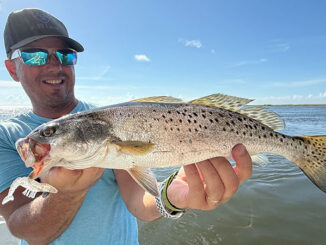
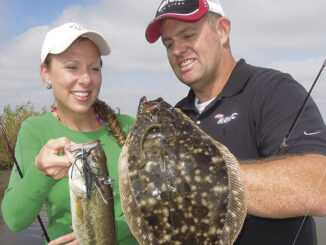
The largest firehose in the nation pours nutrients from the Rockies to the Appalachian Mountains into the delta. These nutrients encourage lush plant growth. Small creatures feed on the plants. Predators eat the small creatures. The delta marshes, bayous, bays and passes create ideal habitat for redfish, flounder, speckled trout, black drum, sheepshead and many other inshore species.
“The marshes around Venice are some of the state’s best for redfish,” said Jason Adriance, the Louisiana Department of Wildlife and Fisheries Finfish Program Manager. “The combination of proximity to salty water in the Gulf and fresh water mixing from the Mississippi River creates perfect habitat for redfish and their prey.”
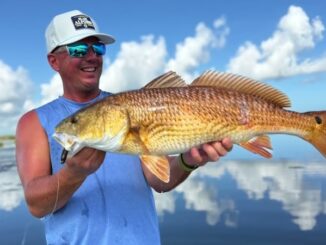
In the summer and fall, river levels traditionally drop and water clears. Saltier green water moves farther upstream. People can catch redfish in the main Mississippi River channel and all the passes. From about August to mid-October, big “bull” redfish return from offshore to spawn by the passes.
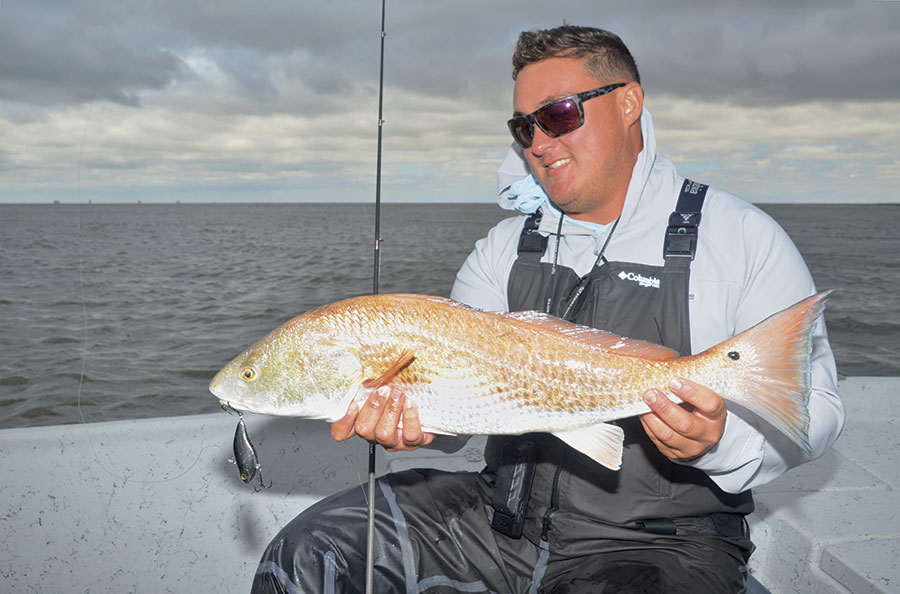
“The Mississippi River Delta is one of the few destinations where people can catch giant bull reds all year long, but in summer and fall, the water clears,” Frenette said. “That’s when sight-casting to individual redfish becomes a thriller. In late summer, huge bulls come into shallow bays in massive numbers. I sight-cast to 30- and 40-pounders. People can’t say that in many other places.”
Topwater baits
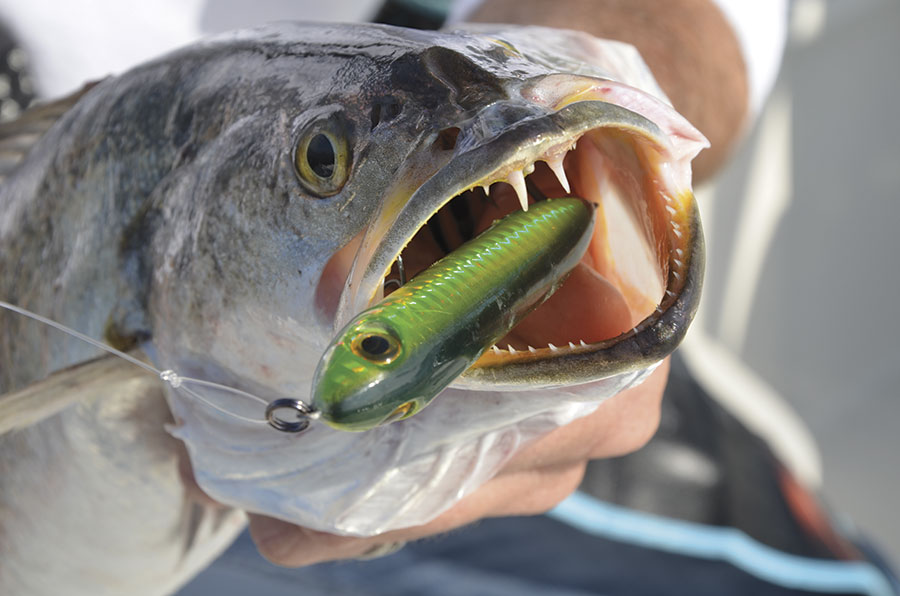
When those bulls congregate in enormous schools to terrorize baitfish in the bays, toss a big topwater bait at them. Few experiences in inland waters match the thrill of a giant redfish exploding on topwater baits. When not chasing bulls, watch for action along the shorelines. Look for spotted tails protruding from the water, bait jumping or large “V” wakes cruising the edges.
“July is a great time to throw topwater baits for redfish when the water calms,” Frenette said. “Nothing compares to catching big redfish on topwater baits for pure fun and excitement. It’s like someone dropping a concrete block into the water. It’s exhilarating!”
Many topwater baits simulate baitfish, especially mullets. Mullets commonly swim with their noses sticking out of the water to feed. Most saltwater fishermen prefer “walk-the-dog” baits that zigzag across the surface with scintillating enticement. The hefty baits sail long distances to cover vast tracts of water.
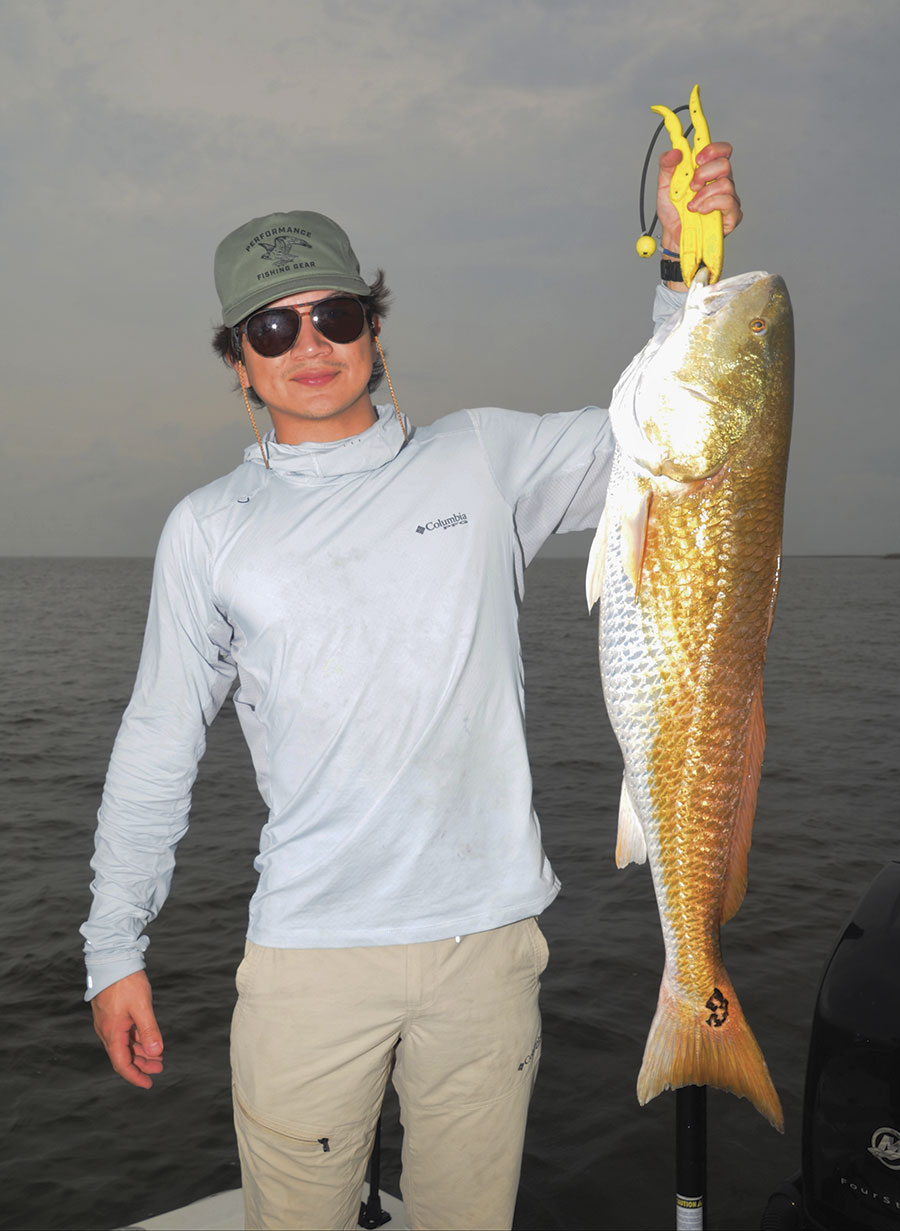
“I like the walk-the-dog style topwaters, especially a Strike King (www.strikeking.com) KVD Sexy Dawg,” Frenette said. “With topwaters, I don’t like to make a fast retrieve for redfish. I like to wiggle waggle it back to the boat with a stop and go retrieve. I’ll change the retrieve and work a steady retrieve to see what works best. Topwaters also work very well for larger trout, especially early in the morning or late in the afternoon during the summer.”
Also try the stop and go approach. Sometimes, fish swirl underneath a bait, but don’t take it. Stop the retrieve and just twitch it right there. That could provoke a vicious strike.
Grassy ponds
In the summer heat, shallow waters could become hypoxic. So many fish head to the larger, deeper bays where wave action oxygenates the water. People can still find exciting activity in ponds growing with grass. Influxes of fresh river water encourages plant growth.
“This year, the Mississippi ran a little higher so it added more fresh water to the ponds,” said Louis ‘Rock’ Rossignol with Venice Guide Service (504-481-7529, www.veniceguideservice.com). “That makes the grass grow better. Those grassy ponds are great places to fish for redfish because that vegetation oxygenates the water and clears up the algae. Little snails live on the plants and eat the algae. That helps filter the water.”
When grass grows thick, nothing slithers through salad like a soft bait with the hook inserted into a plastic body. Plastic frogs also work over grass. People normally don’t think of redfish preying upon frogs, but a hungry spot-tail marsh marauder might attack anything. Of course, all the old standbys, like shrimp under a popping cork, spoons, shallow-diving crankbaits and spinnerbaits, also tempt big redfish.
“In July, I head to the bays with more open water,” Rossignol said. “When the ponds get too hot and stagnated, fish move out into larger bays. I look for moving water. When we see breaking water creating white foam, that mixing adds oxygen to the water.”
Live shrimp
For fishing around foam, Rossignol rigs a live shrimp with a 2.25-inch green H&H (www.hhlure.com) Sparkle Beetle. The shrimp gives off natural scent. The plastic provides color.
“Instead of hooking a live shrimp under the horn, I hook it through the middle of its back so the hook comes out of the last joint in the tail,” Rossignol said. “When we hook a shrimp like that on a Sparkle Beetle, the shrimp lies right up against the Sparkle Beetle perfectly and stays on the hook longer. It looks more natural.”
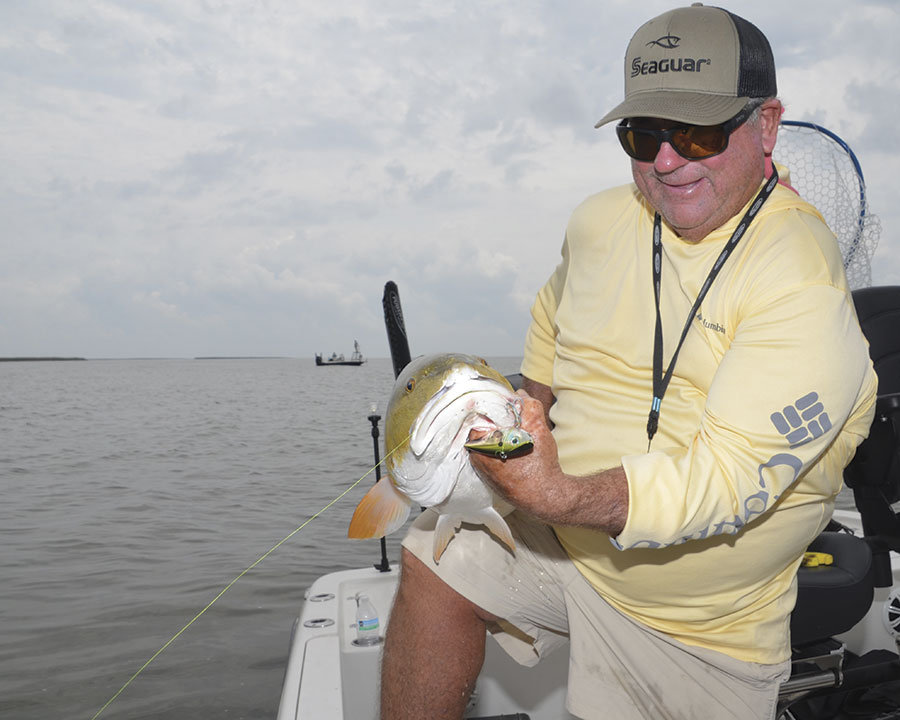
While fishing open water, lipless crankbaits cover considerable lengths of water. Run them slow and steady so the wobbling action gives off good vibrations. Periodically pause so the bait drops a couple feet before resuming the retrieve. That action mimics a dying shad.
“I like to fish ¾-ounce Strike King Red Eyed Shad (www.strikeking.com) lipless crankbaits,” Frenette said. “They work great for bull reds feeding on small fish. Redfish regularly congregate at the mouths of little drains pouring out of the marsh during a falling tide waiting for the flow to bring them something to eat. That’s a good place to throw a Red Eyed Shad.”
Speckled trout and tripletail
As the river falls and water warms, speckled trout move out to deeper, cooler water. The delta can produce some monster specks, but most range from 1 to 4 pounds with an occasional 5- to 7-pounder. During the summer, big trout congregate around Breton Island, near reefs in East Bay, West Bay, in the passes and around nearshore rigs.
“In July, the best trout fishing is often in the nearshore waters a mile or two from shore,” Rossignol said. “I fish a Marker 54 (www.marker54.com) soft-plastic Glide Shrimp under a cork with a long leader. As we pull the cork, the bait glides up towards the surface. Then, let it flutter down. Trout usually hit when it’s fluttering down.”
In the bays and nearshore waters, look for tripletail during the summer. Tripletail love to hover under floating objects. Approach from upwind and tempt them with a live shrimp under a cork or a shrimp imitation.
“Tripletail really start getting aggressive in July all the way through the fall,” Frenette said. “We see some in the 10- to 25-pound range. I catch tripletail with 4- to 6-inch soft plastics, like a Strike King Tidal Shrimp. I rig it worm style with no weight. Toss it next to single pilings or wellheads and let it slowly sink down to the bottom. Tripletail usually hit while it’s suspending. Cobia also show up in the summer.”
Tarpon
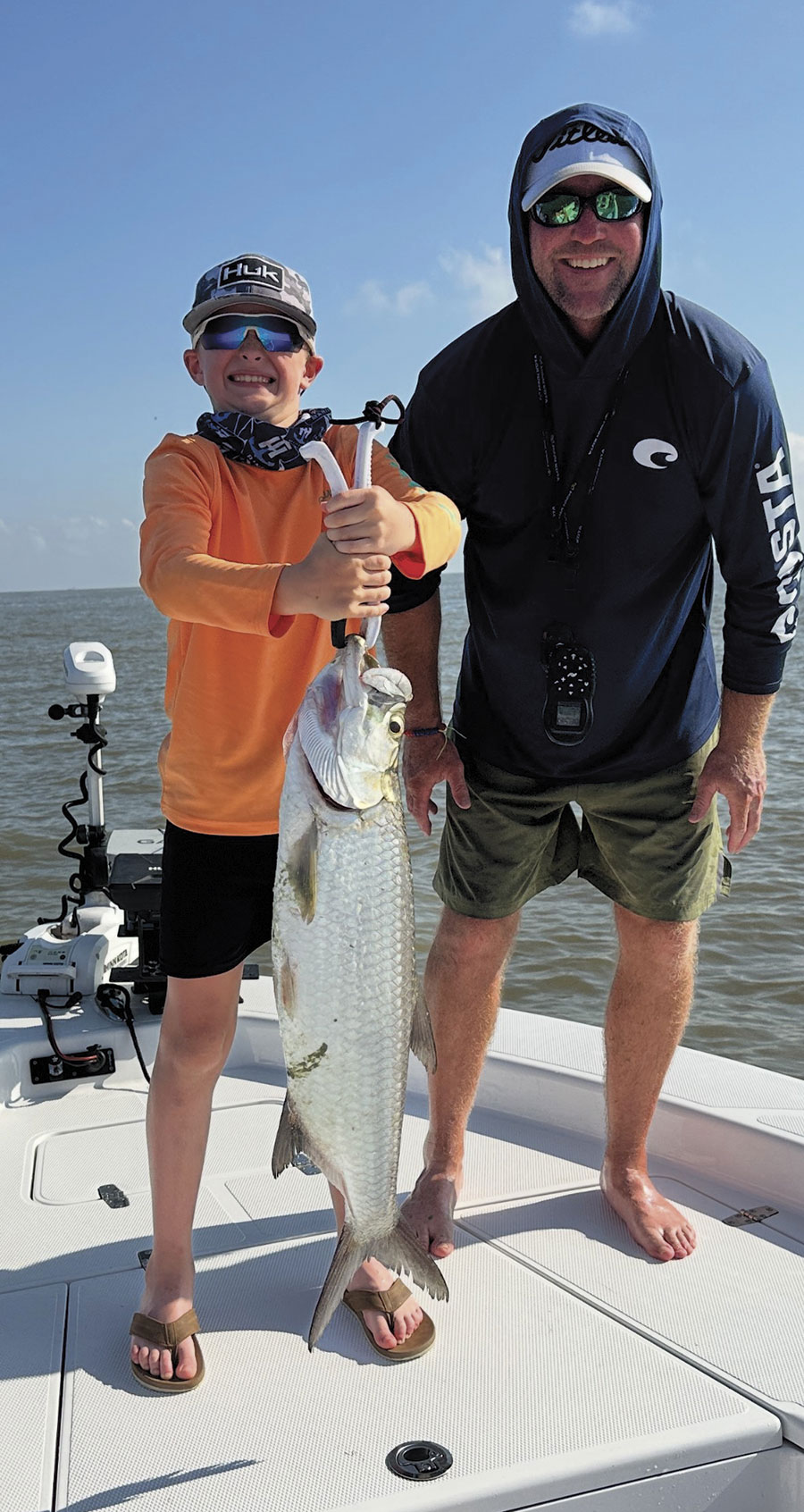
The delta probably offers the best waters in Louisiana for tarpon. The silver fish start appearing in mid-June and usually stay until the first cool fronts in October. Look for tarpon off South Pass, Pass-a-Loutre and Southwest Pass, in the West Delta area or near Breton and Grand Gosier islands.
“July is a great month for tarpon,” Frenette said. “They follow pogies and mullet. We sometimes see them slow rolling. If they are not showing themselves, we look for big slicks on the water or find them with our electronics. Many are in the 150- to 175-pound range. My biggest weighed about 217 pounds.”
Many people fish for tarpon with live mullet or pogies. Toss some chum in the water. Put some live bait on a drift-line or under a balloon. Some people cast flies at tarpon.
“In my opinion, the most consistent way to catch tarpon is with a Coon Pop lure invented by Coon Chouest,” Frenette said. “It’s a jighead rigged with a big circle hook. We cast it toward the schools and let it sink or slowly bump-troll it.”
Anglers might catch pompano on small hair jigs or jigs sweetened with shrimp. In the bays and nearshore waters, Spanish mackerel and bluefish smash any shiny lures. People can also catch sheepshead around any hard structures with live shrimp or small crabs. For pure adrenaline-pumping action, look for massive schools of jack crevalle terrorizing baitfish. Toss a topwater at them.
Whether fishing the shallow marsh ponds, bays or nearshore waters under petroleum platforms, the Mississippi River Delta provides incredible action for just about anything anyone wants to catch during the summer.