If you time your trips right, this time of year provides great kayak fishing for a variety of inland coastal species. Trout and redfish fill the interior marsh, flounder season is back open, and white trout, gafftops and others help fill anglers’ bags.
The cold weather and open hunting seasons bring less fishing pressure and concentrated fish. Of course, not every day is suitable or safe for kayak fishing. Avoid days with strong fronts and high winds, as these conditions are uncomfortable and unsafe for kayaks. However, pick the calm days, and you can be rewarded with some hot, wintertime action.
Safety is always the number one concern. Wearing proper clothing helps ensure a safe outing when kayak fishing on cold days. Windproof and waterproof is the key to keeping you safe and dry. Other precautions should also be taken to prepare for a safe outing. Even though kayakers generally don’t travel far from their launch site, these sites are often in more remote locations that may be difficult to locate if a rescue effort is necessary. Cell phone coverage can be spotty, so a handheld, waterproof VHF radio is a great accessory to have onboard. Prepare a float plan and make sure someone knows the general area where you are fishing. This narrows the search area and saves precious extra time in the event of an emergency.
Keep a basic survival kit and dry clothes in a waterproof bag or container to help avoid hypothermia if you get wet during your trip. Now that you’re prepared, get ready for some great kayak fishing.
Slow down your presentation
Often said, but always worth repeating, is to slow things down for winter fishing. Fish are cold blooded and their metabolism slows with the lower water temps. However, they still have to eat, just not as often or voraciously. Bites are often so subtle that they are hard to feel. Line watching is a good technique, and anglers should watch for any small jerk or twitch in the line. Although you might not have felt anything, set the hook, as it often is a bite.
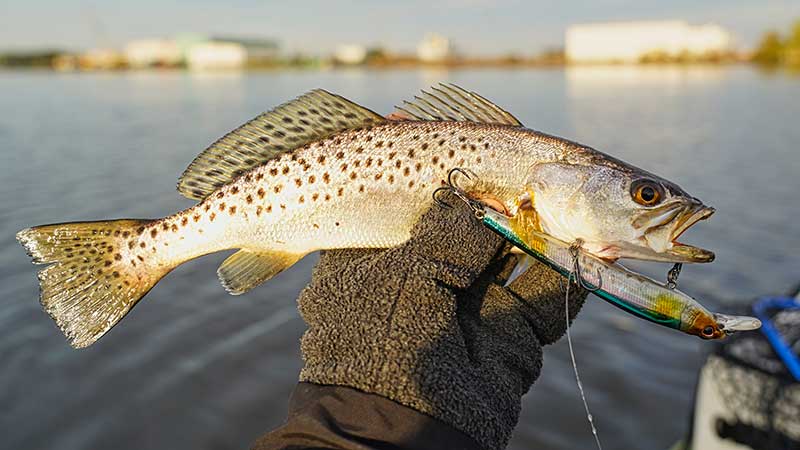
As the water cools and the days get shorter, fish stack up through the coastal marshes. The schools build as the fish concentrate into deeper, warmer waters. Find the fish and you’re likely to get on a bite that fills a limit without moving from spot to spot.
Although it may be available deep into winter, live shrimp is usually not necessary. A handful of your favorite plastic tails, jigheads, a couple popping corks and a few hard baits are likely all you need. Again, no matter the lure chosen, slowing down your presentation often draws strikes. If you want to use live, cocahoes are a hardy and effective wintertime bait.
Winter is a great time to catch a variety of species in the same areas, using the same baits. Remember that the fish are generally more concentrated. While the urge is always to head further in search of better areas, don’t pass up fish. Start fishing as close to your launch point as possible. Many times limits are caught not far from where you put in.
Trolling and drifting
Winter techniques vary widely, and chances are your favorite methods put fish in the kayak. On any given day, trolling, tight-lining, popping corks — and, yes, even topwaters — work during winter. All of these methods can be successful even on the same trip. Vary your lures and techniques to see what brings the best success.
There are two great techniques for winter fishing that are often overlooked but generally highly successful. Speckled trout are highly susceptible to being caught trolling or drifting. However, a variety of other species are caught using these methods as well. Drifting and trolling are similar, but not exactly the same. However, both are well suited for kayak fishing. Both rely on pulling a lure along behind the kayak, slowly moving along and letting the lure do all the work. Drifting doesn’t necessarily need some wind to move the kayak along. On days with too little or no wind, slowly paddling or pedaling imparts the same lure action.
A variety of lures can be used for drifting and trolling. The simplest is a jighead and plastic tail. As the kayak moves along, the lure slowly bounces the bait off the bottom. If you catch a fish, carefully note the location where the strike occurred. Move along, and if no more strikes occur, go back to that area of the strike and see if they may be concentrated. If not, start your troll or drift again. Even if they are not stacked, you’ll likely pick up a fish here and there, and that quickly adds up on repeated passes.
As winter wears on, many kayak anglers get a bit worn down and start dreaming of warmer spring days to come. However, doing so often causes missing out on some great fishing action. While kayak anglers in other states have to deal with closed seasons and fishing waters that turn into ice fields, we here in Louisiana are fortunate enough to have access to year-round fishing. Dress properly, pick the best weather days and enjoy our unique opportunity to be able to fish while others have to stay at the house.