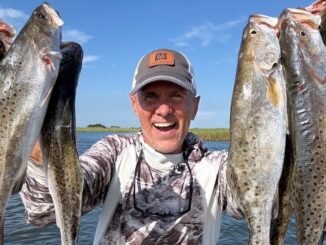
The Vermilion Bay system south of New Iberia can produce good fishing all year long, but action heats up as the spring sun warms its waters.
“In March, specks are going into a transition phase,” said Troy Nash with South Louisiana Redfishing (337-412-5950, www.southlouisianaredfishing.com), which runs out of Cypremort Point. “In March we look for specks right along Cypremort Point. They will be along some of the banks where we get a little bit of tidal movement.”
For specks, Nash recommends popping-cork rigs. Anglers can tip it with a live shrimp, if they can find it, or a piece of fresh shrimp on a jighead. With fresh shrimp, pop off the head and thread the body onto the hook. Shrimp imitations, such as Vudu, D.O.A. or Gulp!, can also work under a cork.
“Often, the bay has sediment in it, so we fish Gulp! or soft plastics under corks,” Nash said. “We use about a 3-foot longer leader to get the bait down closer to the bottom where the fish are at that time.”
The brackish system receives freshwater influence from the nearby Atchafalaya River mouth. When the river gets high and muddy, it can dirty the water in the bay. Usually, that happens later in the spring after snow melt comes down the Mississippi River into the Atchafalaya.
“If we don’t get too much rain coming down the Atchafalaya, the fishing is pretty good,” Nash said. “The tides don’t affect fishing as much as the winds do here. A strong south or west wind churns everything up. I like a south or west wind.”
Redfish aren’t picky
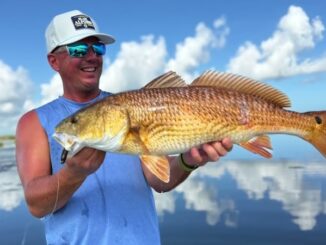
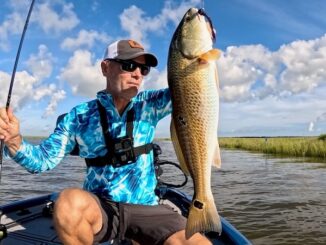
Muddy water doesn’t bother redfish as much as trout. In fact, reds commonly hunt in muddy water and along transition zones. The dingy water hides them from prey. Redfish primarily hunt by smell and sound rather than sight. Use lures that generate significant sound and vibrations in the water.
“I like to throw bladed jigs, like a ChatterBait, or spinnerbaits for redfish,” Nash said. “Redfish move up into shallow water to feed, but if it’s murky, a natural bait sitting still won’t attract as much attention as something making vibrations. With a bladed jig, people can cover considerably more water than with a popping cork and create a lot more sound.”

Dark bottoms can retain heat from sunshine. Shallow waters in the sunshine heat a little faster than deeper waters. Many people fish marshy shorelines or look for small tributaries flowing out of the marshes. They might use a popping cork or various lures.
“I like to find current,” Nash said. “I like an incoming tide at the mouth of a creek. As the tide comes in, it brings fresh nutrients and bait. Stop about 50 to 100 yards out and work toward the shallows. Redfish will be up in the shallows where the sun warms the water.”
Warmer days
A hard cold front can shut fishing down for days. After three days of warmer, sunny weather, fish become active again. Since they didn’t eat for days, ravenous reds look for anything they can devour.
Anglers can catch black drum all year long. Sheepshead stay active in cold water. Look for sheepshead and redfish by rocks or other hard structures. Hard objects absorb solar energy and radiate that into the water column. Cold-blooded fish go where they can find slightly warmer water.
Flounder spawn during the winter in the deep waters of the Gulf. In the spring, they migrate back into the bays and estuaries. In Vermilion Bay, anglers might catch an occasional flounder in March, but most flounder don’t return to the system until about April.