One of the top crappie lakes in Louisiana, Lake D’Arbonne should produce some excellent catches this spring as the water warms.
Impounded in 1964, the lake spreads across 15,000 acres of Union and Lincoln parishes near Farmerville. Much of the lake resembles a shallow cypress swamp. As water warms, crappie spawn around flooded tree trunks, cypress stumps, gnarled old fallen trees and other structures in 2 to 5 feet of water.
“Once the water temperature reaches 62 degrees and it stays there for several days the crappie commit to spawning and hold on the trees,” said Steve Danna, a professional crappie angler from Farmerville. “If the weather turns cold again, they move back out to the deep sloughs where they stage until they go into the shallows. One day, I’ll catch suspended fish in 22 feet of water. A few days later, they will be all over the trees.”
Danna’s gear
During the spring, Danna uses 10- or 11-foot B’n’M (www.bnmpoles.com) Tree Thumper crappie jig poles of his own design. He pitches 1/32-ounce jigheads with No. 4 sickle hooks around the trees. On windy days, he ups the offering to a 1/24-ounce jighead, but never adds additional weight above the line. He keeps two poles handy with soft-plastic temptations and two with his own hair jigs to see what works best.
“Many crappie fishermen hate wind, but that’s the best time to fish the trees,” Danna said. “Crappie are more aggressive then. Don’t overlook stumps and laydowns close to the bank. Those stumps and laydowns indicate broken cypress trees. The root structure comes out quite far from a cypress tree. Crappie get on the roots.”
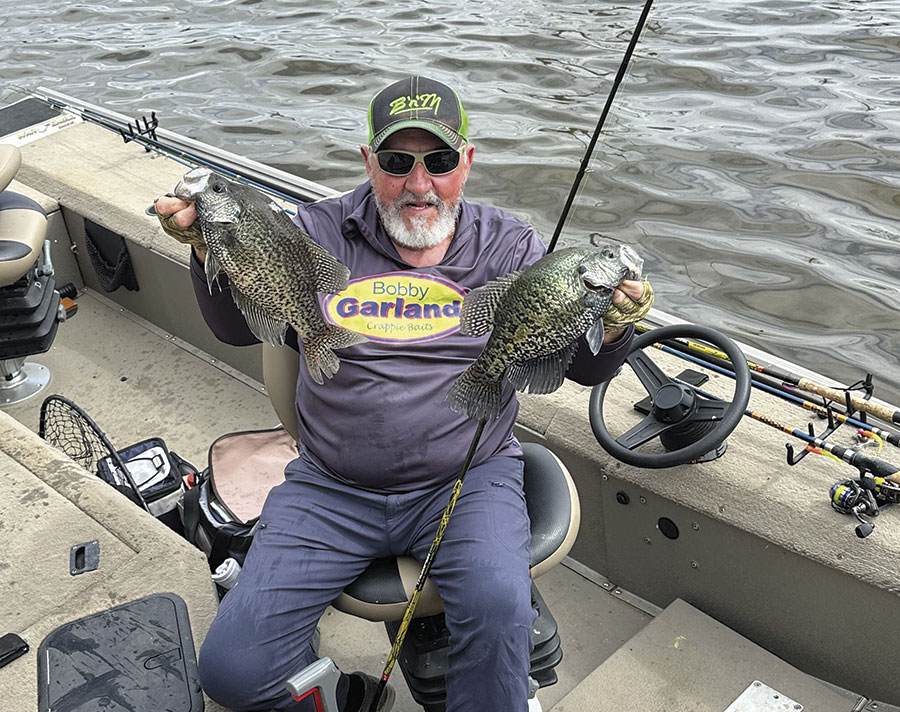
For soft-plastic temptations, Danna prefers Bobby Garland (bobby-garland.com) 1.75-inch Live Roam’Rs in black gum, pecan and live minnow colors for spring fishing. For his own hair jigs, he likes blue and pink, pumpkin and chartreuse or brown and white.
“I look for groups of trees in 3 to 5 feet of water or a cluster of five to six trees off by themselves,” Danna said. “I run that pattern, hitting groups of trees. When I see trees I like, I don’t move right up on the trees. I stay back off and ‘strip and pitch’ to them.”
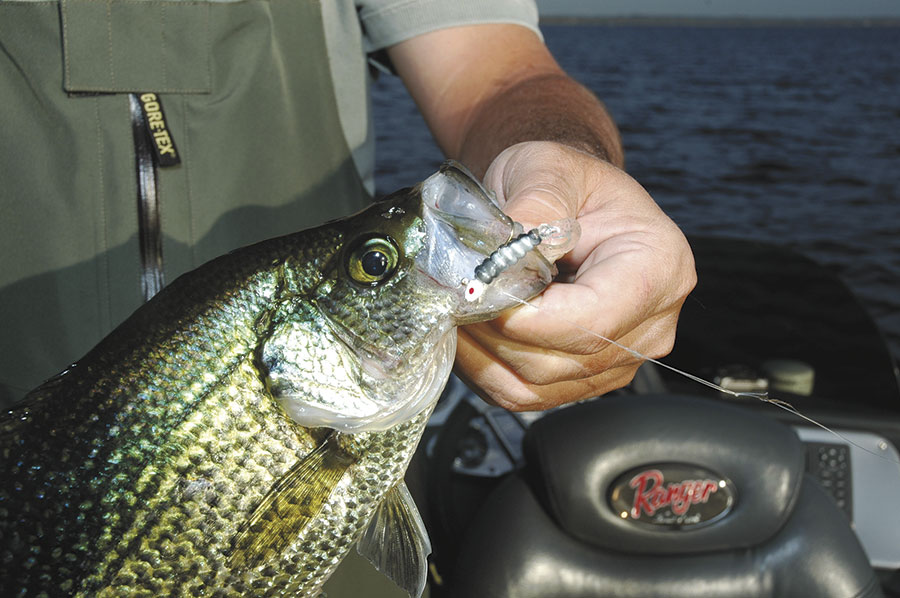
A 1/32-ounce jig, especially a hair jig, doesn’t make much noise hitting the water. Just let it fall naturally as close to the structure as possible. Crappie normally hit it on the fall. Watch the line as the bait sinks. Anglers might just see the line jump or feel a slight tap.
Treeing crappie
Crappie could strike anywhere from just below the surface down to the bottom. Often, they hang around cypress roots at the bottom. If nothing hits, hop the bait up off the bottom. Work around each tree trunk hitting every piece of structure from multiple angles before moving to another likely target area.
Sometimes, Danna catches one or three fish from a tree. He’s landed as many as 13 from the same trunk before. In the spring, anglers frequently catch the biggest fish all year. Lake D’Arbonne can produce crappie topping three pounds and many exceeding two pounds.
“The fish are ready to bite with water temperatures in the upper 60s,” Danna said. “I’ll catch crappie on the trees all the way through the first or second week in June. In March, I fish from 18 inches to 5 feet deep around the trees. As it warms up, move out to deeper trees.”
After crappie finish spawning, they pull out to deeper sloughs and creek channels. They stay in 5 to 12 feet of water and hold there through the summer heat.