Since his boyhood days fishing with his parents, Kevin Suit of New Iberia has tapped the bass population most Novembers at Lake Dauterive-Fausse Pointe.
Many anglers refer to the system these days simply as Lake Fausse Pointe, or Fausse Pointe. Apparently that’s because most of the named and popular fishable waters are in the lake nestled on the west side of the West Atchafalaya Basin Protection Levee.
Make no mistake about it, Suit knows them all and can’t wait to sample the bassin’ once again this month like he did growing up and fishing there each year with the late Jerry Suit and the late Margaret Suit. He learned well from them and passed his knowledge on to his sons, Ben and Zach.
So many years later, long after his days competing for and winning Angler of the Year a few times in the old Basin Boys Bass Club, making the Louisiana B.A.S.S. Federation State Team two or three times and fishing Bayou State Sportsman tournaments, the 66-year-old Suit still enjoys fishing with his sons and has gotten back into competitive fishing with the Louisiana Bass Cats. Lake Fausse Pointe remains his close-to-home spot to catch quality bass this time of year.
“It’s heavily fished in the spring, and in summer it’s left alone,” he said, noting most of the attention June through August is on the Atchafalaya Basin. “The water cools down. I really think you can catch bass that time of year. I’ll name some places — cypress trees on the Peche Coulee side, Texas Field canals and the borrow pits, including the borrow pit canal (that runs along the levee south from Lake Fausse Pointe State Park).”
What to throw
Suit, who retired as lead at Field & Stream, then from Dick’s Sporting Goods in Lafayette, looks for baitfish and clean water. When he’s around the cypress trees, he prefers water clarity 4 to 6 inches deep. He’ll cast a chartreuse/blue/white spinnerbait with a silver Colorado and a gold willowleaf blade, or flip a black/blue jig-n-soft plastic combo or soft plastic creature baits, adding “the fish will tell you what they want.”
His main focus is on the cypress trees.
“If I commit myself to the cypress trees, I put my trolling motor down where I’ve caught before, mark every fish I catch (enter waypoints),” he said. “I go at a good pace but I don’t speed through them. I fish all the sides.
Suit pointed out he patterns them by noting which side most are on and whether the cypress trees are outside, middle or inside.
“I guess if I really had to focus somewhere it’s on the middle to inside (cypress tree line) that time of year,” he said. “And I’d definitely concentrate where knees (cypress knees) are, also.”
Single trees with knees around them often produce better than single trees.
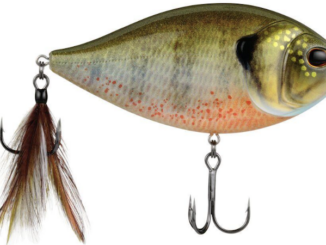
When he targets bass in the borrow pits or borrow pit canal and Texaco Field he probes deadfalls and other structures with black/blue jig-n-soft plastic combos after fishing early or on overcast days with buzz baits, otherwise relying on spinnerbaits and shad-colored Black Label crankbaits.
After a cold front
Bassin’ usually heats up after a cold front when the north winds get the drains flowing, Suit said. Buzz baits and spinnerbaits trigger bites in the Texaco Field, especially on cloudy days.
It’s hard for him to stay away from the cypress trees, however.
“If I was fishing (in November), I’d probably fish a lot of cypress trees,” he said. “There’s less traffic, not as many boats, and the best fish ought to be in there.”