Covington angler shares his strategy for fishing the bass spawn
When it’s February in Louisiana, the discussion at the boat launch often involves phrases like “they’re moving up already,” and “they’re on their beds now.” But for Jason Pittman of Covington, figuring out the bass spawn isn’t as easy as some make it out to be.
Pittman was born in Pineville and learned early that the spawn translated to catching big bass.
“Whether it was a long drive to Toledo Bend or a shorter drive to Lake Rodemacher (CLECO Lake), the spawn was always memorable and eventful,” he said. “At the age of eight, I didn’t have a grasp or realize exactly what was happening in February. All I knew is that duck season was over and the bass fishing was getting better by the day. I don’t want to say it got easier to catch fish, I just think the bass moved to places that bank beaters fished when they came up to spawn.”
One particular trip is burned into Pittman’s memory. It’s a memory that he often revisits every February.
“One particular day that has stayed with me over the years was landing two fish in the 5-pound range on a spinnerbait,” he said.
His father, Floyd, had the two fish mounted on the same piece of driftwood.

“Those two fish were caught off of laydowns in super shallow water and it wasn’t a coincidence, it was spawning time for them,” Pittman said.
Paying attention
As he grew older, Pittman started to figure out the spawn better, and today he’s able to put together the pieces of what he likes to describe as a “puzzle.”
Like most things in Louisiana, our state is far different from others when it comes to the bass spawn.
“What’s so unique about Louisiana is that the spawn isn’t necessarily a ‘wave’ or a push of bass to the shallows like it is in other states like Missouri, Arkansas and Oklahoma,” he said. “The idea that ‘all the bass spawn at the same time’ doesn’t fly with me due to the fact that I’ve seen four different bass use the same bed on the Tchefuncte River during February and into March.”
The Covington angler said it all boils down to conditions and paying attention to water depth and temperature.
“On Toledo Bend, the spawn starts on the northern end of the lake this time of year and gradually progresses down to the lower end of the lake by April,” he said. “This happens on other bodies of water as well, with the north winds being blocked and allowing the northern most waters to warm faster, which in turn will trigger a bass’ natural instinct that it might be time to start looking for a spawning area. Water clarity and depth play a factor as well with sun penetration.”
And then there’s the marsh

For bass fishermen who fish the marshes of Southeast Louisiana, the puzzle goes from a 100-piece to a 1,000-piece box. For anglers that target bass in the marsh, tide swings and north winds factor into the game.
“A decent warm up followed by a nasty front with brutal winds can wreck the spawning area when the water gets blown out,” Pittman said. “The fish remember these things from year to year and still might choose a shallow area but will have access to deeper water if that were to happen.”
Pittman recommends focusing on man-made canals due to the shallow cover along the banks. These canals contain deeper water in the middle where bass can retreat to after a hard cold front.
Pittman’s picks
In February, Pittman has three go-to setups for shallow-water fish. He refers to these as his confidence baits and has three rods laying on his bow ready to go this month.
- Spinnerbait
This month, Pittman likes to combine covering a lot of water with concentrating on cover. For this, he uses a spinnerbait in any shad color or white.
“Just sling it!” he said. “Throw it at every piece of cover you have in front of you — from a boat dock, to a lay down, to a stump, to a cypress tree. Keep moving while also paying attention, because when you do get a bite, the chances of replicating it on the same type of cover are pretty good.”
Pittman recommends trying different retrieves with the spinnerbait.
“Don’t be scared to vary the retrieve,” he said. “Flutter the blades by twitching your rod tip or just kill the spinnerbait around cover to see if you get a reaction from an aggressive fish.”
When fishing a spinnerbait, Pittman uses a 7-foot-1, Medium Heavy KASTKING Rod with a Mega Jaws Blacktip 7.2:1 gear ratio reel. He loads the reel with 17-pound Kovert Fluorocarbon.
- Plastic craw
Another faithful bait for Pittman over the years has been a Texas-rigged Mister Twister Poc’It Craw in Green Pumpkin or Watermelon Red.

“Depending on the depth of the cover or the rate of fall I want the bait to have, I will fish it with a ¼-ouce or a 3/8-ounce weight that’s pegged to keep the bait together with the weight,” Pittman said. “A lot of people throw creature style baits this time of the year, but for me the compact design of the Poc’It Craw is deadly on a shallow fish that might not be looking for a meal but won’t pass one up if it’s in front of them.”
The craw allows him to slow down his fishing pace and start picking cover apart when he finds an area that’s holding fish. When using the Poc’It Craw, Pittman prefers a longer rod.
“I like a 7-foot-3, Heavy KASTKING Rod with a 7.2:1 gear ratio reel lined with 2-pound Kovert Fluorocarbon,” he said.
- Jerkbait
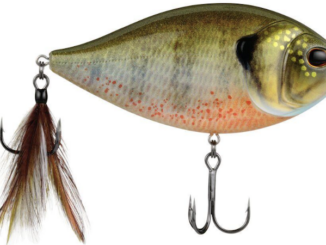
As a third option, Pittman uses either a Smithwick Gold Rogue or a Red Fin made by Cotton Cordell.
“I know these profiles imitate a minnow or baitfish, but it dang sure gets a reaction from the bass that are shallow,” he said. “There’s something about that Rogue in February that the bass can’t stand, and for those that fish it constantly it might be the ‘swipe’ they take at it that is awesome to see.”
As far as the Red Fin, Pittman was introduced to it in the 90s and has been throwing it at cypress trees ever since.
“This high floating bait is hard for a bass not to bite,” he said.
When using these baits, Pittman goes with a 7-foot, Medium KASTKING rod with a 5.4:1 Mega Jaws reel lined with 15-pound KASTKING Kovert Fluorocarbon.
Putting the pieces together
When it comes to fishing the spawn, hardly anything is random. Pittman recommends paying attention to where the bites are coming from and building on that knowledge.
On Pittman’s latest trip to the Tchefuncte River, he was fishing a stretch of cypress trees.
“I was throwing a spinnerbait and I saw a fish boil off a tree when my bait hit the water,” he said. “It wasn’t spooked, but it moved just enough water for me to tell it was a shallow fish that wasn’t impressed or interested in my spinnerbait.”
Pittman mentally marked the spot and continued down the shoreline fishing another 20 yards. He then spun back around and fished back to where he saw the fish.
“This time I flipped the Poc’It Craw past where I had seen the fish previously move, drug it near the base of the tree, and felt the weight of the fish easing away towards deeper water,” he said. “My hook-set hauled water and my craw returned with one less claw on it, but I realized the fish was relating to that tree.”

Pittman gave the spot an hour and returned.
“I made the same flip to the base of the tree and the bass bit again,” he said. “This time I was able to connect on the hook-set to land it. I know that if I wouldn’t have seen that fish move off the tree earlier in the day it wouldn’t have been caught because I would’ve just kept fishing through the area.”
As the temperatures warm, the spawn will continue to provide anglers with puzzle pieces to fit together. Pittman said there’s no telling what the next day might bring so operate with what each day offers.
“The spawn is just a puzzle,” he said “Some days there are way too many pieces and other days it’s a kiddie puzzle with hardly any pieces to put together. It will humble you quickly because the ‘here-today-gone-tomorrow’ aspect will come into play due to conditions changing.”
Hopefully you can put all the pieces together and make this spawning season a memorable one.