
Freshwater Fishing
Black Bayou Lake is pretty as a postcard
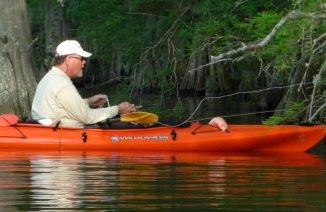
Black Bayou Lake, the centerpiece of the Black Bayou Lake National Wildlife Refuge, is pretty as a postcard. […]
Black Bayou Lake, the centerpiece of the Black Bayou Lake National Wildlife Refuge, is pretty as a postcard. […]

Kincaid Lake is about 10 miles west of Alexandria south of Highway 28 West. It lies partially within Kisatchie National Forest.[…]

The word “bream” (pronounced “brim”) is a Southernism. Our northern friends call them by their proper species name, or they lump them all together as sunfish — which sounds altogether too sissy-like. In the South, we talk about bull bream.[…]

This bream, officially known as the redear sunfish, is named for the red-margined flap extending rearward from its gill cover.[…]

This feisty species is definitely the backbone of the bream fishery. It gets big — for a bream —at 10 inches, and during its summer-long spawning season forms dense beds of nests.[…]
Speckled trout action should be gangbusters this month after a colder than normal spring. There was plenty of clear water in April and that favors topwater action.[…]

Although Lyle Soileau definitely uses a standard anchor, he also has another tool to help hold his pontoon boat in place.[…]

Bream will stack up where tangles of cover is scattered along the lake bottom, and that means anchoring often results in anchor hang-ups.
[…]

Toledo Bend is vast, so there are myriad areas in which to look for bream beds.[…]
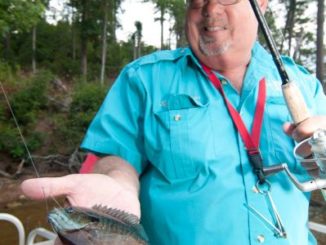
Any slack in the line will allow fish to swallow the hook pretty deep. And the small mouths of bream can make it difficult to remove them.[…]
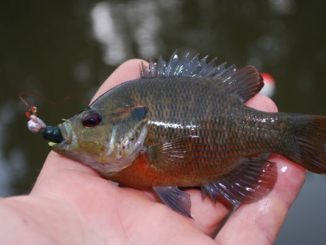
This pretty little fish, properly known as a spotted sunfish, is quite often caught by bluegill fishermen who are fishing in sluggish streams, swamps and lowland lakes.[…]
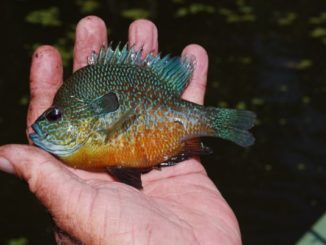
Fishermen call two species of bream “sunperch:” the longear sunfish and the dollar sunfish. Both are brilliantly jewel-like in coloration, plastered in red-oranges and yellows and covered with turquoise reticulations.[…]
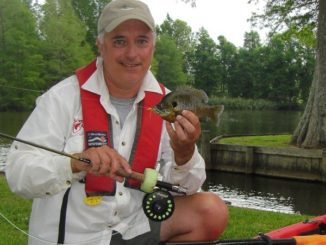
Look at a map of eastern Louisiana, from Bastrop to New Roads, and you’ll realize the power of the mighty Mississippi. Over millennia, the great river has carved out dozens of deep waterways, most of which have become isolated from the river’s flow. […]

The broad-shouldered man actually tiptoed when he moved around in his boat. “Being quiet,” he explained, “is real important when you are fishing for bull bream in shallow, clear water.”
We were indeed in shallow water — 2 to 3 feet deep. Through the tea-colored water, multiple, round plate-sized bream beds could be seen as dark blotches on a lighter bottom. A resident male bluegill was likely hovering over or around the nest, guarding it against intruders that could eat his eggs or young.[…]

Is there anything better than the fast action of a spring bream bed? The big redears we call shellcrackers in South Louisiana and chinquapin up north go to the warming shallows first, followed by bluegill and other sunfish.
When that happens, it’s time to take advantage of the golden opportunity to battle big panfish on a fly rod or ultra-light spinning gear.
Filling the cooler with chunky “bull” bream can work up an appetite, remedied by a fish fry at sundown. It’s just one more reason to love spring in the South.[…]

The day started out, well, rough. I hadn’t slept well at all, and then I lost an altercation with a coffee cup. I was left teary-eyed as the hot liquid dripped out of my close-cropped hair and down my face.[…]