Massive spaceport to be built on 125,000 acres of coastal marshland near Pecan Island
By nature, Louisianians religiously follow the first public warnings about tropical disturbances in the Atlantic Ocean. They hang on to each succeeding advisory about storms possibly entering the Gulf, which might, as many have, impact Louisiana’s Gulf Coast.
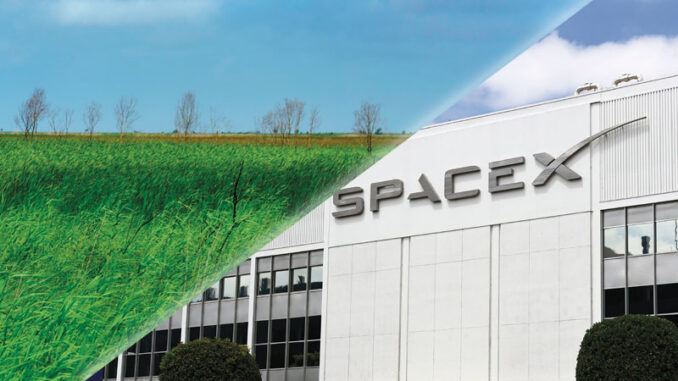
Early reports of another kind, i.e. rumors near and far, spread like wildfire across Louisiana in April and May about the possibility of a major aerospace company’s pending purchase of land south of Louisiana Highway 14 — specifically 125,000 acres of prime Louisiana coastal marsh around Pecan Island. The colossal news officially made landfall on Aug. 25 when Elon Musk’s SpaceX and Louisiana Gov. Jeff Landry, a St. Martinville native, announced the 125,000-acre development — 18 miles along the coastline — supported by a $100 billion capital investment in Vermilion Parish to build Starbase Louisiana.
“This is nothing short of a transformational moment,” Landry said. “This project means more than just steel, technology and capital. It represents jobs for our families, it represents momentum for our communities and it represents protection for our coast.”
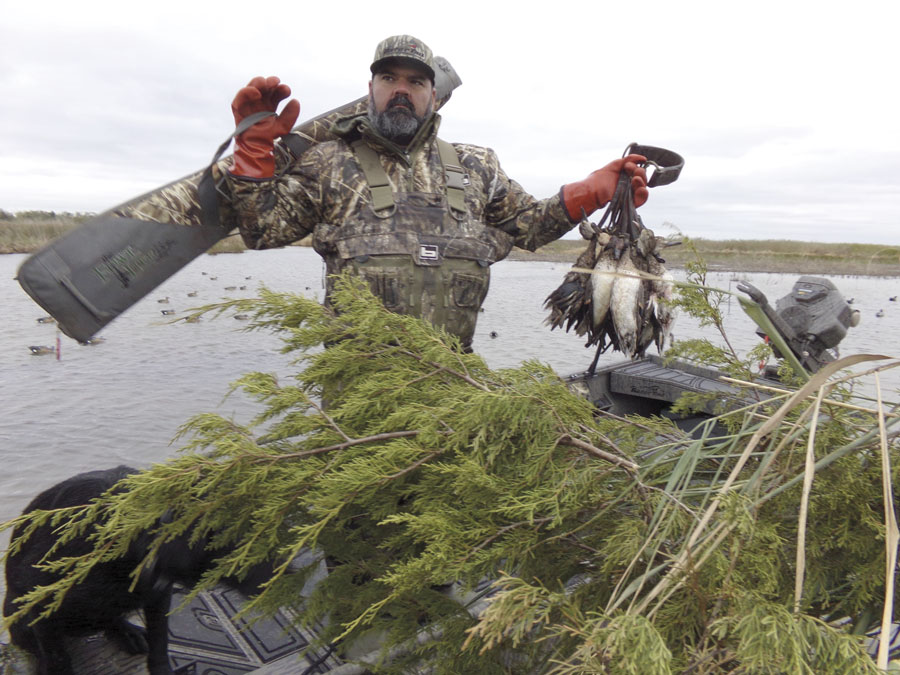
The area’s habitat stands out as a crucial stopover destination for migrating waterfowl in the Mississippi Flyway.
A rich history
Several generations of outdoorsmen, who also hunt alligators and go fishing there, have enjoyed countless duck hunts in those ecologically rich and economically untouched wetlands. The area has been managed primarily for hunting purposes since the 1950s by the Vermilion Corporation under the direction of president and board chairman P.R. Burke of New Iberia. Previously owned by ExxonMobil, it is managed through a long-term surface lease by the Vermilion Corp., which along with its predecessors has been an invaluable steward of the land for more than 100 years.
Hundreds upon hundreds of duck hunters will get out on their leases again this waterfowl season. After that? Construction on the new Starbase is expected to begin in 2027, with the first launch from the site targeted for 2029, according to SpaceX.
After experiencing similar processes in Florida and Texas, SpaceX has begun working with Louisiana wildlife and coastal agencies to assess the impacts of a large industrial complex along the Gulf Coast.
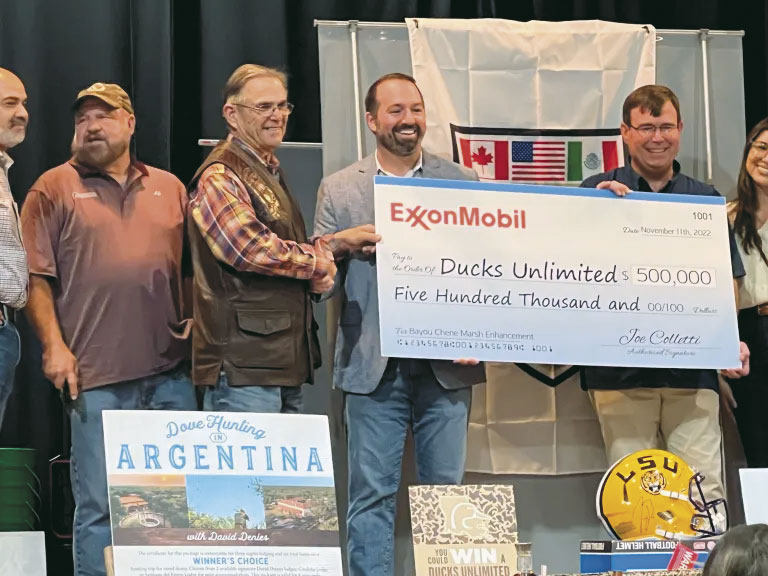
“We are committed to doing our part to ensure that this land doesn’t disappear,” Gwynne Shotwell, SpaceX COO and president, said. “SpaceX is partnering with state and federal agencies to expand Louisiana’s coastal master plan, including shoreline protection, marsh restoration and wildlife conservation.
“In order for us to build our infrastructure, to bring the launch pad, to bring the rockets here, we’re going to have to literally shore up the shoreline. It’s going to be a historic coastal restoration.”
The Vermilion Corporation
Burke, 80, a lawyer, avid duck hunter and dedicated conservationist, has devoted his adult life working with duck hunters and addressing the needs of the marsh, as outlined in New Iberia native Jason P. Theriot’s book “Great Game Paradise” published in 2018 about the Vermilion Corp.
In the book’s Foreword, Burke saluted a friend and one of America’s greatest conservationists, the late E.A. “Ned” McIlhenny of Avery Island, the McIlhenny Company founder who created Tabasco, and wrote: “McIlhenny’s dream revolved around the abundance of waterfowl in Vermilion Parish. He also understood the need for conservation measures and played a large role in the creation of the Rockefeller Refuge (the Vermilion Corp.’s western neighbor) and the Russell Sage Refuge and Audubon’s Paul J. Rainey Sanctuary (eastern neighbors to Vermilion Corp.). Today, the founders would be amazed at the condition of the marsh compared to that which they knew.”
His words were from the heart. Burke began duck hunting with his father after World War I. He learned his father, who organized a calvary, got it federalized and commanded it, was a gung-ho outdoorsman before the war.
“I was late in his life but he never wanted to shoot a gun,” Burke said. “He didn’t want to kill anything. I begged him to go duck hunting. I was 5 or 6.”
His dad took him and his 20-gauge shotgun to an old trapper’s duck blind in Lee Station of rural Iberia Parish. A dos gris dropped down to the decoys and his father “gave the duck every chance” to fly way but ended up dropping it.
To this day, Burke said, “I remember holding the duck. I remember thinking how wonderful it was my old man could shoot.”
“The key to that story 75 years ago, I still remember that hunt with my father,” he said. “He put the gun down after that and never lifted it again.”
Fast forward so many years, Burke said, through high school, then college, then the U.S. Navy, then law school at Tulane and eventually meeting McIlhenny in 1972, and his love for duck hunting blossomed in Vermilion Parish around Pecan Island.
Burke has done his best as president and board chairman to improve Vermilion Corp. To this day, he cherishes every duck hunt in the marsh.
“The whole thing,” he said. “The experience. You see and hear the marsh come alive. You listen to the sounds of the marsh as it awakens. You get to see the sunrise. If you’re lucky, ducks come along.”
A dedicated hunting guide
Marlon Koch of Kaplan grew up hunting ducks and alligators on the land run by Vermilion Corp. Regardless of the abrupt change in ownership, Koch, 35, said he still loves duck hunting.
“On a scale of 1 to 10, I’d put it at 25, even with all the stuff going down and we don’t know the future,” he said. “But I know one thing … I will bring my kids hunting. I’m not going to change.”
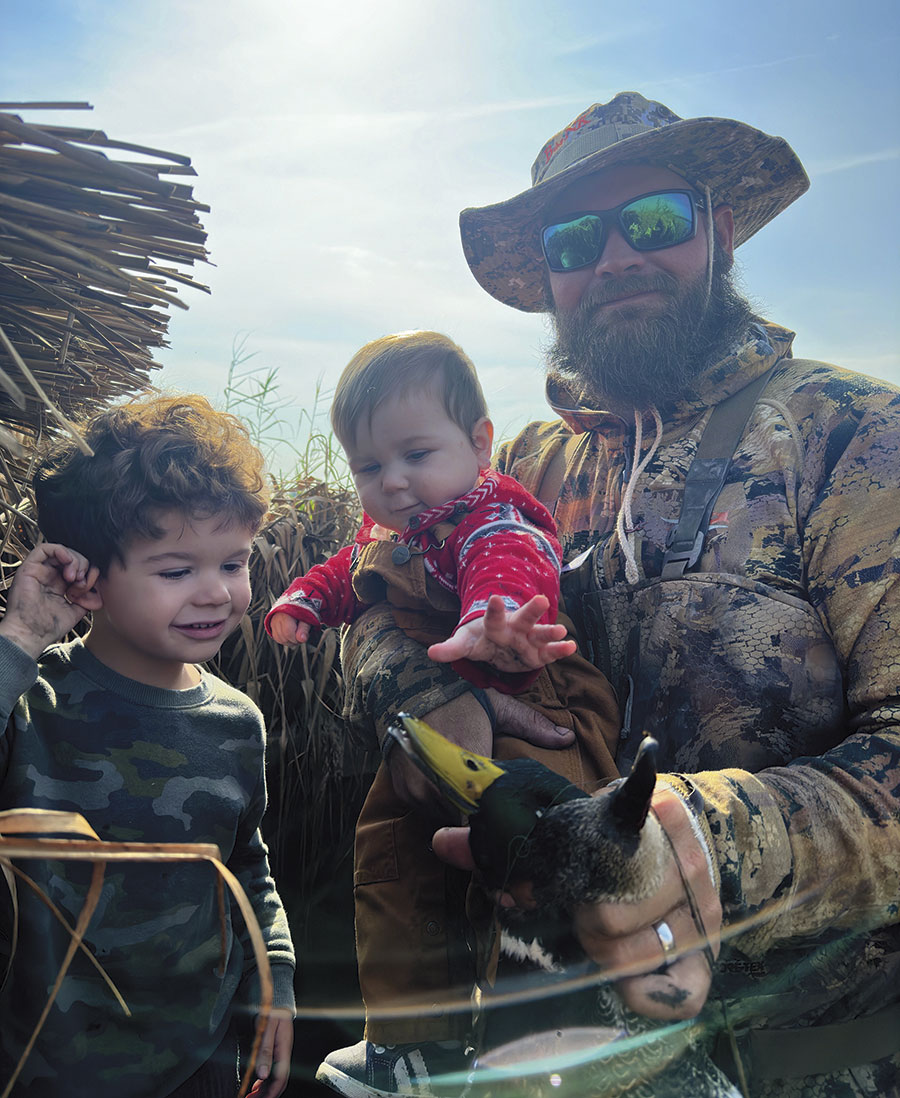
It’s about family, always has been, always will be. For example, the duck hunting guide and his wife, Emily LeBlanc Koch, took their sons, Graham, 6, and Bennett, 2, to his favorite duck hunting blind on Christmas Eve morning in 2025. It was a special day for the family.
Koch also gives it his all on guided duck hunts.
“We had a good season last year compared to what everybody else did,” he said. “I feel like we did phenomenal.”
Burke called Koch “a wonderful guide, a wonderful duck hunter.”
Koch also had kind words to say about Burke, the older, veteran outdoorsman with a storied work history on Vermilion Corp.
“I tell you what, he’s one of a kind. He helps out his workers. He’s a dang good boss,” Koch said, noting he’s guided for nearly 18 years for Vermilion Corp., where the camaraderie is unparalleled.
“It’s all I’ve really known,” he said. “You know everyone hunting and you can joke with them. It’s pretty much hunting with neighbors.”
Depending on the weather, the harvest mostly is gray ducks and teal. Occasional cold fronts push pintails and mallards into the region.
“I remember back in the day, when you get a cold front, you’re going to kill mallards and pintails,” Koch said.
Strong connection to the land
Kyle Broussard, 48, of Loreauville, the Gatortail co-founder who designed the state-of-the-art “mud motor” in 2002 as a student majoring in mechanical engineering at the University of Louisiana-Lafayette, coincidentally, while duck hunting the Pecan Island area, has a cozy duck hunting camp just west of Pecan Island along Louisiana Highway 82.
Thanks to Broussard, duck hunters nationwide got a good look a few years ago at the marsh’s breathtaking aura and its duck hunting around Pecan Island on the No.1-ranked cable television outdoors show, “The Fowl Life.”
“I’m blessed,” Broussard said. “I can hunt anywhere in the country, but I choose Pecan Island as a hunting place. I’ve been hunting the same piece of property since 1998. In one of the blinds, three generations have hunted the same blind. It means a lot to us.”
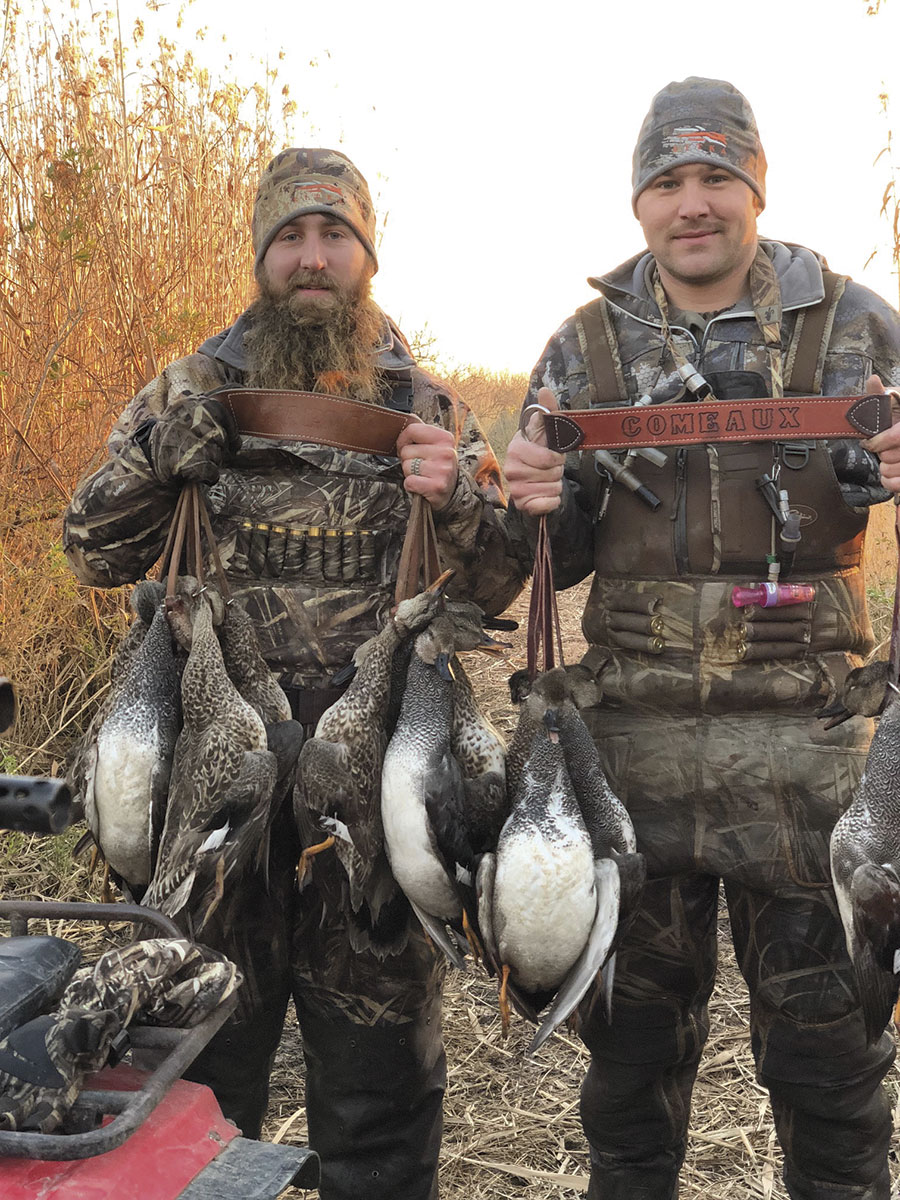
Broussard noted he primarily has hunted all those years on Vermilion Corp. land as well as on Miami Corp. land. He said the underlying reasons for hunting the area so long are for the sake of their children and the culture.
“Basically, we’ve been fighting Mother Nature for years,” he said.
Each time a hurricane comes, more and more marsh is lost and the struggle mounts.
“It’s a lot of work but I enjoy doing it … give a lot back to the land,” he said. “It’s been a great experience. I’ve been very appreciative that we’ve been able to use the land for all these years. We introduced many kids to duck hunting.”
The youngsters, outdoorsmen and outdoorswomen mostly see gadwall, blue-winged teal and green-winged teal each season, he said, the latter which typically show up at the tail end.
The Pecan Island area’s marsh beauty was on display for all to see when Broussard hosted well-known cable television show host Chad Belding the opening week of the 2022-23 duck hunting season. The Outdoors Channel aired the episode of “The Fowl Life” in July 2023.
Belding opted to film in the heart and soul of Cajun Country for the first time with the Broussards. His relationship with the Broussards and Gatortail was the reason.
“Nothing cements a friendship or partnership more than when you share time in a duck blind. What I really wanted to do is walk in their shoes, their hunting,” Belding said, appreciatively, after getting plenty of duck hunting action in that period spent inside the Gatortail Quack Shack, a floating duck blind built by the Broussards at their plant in Loreauville.
It was one of beaucoup memories made on the Vermilion Corp. land.
It’s about more than ducks
Seth Chapman of Maurice hunts 25 acres of private land owned by his godfather at Mulberry Island south of Pecan Island and surrounded north, south and west by the Vermilion Corp. The 34-year-old outdoorsman and owner of several small businesses, including Chapman’s A/C & Heating, began going to duck blinds there 30 years ago and made his first duck hunt at age 7 with his father, Daniel Chapman.
He remembers that day vividly as he went with his .410-gauge shotgun while wearing little LaCrosse knee boots on a very cold day.
“I was kind of underdressed, but we killed birds,” Chapman said about the first of many trips.
Chapman still loves the seclusion of the remote marsh in Vermilion Parish.
“The harder it was to get to a blind, the better it was,” he said about long three-wheeler rides and long walks. That holds true today, he said.
His latest duck hunt was during the recent special teal season with two others, his wife, Darian, and a friend, Caleb Delhommer. They took home eight blue-winged teal.
Chapman’s wife also hunts ducks with him in Arkansas, Oklahoma and Canada, he said. Their daughter, Lily, 2 ½, sat in a duck blind with them on Mulberry Island during the snowy, icy period a few years ago.
“I’m a big hunter, a big duck hunter. (But) it’s not all about killing ducks,” he said, adding harvest rates have declined in the Pecan Island region over the past five years.
As passionate as he is about hunting ducks around home, Chapman foresees the economic opportunities ahead.
“Even though we’re losing duck hunting land, I think it’s a great positive for Louisiana, especially for small businesses,” he said.