Hunters will need to use every tool they have to fool these wary birds
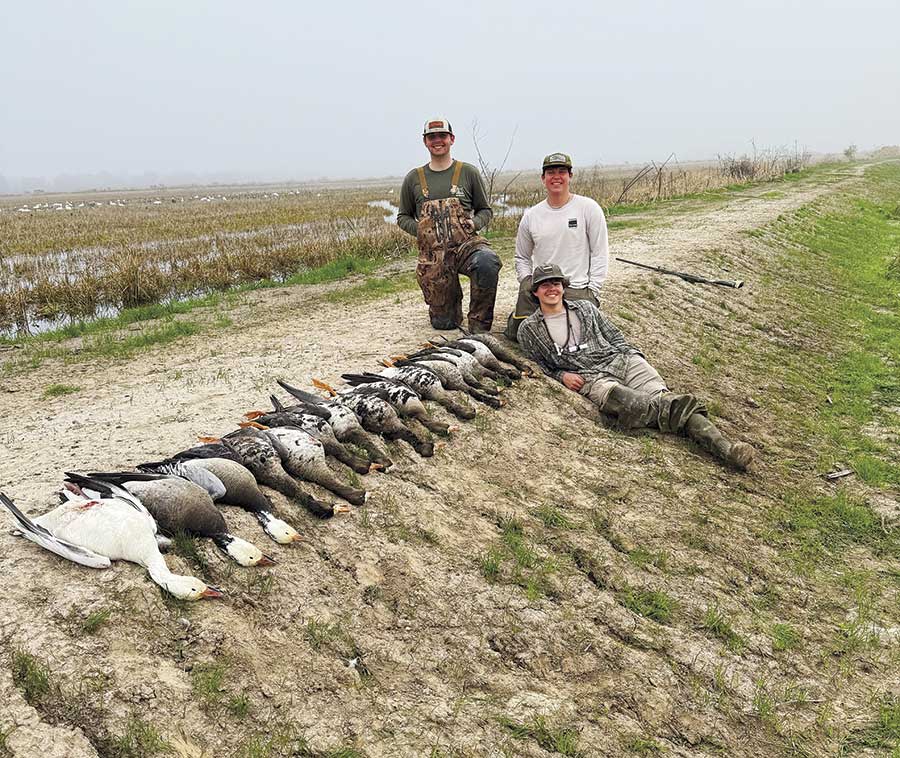
There is nothing much better than seeing a group of cupped and committed specklebellies over your decoys. In my opinion, one of the toughest places to hunt them is South Louisiana. These birds make their way down to the rice prairies of Southwest Louisiana every winter. What’s not taken into consideration is that during the whole duration of their journey, they will be shot at. For South Louisiana hunters, that means finicky birds.
After talking to many people over the past few years, they’ve shared with me their struggles during the hunting season. They find many excuses to point fingers when their season isn’t panning out. Besides having a solid field or a few fields to hunt, there are many ways to set yourself up for success during the season.
Concealment
If you take one thing away from this article, it is this. Nothing is more important than your hide. Most people do not take the time to work on concealing themselves or even fixing their levee up. A lot of times we see birds climb in altitude when approaching a levee. This is probably because they get shot at over most levees.
They see things you can’t from above. We use clumps of salt grass around our blind as well as salt grass “brooms” that we make. Sometimes we even go above and beyond, putting these clumps down the whole levee to break up the blind. What is concealed to the eye from above is important.
Decoy spreads
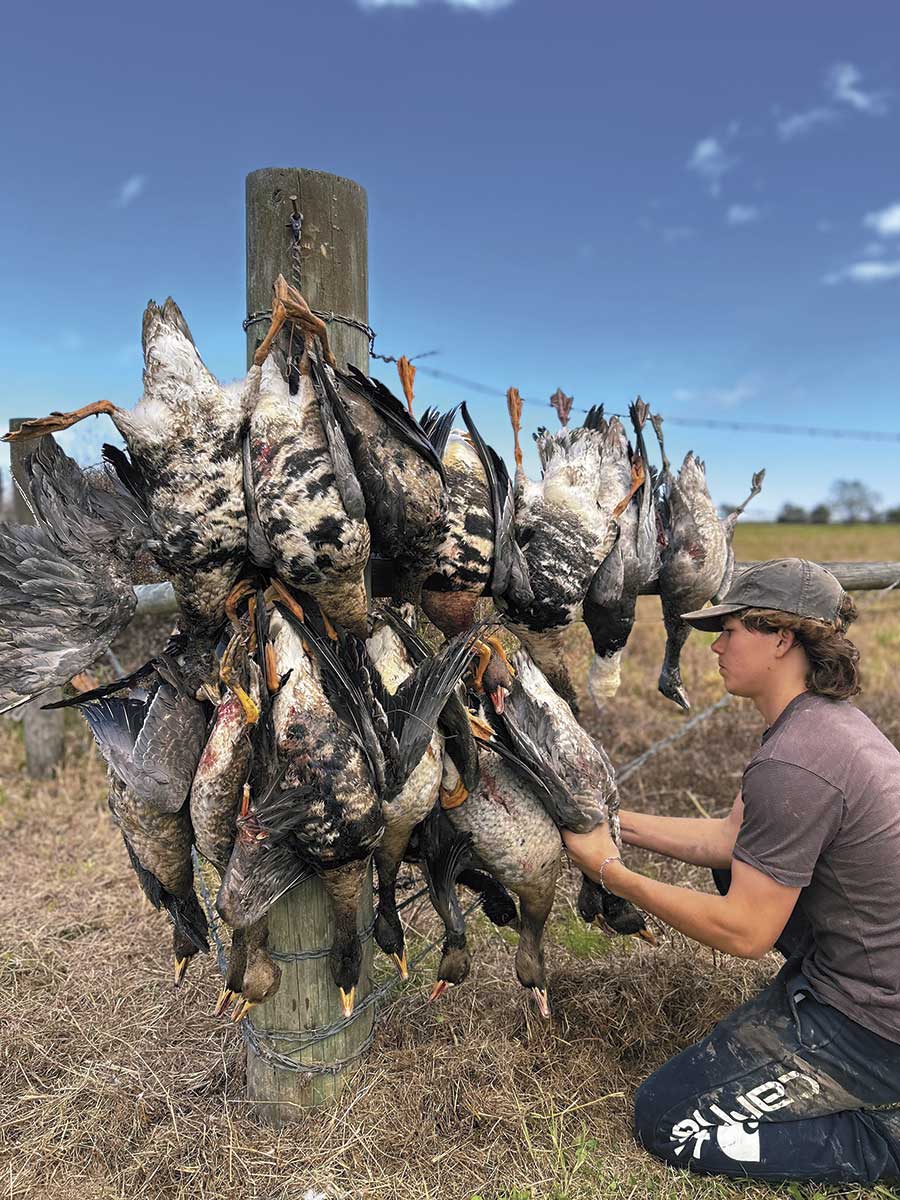
Something that has helped us tremendously is matching our spread size when it matters. We hunt a few fields that are really just dirt. We sometimes run 600 full bodies or more of dark and white geese. In some cases, we will run only a dozen or two. We match the body of geese we are hunting. This depends on how many birds are in the area. It’s not always best to throw the kitchen sink at them. Sometimes it’s full bodies; sometimes, with a good wind, we will use sock decoys. The number of decoys we put out also depends on the birds’ temperature. By that, I mean how finicky they are. Sometimes you add even more or remove from the spread during the hunt.
Calling
What seems controversial in speck hunting is calling the bird in. Communicating with specks is a chess match. The back-and-forth and knowing when to hit the right notes is key.
In some instances, we found that not being careful helps. On a few occasions, getting extremely loud with multiple people calling helped us finish some big groups this year. We would always get loud with multiple people calling at the snow geese spins. We tried it a time or two for specks, and it worked.
Sometimes mixing it up, having two or three people hitting different notes, also is a tremendous help. Reading the body language in the air is essential to understanding what they want to hear. Mix in three good people on a call and one person who can read their body language for some good chemistry and limits on the ground.
Hunt late
The last bit of advice I have is, if you have the time, hunt late. Specks like to fly during business hours. As a true nine-to-five bird, it’s not always an early morning shoot. During some of our best hunts of the year, we had two birds by 9:30 a.m. We would step out the blind at 1 p.m. with a full 6-man limit of specklebelly geese and snows. Sometimes it pays to be patient. You’re hunting; it’s not killing. Share some laughs and pack some food. In other words, be prepared for a long sit.
With the increasing pressure on these birds, successful hunts will be nothing short of a challenge. Just like the birds do, we have to adapt. You can’t kill them like they used to; it’s a different ballgame now. I hope what I have shared helps you find success this season.