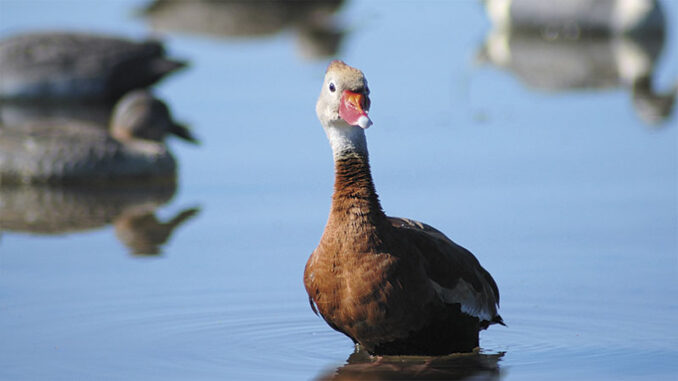
Waterfowlers, rejoice! We will have duck hunting in October in the state of Louisiana. We spoke up, and the Louisiana Department of Wildlife and Fisheries (LDWF) has listened. On Oct. 3-11, hunters can hit the sheer variety of habitat that black-bellied whistling ducks have taken over all around the state. These birds have tremendously expanded both their range and numbers in the last decade.
While chasing whistling ducks in Louisiana is hardly new, a dedicated season allocated to targeting their growing numbers, much less in the month of October, surely is. This will come on the heels of September’s teal season and serve as yet another primer for the regular season to come next month.
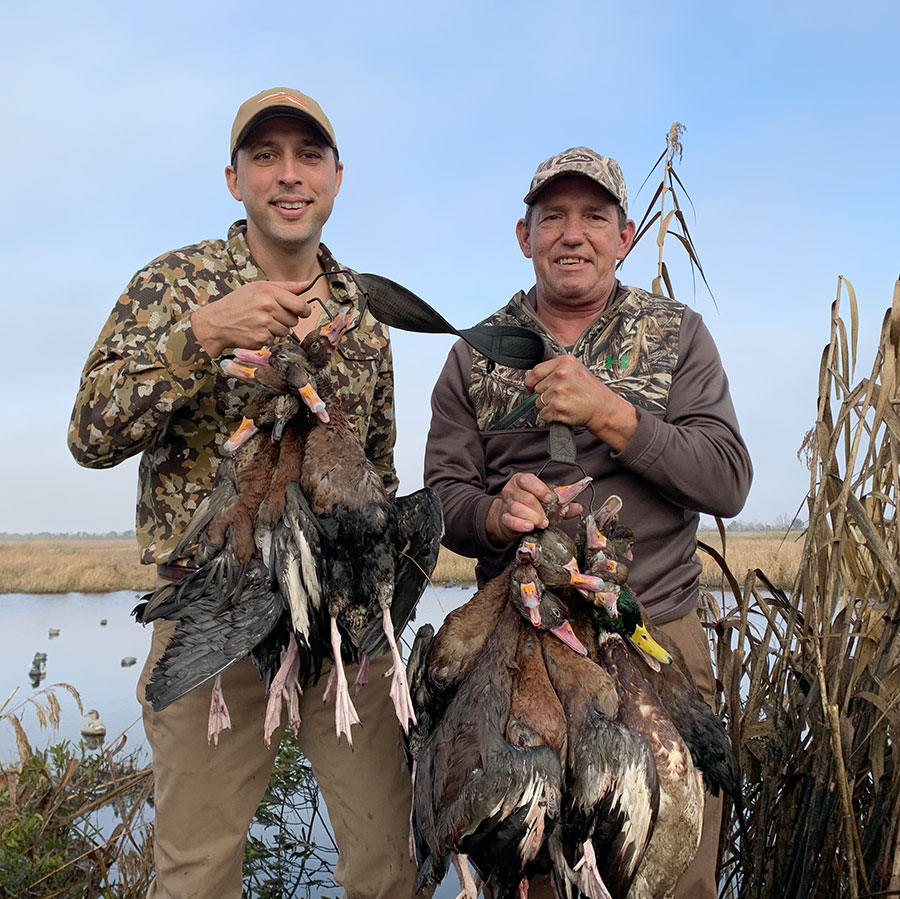
LDWF Waterfowl Program Manager Jason Olszak is excited to bring additional opportunity for duck hunting to Louisiana hunters hankering for a crack at what plainly appears to be a growing resource of the state. While many might argue it is long overdue, the stars finally aligned for obtaining United States Fish and Wildlife Service (USFWS) approval for what is an experimental season set to run nine consecutive days beginning the first Saturday in October for the next four years.
“Our challenge in getting this season approved was just how little is known about the species,” Olszak said. “We’re hoping that these four years help to shed more light on the species, such as better understanding how many there are in the state and where they travel throughout the year.”
The required post-season online report should indeed provide a multitude of new data to the regulatory community trying to better understand this resource for seasons to come. This will be critical in assessing future season timing, duration, and even the consideration of higher bag limits.
Identifying your quarry
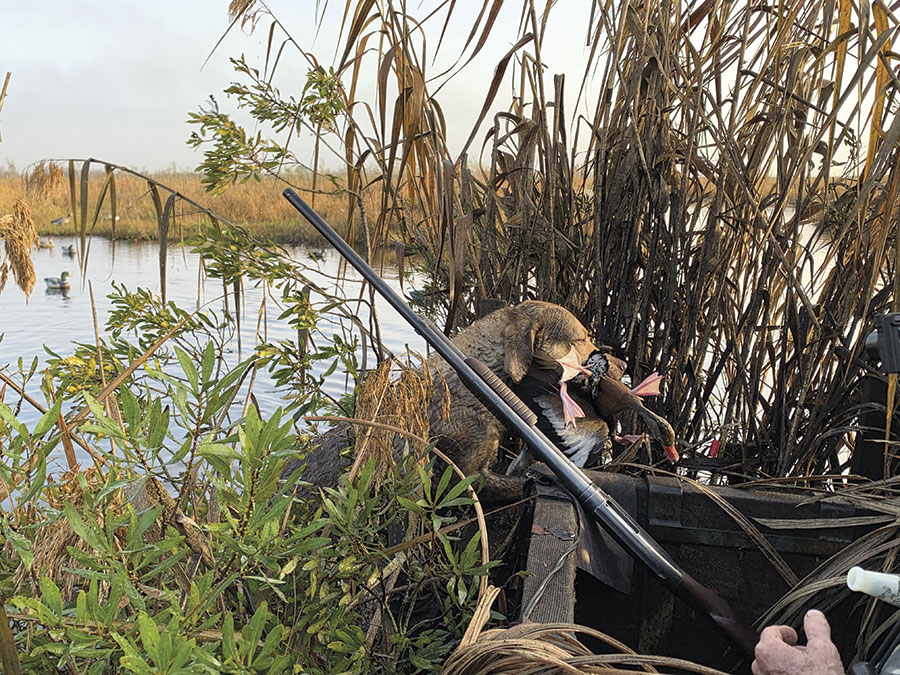
Given the larger size and similar flight patterns of these birds, there is indeed cause for extra attention to be paid in identification before pulling the trigger.
“We recognize that there are likely to be a number of other local birds observed during this season, and also the potential for early migrators like pintails, shovelers and gadwall,” Olszak said. “That was a big piece of why we went to a shooting time of sunrise versus the traditional half-hour before.”
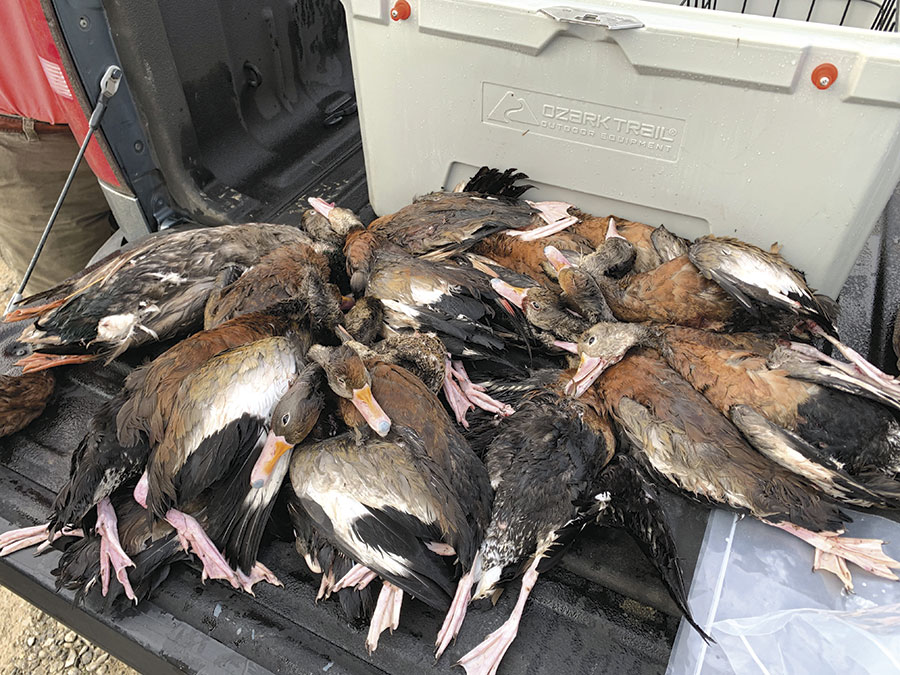
While the fulvous whistling-duck has a very similar flight pattern to the black-bellies, Olszak notes that they are not typically present in significant numbers and also make notably different sounds. The fulvous is known for its call that’s limited to two notes, while that of the black-belly is a trill of numerous notes. In flight, the black-belly’s large white wing patch is also a reliable tell-tale for identifying birds on the wing, even at a distance.
Important details
A few critical details for hunters to keep in mind when heading out for this special season:
- The season runs from Saturday, Oct. 3 to Sunday, Oct. 11.
- The limit is 4 ducks per person, per day, with a possession limit of 12.
- The season is limited to only black-bellied whistling ducks and does not allow for the harvest of fulvous whistling ducks, which often fly in similar patterns and can look very similar in low-light conditions. Look out for the distinguishing large white wing patch on the black-bellies.
- Legal shooting hours will begin at sunrise instead of the customary half-hour before sunrise, as with other waterfowl seasons, and ends at sunset.
- A free, black-bellied whistling duck permit will be required in addition to all applicable hunting licenses and validations.
- All other standard licensure requirements for harvesting waterfowl in Louisiana apply, including the Harvest Information Program (HIP) survey, basic hunting license, waterfowl hunting license and the federal duck stamp.
- Within 15 days of the season closing, hunters will be required to report their efforts and harvest information via online portal.
Calls and decoys
With hopes of putting some of these tasty birds on the straps, scouting is going to be key. While it may seem they are everywhere these days, these ducks are very specific in their daily patterns. For example, having “traffic” isn’t nearly the same as being at their destination, but could nonetheless result in productive hunting if the traffic is within reasonable range. Ideally, though, finding a location the birds are actually using will bring the best chances of success.
If relying strictly on a flight path, getting under the birds’ daily path with decoys and plenty of their distinct whistling calls can be just enough to bring groups close for a productive pass shooting opportunity. I’ve found the birds to be quite responsive to whistling calls run to mimic the cadence of the birds. Simply listening to their calls and echoing their sounds with any number of whistling calls is usually effective in gaining their attention for at least a pass.
When it comes to decoys, new this year are a variety of decoys depicting the plumage of black-bellies, though they’ve also been known to be harvested over a myriad of other waterfowl decoys. Like just about any waterfowl hunting, choosing a location under the traffic or ideally at their destination will be more critical than selling them on decoys.
Speaking of locations, the season will be open statewide. Public land hunters should verify that their favorite state WMA or federal refuge is open for the special season prior to opening day. For the latest on all current announcements from the LDWF, hunters are encouraged to monitor the department’s social media feeds and website before heading out.