There’s no telling what might tug on your line in coastal marshes
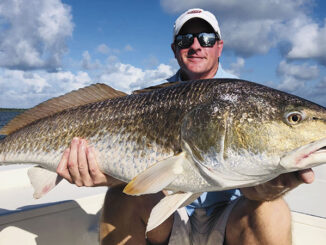
WHAM! Water erupted in frothy fury as the big predator smacked the topwater lure worked next to a marshy shoreline. A giant for its species in these waters, the 3-pound largemouth bass could not compare to the 9-pound redfish that tried to obliterate the bait on the previous cast.
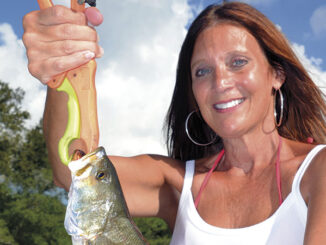
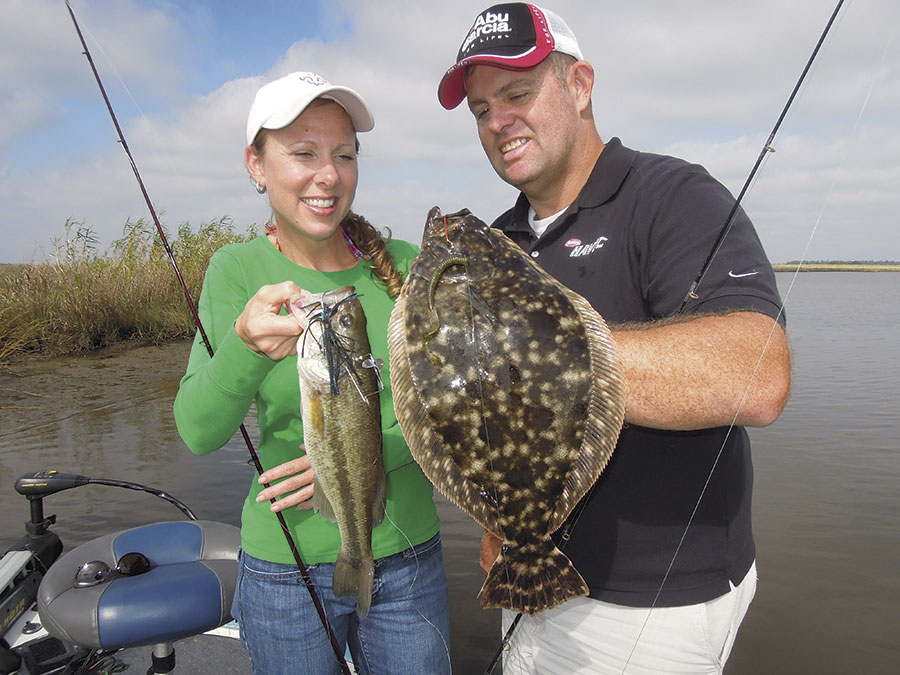
Freshwater bass and salty species like redfish should not mix, but they do throughout coastal Louisiana. Anglers can reap a multispecies brackish bonanza where worlds collide. This phenomenon can exist anywhere that salty and fresh waters merge. Tidal river deltas create some of the best places to catch diverse species.
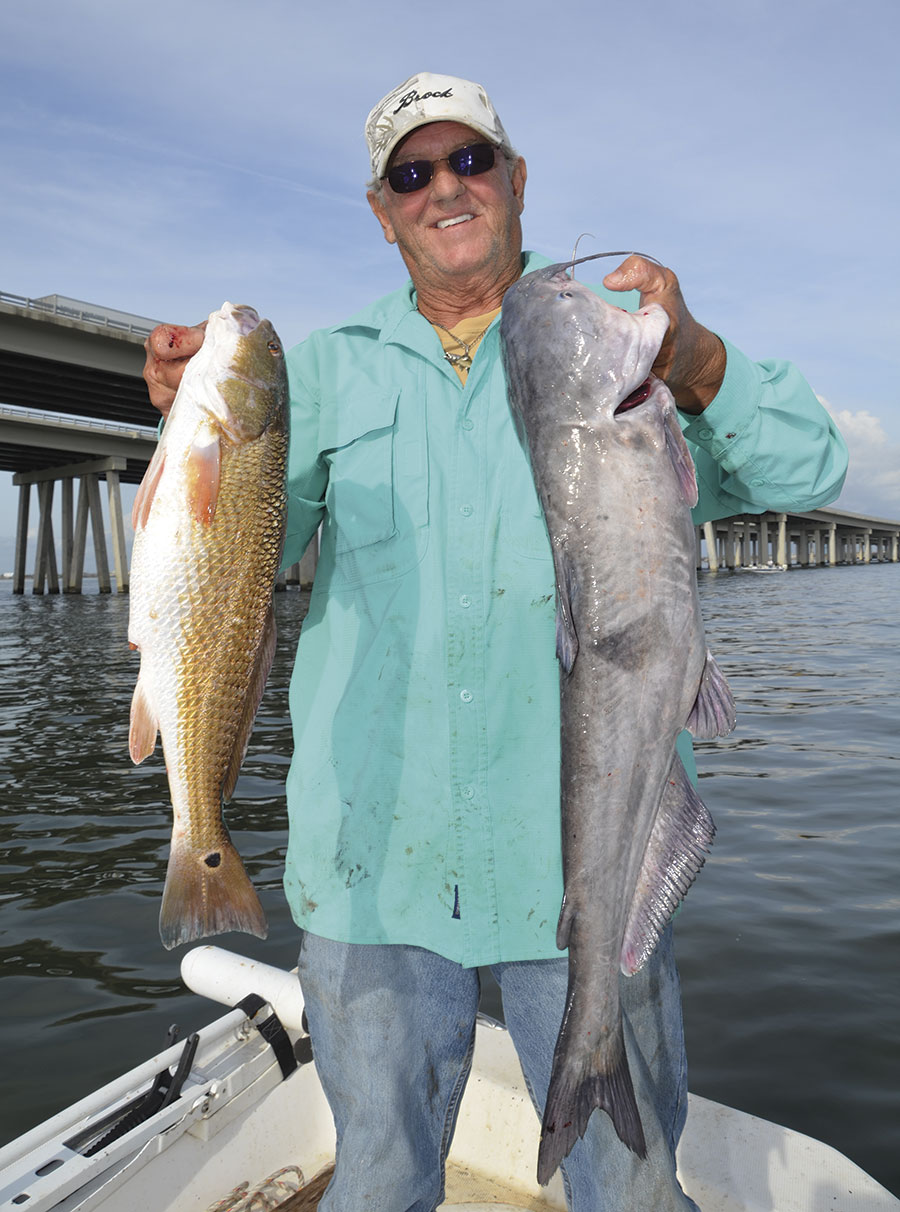
“Catching freshwater fish and saltwater fish in the same place at the same time happens all the time around here, especially when the Mississippi River is low,” said Mike Frenette, owner of Redfish Lodge of Louisiana (504-782-0924, Laredfish.com) in Venice Marina (venicemarina.com). “We can sit in one spot and whack bass, redfish and flounder without moving. I’ve caught as many as eight species in one day, both fresh and saltwater. I’ve caught largemouth bass in the Mississippi River itself.”
Largemouth bass can tolerate fairly high salinity levels for short periods. When levels rise too high, bass seek sweeter water in aquatic vegetation or fresher backwaters. High salinity levels for too long can prove lethal to bass.
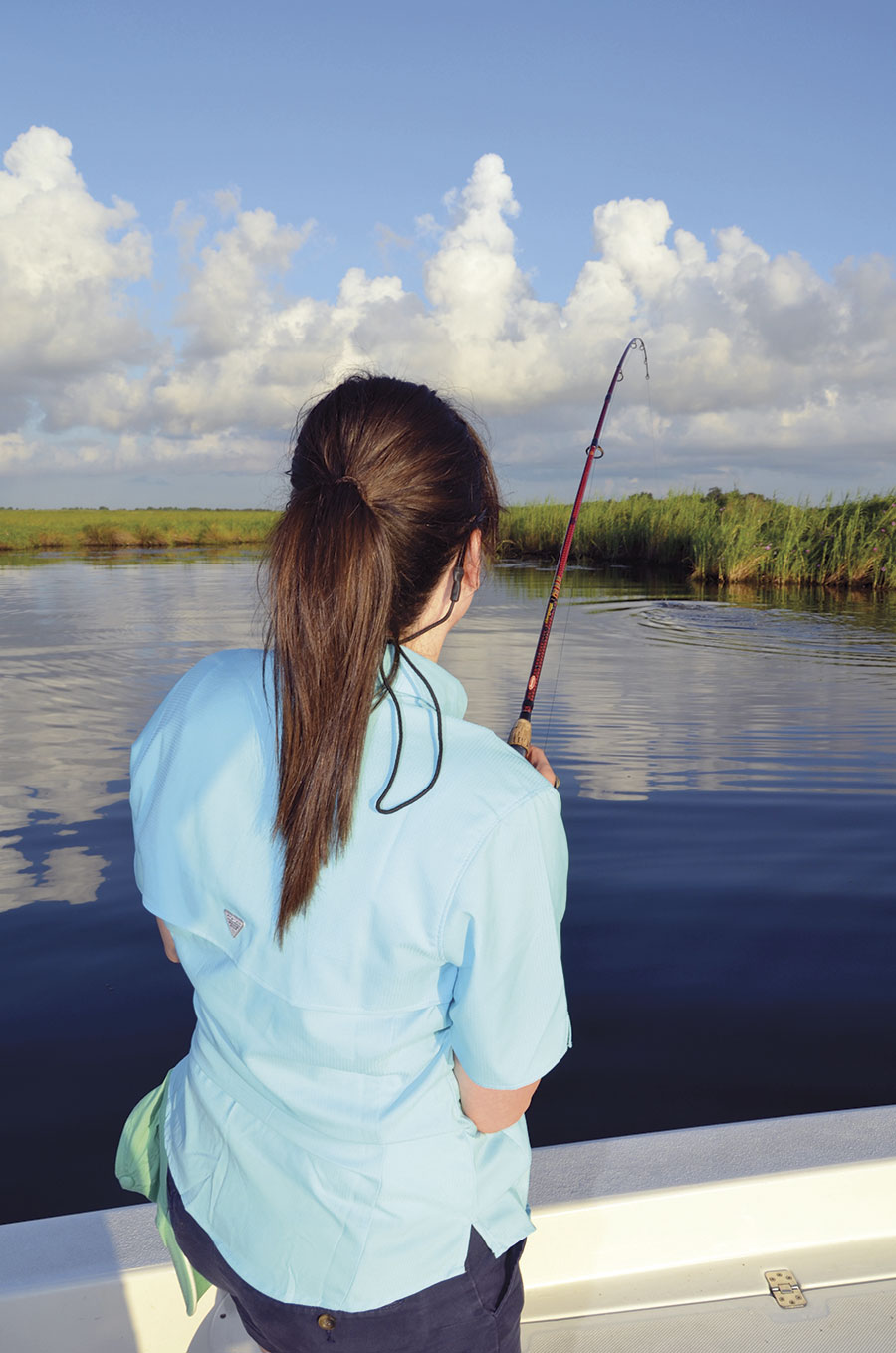
“Bass actively feed from 0 to 8 parts per thousand of salinity,” said Zane LeBlanc, a Louisiana Department of Wildlife and Fisheries biologist and avid bass angler. “In brackish areas, bass adapt to their environment, but once salinity levels reach about 12 parts per thousand, bass tend to cease feeding. If salinities stay 12 parts per thousand or higher for long periods, bass die.”
Water flow
Biologists describe redfish and flounder as “euryhaline,” meaning they can tolerate a wide range of salinity levels. Both species can live in pure fresh water. Flounder and redfish both commonly appear far upstream in coastal rivers. Some species, such as garfish, bull sharks and mullet, easily slip between both worlds.
Sheepshead also move into fresh water. Black drum can go into water as low as 5 parts per thousand salinity. Speckled trout typically require higher salinity levels than those other species. Blue catfish can tolerate higher salinity levels than other freshwater catfish.
“I catch more freshwater catfish than other types of freshwater fish when I’m fishing for redfish,” said Troy Nash with South Louisiana Redfishing (337-412-5950, www.southlouisianaredfishing.com), who runs out of Cypremort Point. “Catfish like muddier water.”
What one catches anywhere on any given day largely depends upon water flow. High tides push salty water farther inland. Low tides bring fresher water out. Winds can overcome tides. As natural forces battle constantly for dominance, anglers might catch largemouth in one spot in the morning and specks at that same spot in the afternoon.
“Downriver, we catch redfish and bass by flipping into canes almost all year,” Frenette said. “Anglers can catch both fresh and saltwater species from Baptiste Collette down through Pass-A-Loutre and South Pass.”
Also, heavier, denser salt water sinks to the bottom. Lighter fresh water “floats” on top. Anglers might catch bass on topwaters and trout or flounder by dragging baits along the bottom.
In the piscatorial gumbo where saline and sweet environments overlap, fresh and salty fish feed upon the abundance from both worlds. The menu might include freshwater forage like shad, shiners, crawfish and bream or salty snacks like crabs, pogies, mullets, croakers or many other creatures.
Marsh bass
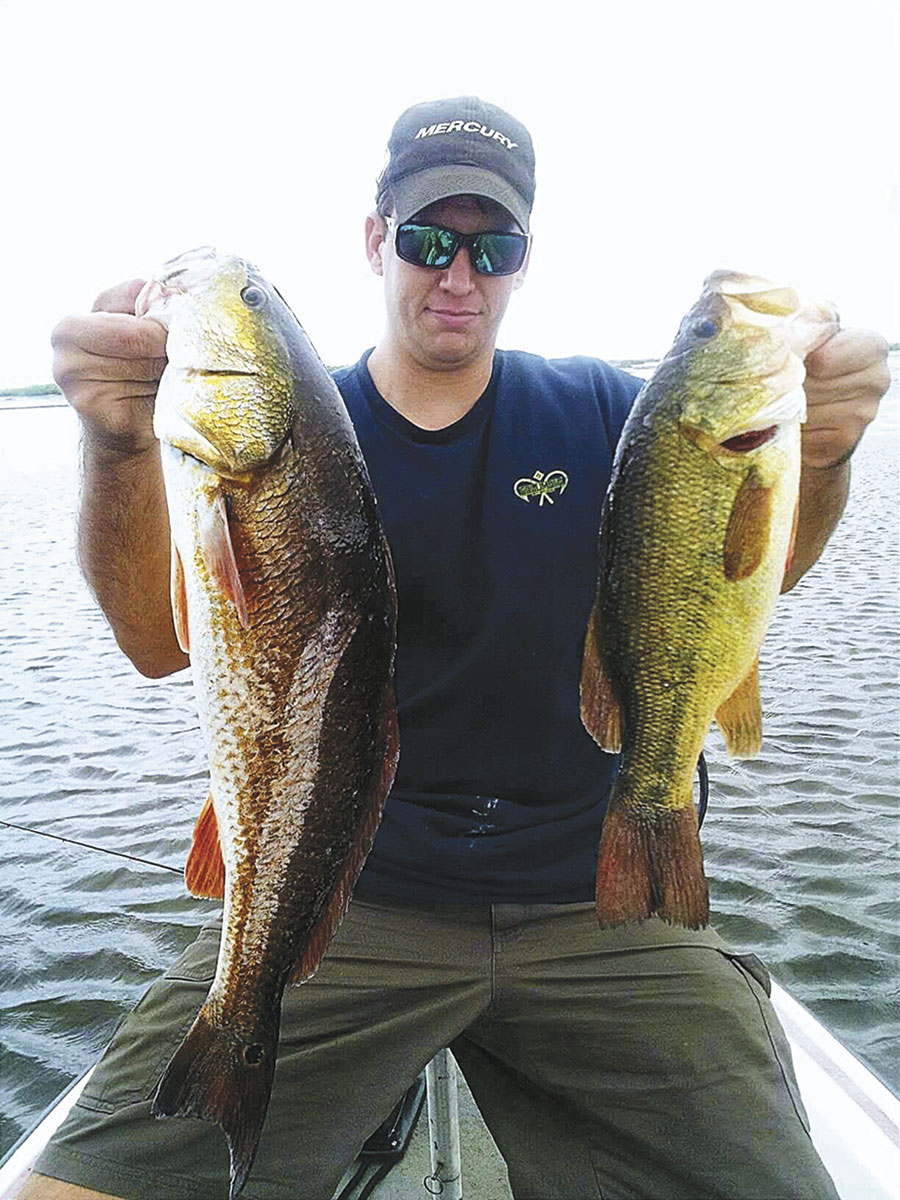
In such a fertile environment with plentiful food, one would think that bass should grow to gargantuan sizes. They get fat and football-shaped, but few reach trophy proportions because their harsh environment slowly kills them. Bass in brackish water must expend considerable energy just to eliminate salt from their bodies instead of growing. If bass can’t process salt fast enough, it builds up in their bodies. Too much salt kills them.
“Bass are generally more abundant in brackish systems because they have so much food available to them, but they must constantly deal with salinity levels and pressure from much larger predators,” LeBlanc said.
Most marsh bass only live about three years. Very few exceed 5 pounds. However, what they lack in size they more than make up for with their aggressive attitudes and voracious appetites. Salt makes them hungry. Since bass and redfish commonly attack the same prey in the same places, they naturally hit the same lures. Both might smack anything that would interest a speckled trout.
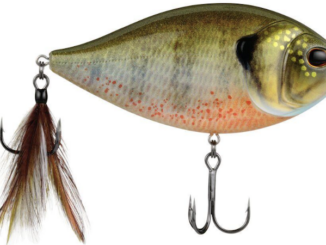
Bass and redfish both use cover to ambush prey. Redfish frequently feed in very shallow waters. For bass and redfish, few baits duplicate the excitement of explosive topwater action. Most saltwater anglers prefer “walk-the-dog” topwater baits that make enticing zigzag motions across the surface.
Frogs
Many river deltas grow lush grass mats. Few lures go over or through vegetation better than a frog rigged with a hook inserted into the soft-plastic body. Frogs also look like natural prey. Kicking legs and feet create quite a commotion. Some frogs float and others slowly sink. Work floating frogs like conventional topwater bass lures. Hop it in spurts. Then, let it sit a few moments.
“I catch redfish on green Ribbit frogs with pearl bellies,” Nash said. “People tease me when they see frogs on my rods while I’m going redfishing, but a redfish will blow up on a frog. Frogs live in the marshes. A redfish will eat just about anything. The feet on a frog make a commotion that sends vibrations through the water.”
In thick grassy cover, pull sinking frogs across the top with a steady buzzing retrieve or in quick hops. Let it “crawl” over vegetation. Pause so the frog sits on top of the vegetation a few moments. Then, pull it over the edge into an open pocket. Let it sink a foot or two before resuming the retrieve. People can fish other slithering soft plastics the same way.
Spinnerbaits
Among the most versatile lures on the market, spinnerbaits can tempt bass and redfish from top to bottom. Buzz spinners with rounded Colorado blades over the surface or just under it. In deeper water, hop them off the bottom. Swirling blades give off flash that mimics baitfish. Also, redfish might think the flickering blades resemble the rounded swimming fins on crabs. Redfish love nothing better than eating a crab.
During a falling tide, dropping water levels pull baitfish, shrimp and crabs from cover into open water. Bass, redfish, flounder and other species gather at drain mouths waiting to ambush anything.
“I use Strike King (www.strikeking.com) Redfish Magic spinnerbaits for both redfish and bass,” Frenette said. “Bass, redfish, flounder and speckled trout will all hit it. I like to fish drains coming out of the marsh during a falling tide. Work a 1/8- or 1/4-ounce Redfish Magic slowly through the cut. For colors, I like white with a red tail and chartreuse with the red tail. In the right cut, we get plenty of action from multiple species without even moving.”
When predators chase pogies or other baitfish, throw a lipless or lipped crankbait. In the shallow ponds, work a square-billed crankbait, which only dives a couple feet. Jerkbaits also work great. The old favorite redfish bait, a gold spoon, works for multiple species, including trout.
“A gold spoon catches bass and redfish,” Nash said. “I catch redfish on jerkbaits, spinnerbaits and ChatterBaits, which are well-known bass lures. In murky conditions, fish hunt by sounds and scents. That’s a good time to throw a spinnerbait or ChatterBait.”
Shrimp
In deeper water, bass jigs tipped with plastic craw trailers simulate crabs. Use trailers with blue claws to match the color on live crabs. Drag jigs over the bottom.
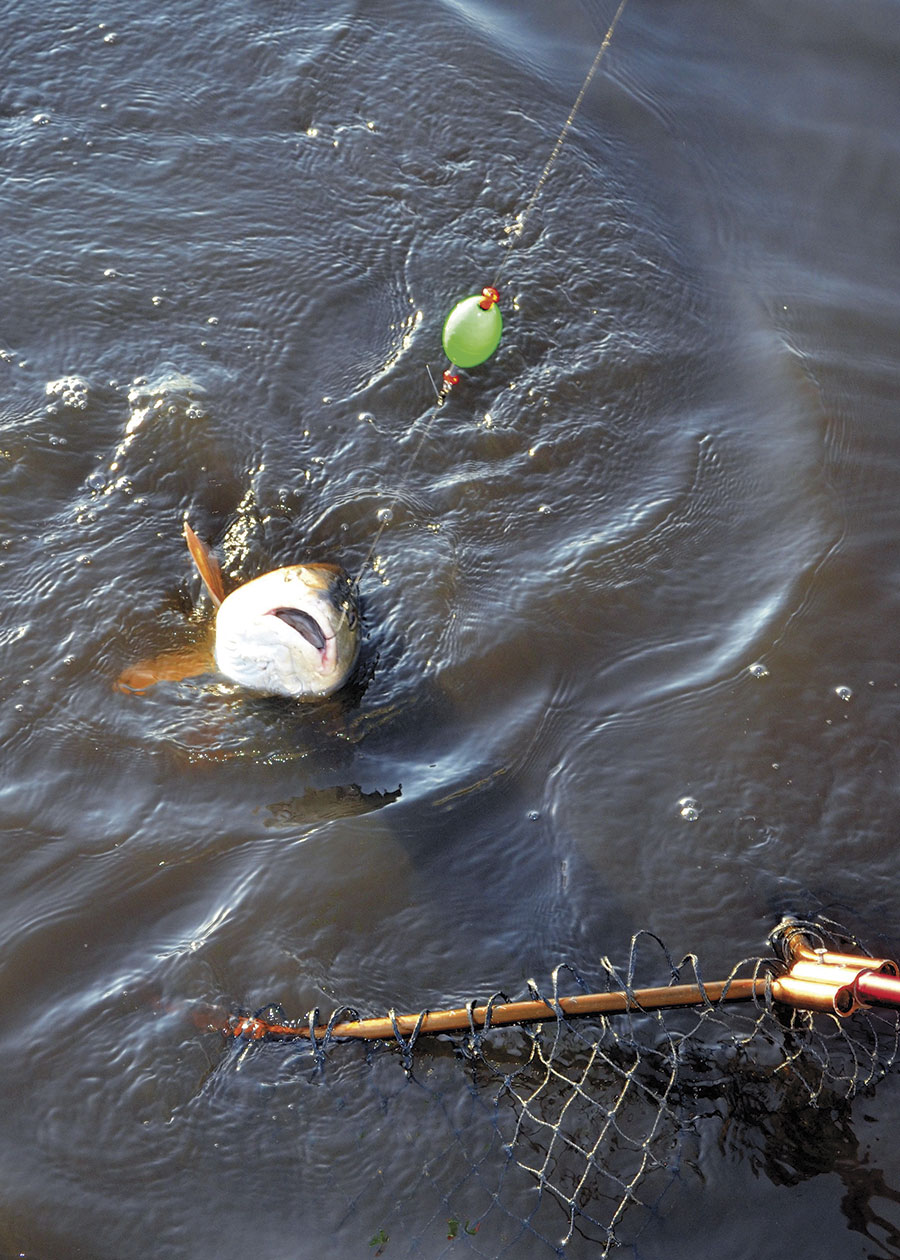
Nothing ignites a multi-species feeding frenzy like a crustacean migration. When shrimp migrate in and out of the estuaries, everything follows. In coastal areas, a live shrimp dangling under a popping cork might catch just about anything.
“Bass absolutely love live shrimp,” said Tom Adams of Fishing Tom Guide Service (318-675-9114, www.fishingtom.net), who fishes the Calcasieu-Sabine estuary systems near Lake Charles. “In September and into the fall, we fish grass lines with live shrimp under a popping cork for both bass and redfish. We also catch many flounder in the same places. We’ve caught 15 or more different species in one day.”
Anglers can also use artificial shrimp, either under a cork or on a jighead. Throw a bait as far upstream as possible. With a cork, let the current carry the rig downstream. With a plastic shrimp, use just enough weight for good casting heft. Let the tide bounce the bait along naturally. Use the reel only to take in slack. If the bait stops, feel to see if a fish grabbed it. If not, lift it back up into the flow.
Among the most fertile habitats in North America, river deltas and other coastal marshes can host untold numbers and varieties of creatures where sweet water mixes with briny water to produce a gumbo of life. One never quite knows what might hit on any cast.