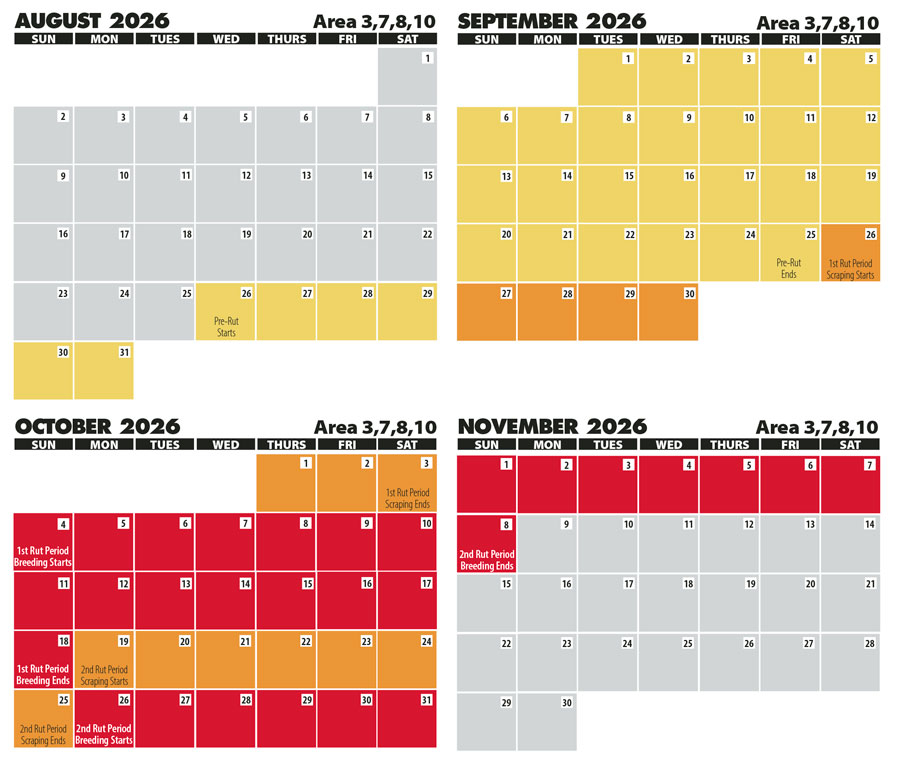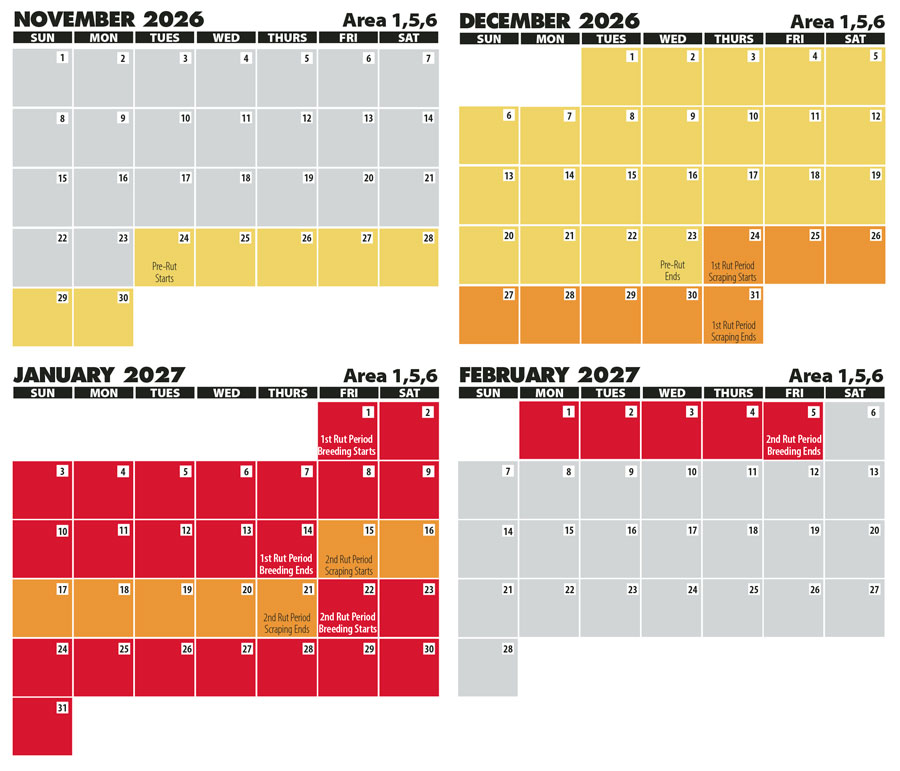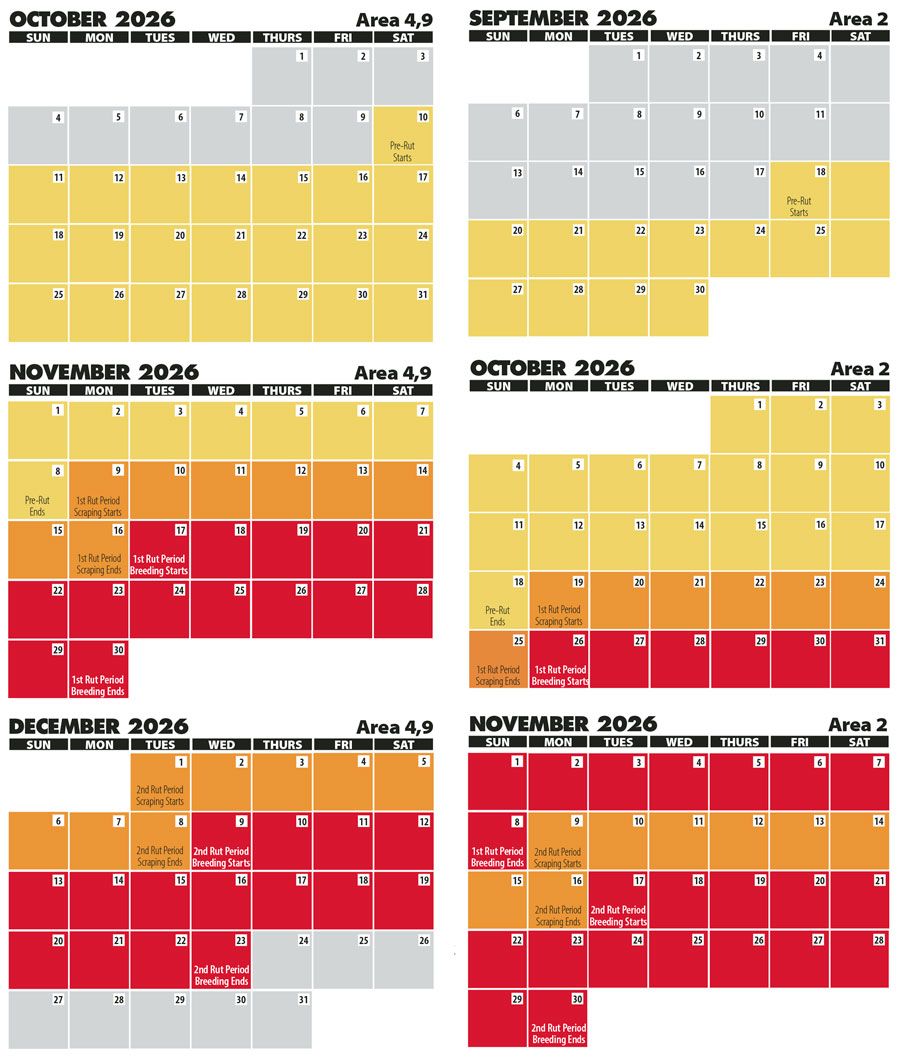
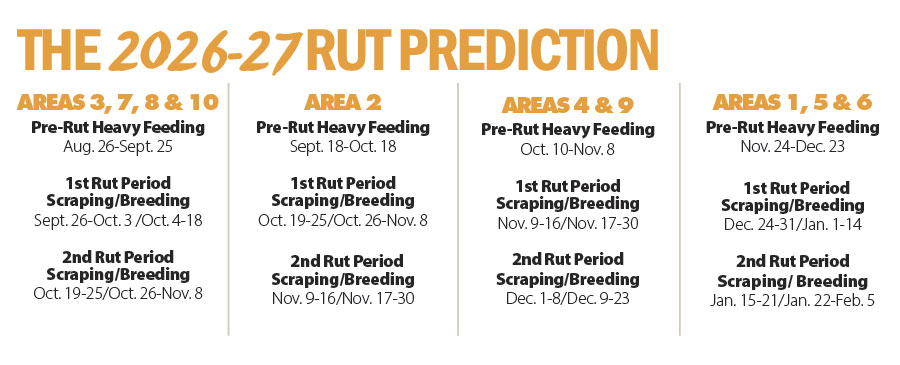
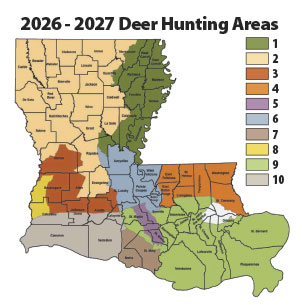
Deer hunters in all the different areas of the state will be able to hunt during the major peak activity time and, if needed, during the minor peak activity time that occurs a month after the major peak. The majority of does will have bred during the first rut, and hunters with land that has a good buck population should see rut activity during the second peak. Because only a few does will be cycling, the buck activity and chases could be intense, with several bucks chasing a single doe.
 Looking back at the 2025-26 season
 I experienced a good late season hunt during the second rut period in Area 6, Pointe Coupee Parish. I was in the stand at 6:45 a.m.; I did a series of loud grunting at 7 a.m.; and at 7:15 a.m., I shot and killed a nice 3 ½-year-old, 8-point. Rabbit hunters had hunted this area the day before and the landowner told me they had seen many fresh rubs in the area. This buck had fresh bark in the base of its antlers and was probably one of the bucks making these fresh rubs.
Harvest data from an Area 2 club in Bossier Parish matched well with the rut prediction for last season. The peak rut last year for Area 2 was Nov. 13-Dec. 11. Nine of 12 does harvested in early January had breeding dates that were in line with this peak period. The dates for the nine does were Nov. 14-22, a very tight window of activity, but it shows most of the does are bred during the first rut period. Hunters on this club killed 16 bucks during the heavy feeding period and the first rut. Breeding data from does harvested in Area 6 in Pointe Coupee Parish found ovulation occurring from mid-to-late January. Again, right on target with the rut prediction.
Know your deer herd
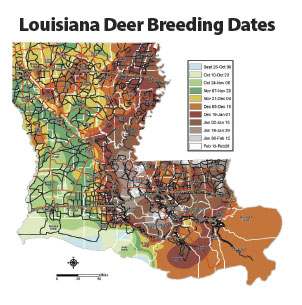 In Area 4, the rut prediction for the first peak period last season was Dec. 12- Jan. 10. On Dec. 11, from 11:30 p.m to 12:30 a.m., I was watching a 4 ½-year-old buck tending a doe about 40 yards from the house. We have a security light in this part of the yard which makes it easy for me to sit in my cubby area next to the kitchen and watch the wildlife activity outside.
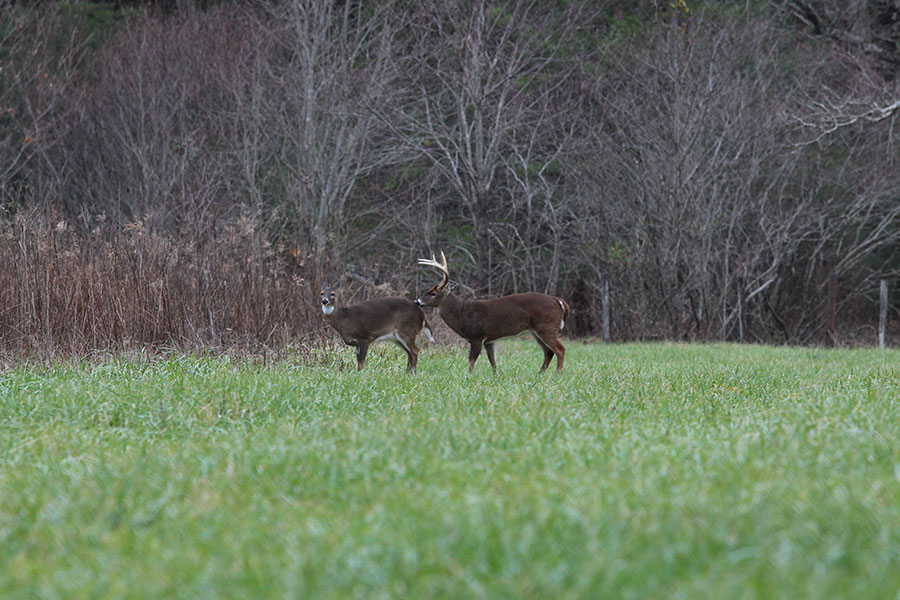
A doe came walking in from the dove field and began feeding on water oak acorns. The 4 ½-year-old, 4-point followed her and did a little feeding but always kept his eye on her. I had seen this buck on numerous occasions in this area, along with a few other bucks and does. The buck walked over to a tree and bedded down facing toward her.
After 10 minutes or so, the doe quit feeding and moved back in the direction of the dove field. The buck stood up and followed her. They soon returned with a couple of more does and went back to eating acorns. A spike came into the group and the 4-point lowered his head and they had a brief sparring match, which quickly ended with the spike leaving. Eventually, the doe headed south toward the camp field with the buck behind her. No doubt over the next couple of days the doe cycled and the buck bred her.
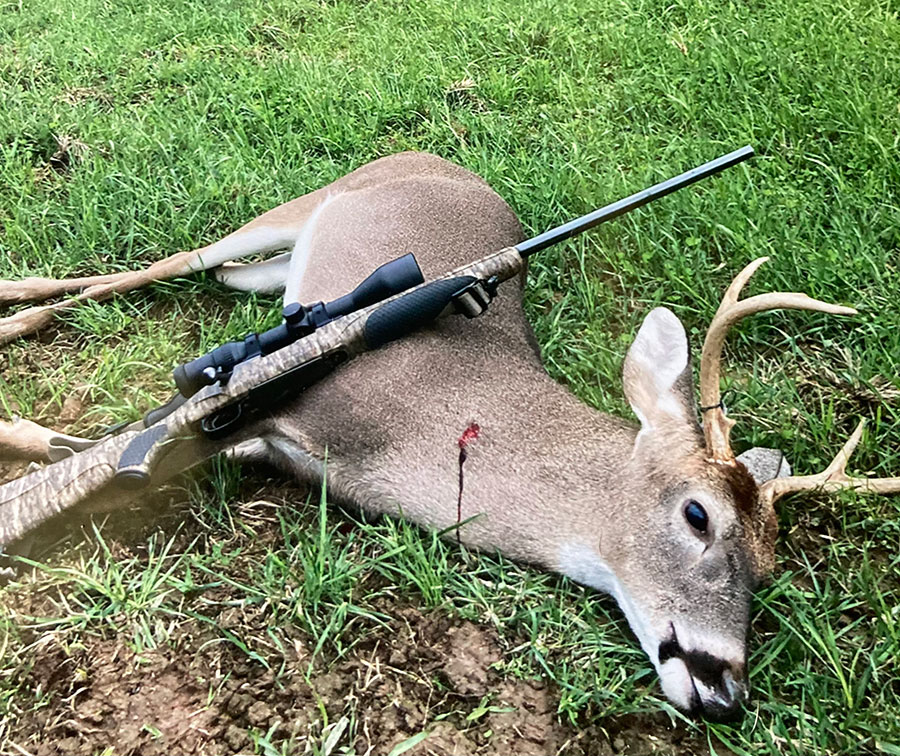
The reason I know this buck was 4 ½ years old is because on Dec. 27 the buck was out early feeding and I was in my deer stand with a .308. I had not seen this buck in two weeks, which is typical for deer that are in the breeding mode. The .308 dropped it where it stood, and the first thing I did was check the age. I was somewhat surprised that it was 4 ½ years old. This was one of those low-end adult bucks that most hunters pass up thinking it will get bigger, but on low quality habitat they don’t. Understanding the growth and development trends of your deer herd is a must and provides sound data to help with the shoot/don’t shoot management decisions.
Archery season
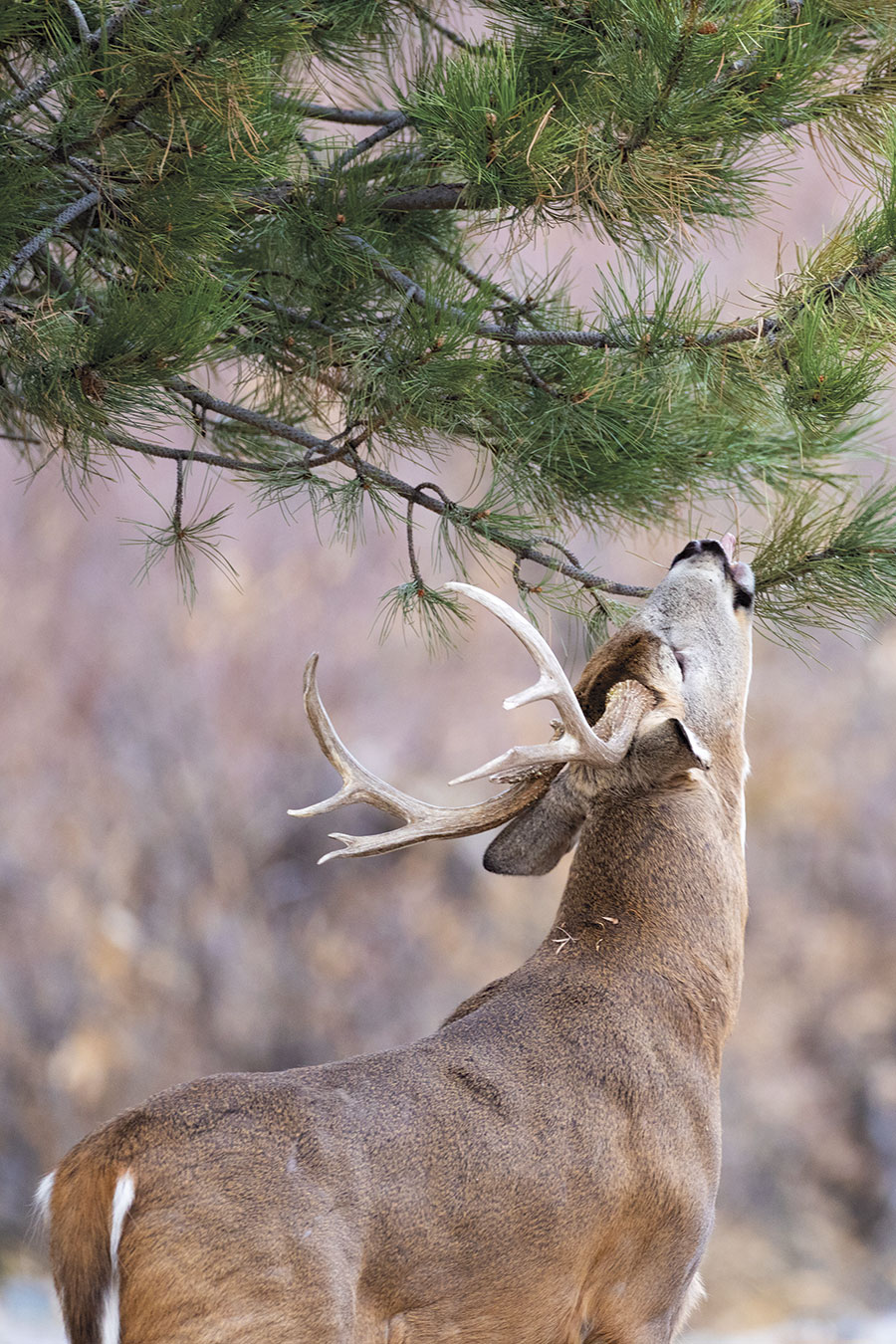
Bowhunters in all deer areas have the first opportunity to harvest a quality adult buck. The new velvet antler season that is available in a few areas of the state provides more opportunity for the bowhunters to harvest a buck that is still in velvet. Not all deer areas have this new velvet season, so be sure you check the regulations and know if your area is open before going out. Other states offer similar opportunity, and it has become vogue for hunters to kill a velvet buck for the wall.
The early bow season is also the time that deer become alerted to the fact that there are hunters in the woods. Increased ATV traffic in the early mornings and afternoons will cause them to change their movement times and even travel patterns. This is especially true for the late rut breeding areas where good deer activity doesn’t really begin until December, so keep this in mind. A concerted effort should be made to limit the amount of hunter disturbance on the landscape. Gun hunters in Southwest Louisiana and in Area 2 have a really good season structure because when the gun hunting opens the deer are beginning rutting activity.
Scraping activity
Hunting scrapes can result in success if you catch the bucks at the time they are checking scrapes each day. Keep in mind that several bucks will work the same scrape, so you don’t necessarily want to shoot the first buck that walks in. Trail cameras are great tools that can be set up to let the hunters know when the scraping activity is on. Both bucks and does will work scrapes; pawing, urinating and defecating in the scrape. Oftentimes, the scrape will be made under an overhanging limb that the buck will bite and chew on, leaving scent on the branch. These branches are referred to as licking branches. Bucks and does will leave scent on the rubs also, which further helps the bucks identify rivals and determine does that may be getting ready for ovulation.
On the hunt
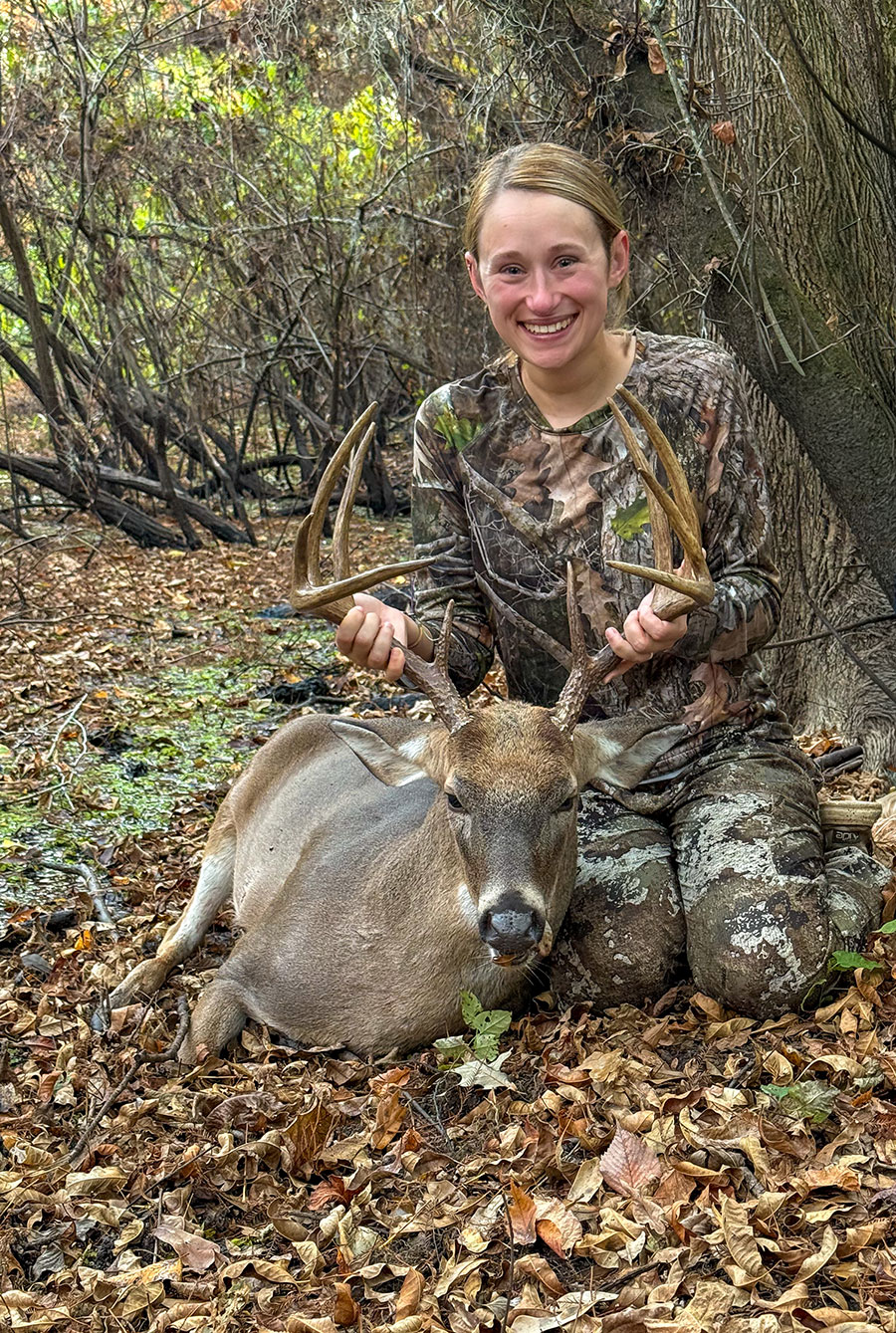
The chase period usually lasts several days, with the buck staying with the doe until she will stand for breeding. Hunters know that during the time this happens and a moving doe comes by they should be looking for a buck on her trail.
I remember a couple of years ago a doe and yearling came by moving fast, then two small racked bucks came by on her trail. I was glassing one that had stopped, but then I saw antlers pass by and looked up to see a larger buck moving in the direction of the doe. The buck stopped and I dropped it. So be aware that more than one buck may be following a hot doe.
When the actual breeding starts, deer generally go into the bedroom, close the door and sightings will drop off. Some call this the lockdown period, and it frequently results in a slow deer hunt. It was 16 days from when I saw that 4 ½-year-old, 4-point tending a doe until I saw it again.
Spring and summer rains have been frequent and the acorn crop looks good, so a good deer season is anticipated. Again, be aware that when acorns are falling, deer will be feasting on that food source and may leave the corn feeders and food plots.
Have a good and safe deer season!