Every fisherman born and raised in Southeast Louisiana carries childhood memories he will never forget. But for a few, those memories are of fishing trips better than what most anglers ever get in a lifetime.
Todd Schultz is one of those fishermen. Schultz was born in Mandeville and can remember fishing the Chandeleur Islands in the Gulf. He would go fishing with his dad, Gus Schultz, and his dad’s friend, Bob Boatner.
“We had a camp out of Port Eads and we fished the islands a lot,” he said. “I’d go out there with my dad and Mr. Bob and remember catching two fish at a time on every other cast.”
Shultz remembers throwing an H&H Sparkle Beetle Double Rig all day and boxing 75 trout.
“We really didn’t have all the fancy lures that you have today,” he said. “Just unwrap the plastic wrapping that covered the cardboard and tie it directly to your line—no leader or anything like that.”
Since his time with his father, Shultz has graduated from fishing for ANY trout to strictly going after BIG trout at the islands.
Making the run
Today, Shultz launches out of Shell Beach and makes the run across the Chandeleur Sound. Schultz said it’s about 40 miles with at least 20 of those miles being open water. That distance is a big reason the islands offer some of the least-pressured water off the coast. There’s no road, no marina waiting on the other side, and no place to stop for fuel or wait out a storm.
When making a trip to the barrier islands, Shultz leaves early and makes it there at sunrise, but an early start is not always necessary.
“We roll out there super early, but sometimes we’ve had trips where we got there early and they weren’t biting,” he said.
In this case, Shultz recommends staying throughout the day because the fish turn on eventually.
“A good tide swing is what you’re looking for out there,” he said. “Sometimes it won’t happen until noon or 1 p.m., but at some point, they will start biting.”
Don’t follow the birds
Speckled trout fishing and diving seagulls go hand in hand for trout fishermen in Southeast Louisiana. But along the barrier islands, Shultz said there are birds everywhere, all the time.
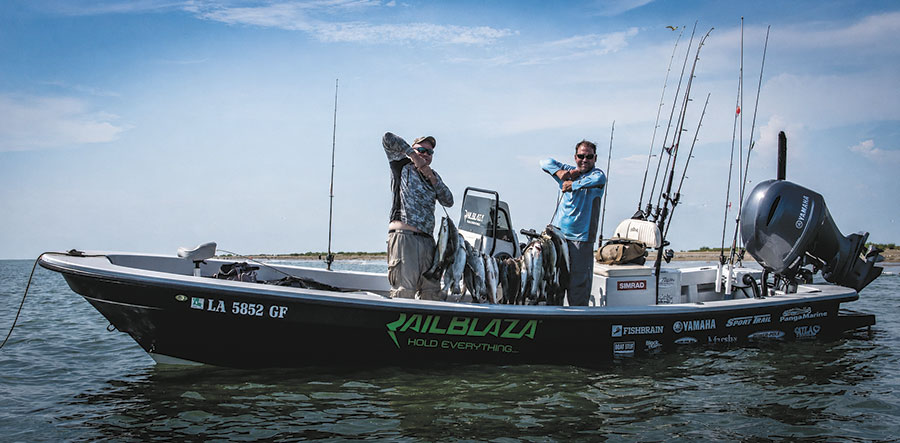
“It looks like every bird in Louisiana is flying around out there,” he said.
The reason why there are so many birds is that the Chandeleurs make up the Breton National Wildlife Refuge, which is a federally protected bird sanctuary. Shultz said between the number of birds and the trash fish in the water, it’s hard to tell what’s going on.
“Jacks, ladyfish, stingrays, giant rafts of mullet—it’s the best trash fishing in the world out there,” Shultz laughed.
Shultz’s setup
With all the trash fish in the water, Shultz likes to use big lures that eliminate the smaller fish from biting the lure.
“Ninety percent of the time I have a topwater plug tied on,” he said. “The bigger ones tend to blow up on them.”
Shultz’s go-to topwater plug is a pink She Dog made by MirrOLure.
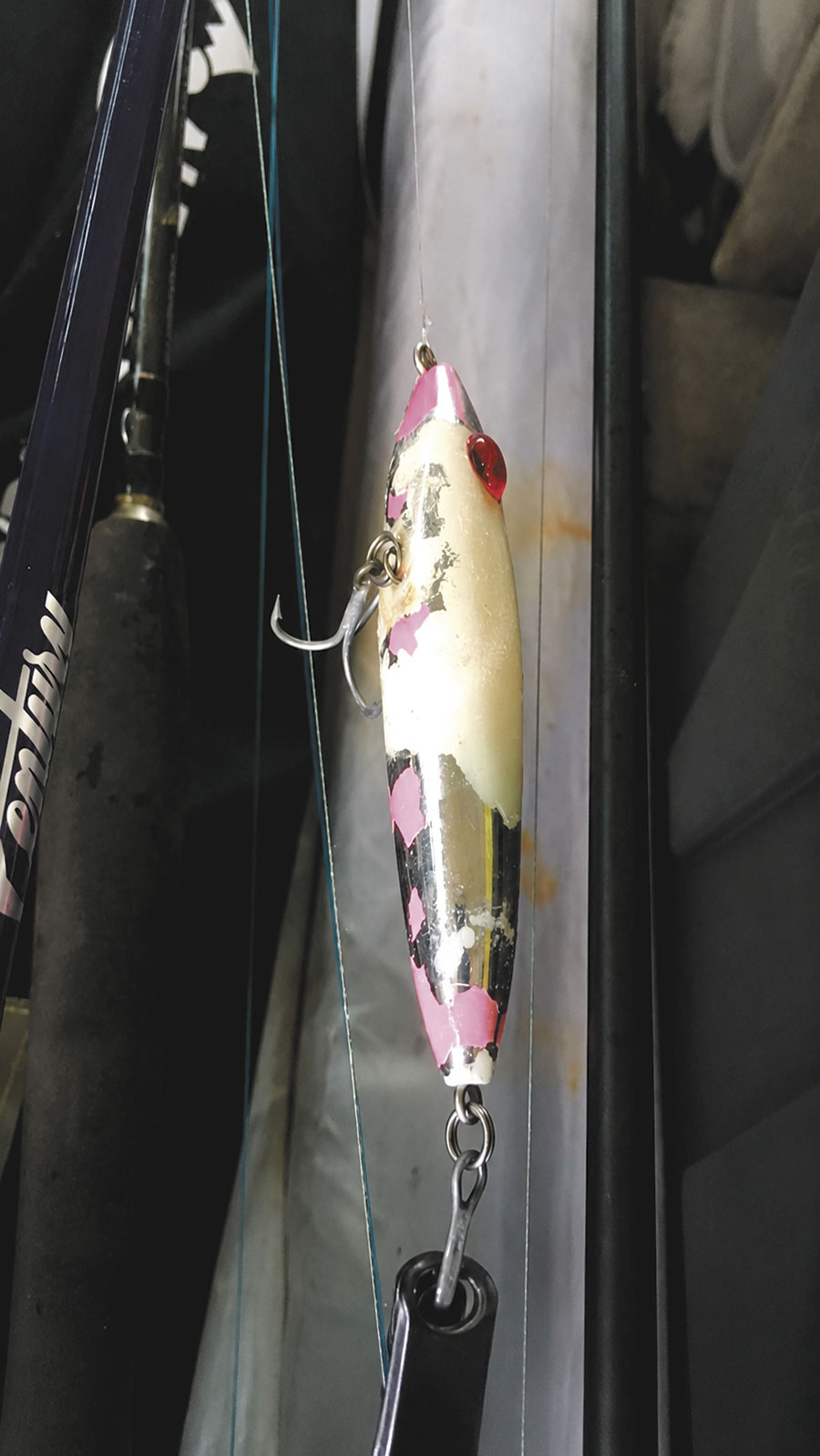
“It’s always fun to watch a giant trout come up and just inhale that bait,” he said.
For line, Shultz uses 30-pound braid for his main line and ties it to a 30-pound fluorocarbon leader. The She Dog does more than weed out the small fish. It also turns the strike into something Shultz said you can hear as much as see.
“You can throw this out there, close your eyes and just listen to it work across the water,” he said. “Then all of a sudden that fish hits. It’s hard to even describe—the sound of that fish blowing up is something special.”
Fish the mullet rafts
For all the confusion the birds and the trash fish create, Shultz keeps it simple: Find the bait and you’ll find the trout. Shultz said the big fish at the islands are usually concentrated and don’t scatter. They school up and roam the beach, staying glued to whatever bait is around.
“Those big giant trout just roll up and down that beach chasing the bait,” he said. “They just stay with the bait, whether it’s pogies, mullet or shrimp.”
That’s how Shultz’s buddy Russ Pylant caught the biggest trout either of them has ever seen. They found a school of mullet stacked up on the back side of the island and kept their plugs in it, working the baitfish until a giant finally came up and crushed his lure.
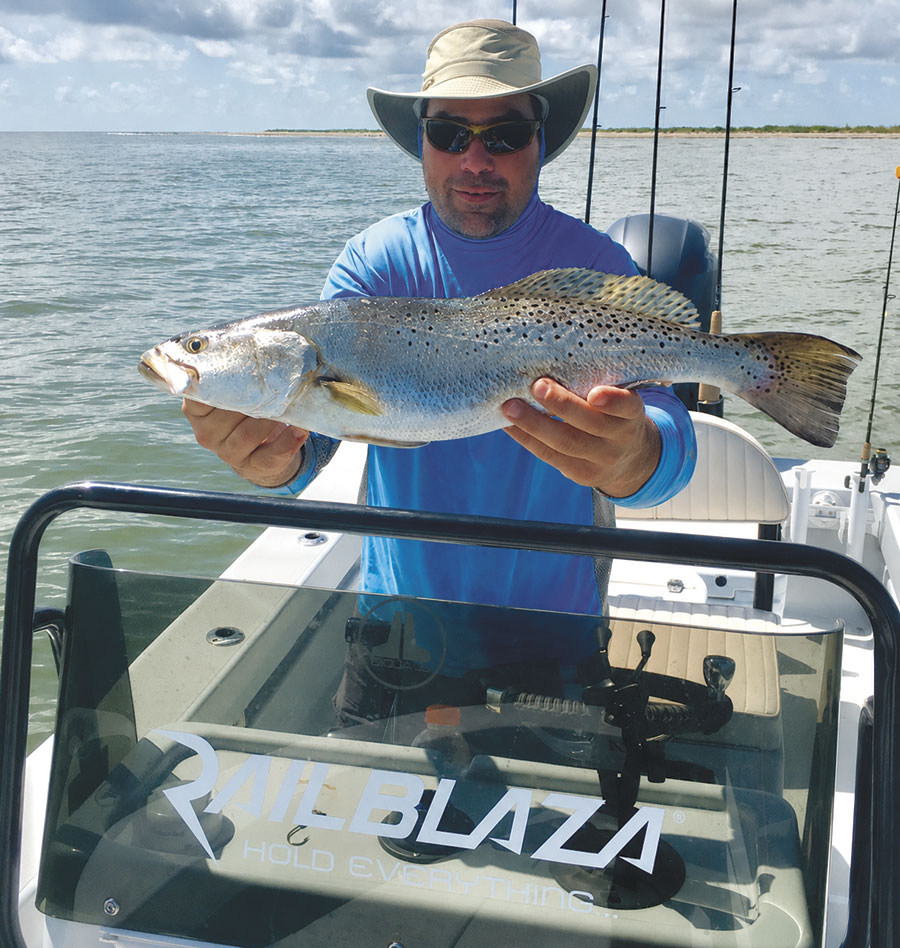
“It was pushing 7 pounds,” Shultz said. “Still the biggest trout I’ve ever seen.”
Big fish are there
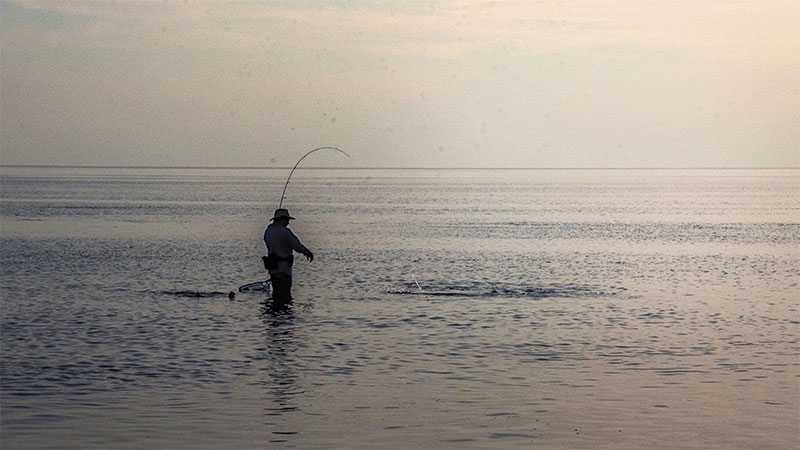
Every fisherman has a story of the one that got away. For Shultz, it was a giant trout he was able to net that still managed to escape. It happened on a day that Shultz and some friends had already boxed their limit of trout. The tide had fallen out hard and left the boat grounded, so Shultz waded away from the boat to keep fishing while he waited on the water to come back up. A ground swell was rolling in just enough to lift the bait and bring the big trout up after it.
“They were hitting it so hard they were jumping out of the water and shaking their heads,” he said. “The bait would get thrown right out of their mouth and another one would just come up and inhale it. It was every cast.”
He was working his plug back toward the beach when the fish showed itself.
“I watched her come up and eat the bait 10 feet in front of me,” he said.
Shultz could see the whole thing unfold as a big silver streak raced in like a torpedo. The trout hit so hard he never had to set the hook. The fight was over almost as fast as it started.
“I only fought her for maybe a minute or two,” he said.
The one he lost
Shultz got the fish to him and knew right away it was a monster. Looking back, he said he should have just walked her straight up onto the beach. Instead, he slid the trout into the net hanging off his wade belt, but the plug was buried down inside its throat and with the hooks where he couldn’t safely grab the fish. Shultz tried to get a hand over the top of her head.
“The top of her head was wider than my hands,” he said. “All of a sudden, she just starts going crazy and shaking her head, and I see this plug come flying out of her mouth. I felt the air from it come right by my face. I don’t know how it didn’t hook me.”
Just then, a swell rolled in almost chest high and filled the net to the brim with water. Shultz staggered to get his footing.
“The fish goes crazy, jumps out of the net and swims away,” he said. “All of that happened in about 3 minutes.”
Shultz didn’t dwell on it. He had already boxed plenty that day, and the bite that afternoon was one he still talks about.
“It kinda sucks losing what would have been my biggest trout, but having 50 giant trout in the box already made it less painful,” he said.
For anyone willing to make the run, summer is the best time to point a boat toward the Chandeleur Islands. The same August heat that drives most fishermen off the water is exactly what fires up the trout bite in the sound. Shultz said those big trout stay stacked along the beaches through the hottest stretch of the year, with August being his favorite month to target them.