Catfish are a welcome addition to a kayaker’s cooler
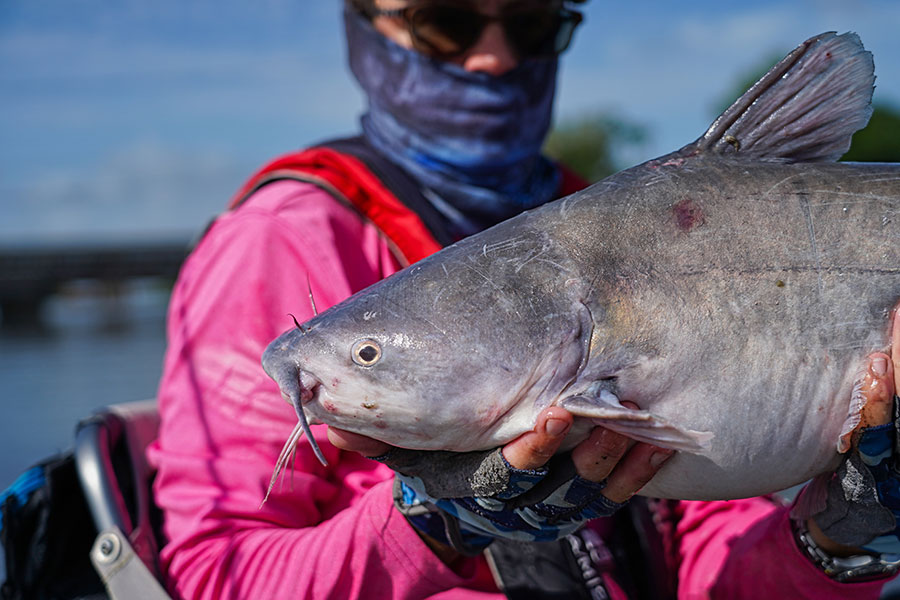
Whether specifically targeted or caught incidentally, freshwater catfish are increasingly finding their way into Louisiana kayak anglers’ fish bags. Catfish are available in all freshwater areas of the state, and they also have spread into many coastal waters that once only held saltwater species. They provide great sport and delicious table fare. With generous bag limits, catching catfish is a great way for kayak anglers to stock the freezer with some tasty fillets.
The three major freshwater catfish species available to kayak anglers in the state are blue, channel and flathead. The daily bag limit is 100 total catfish in the combined aggregate of the three species. Minimum size limits are as follows: blue cats – 12 inches, channel cats – 11 inches and flathead cats – 14 inches. However, the regulations allow 25 undersized fish to be kept of the three species combined. NOTE: These regulations apply statewide, except for the following water bodies that have their own specific size and creel limits; Caddo Lake, Toledo Bend, Sabine River and Bussey Brake WMA.
Rod and reel rigging
Catfish put up a good fight and catching them on a rod and reel is fairly simple. A bottom rig with the hook suspended a few inches above the weight works great. Catfish are bottom feeders and smell plays a big part in their feeding actions. Patience is the key, and you need to leave your bait soak in place to allow time for the scent to draw the catfish to your hook. A stout rod-and-reel combo and heavy braided line will help wrestle these big bottom dwellers out of the thick cover.
The weight size is determined by the speed of the current, and anywhere from 1 to 4 ounces might be necessary to keep the bait on the bottom. Hooks are more of a personal preference but should be a strong circle or standard J-hook style.
Bringing catfish into the yak requires a bit of precaution. While their fins are not as pointy as on saltwater catfish, you can still sustain a painful stick if not careful. The smaller fish are more likely to stick you as the fins on the larger fish are fairly blunt. Using a net and or lip grip helps control the fish in the cramped confines of a kayak. If using a soft cooler bag, use your pliers to snip off the points to avoid puncturing the liner.
Passive fishing gear
Passive fishing gear such as jug lines, limb lines and trotlines can easily be worked in a kayak and provide alternative methods to fill the kayak with cats. These methods take up little space and can be quickly set out before you begin to fish. Check them when you are ready to come in and, if you are lucky, you will end up with a few extra fish to add to your catch.
All passive fishing gear must be clearly marked or tagged with the fishing license number of the owner. In confined areas with no current, jugs can be free floated without fear of losing sight of them. If there is current or blind spots, the jugs must be anchored or tied off to a limb or the bank. Trotlines should be set out of the way of boat traffic. I prefer circle hooks for jug fishing.
Bait
No matter the method used for catching, a wide variety of natural baits work best for catfish. Worms, cut mullet, herring, bream, chicken gizzards, crawfish and shrimp all work well. Flatheads prefer live bait and a live bream often gets the job done. I have tried cheese, blood and stink baits with very limited success. Though they do well in some areas, I’ve found that using natural baits common to the area works much better.
Catching freshwater cats in coastal areas has drastically increased over the last several years. Anglers are oftentimes shocked when the trout or redfish they were targeting turns out to be a big freshwater cat. Due to salinity changes from coastal restoration and hurricane prevention projects, freshwater cats have increased their range across the coast. Their availability changes somewhat with the salinity and they move in and out of areas along with these changes.
While the shrimp and minnows regularly fished by saltwater anglers catch freshwater cats, they also occasionally hit artificial lures. Scented soft baits like Gulp work well and incidental catches on hard lures and spinnerbaits are not uncommon. With lowered bag limits and tighter size restrictions on trout and redfish, freshwater catfish are often a welcome addition to a coastal kayak angler’s fish bags.
Whether you choose to directly target catfish in freshwater or simply add them to your coastal fishing efforts, do not overlook the fun and food they provide kayak anglers throughout the state.