This Southwest Louisiana teal hunting spot is pure gold
During a midweek afternoon hunt last September, Dillon Delaney, a 35-year-old waterfowl guide and outfitter, nervously stood just outside one end of a long well-made blind located on a rice field levee near Klondike, Louisiana. Inside was a long bench, where six hunters sat waiting — hoping more like — teal would soon be flying.
The 2024 Louisiana early teal season had opened the previous weekend. What’s more, all of Delaney’s hunters had done well both days.
“Teal season in Louisiana is pretty much ‘our’ duck season. What I mean by that is people come from all over the United States to hunt teal here.”
According to Delaney, he ran 11 blinds on opening morning that averaged 30 to 40 teal per blind; something Southwest Louisiana has been known for in years past.
“Teal season in Louisiana is pretty much ‘our’ duck season,” said Delaney, who’s been guiding since he was 17. “What I mean by that is people come from all over the United States to hunt teal here.
“We’re known for teal. Winnie, Texas, Katy, Texas, Southwest Louisiana, that’s where you hunt teal. That’s where you kill numbers. There’s not a lot of places you can go and kill a 9-man limit in 45 minutes. Southwest Louisiana is one of them.”
Afternoon hunts
We arrived and set up in the blind at 4:30 p.m. and anticipated steady shooting to start around 5 or 5:15 p.m., but time was ticking off the clock, where it was past 6 p.m. and still no sign of teal. With sunset at 7:15 p.m., it was getting late.
You could see boredom had settled in the blind as some of the hunters’ heads were bent down looking at smart phones, while others were just quiet, seemingly lost in their thoughts.
Delaney, who is originally from Sulfur and now resides in Homewood, mentioned that most of the outfitters around the area didn’t like to hunt the afternoons, and the fields he hunted did not tend to hold teal throughout the day. In making a pitch for afternoon hunting, Delaney pointed out how in the dark, while on the way to their blinds for morning hunts, they’d jump thousands of teal. The birds had been feeding all night in the rice fields with the full moon.
His conclusion was that teal leave the rice fields with full bellies and fly to the marsh where they preen and rest during the day. Therefore, noting this pattern and taking advantage of it, Delaney said the afternoon hunts had been very productive, where now hungry teal returned to feed in the evening.
Most years there is a full moon phase during the September teal season, where birds are prone to feeding at night, thus something hunters must contend with. However, the moon phase shouldn’t be a problem for teal hunters this year. The 2025 9-day season is set to run from Sept. 20-28, and the full moon falls on Sept. 7.
Less pressure
Besides the moon phase, Delaney said another reason for hunting teal in the afternoon is that there is less pressure.
“You’ve got everybody and their momma hunting teal out here,” he said. “Every one of us is jumping a couple thousand birds when we go out into the fields in the morning. There’s a lot of blinds and a lot of pressure.
“They don’t decoy. They also don’t respond to a call those first two days because of pressure. The birds are just flying crazy in all directions opening weekend, which is another reason I like to hunt afternoons more. There’s so much pressure in the morning, where there’s hardly any pressure in the afternoon, where they respond to a call better. They work better. It just comes down to pressure.”
It’s important to mention there has been a decline in both United States Fish & Wildlife Service breeding population numbers and Louisiana Department of Wildlife and Fisheries aerial survey numbers the past few years.
The blue-winged teal breeding population declined 19 percent from 2022 to 2023 and declined 12 percent from 2023 to 2024. Note: At the time of this writing the 2025 breeding population survey numbers had not been completed and released yet, nor the LDWF September 2025 aerial survey flown and reported.
These numbers are worth noting when it comes to the LDWF September aerial surveys. The department reported 264,000 teal statewide during the 2022 September survey, and 148,000 during the drought stricken 2023 survey. There was no September aerial survey report issued in 2024 due to Hurricane Francine.
The right location
Despite these declining numbers, Southwest Louisiana year in and year out continues to hold the lion’s share of teal migrating into the state during September. Moreover, it also comes down to location, location, location. The region from Gueydan to Klondike may be subject to the ups and downs of droughts and hurricanes like everyone, but hunters still manage to kill birds here each year.
In reflecting on 2024 and comparing it to the previous years, Delaney said he saw way more teal.
“I saw twice — triple the number of birds than last year, but that is due to the drought,” he said. “The drought really hurt everyone. I just happened to be in blinds close to the marsh and we did really-really well, when a lot of people struggled. We’re just in the right area.”
When it comes to hunting large groups of hunters, no matter how many birds are flying, it takes a bit of skill on the guide’s part to know when to call the shots.
“Every shot call is different,” Delaney said. “If they’re coming in hot and not wanting to slow down and set up, what I try to do is time it right and call the shot before they get into my spread. By the time everybody gets up, they are flaring up right in front of them, where generally it’s pretty good shooting.”
Safety first
To ensure blind safety, Delaney said he gives a safety speech before every hunt, morning and afternoon. Topics include keeping your gun on safe, knowing where each hunter’s shooting zone is, and if the guide or someone is out of the blind how “no one” shoots.
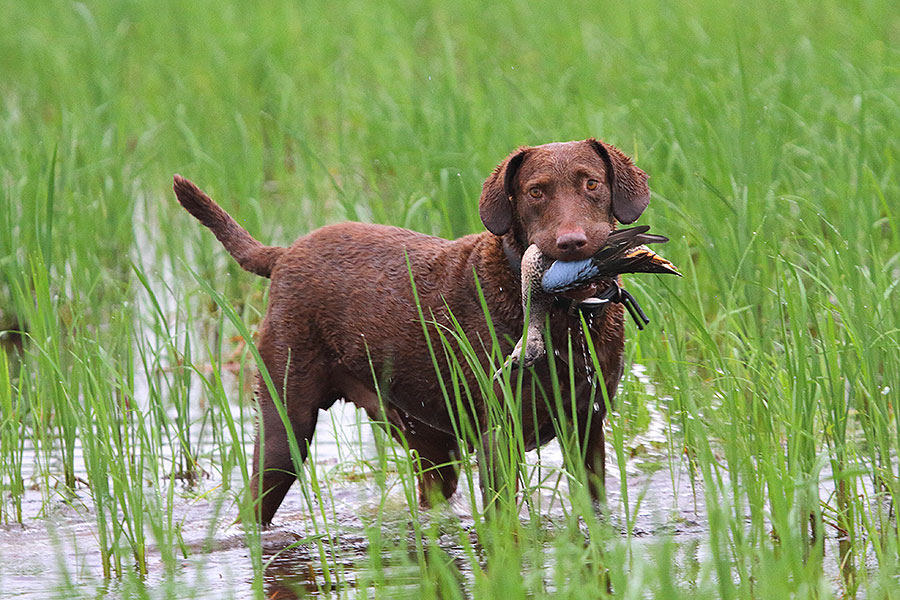
“I go through the safety speech, and I don’t shoot when I have a big group,” Delaney said. “I’ll occasionally clean up after them, but I try to keep an eye on everybody — it’s my job. I’m usually calling the shots, running a dog, and making sure everybody is being safe.”
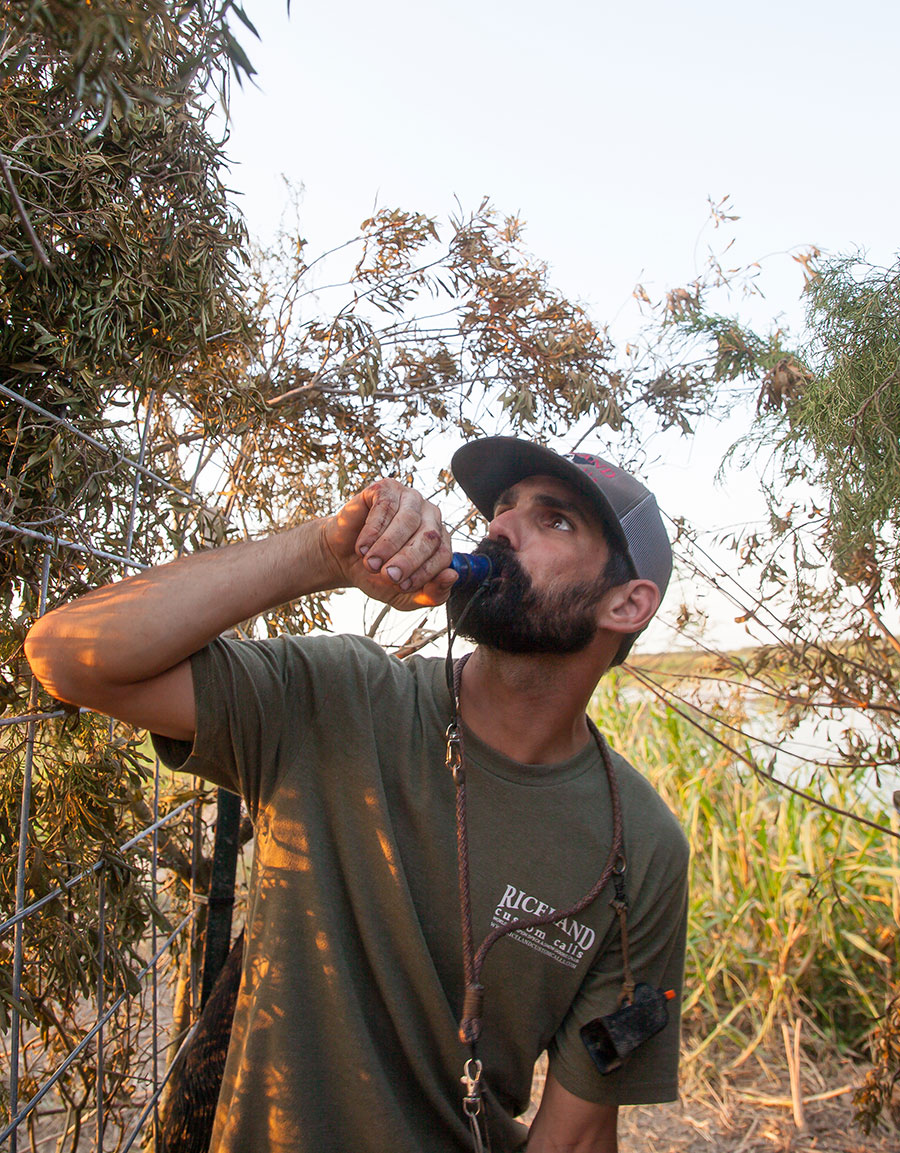
When it comes to calling, Delaney, who uses and prefers Riceland calls, said he likes to “hit-em” on the corners, something he learned from his father who also guided for 27 years.
In describing his technique, he used the example of ducks passing the blind up where they were initially banking, swinging and cupping up, but suddenly seemed uninterested. Delaney said that’s when he will call to get them excited and back on track.
“I’ll call them on whatever corner they turned from me and pull them back,” he said. “Then I’ll kind of quiet down and chirp them in to where I want them. Hitting a bird on the corners goes for teal, big ducks and specks. Working birds on the corners is very important.”
Decoys
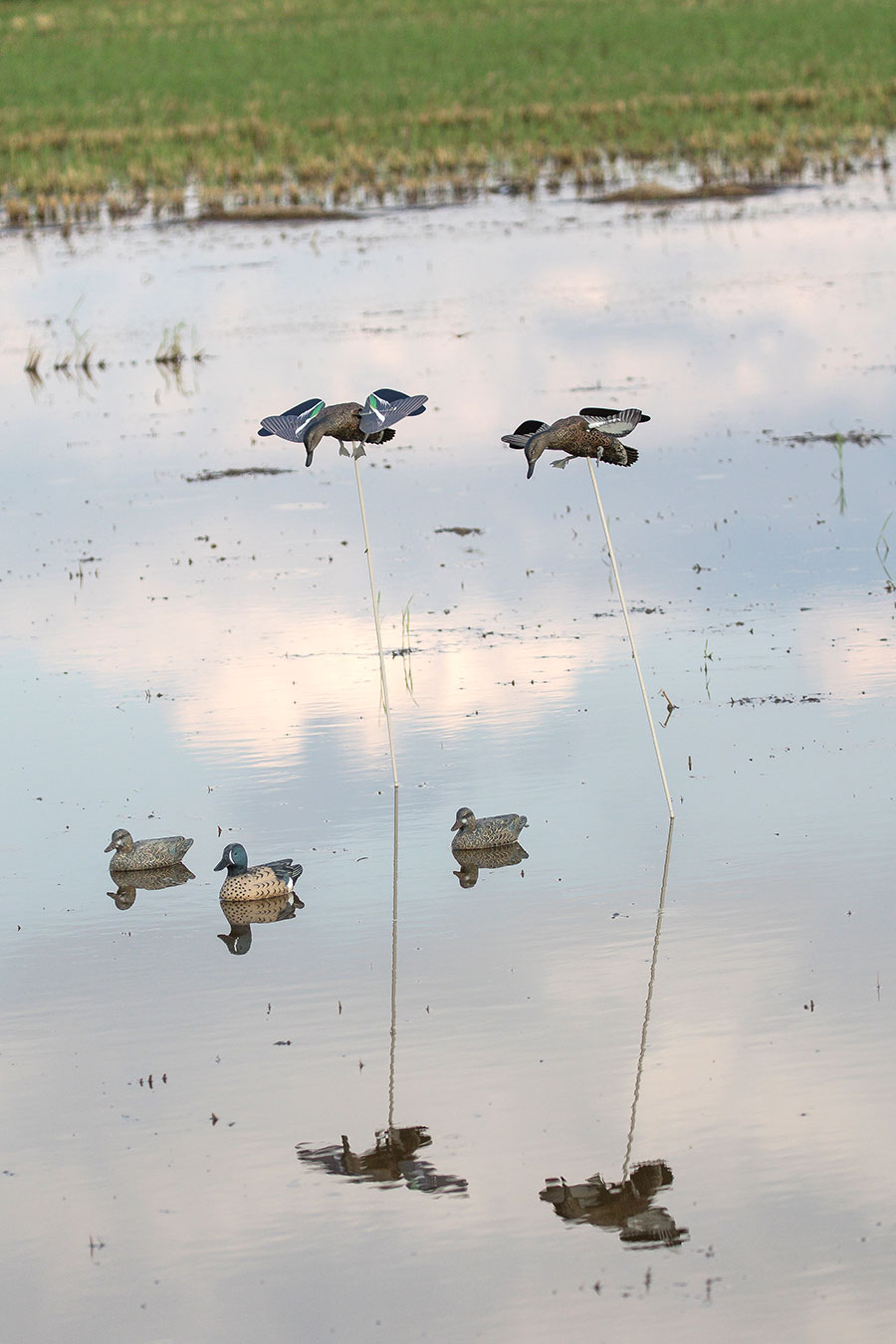
As far as teal decoy spreads, whether on morning or afternoon hunts, Delaney said the “go-to” spread most locals use is four dozen decoys. Instead, he tries to run eight, nine, and even 10 dozen that includes teal, but also a lot of larger brown mallard hen decoys.
“The brown decoys pop more,” Delaney said. “It’s a confidence thing. The larger, darker decoys resemble mottled ducks. We’ll also run eight to 10 Robo duck spinning decoys too.”
With nothing happening, Delaney took a few calls, while never taking his eyes off the sky looking for birds.
“Guiding can be tough,” he said. “I’ve guided in bad years and it’s probably the most stressful thing I’ve ever done. You’re trying to keep people happy and when they’re not pulling the trigger it can be difficult. It’s a business. Not only are you bringing people hunting, but you’re also accepting money from them. So, if they’re not killing, it’s harder to keep them interested.”
Born to be a guide
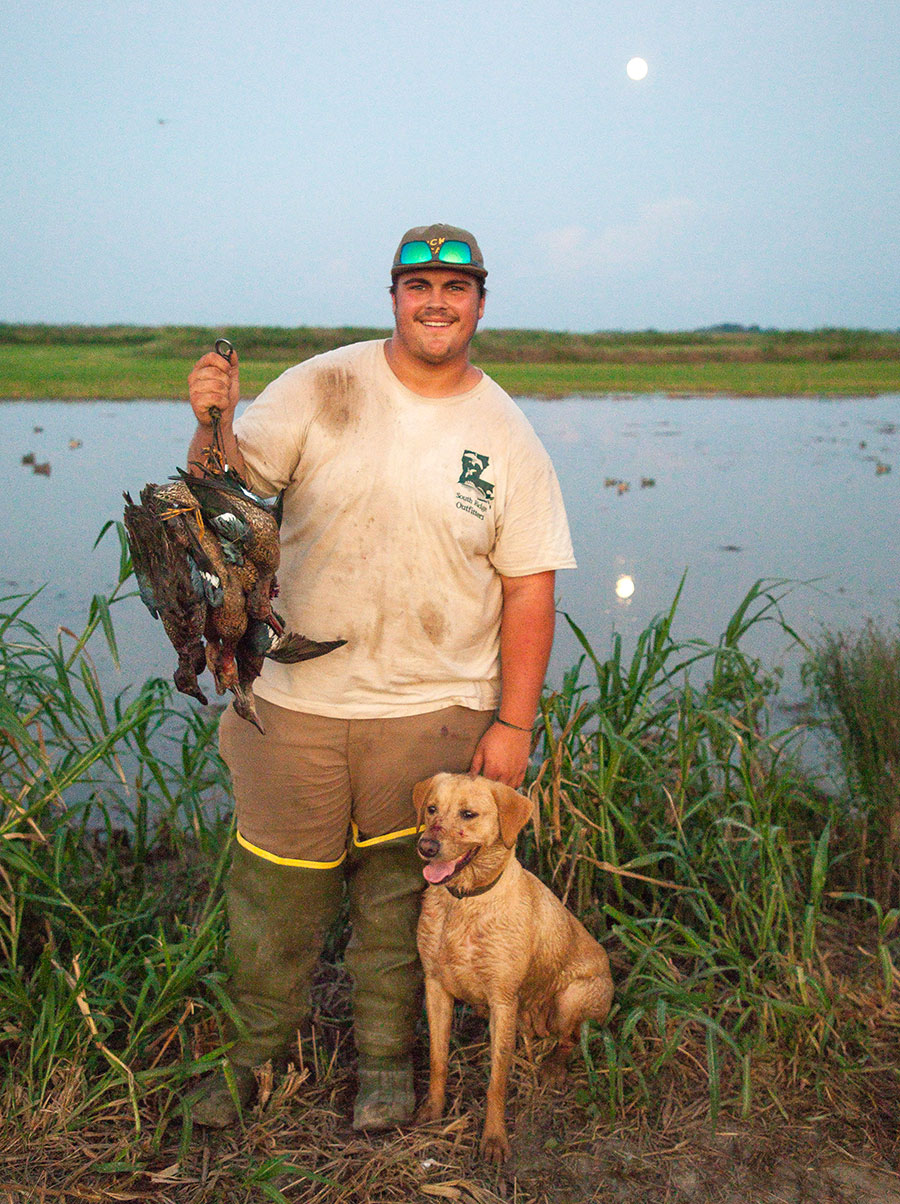
Delaney is married and he and his wife have seven children. He guides 6 months out of the year starting with teal in September and ending with snow goose conservation hunts in Arkansas in April.
Delaney said they travel from state to state and lodge to lodge as a family. His wife, Marina, home schools the children and helps with bookkeeping, taking client calls, and often helps cook and clean at the various lodges they guide for.
“She loves it,” he said. “She loves the lifestyle and meeting new people and the visiting. And the coolest thing about it is we get to do it with our kids. My kids are hunters, but I’m praying that they become doctors and lawyers; but I got a feeling two or three of them are going to be hunting guides.”
Delaney’s deceased father is the person who he attributes receiving his skills as an outfitter from.
“He wanted me to become a doctor or lawyer too, but I didn’t have a chance,” Delaney laughingly said. “I was born to be a guide I guess, cause my dad gave me a duck call before I had a pacifier. He pushed me and I was competition calling at 7 years old.”
On the fly
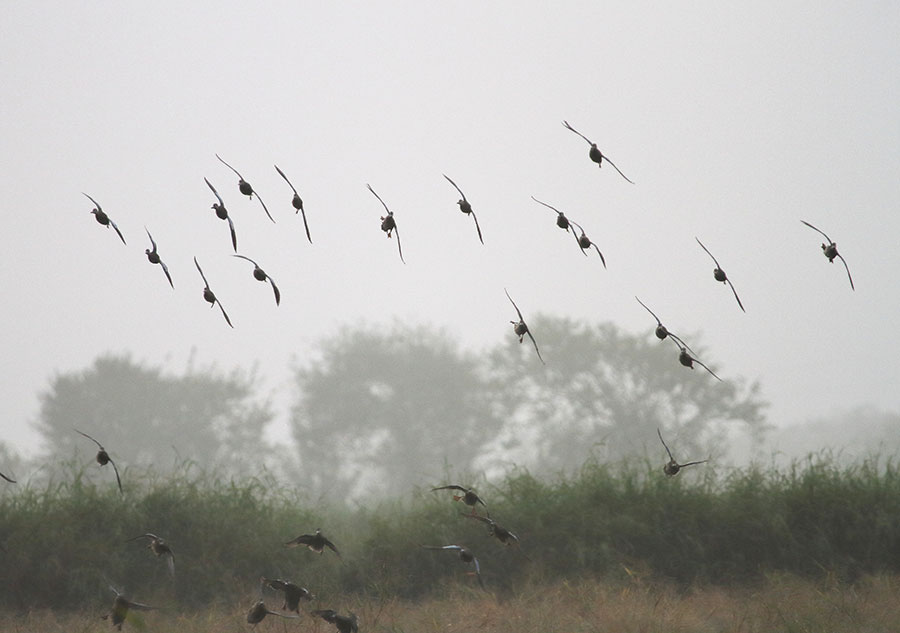
When 6:35 p.m. came around teal started to move, but they wouldn’t work like Delaney wanted them to. The teal wouldn’t commit to the decoy spread and instead flew past the blind like fighter jets strafing a field.
Delaney instructed one of his other guides to reposition the Robo Duck decoys, but it was to no avail. That’s when Delaney simply said, “Fellas, I’m sorry, but we’re just going to have to shoot-em on the pass, it’s the best I think we can do under the circumstances.”
So, we did, and over the course of the next 40 minutes of legal shooting light managed to harvest 22 blue-winged teal. Not bad for an afternoon hunt in Klondike. Maybe not a Klondike strike of gold like in the Canadian Northwest, but instead a Klondike strike of blue-winged teal, nevertheless. Only this strike took place in Southwest Louisiana.
For more information on how to book a hunt with Dillon Delaney, he can be reached by calling (337) 581-2274.