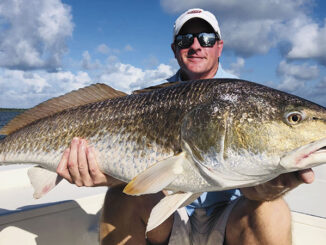
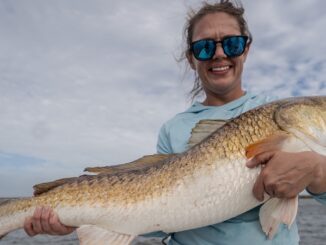
If all anyone was concerned about was redfish mortality outlined in the Commercial Menhaden Fishery Bycatch Study, then news coming from July’s Louisiana Wildlife and Fisheries Commission meeting was good news – maybe.
The LGL Ecological Research Associates study showed this industrial fishery killed about 22,000 adult redfish in 2024.
LGL survey teams used direct visual observations and video examinations in 418 of the menhaden operations’ 13,144 sets made during last year’s season to determine an overall estimate of total bycatch at 3.6 percent by weight.
Bycatch is the name given to any non-targeted species, which, in this case, is any marine animal other than menhaden, a species most Louisianans know as pogies.
The 3.6 percent is within the 5 percent allowed by state law for this fishery, and was a number touted by industry representatives after LGL’s 70-minute presentation.
LGL provided charts, graphs, maps and photos outlining their data collection process, which was hailed by conservation and industry spokesmen for this first thorough study.
The reaction by Wildlife and Fisheries’ marine biologists was provided in a same-day release:
“Mortality estimates for Red Drum (in numbers) are not significantly different from those previously estimated by LDWF; however, the LGL study provided average weights of Red Drum from the bycatch, which were not previously available. These weights, physically taken from the bycatch, resulted in a higher total poundage of dead Red Drum, despite the total numbers being very similar to previous LDWF estimates,” the release stated.
And, “…Mortality estimates of Spotted Seatrout (speckled trout) are higher than previously estimated by LDWF, as the LGL study does a more effective job of accounting for retained catch, which was not accounted for well in previous bycatch work upon which previous LDWF estimates were based.”
The effect on other marine species
LGL’s report contained much more.
Lost to the industry’s purse seining operations were cow-nosed rays, croaker, white trout (identified as sand seatrout) black drum, spot, gafftopsail catfish, jack crevalle and Spanish mackerel among the 41 species observed in bycatch.
The most released species from menhaden-boat catches were redfish, drum, gafftops and blacktip sharks.
The overall effect on marine species was made by extending numbers from the 418 sets to the more than 13,144 overall sets made last year, a figure observers said was below the normal annual menhaden sets made in a single season for the past several years.
In a post-study release issued by the Theodore Roosevelt Conservation Partnership, the total numbers of several species included bycatch mortality of “…approximately 81 million croaker and 25 million sand seatrout,” retained by pogie boats, and species, like pogies, serve as forage for predator species.
TRCP spokesman Chris Macaluso also took issue with the identified 22,000 redfish in the study: “The results are concerning, especially given the efforts underway for the last year to make Louisiana’s redfish population healthier by ending the recreational harvest of large, breeding size redfish.”
New recreational redfish limits established in 2024 banned the take of redfish 27 inches or longer, fish state biologists said had moved into the breeding stock, and fish reported in the bycatch study.
Waterfowl Hunter Survey
Other commission actions included a presentation by Wildlife and Fisheries’ Waterfowl Study leader Jason Olszak about the recent waterfowl hunter’s survey to determine hunters’ preferences for Louisiana’s season dates and waterfowl hunting zones for the next five seasons.
The decision must be presented to the U.S. Fish and Wildlife Service by Aug. 30 and will run through the 2029-2030 waterfowl seasons.
The survey, Olszak reported, contained 37 questions. Some 11,636 responded to the 66,651 hunters holding Harvest Information Program certificates.
Boiled down from the 30-plus minute presentation is that hunters liked the two waterfowl zones – East and West – with almost no consensus for either two or three segments in the 60-day season, and, overall, a mid-November opening day, splits opening on Saturdays, and hunting until Jan. 31, the last date allowed by the USFWS.
For specklebelly geese, the preference was for continuing a 74-day, 3-per-day season.
Other news at the meeting
-LDWF Enforcement Division agent Dustin Barton was honored with the 4th-annual Theophile Bourgeois Memorial Award as presented by the Louisiana Charter Boat Association.
-We learned that Delta Waterfowl used the state’s $103,412.37 donation to get matching funds of $310,237 to establish 560.5 acres in the Canadian province of Manitoba for waterfowl breeding habitat.
-We learned from Ducks Unlimited that Louisiana’s $103,412.37 donation had been leveraged into $413,648 ($537,742 Canadian) to support waterfowl breeding grounds totaling 1,265 acres in the Canadian province of Saskatchewan.
-The establishment of the new Bogue Chitto (1,642.5 acres, Washington Parish) and Flatwoods Savanna (426 acres, Allen Parish) wildlife management areas.
-Approved notices of intent for changes in the Scenic Rivers Program, the state’s Outlaw Quadrupeds and Nuisance Wildlife Control rules and rules in the Wildlife Rehabilitation Program.