Growing new sportsmen into lifelong hunting companions
Many people take their children to the woods where they sit in a box or tree for long hours. That’s great, but most young children quickly grow bored just sitting still and quiet. They need something with more action and excitement to hold their interest.
“Hunting small game is much easier for a child than deer and there’s more game available,” said Randy Gary of Elm Grove, La., who has hosted many youth hunts. “That’s how our grandfathers taught us. They took us squirrel hunting. I started with a BB gun.”
Years ago, few deer roamed Louisiana. Many parts of the state had no whitetails. Rabbits ranked as the most popular game animal with squirrels not far behind.
“I grew up rabbit hunting,” said Toby Dooly from Sarepta, La. “My dad, grandpa and a bunch of uncles all hunted rabbits. Hunting with beagles is a family tradition. Sometimes, we brought a grill to barbecue rabbits for lunch. Then, we went hunting again that afternoon. We had a great time. Not many people still keep rabbit dogs.”
Too many people simply want to hunt more than they want to take their children hunting. Some think young children should already act like Daniel Boone and yell at the youngsters when they don’t. Nobody enjoys people yelling at them. Teach children how to do things correctly. Then let the child do it, as long as it’s safe.
“Whenever we take kids in the woods, we always start with some basic hunting safety,” said Rick Hamrick, a Mississippi Department of Wildlife, Fisheries and Parks small game biologist. “Then, we take them out on the range to let them shoot before they get out into the woods. We want to make sure that first experience goes safely.”
Spotting squirrels
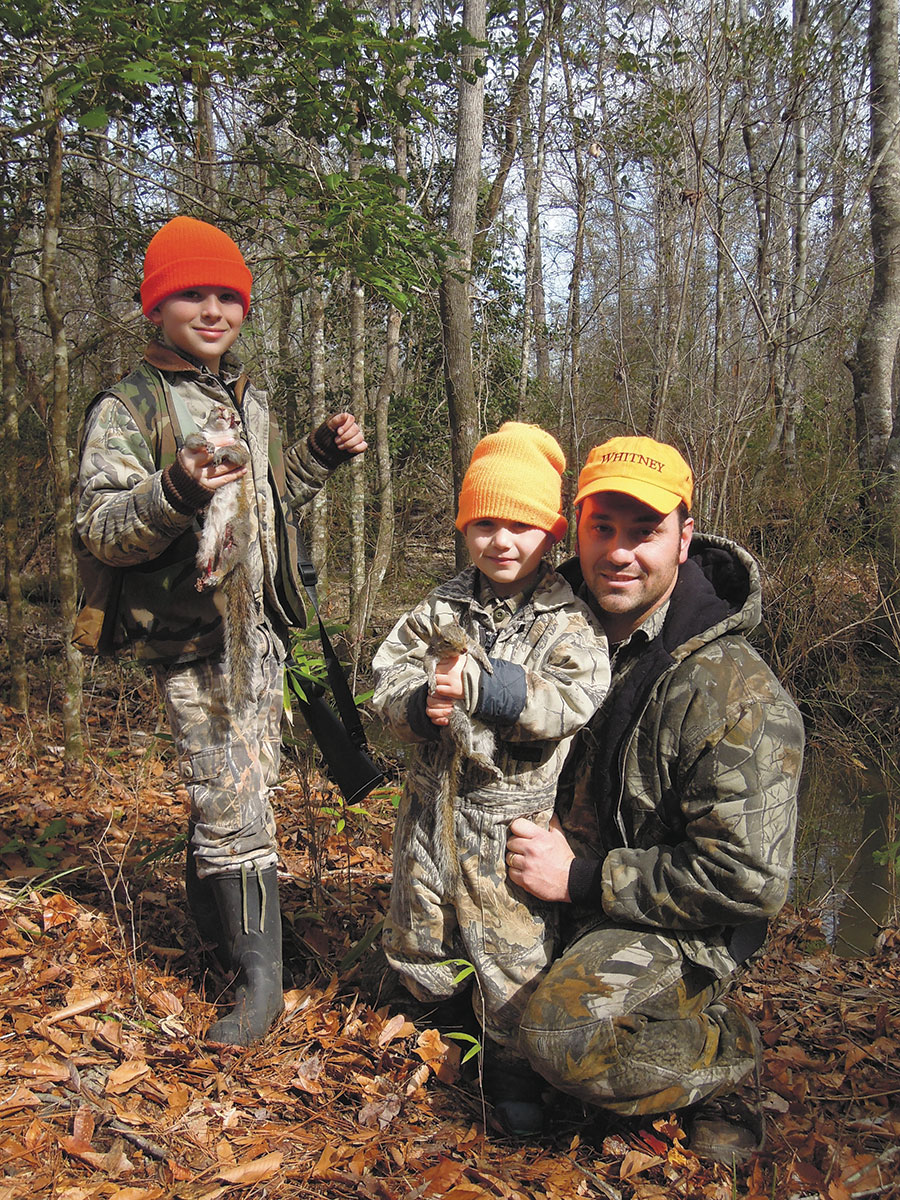
Make every outing interesting, fun and enjoyable for young children. Teach children how to identify tracks and game signs. Teach them to identify species spotted or heard, even if that means a slightly lighter gamebag. Growing a lifelong hunting companion will pay much more dividends than one extra squirrel in the pot.
Rather than start with deer or turkey, take youngsters on a more active adventure that will hold their attention. Squirrel hunting offers outstanding opportunities to introduce kids to hunting and teach them woodsmanship skills that they will use later for other pursuits.
To hunt squirrels, first learn how to spot the “Gray Ghosts of the Forests.” For practice, take youngsters to a park with abundant oak or other hardwood trees. Look for squirrel sign on the ground, such as nut shells or pine cone husks. See how many squirrels the youngster can spot. With multiple children, make a game of it. See who can spot squirrels first and the most. After spotting a squirrel, let the young woodsmen practice their stalking skills. See how close they can get to a squirrel as if hunting.
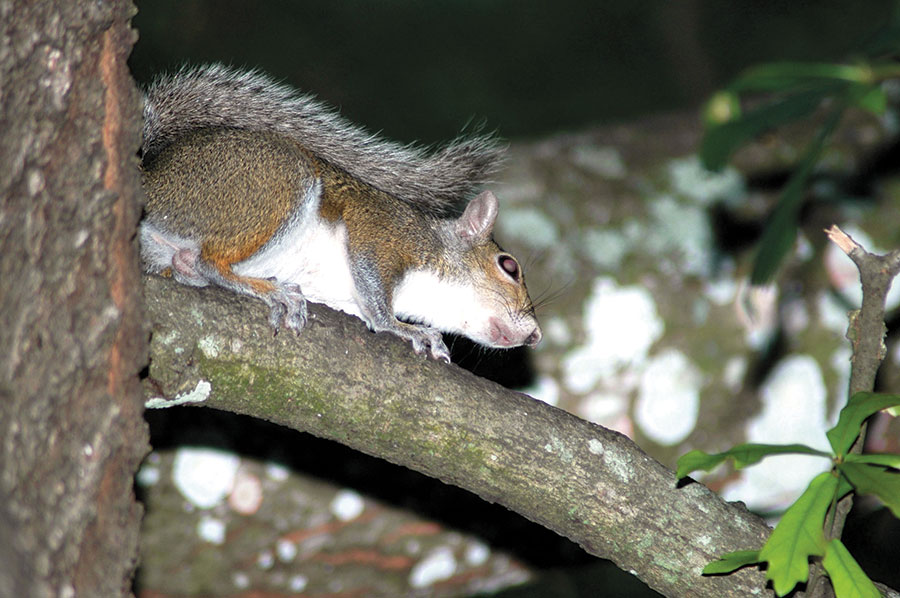
Of course, locating squirrels living in a wild forest requires greater skill levels than seeing them in a park. The masters of concealment regularly fool even the most experienced outdoorsmen by easily disappearing in branches, holes and foliage of big trees.
“We need to teach children how squirrels behave and how to get within range to get a shot,” Gary said. “Children can be still and quiet for a while, but then they get antsy. When they do, move a short distance and sit down again. If children mess up, just walk a little farther and try to get the next squirrel.”
What to listen for
In good squirrel habitat, take a few steps, stop, look and listen. Look for acorns, nests and other signs. Scan the trees for movement or odd shapes. Advance a few more steps and stop. Periodically, find a fallen log or comfortable tree trunk and sit down. Remain still and quiet while scanning and listening.
“When we take youngsters, we’ll teach them how to move around quietly in the woods,” Hamrick said. “We’ll teach them to watch where they step so they don’t make too much noise and utilize cover when stalking a squirrel. When we hear squirrels barking or other sounds they make, we tell the youths about squirrel vocalizations.”
Hunters regularly hear squirrels long before they see them. Listen for claws scratching on rough bark, branches shaking or objects dropping to the ground. Listen for barking or squirrels scampering over dry leaves on the forest floor. Teach children to identify those sounds.
Squirrel hunting in pairs or teams allows socialization, an excellent way to introduce children to the sport. Teams also build lasting bonds and can add more weight to a gamebag.
Alerted bushytails habitually put tree trunks, branches or other cover between themselves and hunters. Take advantage of a squirrel’s innate curiosity. One person walks around the tree making noise. The squirrel will naturally focus on the moving hunter. The youth remains still and silent. Watching the adult, the squirrel might move, giving away its position and possibly offering the youngster a clear shot.
Hunting with dogs
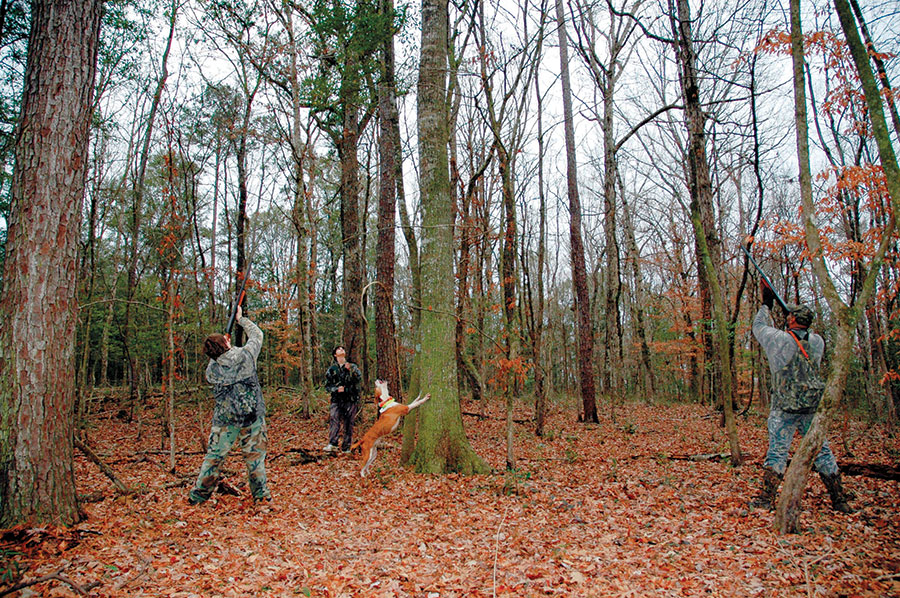
Hunting squirrels with trained dogs provides another excellent way to include children in hunting. Handlers release dogs to romp through the forest sniffing for bushytails. Sometimes, following excited dogs almost seems more like an adrenaline-pumping cross-country race than a hunt.

“Dogs do the work and find the scent,” said Chester Thompson (337-309-0908) a champion dog breeder from DeRidder, La. “It’s amazing what dogs can smell. Their noses are so much better than we can imagine. Dog hunting is a social event. People don’t need to keep quiet. They can talk and don’t need to worry about crunching leaves. It’s a great way to hunt with kids or families.”
When dogs “tree” a squirrel, they become excited, jumping and barking at the tree base. Hunters position themselves around the tree to watch for movement. Someone shaking a vine could prompt squirrels to bolt from cover with afterburners ignited. When hunting squirrels with dogs, don’t wait for the easiest shot.
Squirrel hunting with dogs is fun,” Gary said. “It’s a great way to introduce children to hunting. When a dog trees a squirrel, it’s exciting for that child.”
Learning to hunt rabbits
Rabbit hunting also provides great socializing opportunities. Some hunts involve several families with sportsmen and sportswomen of all ages. After handlers release their dogs, people take up positions where they think a rabbit jumped by beagles might appear. Many handlers get into friendly competitions with associated trash talk about which dog finds the first and most squirrels.
“When hunting rabbits with dogs, we can bring kids who don’t need to worry about being super quiet and still,” said Collins Jenkins of Pine Grove, La. “A single-shot 20 gauge or .410 is a great gun for kids to use when rabbit hunting. People who want to learn how to hunt rabbits should find hunters who do it and go with them. I love bringing youth or inexperienced hunters with me and see their reaction. Their faces light up when they hear the dogs running a rabbit or they kill one.”
Hunting rabbits with dogs sounds easy. People stand around waiting for the dogs to jump rabbits so the hunters shoot them, right? Not every jump results in a kill, or even a shot. Day and night, rabbits must avoid multitudes of predators, all much better hunters than humans. Often, hunters never see rabbits jumped by dogs, but everyone enjoys the thrill of listening to baying beagles.
“Rabbit hunting is much harder than squirrel hunting,” Gary said. “The biggest mistake inexperienced rabbit hunters make is ‘shooting the jump.’ That’s when a rabbit jumps up and takes off. That rabbit will run in a circle and come right back to us. The excitement of a pack of dogs coming back towards that child is something he or she will never forget.”
Go near where the dogs first jumped that rabbit. Find a reasonably clear spot with good visibility. Stay there still and quiet. With dogs hot on its cottontail, a rabbit might burst from cover anywhere. Frequently, a hunter barely sees a flash before Mr. Longears disappears.
“Hunting rabbits with dogs is a lot of fun,” Dooly said. “It’s a family-oriented style of hunting and a great time. If people would get involved with it, they would enjoy it. I love the dogs and watching them work. That’s a good thing for young sportsmen coming up.”