How to disappear from game animals for better success
Ancient hunters knew they could never outrun swift animals, so they fashioned crude weapons of wood and stone to give themselves an advantage.
However, even with these primitive hunting tools, ranges remained incredibly short. If they couldn’t sneak close enough to game, ancient humans had to let animals come closer to them. While modern weapons can reach out great distances, sportsmen today still face similar challenges. They must stay hidden from game constantly alert for predators that could kill them at any instant.
On both public and private lands, most Louisiana whitetail enthusiasts use tree stands or some other type of elevated platforms. Height creates a form of concealment. On private lands, many hunters strap ladder stands to trees. Also, they commonly build elevated shooting houses. Generations of sportsmen might hunt from the same shooting house for decades.
In the absence of suitable trees, like in large agricultural fields, sportsmen can place tripod stands practically anywhere. Many private land hunters leave their tripods or ladder stands out all season.
Tripods can also work in marshy terrain mostly devoid of trees high or strong enough to climb, if the mud can support the weight! Even in the vast, but disappearing, South Louisiana marshes, hunters might find ribbons of somewhat harder ground where they can put tripods. Some levees and shorelines offer slightly higher, more stable ground.
Atop some tripods, sportsmen can hide in small shooting houses. Some sportsmen drape themselves in camouflaged netting for additional concealment. Some tripods come with swivel seats so hunters can look in all directions.
Ground blinds
On private lands, many people also erect camouflaged ground blinds, essentially a shooting house without stilts. Deer might see the blind, but if they detect no human presence, they might just ignore them. Even the most dedicated whitetail hunter doesn’t stay in the blind 24 hours a day for the entire season. Both elevated and ground shooting houses offer sportsmen protection from the weather that most tree stands do not.
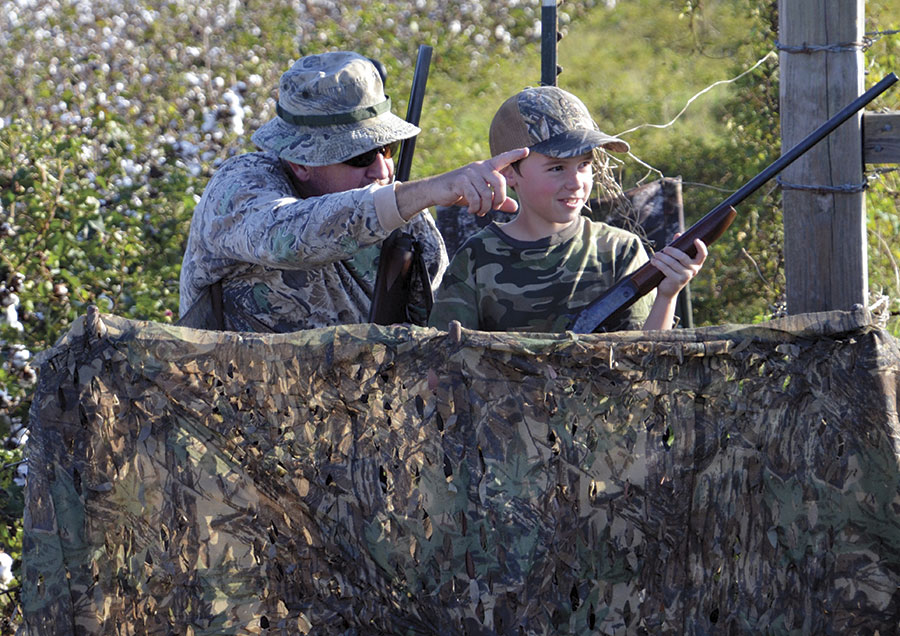
Sportsmen can build excellent ground blinds to use for deer or turkey hunting for very little cost. Old wooden pallets like those used by lumberyards and warehouses to move materials around with forklifts make excellent blind-building material. Often, these pallets stack up and businesses just want to get rid of them. Companies might give pallets away to anyone who hauls them off or sell them for a reasonable fee.
Nail pallets together to build a small house. Cover openings with camouflaged netting or cloth, but leave shooting openings. Add a plywood roof to keep rain out. Once in place, weathered wooden pallets become part of the environment and blend in with their surroundings. Many people stack or plant brush around the blinds to better hide them.
During the fall, animals frequently see numerous hay bales in agricultural fields. These resemble giant paper rolls. Companies sell blinds that resemble hay bales. Since animals expect to see such objects, they might not pay attention to another one. Hay bale blinds could work for deer, turkey, even doves or waterfowl. When game comes into range, pop the top and fire. Farmland hunters might also hide in or behind old tractors or other objects that stay out all year long.
Portable concealment
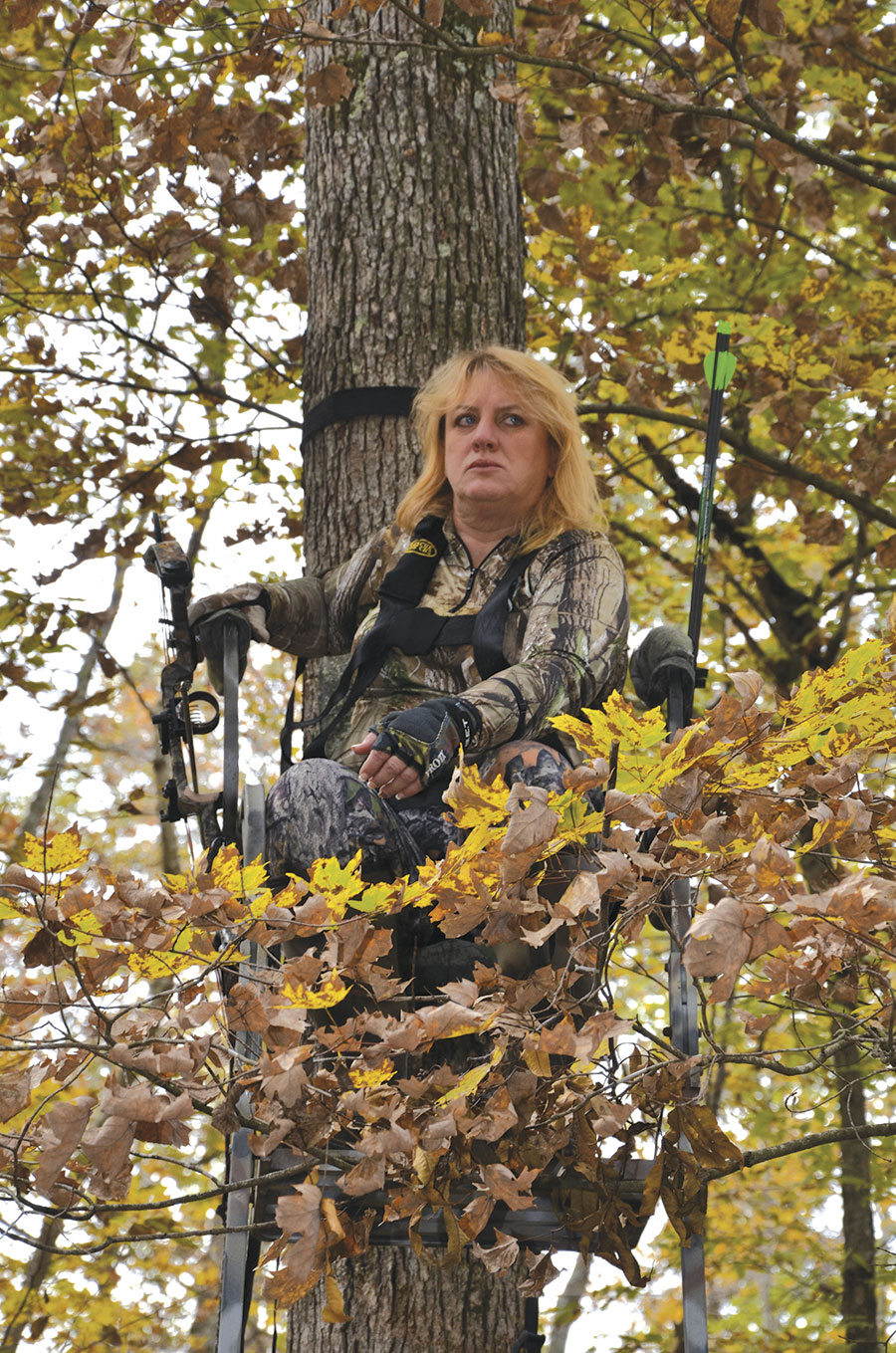
Sportsmen cannot erect permanent structures on public lands and can’t always hunt the same place every time. Therefore, they must remain mobile. They might need to relocate quickly to take advantage of shifting habits or pick a different spot if another hunter beat them to their preferred hunting location.
Many public land deer hunters carry portable climbing tree stands with them. Although heavy and bulky to carry, tripods give sportsmen some mobility and flexibility to keep up with game movements. Where permitted, people can use tripods on public lands, but must carry them in and out every day.
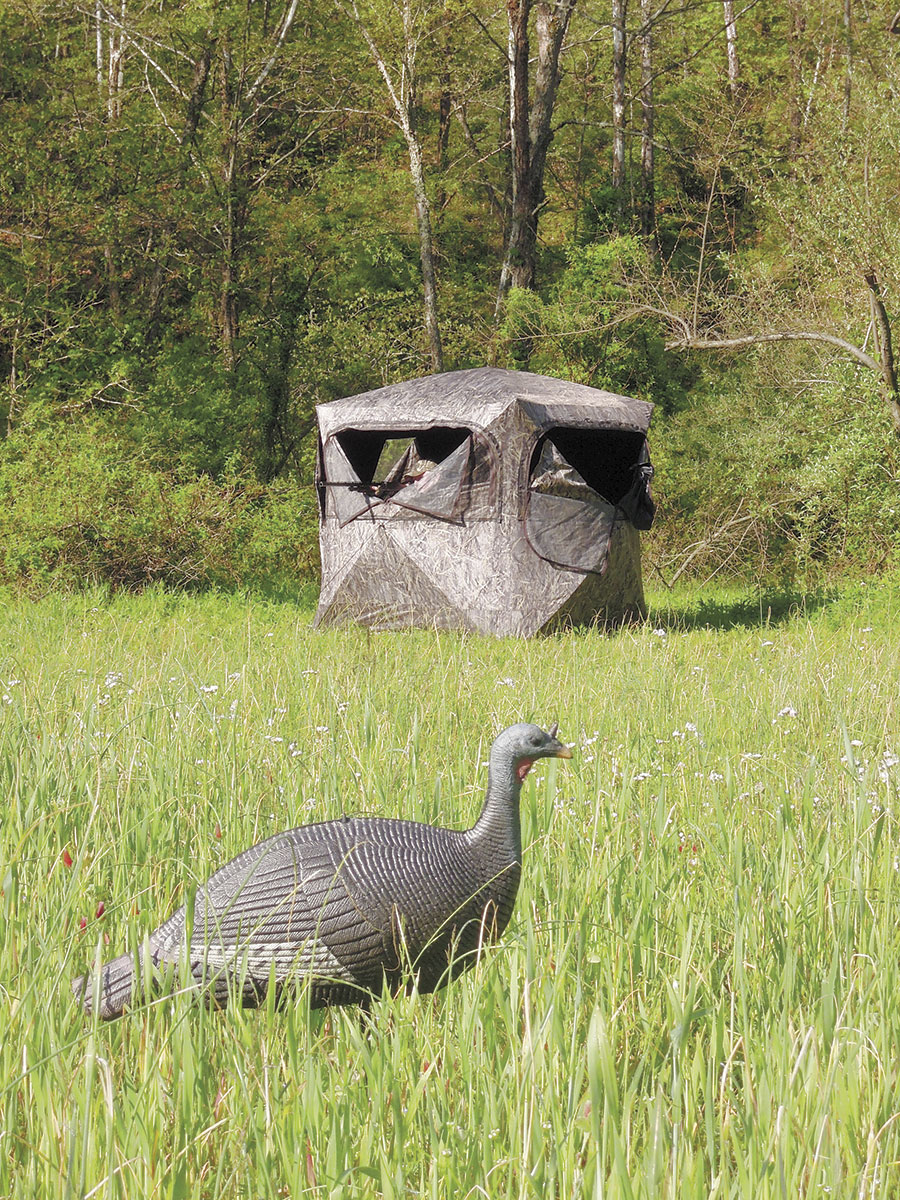
Light and easy to carry, prefabricated pop-up tent blinds make outstanding portable concealment that sportsmen can set up in minutes wherever they wish. They come in several popular camouflage patterns. Pick one that best matches the terrain at your chosen hunting location.
Pop-up blinds make great options for deer or turkey hunting. They conceal a person’s movement, minimize sound and somewhat hide scent. They also shelter people from the elements. Most come with mesh windows to keep insects out, but allow easy viewing. People could even bring a small heater for frosty days.
In many places, no blind makes the best blind if hunters can find adequate native vegetation or other natural cover already in place. In areas with active logging or tree thinning operations, workers leave huge debris piles. Hunters could hide in or behind such piles. Light camouflaged folding chairs make hiding in brush much more comfortable.
Waterfowl hunting
Waterfowl hunting offers its own unique hiding challenges, primarily water! Habitat might range from an upland pond surrounded by trees, to large lakes, flooded swamps or immense coastal marshes. In some places, hunters can hide behind flooded timber, high reeds, log piles, shoreline debris or similar cover.
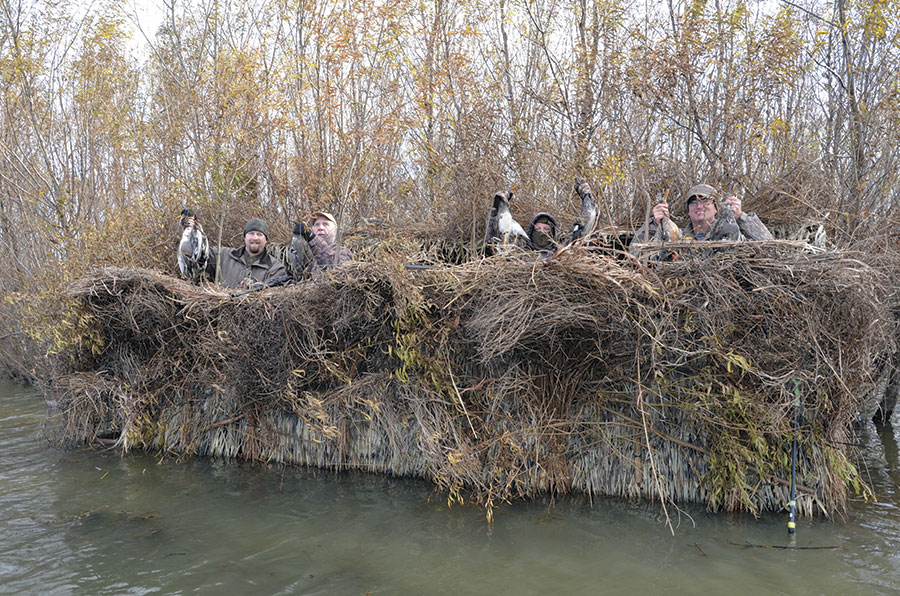
On large lakes and river backwaters, many waterfowl hunters build large blockhouse blinds, some floating and some permanent. Some large blockhouse blinds can accommodate multiple shooters. Some even come with small kitchens where people can cook breakfast or heat coffee. Hunters could even spend the night in some blockhouses. Hunters might use such blinds every season for decades.
Big roomy permanent blinds make hunting comfortable, but ducks and geese don’t always come to them. In heavily pressured places, like much of Louisiana and Mississippi, ducks and geese quickly learn to detect and avoid permanent blinds, particularly later in the season. Sportsmen must stay mobile to keep up with the birds.
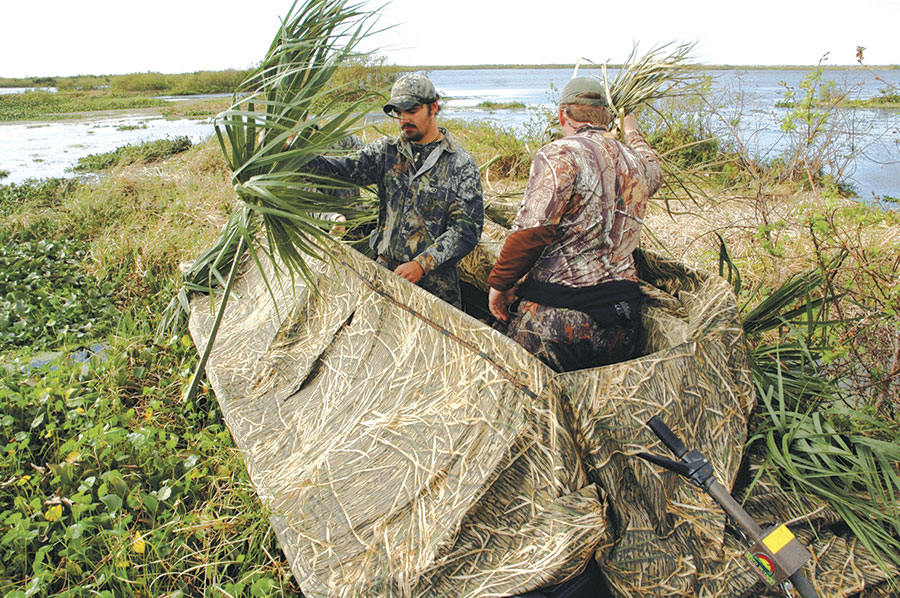
Unfortunately, good hunting ponds don’t always come with great blind material, so hunters must bring in their own. Many waterfowlers traditionally cut some brush or canes to carry to their hunting location. With it, they make temporary blinds or supplement existing natural cover.
Lone hunters might try stapling camouflage netting to sticks. Thrust the sticks into the mud so netting wraps around the hunter. Place a small piece of plywood on the mud for better stability. Sit on a shell bucket or folding chair. Instead of netting, people could use artificial or woven natural grass mats. This blind might also work for deer, doves and other species.
Panel blinds
Sportsmen can also erect panel blinds. These come with intertwined canes or woven grass on aluminum frames. Each panel interlocks with the others so people can assemble them in minutes. When finished, it looks like a natural patch of canes or reeds growing on a shoreline. Waterfowlers could easily disassemble the blind and move to another location if necessary.
“A panel blind is something that people can put up anywhere super quickly,” said Matt Harrison with Ducks Unlimited, a veteran waterfowler. “It comes in sections so people can assemble it and make it as big as they want to accommodate any number of hunters. Throw some extra brush on it for more concealment.
Some companies make portable blinds that replicate natural objects. For instance, some blinds look like gnarled tree stumps, an excellent choice for hunting river sandbars or wooded shorelines. Others look like rocks.
In well-watered Louisiana, many waterfowlers hunt lakes, bays, rivers and marshes from boats equipped with pop-up blinds of woven reeds or canes. While moving, they keep the blind folded. At the hunting spot, hunters toss out a few decoys, raise the blind and wait for the ducks. With such a rig, waterfowlers can easily relocate and begin hunting again in minutes. People could hunt several spots in one morning.
“A boat with a pop-up blind is a good blind to use when hunting water too deep for standing,” Harrison said. “They are very good for hunting places only reachable by boat.”
Layout blinds
For hunting in rice fields or dry fields, many people dig pits and place pre-formed fiberglass blinds in the holes. Geese and sometimes mallards land in dry fields. Goose hunters could also use hay bale blinds or layout blinds. Some reclining layout blinds come with soft cushions and angled backrests so sportsmen can recline in better comfort. Put layout blinds among the goose decoys.
“In a spot with little to no water, a layout blind is a good choice,” Harrison said. “It’s flat with the ground, almost like a coffin. It has two pop-out doors on top of the blind so people can pop them open to see and shoot.”
An unusual layout blind looks like a giant goose. Hunters get inside the huge decoy, looking out slits in the bird’s butt while reclining on a backrest. When birds come into range, they can pop the top and fire at geese very surprised to see humans erupting from their massive cousins’ derrieres to shoot at them.
Various blind options work for different situations, but one factor remains constant. Effective blinds must mimic the surroundings. In fact, they shouldn’t look like anything at all. Pick a camouflage pattern that blends in with whatever natural materials animals expect to see in that area.