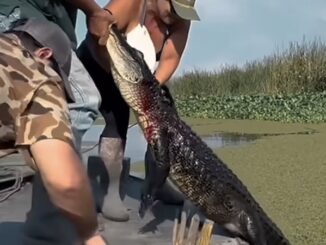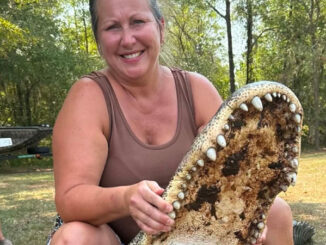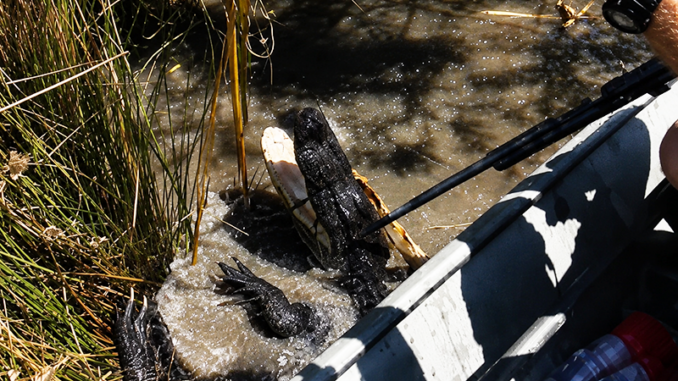
In May, the Louisiana Department of Wildlife and Fisheries issued an official Notice of Intent to establish the state’s first recreational alligator hunting season, which to no surprise was greeted with open arms by the fishing community, who has been experiencing more encounters with these reptiles as the population grows. What the proposed season would do is give Louisiana residents the chance to enter a lottery for the opportunity to hunt and harvest wild alligators on eligible private property across the state. Up to 5,000 winners would each receive two tags for the month-long October season.
How the public responded
Public comment on the NOI will be accepted through June 26. Comments may be submitted to LDWF Alligator Program Manager Jeb Linscombe at LDWF, 200 Dulles Drive, Lafayette, LA, 70506, or by email at jlinscombe@wlf.la.gov. According to Linscombe, the response so far has been largely positive and surprisingly quiet.
“I didn’t get many comments,” he said. “Mostly it was a lot of questions, clarification about how to apply for the lottery. I’ve maybe gotten a handful of comments and they’re pretty much all in support.”
Social media has told a different story, with plenty of calls for an all-out cull. Linscombe is not surprised but said those voices do not reflect the biological reality of the situation.
“I’ve been hearing those same comments for 25 to 30 years,” he said. “If we truly reduce the population, that would be a negative thing, and we’ve proven we can do it, because we did it in the 50s and 60s.”
Not a free-for-all
Linscombe said the department is careful to draw a distinction between recreational opportunity and population control.
“This is not just a free-for-all,” he said. “It’s not like everybody can go out in Louisiana and kill an alligator.”
While Linscombe and the LDWF maintain the alligators aren’t biologically overpopulated, they do acknowledge that another definition of overpopulation is human tolerance.
“The true definition of overpopulation is when the alligator becomes detrimental to either the habitat, themselves, or other species of wildlife,” he said. “There’s no data to substantiate that.”
Linscombe also points hunters and landowners to a newly launched resource called GatorWise.org, a collaborative website developed by alligator biologists across all 11 alligator range states through the Southeastern Association of Fish and Wildlife Agencies. The site focuses on the basics of coexisting with alligators, including one rule Linscombe said cannot be overstated.
“The single most irresponsible thing you could do is feed alligators,” he said.
Nuisance gators first
What the season is designed to do, Linscombe explained, is get harvest tags into areas of the state where commercial alligator hunting doesn’t reach. While the primary goal is expanding recreational opportunity for Louisiana sportsmen, Linscombe said the department hopes the season also gives landowners a legitimate avenue to deal with problem animals on their own property.
“It’ll allow some people to take an alligator on their property that otherwise we would have to send a nuisance hunter to take care of,” he said.
A property owner in Central Louisiana with a pond, a few acres, and a problem gator now has a legitimate path forward. Enter the lottery, win tags, and address the animal on their own terms rather than navigating the nuisance reporting process and hoping relocation sticks.
“If you do win the lottery, take care of any nuisance alligators first,” Linscombe said.
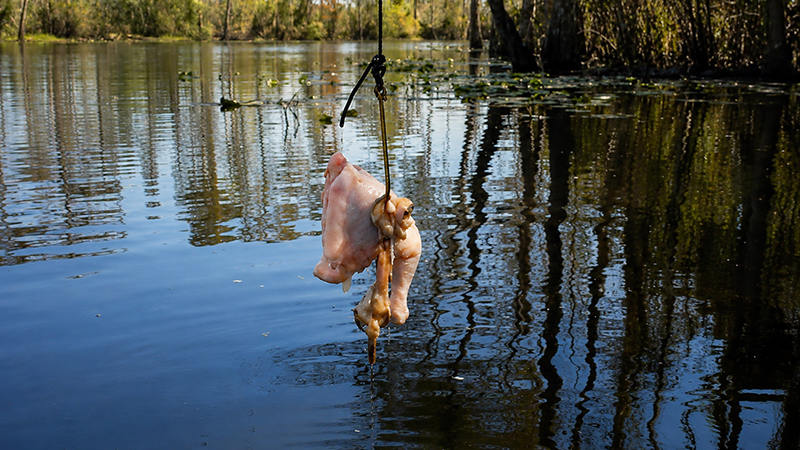
Linscombe reminds hunters that the license does not allow for free shooting of any alligator that swims by. Take is restricted to hook and line or snatch hook only, anchored to property where written landowner permission has been granted. Once secured, alligators must be dispatched with a firearm or bang stick during daylight hours only. Hunters are also expected to make a reasonable effort to preserve the edible meat of any harvested animal, and recreationally tagged alligators cannot be sold or commingled with commercially tagged animals.
Final rules are expected to be published by Aug. 20.