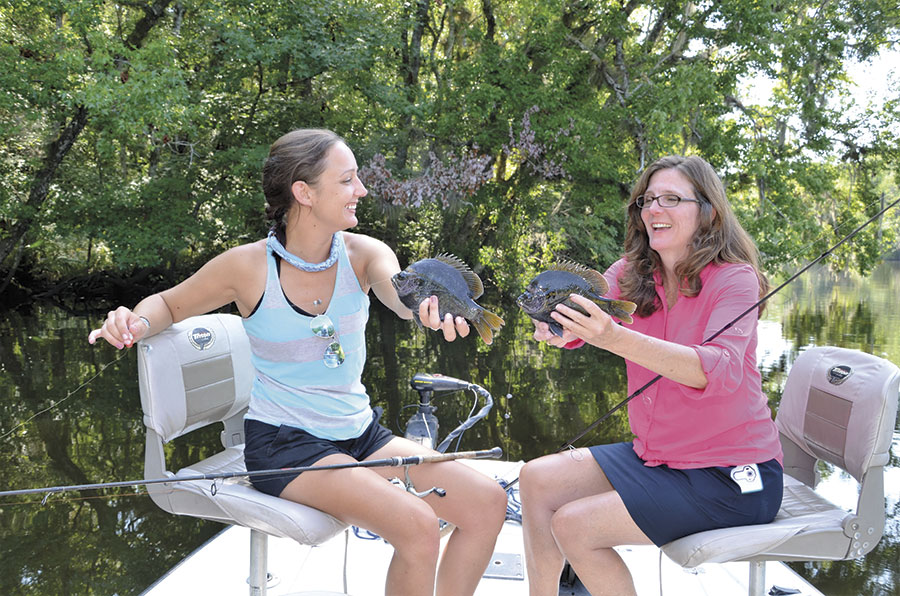
A major mayfly hatch puts everything into a frenzy
One warm afternoon, we struggled to find fish in a backwater off Pearl River near Slidell — until we noticed activity up ahead.
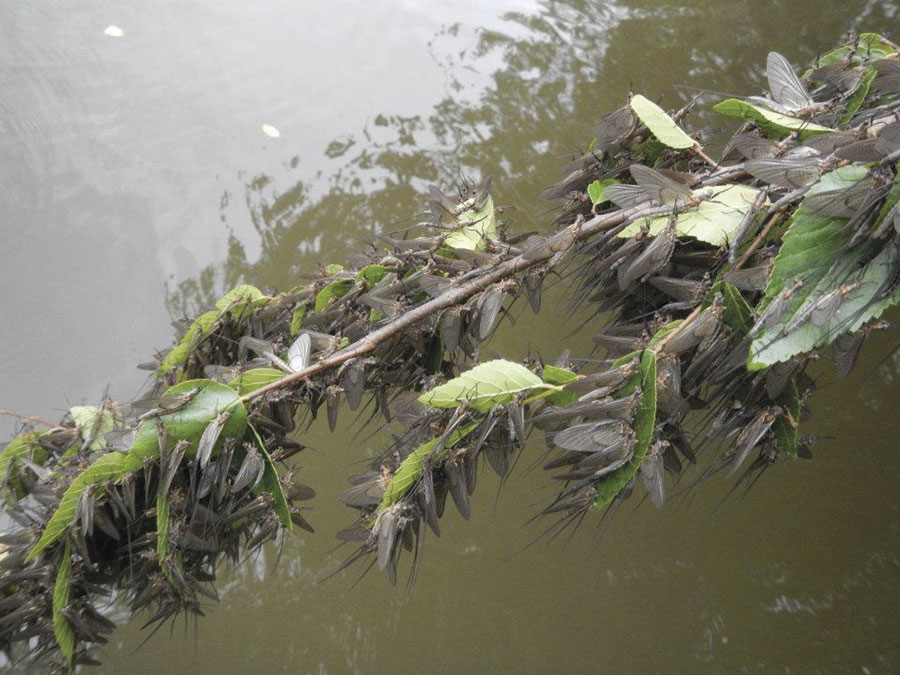
A sight every fly fisherman loves to see, millions of mayflies covered bushes growing along a cypress-lined shoreline in an area about 10 yards long. As if piranhas attacked a bleeding animal, water boiled beneath the bushes with various fish species annihilating anything that touched the surface.
Unfortunately, a roaring spring wind made stopping to fish the honey hole impossible without an anchor or trolling motor. In addition, the ancient 12-foot aluminum boat leaked so badly that we had to bail it with a gallon milk jug about every 30 minutes just to stay afloat.
Fortunately, the wind blew parallel to the bank where we wanted to fish. I cranked up the also ancient 6-horsepower outboard and headed upwind while my friend bailed the boat. We stopped far enough upwind so that we could get our fly gear ready for a quick drift, and by “quick,” I mean with brutal winds hurtling us past the sweet spot nearly as fast as the old motor could push us!
As we shot past the honey hole, we each furiously made a cast or two, hoping we didn’t snag anything. If the bug hit the sweet spot under the bushes, the surface erupted with a big bluegill on the line. If the bug missed the spot, nothing happened.
About the time we shot past the honey hole, the old boat, more resembling a noodle strainer with a motor, needed bailing again. After bailing, we hoped the old engine would crank again. Fortunately, it did. We ran upwind past the bug-laden bushes to make another drift. We repeated this effort many times that warm afternoon until we grew tired of catching fish — and bailing.
A mayfly’s life cycle
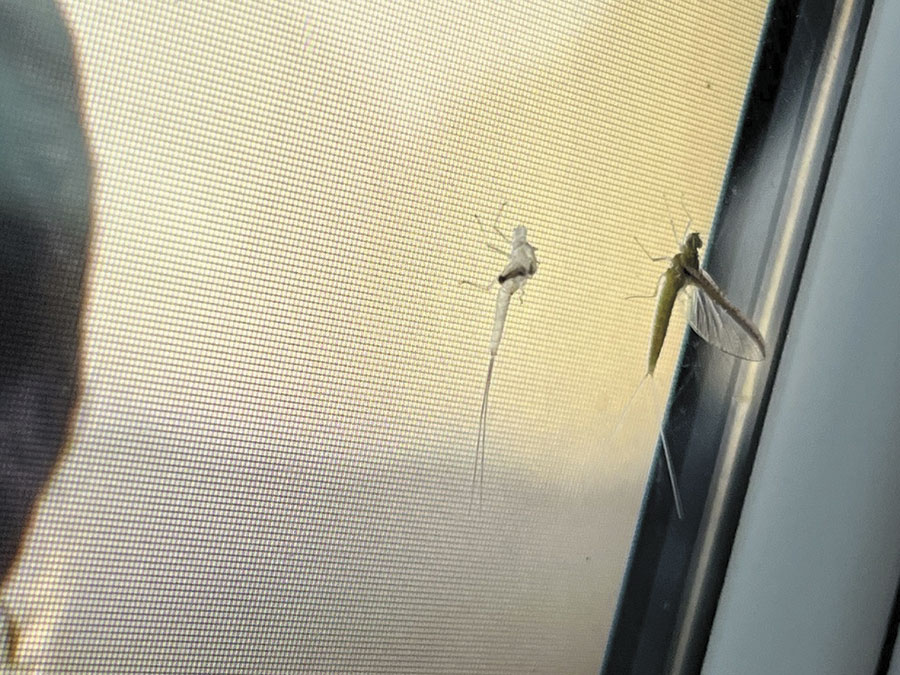
Also called willow flies or shad flies, mayflies spend most of their lives underwater as nymphs. Also called naiads when in their aquatic form, the insects look somewhat like elongated or flattened crickets or a cross between a cricket and a shrimp. Naiads live under rocks, logs, decaying vegetation or silt. Many organisms eat them, but some nymphs also eat other insect larvae.
“The main part of their life cycle occurs under the water,” said Brian Heimann, a Louisiana Department of Wildlife and Fisheries biologist in Baton Rouge. “They emerge from the water in an adult stage to mate and die. When they die, they hit the water and that’s when the fun starts. Fish go nuts.”
More than 3,000 mayfly species occupy the Earth. Some live several years, but most only live a few months or up to a year. Mayflies belong to the insect order Ephemeroptera, which means “lasting only a day.” The winged adults simply exist to live just long enough to breed, if they make it that long. Each female typically lays 400 to 3,000 eggs in the water. After mating, the flies all die.
“Mayflies are found all over the Southeast and throughout the world,” said Dr. Marianne Shockley, an entomology professor at the University of Georgia. “Their life cycle can range from one to two years, up to three to four years depending upon the species. Before they reach their adult stage, the flies go through different stages in which they shed their skins and grow before they develop their adult wings.”
When the weather turns warmer in the spring and summer, naiads sprout wings and emerge from the water to mate. When winged insects appear, they create a feeding frenzy that attracts every fish in an area. Anyone lucky enough to happen upon a hatch could load a boat with bluegill and other species in a short time.
The hatch
A mayfly “hatch,” technically just bugs changing from aquatic form into winged adults, can occur from late March through early October in Louisiana. After emerging from the water, mayflies cling to tree branches, low bushes, reeds or other perches to dry their new wings before taking flight to mate. Thousands inevitably fall into the water, attracting every fish in that area.
“In Louisiana, late May, June and July are the peak times for hatches,” Heimann said. “Fish follow food. If anglers hit a hatch at the right time, the action comes fast and steady. Everything is gorging on those insects hitting the water.”
Flies usually emerge from sluggish eddies or placid backwaters of freshwater systems with little to no current. Adult mayflies somewhat resemble giant mosquitoes. That scares some people. Fortunately, adult mayflies cannot bite anything. In fact, the adult flies don’t even have functional mouths so they can’t eat, bite or sting anything. At that stage, they simply exist solely for reproduction.
“Mayflies are not related to house flies,” clarified Dr. David Held, an associate professor of entomology at Auburn State University. “They have two winged stages. In the water, some species are predatory and some are plant eaters or scavengers. In their adult stage, they are harmless. They just fly around to mate, lay eggs and die, starting the cycle over again.”
A feeding frenzy
When the bugs emerge as winged adults, mayflies create massive swarms that can number in the millions or even billions. Sometimes, swarms grow so large that they show up on weather radar.
In 2014, a hatch on the upper Mississippi River near La Crosse, Wis., reached an altitude of 2,500 feet. On radar, it resembled a massive rainstorm. A hatch along the Susquehanna River near Columbia, Pa., in June 2015 grew so thick that police had to close the bridge over the river to automobile traffic because the dense swarm and smashed bugs on windshields created significant visibility problems for motorists.
On July 3, 2020, a gigantic swarm appeared on National Weather Service radar 50 miles away and blanketed Burlington, Iowa. Sometimes, northern communities use snowplows to push piles of dead insects off bridges so people can drive safely.
“It’s a giant event when mayflies come out of the water as winged adults,” Heimann said. “They come out in masses in the millions and cover everything. I’ve seen entire pavilions at boat launches covered with live ones and thousands of dead ones all over the ground.”
Many flies inevitably fall into the water before mating. Dead ones commonly hit the water surface. Copious amounts of free protein suddenly entering the food chain kicks off a major feeding frenzy for multiple fish species. During a bug hatch, frantic bluegills and other fish turn very aggressive and might smash anything hitting the surface before their cousins grab it.
“Bluegills eat mayflies and so do other bream species,” Heimann said. “Other species, including bass, crappie, catfish, garfish, practically everything, also eat the insects on the water.”
What to use
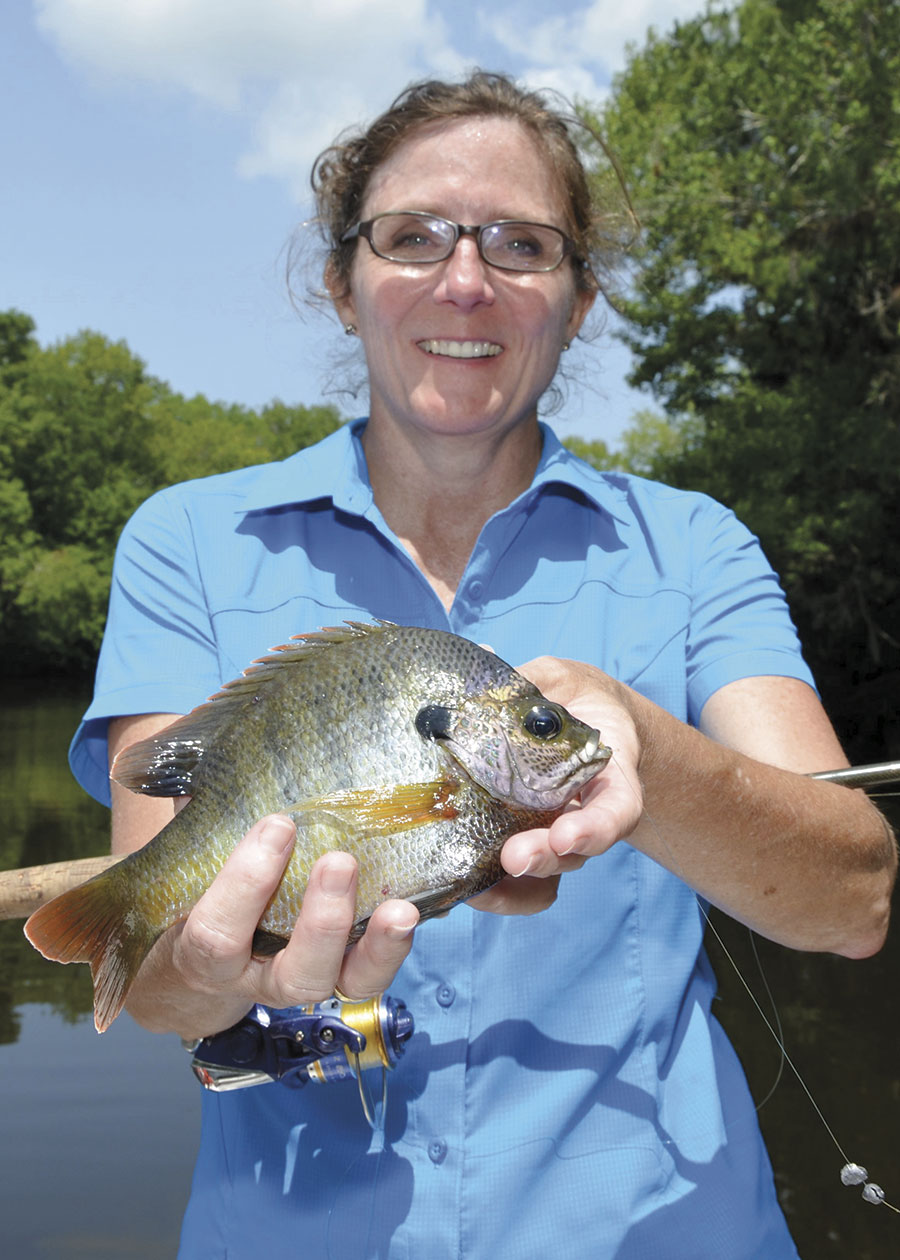
For the most fun, toss small poppers on light fly tackle. Floating “bugs” made of cork, foam, wood or plastic make excellent bream enticements. Some creations resemble crickets, grasshoppers or other creatures that bluegills love to eat. Feathery “dry” flies work magnificently. Let “wet” flies sink a couple feet and then move them in short spurts.
Lure color or selection doesn’t matter as much as placement. If an enticement lands in the hot zone, something will quickly smash it. If it falls outside the sweet spot, don’t waste time. If the frenzy dies down, shake the bushes to make more flies fall into the water and reignite the activity or come back to that spot later. If mayflies hatch in one area, they might also hatch in other nearby waters.
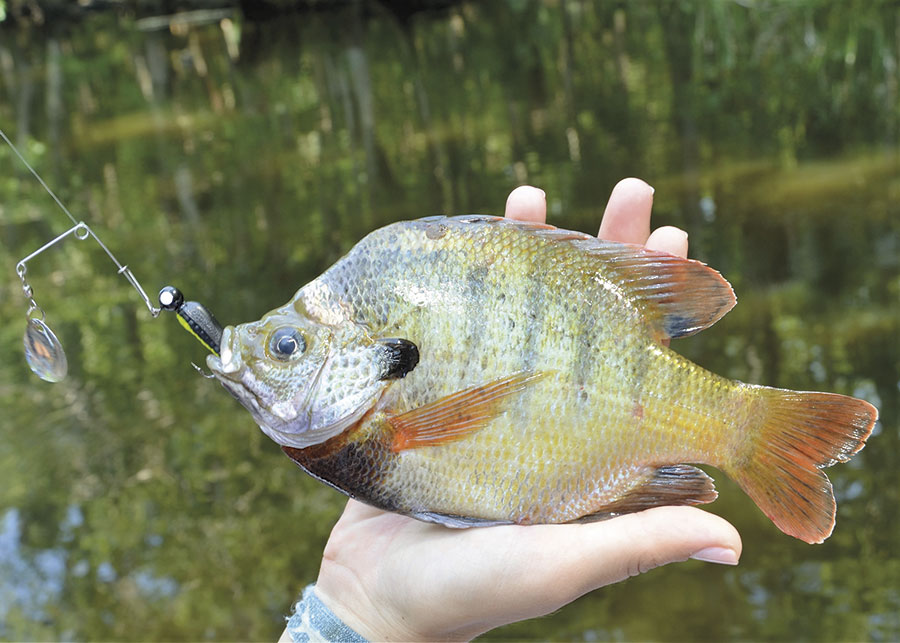
By a good hatch, anglers without fly tackle can frequently catch fish with other techniques. Bream love beetle spinners. Make a slow retrieve, occasionally pausing so the bait sinks a couple feet. The spinner rotates as the lure descends, creating flash. Anglers might try “buzzing” beetles over the surface or “waking” them just beneath the surface.
“A fly rod with surface poppers is probably the best way to fish around a mayfly hatch, but people can fish other ways,” Heimann said. “People can throw practically anything around a hatch and catch fish. People can use natural baits like crickets or worms under a float.”
Targeting bass
Bass also gather around fly hatches. Some bass eat the flies, but larger bass prefer to snatch fat bluegills focused intently upon stuffing themselves with insects. For bass, throw bream-colored crankbaits or chartreuse spinnerbaits. Texas-rigged worms or jigs tipped with craw trailers might also work.
“Mayflies occur statewide,” Heiman said. “The Atchafalaya Basin is one of the better places in Louisiana to see them. Mayflies like cypress lakes, such as Lake Verret, and oxbow lakes off the rivers. Calm areas with still water are where we usually see big swarms of them.”
No one can predict when or where a major hatch might erupt. Look for insects clinging to low branches or surface disruptions. Finding a bug hatch at the right time could turn any humdrum day into a memorable experience and put numerous delicious panfish, or bass, in the boat quickly — assuming the anglers can stay in the good casting spot!