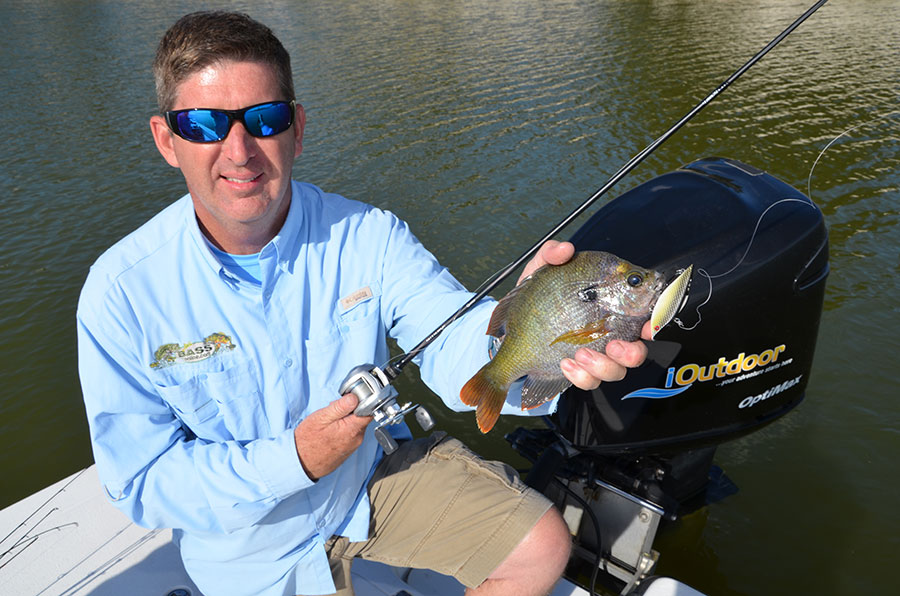
Use these techniques to fill your cooler with panfish
Most bream anglers grow up dangling worms or crickets under floats and waiting for their bobbers to disappear under the water.
Of course, that method will always catch bluegills and other bream species, but some people prefer more active angling techniques. Bream enthusiasts can take a few tips from bass anglers. Just downsize the tackle to amplify the experience.
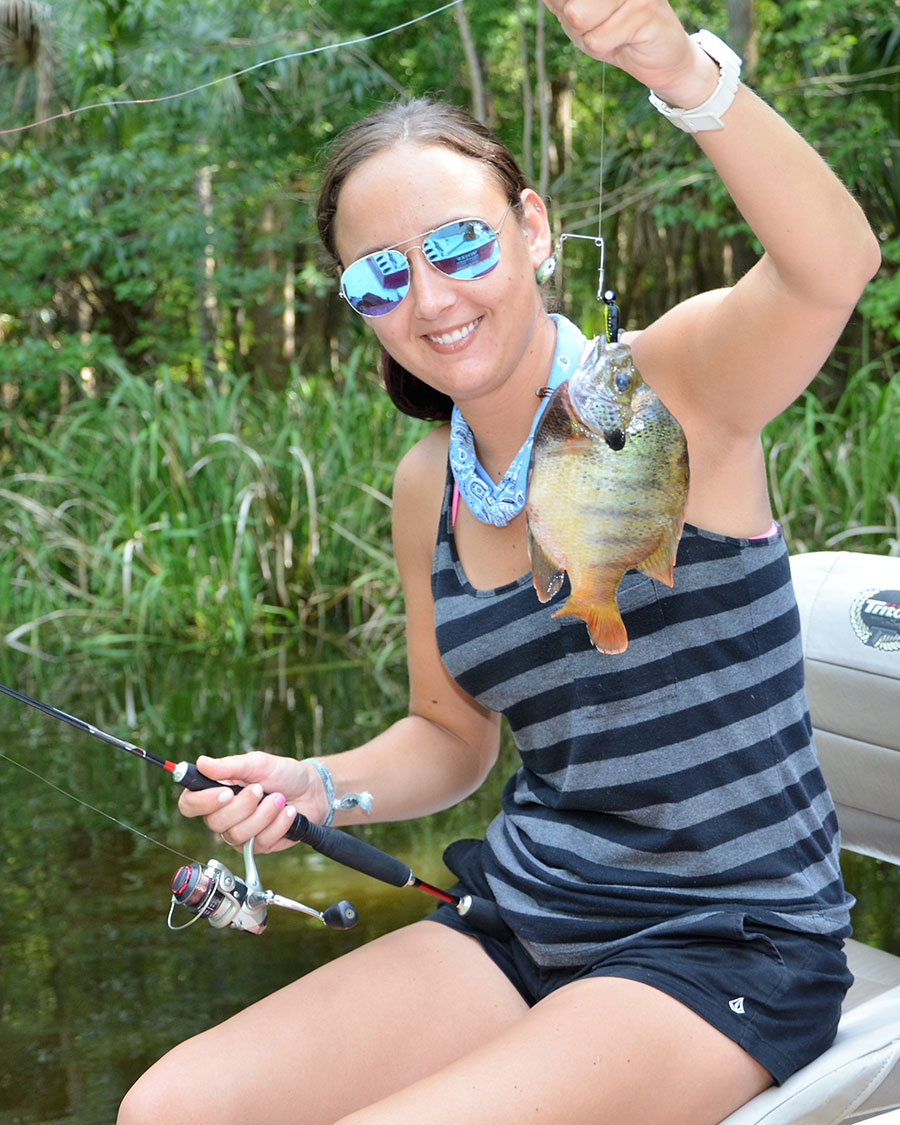
Ultralight spinning or spin-casting tackle can provide all the excitement any panfish angler wants. Pound for pound, or more appropriately ounce for ounce, bluegills and other bream species outfight anything in fresh water. Using ultralight tackle greatly magnifies the thrill.
Load an ultralight spinning or spin-casting reel with 4- to 6-pound-test monofilament line for fishing tiny baits. Monofilament floats, so it’s good for topwater baits. Fluorocarbon line sinks, so use it to fish deeper. With this equipment, people can throw diminutive lures that provide enormous fun.
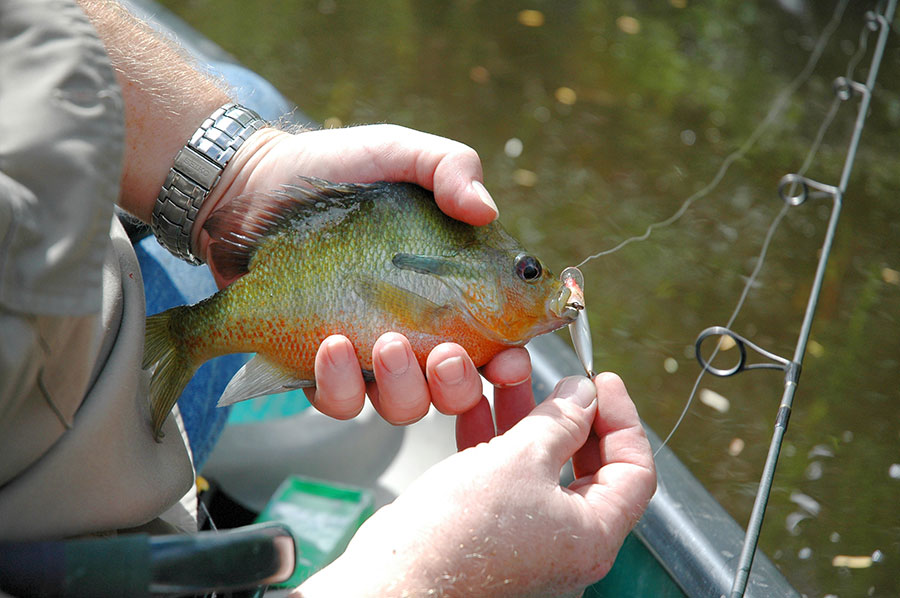
Probably the most popular non-fly artificial temptation for bream, a beetle spinner consists of a wire harness with a spinner blade attached to a jighead. The components separate so anglers can easily switch blades, harnesses, jigheads or trailers. Sweeten the jighead with soft-plastic trailers that look like grubs. Some people use twin-tailed trailers, paddled tails or curly tails. Keep experimenting with different colors, sizes or configurations. To make fish attack more aggressively, tip the hook with a scent pellet for added flavor.
Beetle spinners
Besides assorted bluegills, beetles might also catch goggle-eyes, redear sunfish, also called chinquapin or shellcrackers because of their fondness for devouring snails, and other species. Beetles might also attract the attention of crappie, bass, possibly an occasional catfish. Practically any predator that swims Louisiana waters might hit a beetle spinner. In brackish waters, a speckled trout, redfish or flounder might inhale the bait.
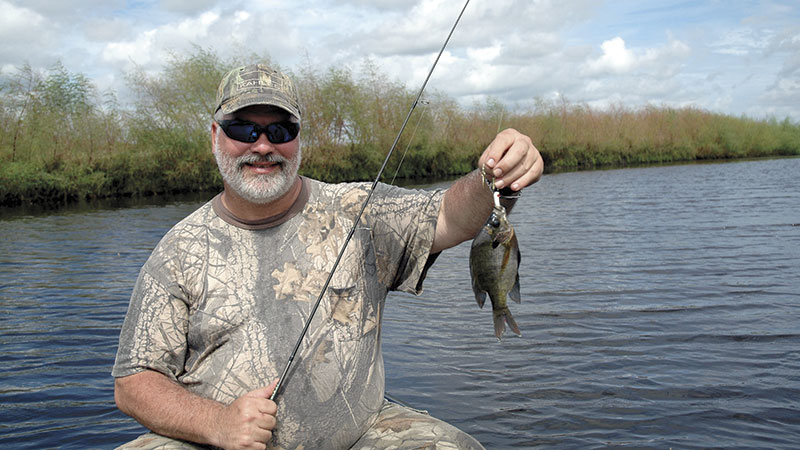
“Bluegills are easier to catch than redears because of their food habits,” said Josh Eubanks, a Louisiana Department of Wildlife and Fisheries biologist. “When fishing for redears, people need to specifically target them where they are in the water column.”
Easy to work, a beetle spinner can catch multiple panfish species from top to bottom. Retrieval speed determines how deep the lure runs. Around thick grassy patches you should buzz beetles over the surface so the blades churn the water. Also try waking them just below the surface. Sometimes, fish explode on sputtering beetle spinners.
Deep water
For deeper presentations, try the stop-and-go method, particularly around isolated or scattered cover. Every few feet, pause the retrieve to let the bait sink. As the bait slowly descends, the blade continues revolving, giving off pulsating flash. Around submerged vegetation, let the bait sink into the grass tops. Then, run it just above the vegetation.
The biggest bluegills and most chinquapin prefer deeper water. Look for long points, fallen trees and other structures around drop-offs that give fish easy access to both deep and shallow water. Throw a bait close to cover. Let it sink to the bottom or the desired depth. Just off the bottom, slow-roll it just over the contours.
Also try removing the harness and fish just the jighead and trailer. Drag it across the bottom, almost like working a plastic worm. That stirs up a mud trail to simulate a crawfish scurrying along the bottom. Also try hopping the jighead off the bottom and letting it sink. To fish deeper, increase the jighead size. For fishing small baits in deeper water, add a split-shot or two to the line about a foot or so above the jighead.
“For bluegill, I like to use a 1/24- or 1/32-ounce leadhead jig tipped with a Bobby Garland Itty Bit,” said Dan Dannenmueller, a professional angler. “I also like to use all different colors of hair jigs.”
Drop-offs
When fishing drop-offs, throw parallel to the edge. Make repeated casts to fish both sides of the drop. Sometimes, fish stay on the ledge. At other times, they prefer to hang near the drop-off wall at the bottom. Often, fish hover just over the lip. At any depth, retrieve baits parallel to the drop-off edge.
“I like to find a steep ledge with a good drop-off as close to the bank as possible,” said Mark Reynolds from Caledonia, Miss. “I don’t like a long, sloping drop. I’ll find the deepest water and start there. I’ll start at the bottom of the drop. If I don’t catch fish there, I’ll work my way up the ledge. Then, I’ll work my way shallow. If I’m working the bank, I’ll start shallow and work toward deeper water.”
Besides spinners, anglers fishing ultralight tackle could also throw small crankbaits, jerkbaits and topwaters. Many of these lures resemble scaled down bass baits. Some small panfish enticements look exactly like crickets, crawfish, grasshoppers, minnows and other creatures that bream eat.
Usually, these baits come as miniature topwaters or crankbaits. Toss topwaters out and let them sit until the concentric rings dissipate. Then, pop them. Let them rest. Then repeat.
With crankbaits, jerk the rod to make it dive. Then, let it float back to the surface or reel it a few feet underwater. Pause regularly so the bait hovers briefly before rising toward the surface. Experiment with varied retrieves and depths. Deliberately run crankbaits into solid objects. A crankbait will hover a few moments like a stunned fish before floating toward the surface.
Bream busters might also try tiny Texas-rigged plastic worms, just like for bass, only smaller. Slide a small bullet weight on fluorocarbon line. Insert a long-shanked bream hook into the plastic body of a small worm. Drag it across the bottom like Texas rigging for bass.
Big bream
Deeper water remains a relatively constant temperature all year long. During thermal extremes, bream plunge into deeper water. Just like in shallow waters, bluegill congregate in the depths where they find oxygen, cover to hide from predators and forage to eat.
“By far, we always catch much bigger bream in the deeper water than in the shallows,” Reynolds said. “With electronics, I’ve found bream bedding in 25 to 30 feet of water. These fish in deep water are hardly pressured because everyone looks for them in the shallows and doesn’t even think of looking for bream in deep water.”
Spots where tributaries hit main river channels, outside bends, bluff walls and other deep places could hold big bream. Brush piles, sunken trees, branches and other debris pieces fall into these holes, creating additional cover for fish. Over a deep hole, fish won’t spook as easily as in the shallows. Anglers fishing a hot honey hole in deep water could load a livewell without moving the boat.
To fish deep holes for bream, try a downsized drop-shot rig. Tie a small hook or multiple hooks on the line about 12 to 36 inches above a sinker. Tip each hook with a small soft-plastic worm, beetle or grub. After the bait hits bottom, just twitch the rod. Bream don’t like as much dynamic action as bass.
For the deepest presentations, anglers can’t beat a 1/32- to 1/8-ounce chrome jigging spoon. Let a spoon flutter all the way to the bottom like a dying baitfish. A faceted spoon reflects sunlight and mimics the flash of baitfish, creating sparkles in the water. At the bottom, lift the rod tip. Then, let the spoon flutter down again. Try different depths. Anglers can also cast spoons. Let them sink to the desired depth and retrieve them with a slow wobble. Periodically, pause the retrieve so the spoon sinks a bit.
Shooting docks
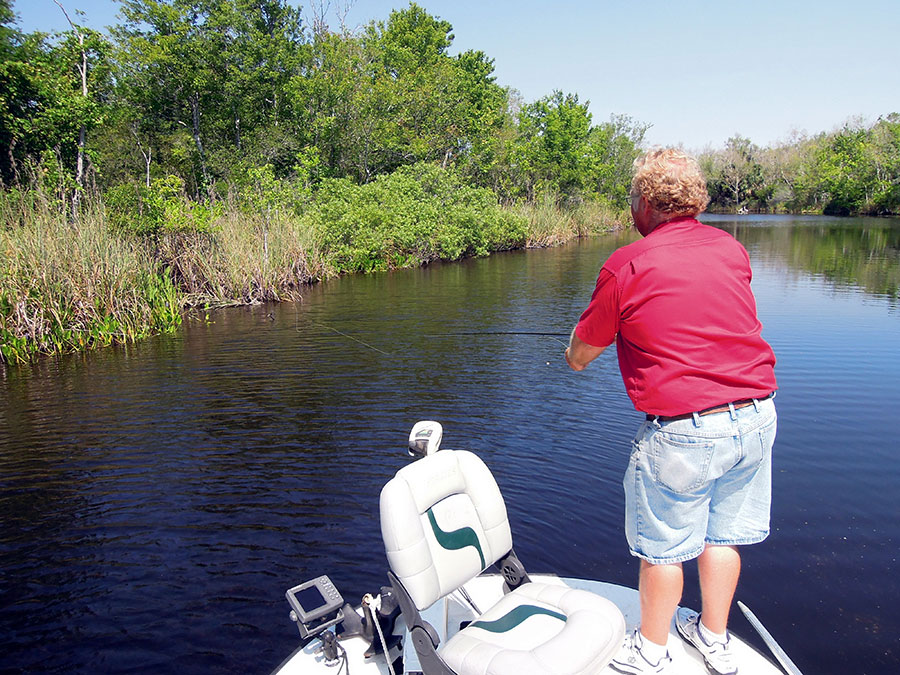
Not all fish go deep, even during hot days. Often, bream seek the coolest, shadiest places under overhanging trees, around cypress or other shady places. Docks make fantastic places to look for big bream on hot days. Many people just fish the outside pilings, but the biggest fish like to get as far under cover as they can.
Try “shooting docks.” With a flexible, ultralight spinning rod, open the reel bail and grab the jighead. Bend the rod to build up energy like a bow. Pick an opening between a dock and the water or a space between pilings and let fly. The unbending rod flings small baits far under overhanging structures with remarkable accuracy.
For the ultimate ultralight experience, use a fly rod. Bluegills and other bream devour insects. Their small mouths commonly make snapping noises when feeding on the surface, giving away their position.
“Bluegill are voracious feeders,” Eubanks said. “They will attack anything, whether they’re hungry or not. They eat many insects and things at the top of the water column. Poppers, foam spiders or crickets and other bug imitations make great enticements for bluegill.”
Toss poppers
Move quietly along a shoreline. Cast floating cork or foam poppers adorned with feathers close to cover. Some baits simulate crickets or other small creatures. Let the bait rest on the surface a few moments. Then, twitch or pop it. Keep repeating that action.
The mouths of little rivulets draining swamps create ideal places to toss poppers. During falling water, these drains flush insects and other creatures into the open. Old duck blinds also make great places to find bream. At times, bream rush in like Jaws to obliterate poppers. At other times, bluegill act timid, gently tasting a bug before sucking it down.
For deeper fishing, throw wet flies or streamers that imitate minnows. After temptations sink a few feet, pull them through the water in short spurts. Pause after each movement so the fly hovers or slowly sinks.
“Redears are not surface feeders,” Eubanks explained. “For redears, fish subsurface fly tackle like scud patterns and nymphs that mimic freshwater shrimp, baby crawfish and insect larvae. They are specialists at eating freshwater mollusks and crustaceans.”
Nothing puts bream into a feeding frenzy quicker than a mayfly hatch. After spending months underwater as nymphs, adult mayflies emerge to mate and die. Looking something like oversize mosquitoes, mayflies cling to low overhanging bushes and shrubs to dry their wings. When flies inevitably fall into the water, gluttonous fish rush in to gorge themselves.
Whether throwing a spinning rod or casting flies, any catch of these micro-sized powerhouses can provide outstanding sport on ultralight tackle. With delicious, white meat, these tiny temptations provide excellent eating.