Put a bait where the bass are hiding and a strike will soon follow
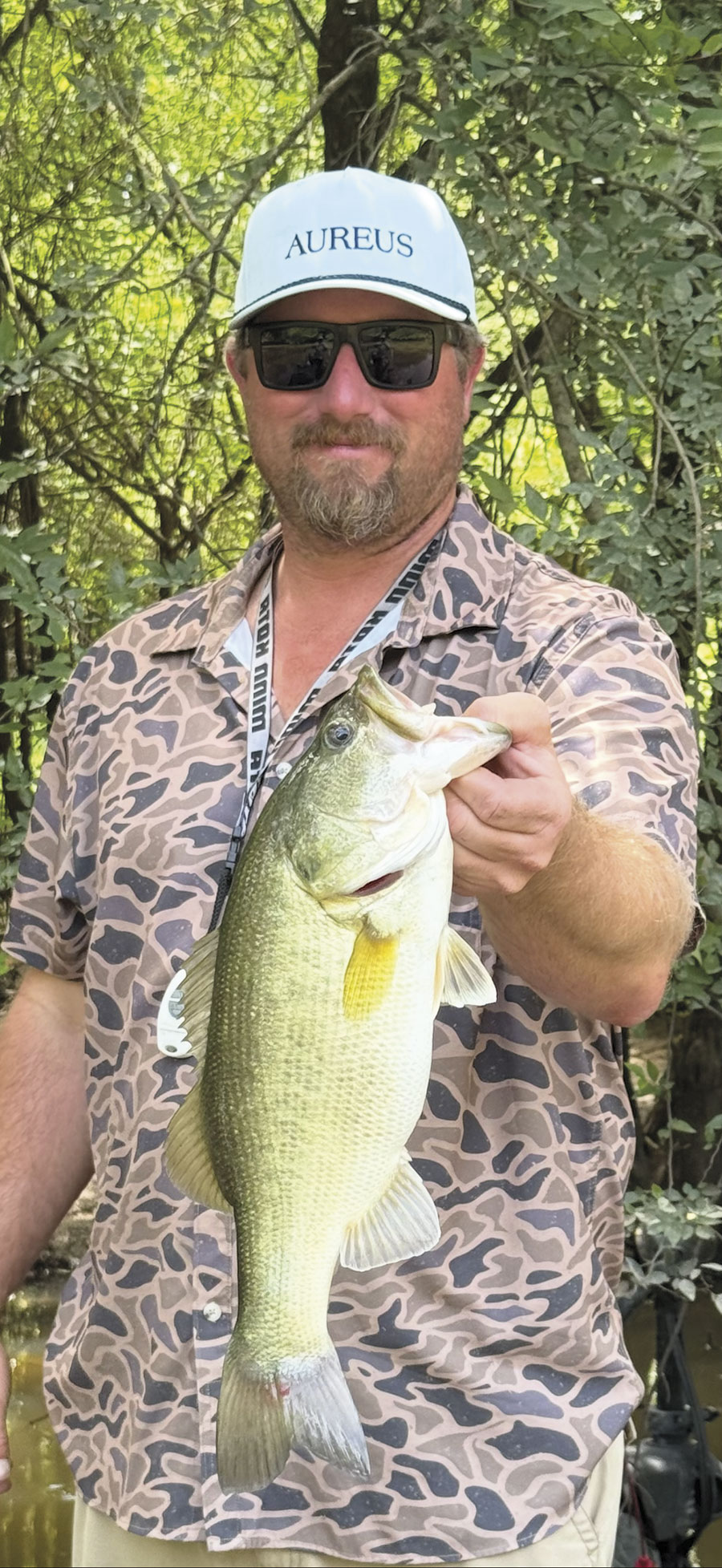
By the time the Louisiana sun starts climbing high over Wallace Lake in Caddo Parish, most anglers are already looking for shade. But for local bass angler Michael Burke of Stonewall, that heat is exactly what positions fish where he wants them. While pleasure boats idle at the ramp and the air hangs thick over the water, Burke eases his 20-foot Javelin bass boat off the trailer, drops the trolling motor, and goes to work.
“I actually like it when it’s hot,” Burke said. “When that sun gets way up in the sky, it positions the bass under the grass and makes the targets easier to see.”
During the dog days of summer, when water temperatures push past 85 degrees, Burke isn’t chasing bass out deep. Instead, he’s focused on shallow vegetation along creek channels, places most anglers might overlook when the heat sets in.
“When I’m targeting bigger bass this time of year, I’m looking for grass on the surface along the creek channels,” he said. “There are multiple grasses in Wallace: giant salvinia, moss and hyacinth. I’ll keep the boat in about 4 to 7 feet of water and cast up into zero to 2 feet.”
It’s a simple but calculated approach. The bass use those shallow mats as shade and ambush cover, sliding underneath the thick canopy to escape the sun. Burke knows if he can put a bait in the right location, a strike usually won’t be far behind.
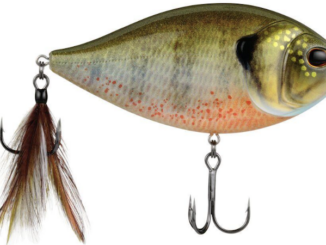
His frog setup is built for heavy cover and explosive bites. A Spro Bronzeye frog is tied to a 7-foot-6 heavy fast-action baitcasting rod, paired with a 7.5:1 reel and spooled with 65-pound green braided line.
“When I’m throwing the frog, I keep it simple,” he said. “If it’s real sunny, I like the Nasty Shad color. In lower light, I’ll go green pumpkin or black.”
Techniques
Working the bait is just as important as color. Burke prefers to “walk” the frog across the surface, making it dart side to side before pausing.
“I’ll walk it a few times and let it sit, especially on the outside grass line,” he said. “Or I’ll look for little holes in the grass and work it right into those. When that frog drops in an opening, that’s when they usually blow up on it, and they hit it hard.”
For thicker mats or when fish bury deep, he upsizes. A ¾- to 1-ounce black-and-blue jig or a creature bait like a Zoom Brush Hog or Berkley Pit Boss gets the call. That heavier presentation is paired with an even stouter 7-foot-11 extra-heavy rod and the same braided line to winch fish out of the jungle.
“With the flipping baits, I’m moving pretty fast,” Burke said. “I’m trying to hit every little opening I see. Most of the strikes are almost immediate. As soon as it gets in their domain, they react.”
While many anglers rely heavily on electronics, Burke uses his tools more as confirmation than a crutch. His LiveScope helps him spot hidden structure in front of the boat, but he still believes in covering water and letting the fish tell the story.
“When I’m not using the graphs, I just cover as much water as possible until I get a pattern,” he said. “Once you figure out what they’re doing, you can repeat that the rest of the day.”
Simple fishing
Water clarity, more than temperature, often dictates the bite on Wallace. With two bayous feeding the west end of the lake, even a small rain can muddy things up quickly.
“The clarity and the lake level play a big factor,” Burke said. “It can change fast out here.”
When the pattern comes together, the action can be quick. Bass tend to group up beneath the grass mats, and one productive stretch can load the boat in a hurry.
“You might catch four or five fish out of one mat,” he said. “Then you’ll go a little while before you land on them again.”
For Burke, Wallace Lake’s biggest draw isn’t just the fishing, it’s the simplicity. Less traffic, close to home, and fishable water right off the ramp make it an easy choice.
“I like that it’s not very busy,” he said. “You can put the boat in, drop the trolling motor, and start catching fish.”
His advice for newcomers is straightforward: don’t overthink it.
“It all looks fishy, and you’ll want to cast at everything,” Burke said with a laugh. “But get out there, cover water, find a pattern and stick with it. That’s what makes the difference.”
In the end, summer bass fishing on Wallace isn’t about beating the heat. It’s about understanding how the fish use it and putting a bait exactly where they’re hiding.