We are coming off of a summer El Niño with record low tropical activity in the Atlantic Basin. The Gulf saw almost no hurricanes, and Louisiana was spared from any major tropical weather. A few high-water events brought in some good slugs of tidal saltwater. The marsh areas are in good shape, and many places still have large expanses of submerged vegetation. Grass beds are redfish magnets as they seek out a variety of critters that use the grass for cover, and when talking fall and the Louisiana marsh, redfish quickly come to a kayaker’s mind.
The downside of an El Niño summer, unfortunately, flips the script from hot and dry to cold and wet. Most areas across the country are predicted to see increased precipitation and colder than average temperatures this winter. Now is a great time to take advantage of the mild fall temperatures and get on the redfish while fishing conditions for kayakers are mild and comfortable.
The lower temperatures bring less fishing pressure and concentrates the fish in many areas that are easily accessible to kayak anglers. Hunting seasons also keep more people from fishing, as they pursue ducks, deer and other game. While many kayak anglers across the country have to put their ‘yaks away for winter due to extremely low temperatures and the inability to paddle on frozen lakes, anglers here may only experience a few days where fishing is all but impossible.
Cool-weather fishing
Kayak anglers pursuing redfish in the cooler months of fall and winter can fairly easily find success. Redfish are cold-water tolerant and predictable. If you carefully select your locations and techniques, you can find some very hot cold-water redfish action. When it comes to cool-weather redfishing, the vast marshes of South Louisiana have all the necessary features to make a successful trip under varying conditions.
Many fishermen think redfish magically appear in the marsh this time of year. However, they have been there all along, but the colder water temps and scarcer bait concentrates them a bit more in certain areas.
As fall cold fronts push through South Louisiana, the accompanying northwest winds lower the water levels throughout the marsh. This can actually be great for kayak anglers. Areas that are too low to be accessed by boat fishermen often offer prime fishing opportunities for kayak anglers.
The low tides also help reveal bottom structure in some areas. Oyster reefs are readily visible along shorelines and point the way to spots where redfish congregate in low-water conditions. Finding holes and drop-offs near these shallow areas is often the key to success. The varying water depths allow the fish to move in and out of the area depending on the conditions.
Feeding frenzies
When the water is low and cold, reds school in the deeper bayous and dead-end canals. Staking out near an oyster-covered bottom that runs deep into a canal or bayou, you can often find redfish literally stacked upon one another. The deep water provides a warmer, more-stable temperature.
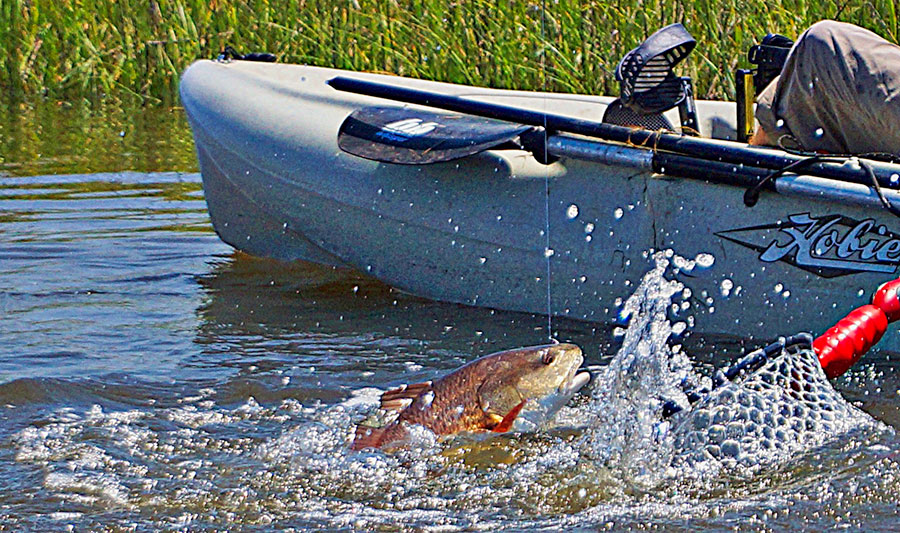
Sometimes you can catch your limit and release many more without ever having to move to another spot. Strong winds associated with cold fronts can make paddling difficult but also helps concentrate bait in the back of coves, ponds and dead-end canals. These wind-blown shorelines become prime hunting grounds for redfish.
After the passage of a cold front, the weather stabilizes and usually warms up some. Reds take this opportunity to move from the deeper areas into nearby shallower shorelines. The post-front bright, clear-sky sun quickly radiates through the shallower waters to the dark muddy bottoms, allowing the water to warm by several degrees. This little bit of warming can kick off redfish feeding frenzies.
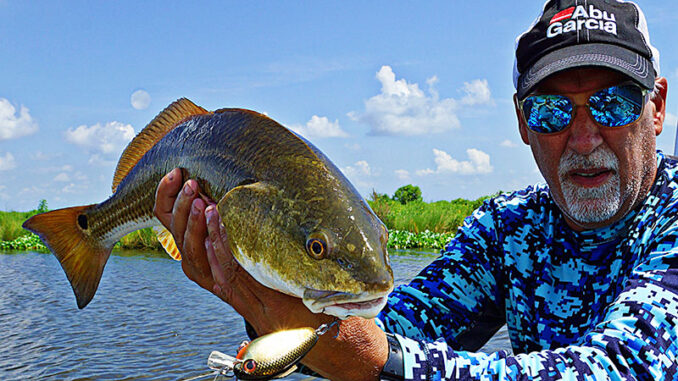
Redfish are designed by nature as bottom feeders and root around searching for virtually anything they can find. They are not picky eaters. A friend once found a spent shotgun shell hull in a red’s stomach. No doubt the fish was likely feeding in a duck pond. Their powerful crushers in their mouths are great for dispatching their favorite prey of shrimp and crabs. However, redfish also eat many small fishes and certainly a wide variety of artificial lures. Anything that reasonably resembles food to a redfish will quickly be devoured if cast in their vicinity.
What to fish with
Live shrimp are hard to beat and sometimes remain available even into wintertime. However, the shrimp leave the marsh with each passing front. When this happens, many kayak anglers seek viable alternatives. While many prefer to fish artificial lures, dead shrimp is a simple but sure-fire way to attract cold water reds. Smell is the key, and reds just can’t seem to pass up a piece of dead shrimp when presented under a popping cork, tight-lined on a jighead or slowly worked on a Carolina rig. If you really want to fish live bait, cocahoes are a cold water favorite for reds.
When fishing this time of year, kayakers are subject to the elements more than other anglers. Kayaks provide no wind or rain protection, and sitting so close to the water means you are likely to get wet. Wave splash, paddle drips and even a hard fighting fish at yak-side can get water on you. However, with some simple precautions and proper gear, you can safely kayak fish as the days and water turn colder. Wind and waterproof clothing are the best bet. The goal is to stay dry and maintain your core body temperature.
As the days get colder, the fishing gets hotter. The Louisiana marsh this time of year is what kayak anglers’ dreams are made of.