Learn how to master this tricky transition month
October may signal fall across much of the country, but in Louisiana, the calendar doesn’t always mean much.
One day can feel like August, with temperatures pushing 90 degrees. The next day a cold front rolls through dropping temps into the 60s. Those temperature swings can make October one of the more unpredictable months of the year for sac-a-lait fishermen.
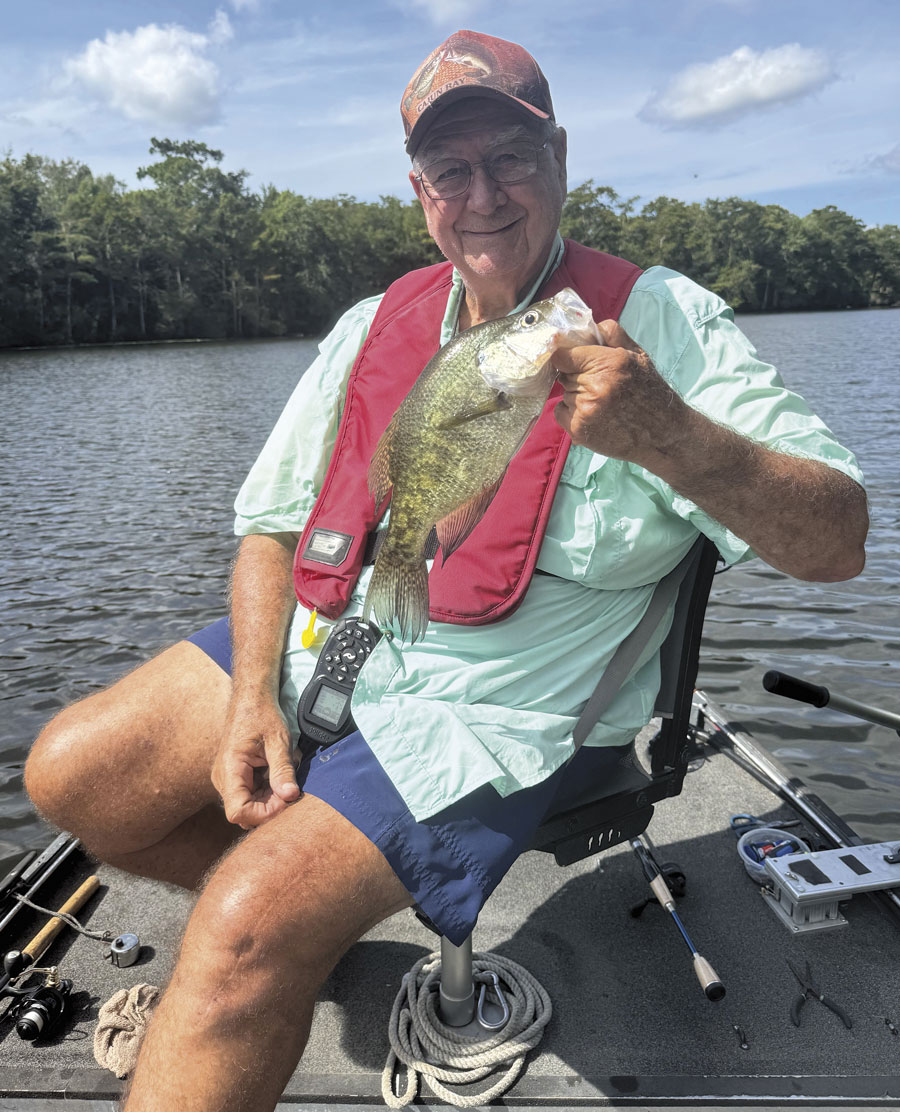
Ray Miller of Madisonville fishes sac-a-lait year-round and knows better than to expect the fish to be in the same stage of their fall transition every October.
“You never know what kind of weather we’re going to have,” Miller said. “But October is an exciting month because it’s a transition period, and we know we’re fixin’ to catch some really good fish.”

While many Louisiana fishermen begin turning their attention toward hunting season, Miller starts looking forward to catching what he calls the “big girls.” As the water begins to cool, baitfish start moving and sac-a-lait start to change not only their feeding patterns but their holding patterns as well.
The trick is figuring out how far along that transition has progressed.
A hot October can keep sac-a-lait behaving much like they did during summer. A normal October can put the fall transition in full swing. And an early blast of cold weather can push the fish toward their winter pattern ahead of schedule.
For Miller, October fishing is less about the date on the calendar and more about understanding the weather, the water temperature and where the baitfish are going.
A hot October
We’ve all experienced it. The yards are filled with Halloween decorations, pumpkins are sitting on front porches, and it’s still 90 degrees outside.
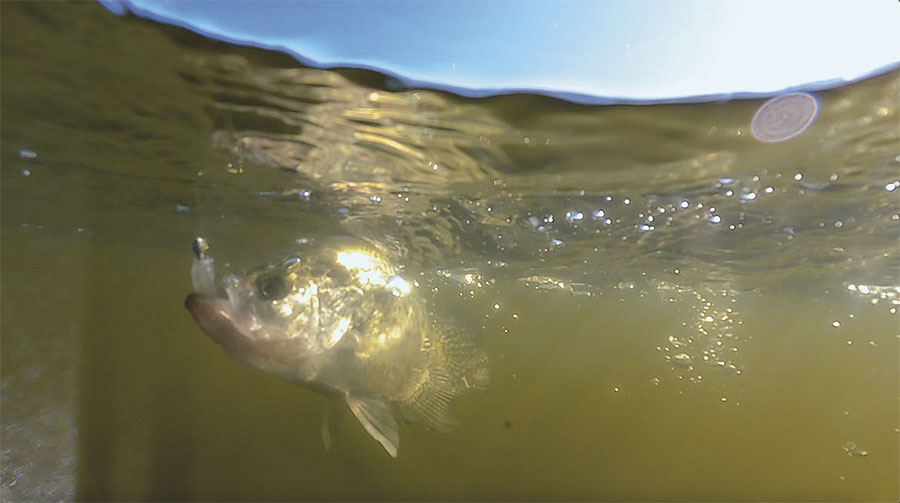
When fall refuses to give us any relief, Miller said he approaches targeting sac-a-lait much the same way he does during the summer.
“If we have an extremely warm October, it’s almost like summer-like conditions,” he said. “You’ve got to remember, crappie are always going to migrate to where the bait’s at and we just don’t see the bait grouped up with warmer temperatures.”
During a warm October, Miller pays close attention to shad and looks for fish that are still roaming and actively feeding. Instead of being tightly grouped on deeper brush piles, many of the fish will spread out across flats and drop-offs as they chase bait. That makes casting one of Miller’s preferred ways to find them.
“You can cover more water,” he said. “The fish are moving around and feeding, especially the big white crappie. They’re going to be out on the shallower flats chasing bait.”
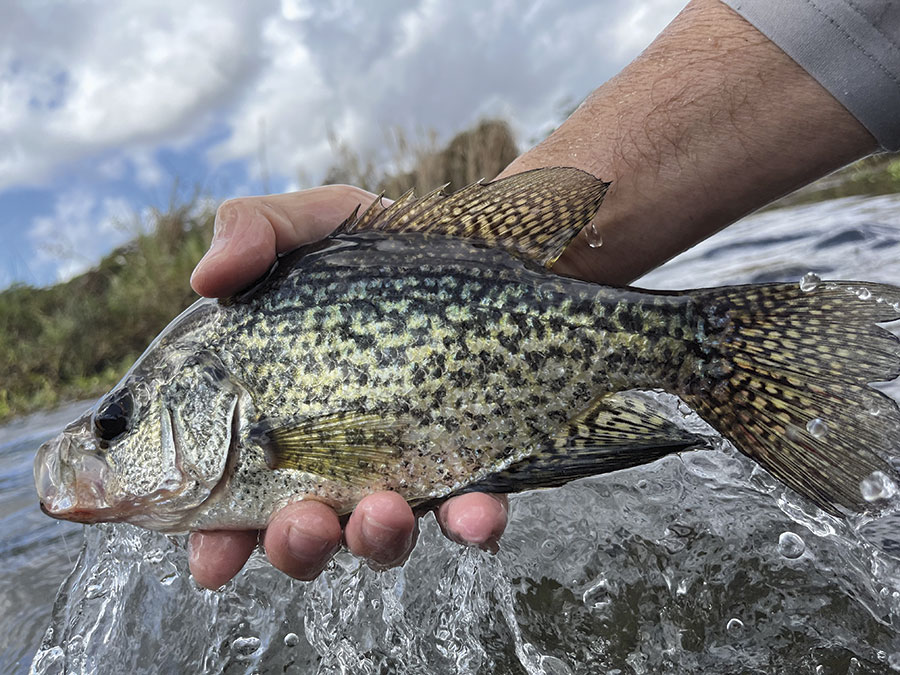
Miller likes casting small Road Runners or crankbaits that resemble shad. He will usually step up from the 1/32-ounce jigs he uses for vertical fishing to a 1/16- or even 1/8-ounce jighead paired with a 2- or 3-inch bait.
His setup is simple: a 7-foot rod matched with a 1000-series spinning reel and 8-pound mono line. Instead of dropping directly into a brush pile, he makes longer casts around shallow wood, creek beds and the edges of drop-offs where roaming fish can pick off bait. The key during a hot October is not forcing a fall pattern simply because the calendar says October. If the water still feels like summer, Miller fishes it like summer and keeps moving, picking up scattered fish in order to put a box together.
An average October
A more typical Louisiana October usually brings a little bit of everything. While we usually see warm days in October, there are days after a front where the temps will dip down into the 60s. For Miller, those fronts are what he watches.
If the weather remains warm and the water temperature has not dropped much, Miller continues fishing much like he would during the summer. But once cooler weather begins lowering the water temperature, the fall transition starts becoming much more noticeable.
“When that water starts to cool down, they really get aggressive,” Miller said.
One of the biggest changes is what happens to the bait. Threadfin shad that were scattered during the warmer months begin grouping tighter, and the sac-a-lait follow.
“The fish are always migrating to wherever the shad are moving,” Miller said. “This month, you’ll notice them on LiveScope congregating closer together.”
Instead of searching large flats for roaming fish, Miller begins concentrating more on drop-offs, creek channels and the edges of hyacinth in roughly 8 to 15 feet of water. As stronger cold fronts arrive, he expects those fish to gradually move toward deeper water and begin holding tighter to structure.
“If it’s warm, they’re going to stay up high,” Miller said. “When those cold fronts start coming in, they’re going to start transitioning and moving a little bit deeper.”
That means fishermen shouldn’t abandon the summer pattern simply because October has arrived. If Louisiana is still serving up summertime weather, Miller keeps fishing accordingly. But when that first strong front drops the water temperature, it can be the signal that the shad are tightening up and the sac-a-lait are beginning their move toward deeper fall and winter haunts.
A cold October
Every once in a while, Louisiana skips the slow transition into fall and gets hit with an early blast of cold weather. When that happens, Miller said sac-a-lait fishermen need to be ready to change gears quickly.

“A good cold front and those fish are going to drop,” Miller said. “They’re going to be deep.”
As the water temperature falls, the shad move deeper and the sac-a-lait follow. Instead of roaming flats and chasing bait, the fish begin grouping tightly around deeper brush piles and boat dock pilings.
Miller has one stretch of shoreline on the Tchefuncte River that shows just how dramatic that change can be. The bank is less than 100 yards long, and he rarely fishes it during the warmer months.
“I call it my winter bank,” Miller said.
The shoreline drops into 12 to 20 feet of water and contains several brush piles. Once cold weather arrives, Miller begins checking it, and the payoff can be impressive.
“Every year I catch one or two over 16 inches,” he said. “Huge sac-a-lait.”
When fish settle into those deeper areas, Miller puts away the casting rod and turns to a more vertical approach.
“When that water temperature gets cold, we do more vertical fishing right over the brush piles,” he said.
Miller calls it the “do-nothing bite.” Rather than constantly twitching the jig, he lowers it into the fish and holds it as still as possible.
“You put that bait in front of their nose, and you don’t twitch it,” Miller said. “You twitch it, you spook them.”
For this style of fishing, Miller uses 10- and 12-foot jigging poles and downsizes to a 1/32-ounce jig. Black and chartreuse is one of his choices in muddy water, while blue and chartreuse has been especially productive in clear, cold water. Monkey Milk and Threadfin Shad are also favorites because they closely resemble the baitfish sac-a-lait are feeding on.
October turnover
While Miller primarily fishes rivers, he points out that anglers fishing areas like Lake D’Arbonne, Caney Creek and Toledo Bend have another factor to consider: turnover.
As surface water cools this month, it begins sinking and mixing with the warmer water below. Miller said that process can continue until the water column becomes more uniform in temperature.
“In October, that’s when the lakes, ponds and reservoirs start to turn over,” Miller said. “The cooler water starts settling, the warmer water comes up, and it keeps doing that until the water column equalizes.”
During that period, sac-a-lait can move and feed aggressively as conditions change throughout the lake. Miller said anglers should pay close attention to baitfish and nearby drop-offs, since the fish may shift depths as the turnover progresses.
Once the water column stabilizes and colder weather becomes more consistent, Miller expects the sac-a-lait to settle into deeper water and begin grouping tighter for the coming winter.
Whether Louisiana gives us a hot October or an early taste of winter does not matter much to Miller. He knows the cold weather’s coming, and with it, some of the best sac-a-lait fishing of the year. For Miller, October is simply the beginning.