All species become more active as we move into fall
Moving into fall, when the water cools, fishing in the Calcasieu Estuary gets hotter.
“October is the best time to fish the Calcasieu Estuary,” said Tom Adams of Fishing Tom Guide Service (318-675-9114, www.fishingtom.net) in Sulphur. “Fall fishing is excellent for all species. Everything is getting prepared for winter and feeding ferociously trying to fatten up.”
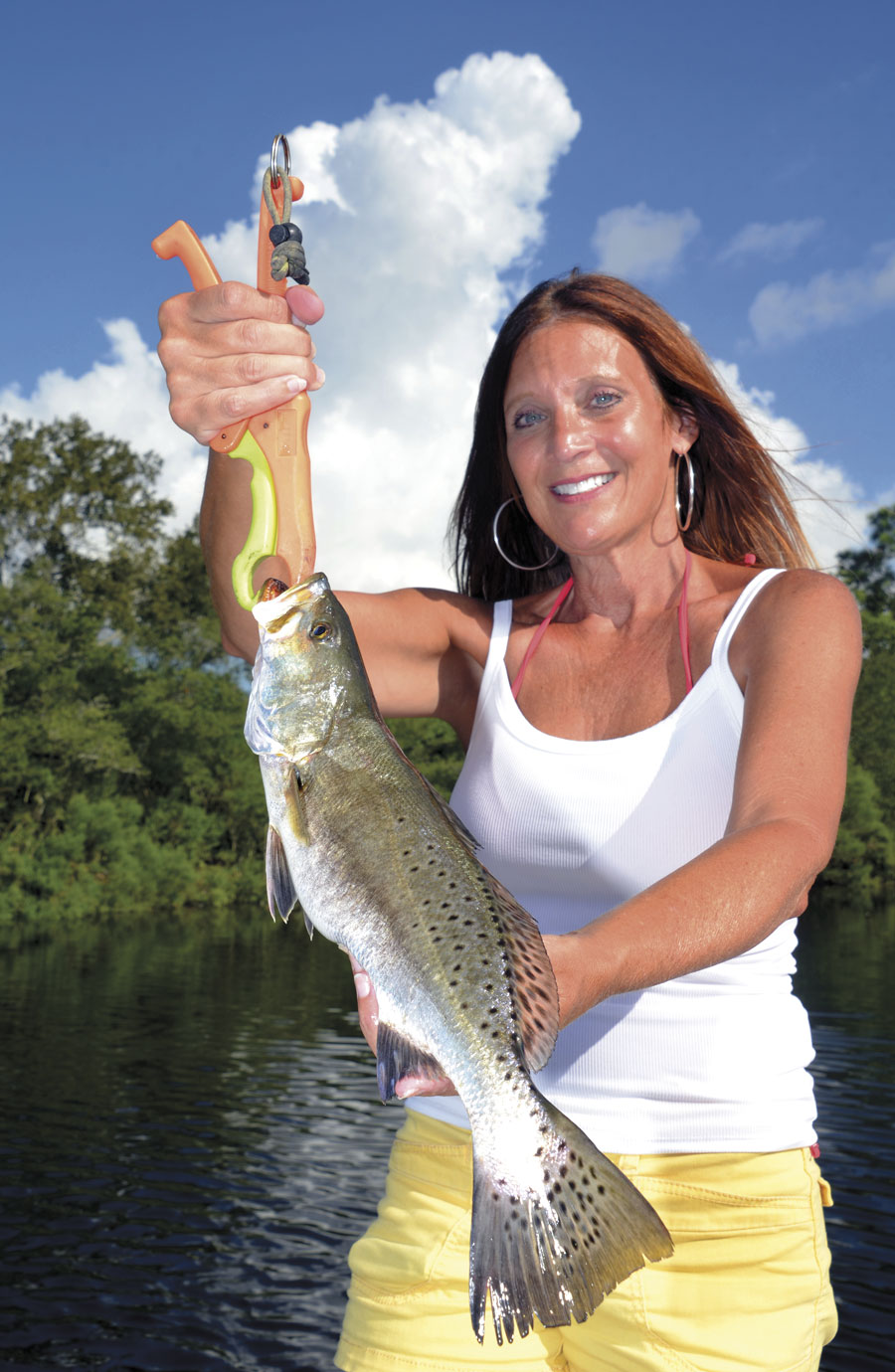
Years ago, the Calcasieu Estuary gained a reputation for producing double-digit speckled trout. The estuary still holds good trout numbers, with many in the 5- to 8-pound range and some bigger ones.
“In October, most trout we catch average about 15 inches, but we also catch some in the 20-inch range,” Adams said.
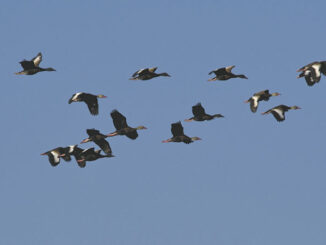
After the first cold snap hits in the fall, shrimp start migrating out to the deep waters in the Gulf to spawn and spend the winter. Nothing ignites a fish feeding frenzy more than a crustacean migration. When the shrimp move, every predatory fish moves with them. Birds also look for shrimp and swoop down to snatch their share.
“By the fall, shrimp have matured so there’s tons of bait,” Adams said. “That makes a good situation for hungry trout trying to put on their winter weight. In the fall, we often see birds working and shrimp popping.”
Hit the reefs for trout
Without seeing bird activity, fish the reefs in Calcasieu Lake. In the fall, specks congregate on drop-off edges to ambush bait. People can see reef locations on the internet, but many people look for the reefs that hold the most boats at that time.
“Any reefs should hold trout in the fall,” Adams said. “Usually, one produces better than the others for whatever reason. When the tide moves, we fish reefs on the edge of the lake that drop off into the Calcasieu Ship Channel. Moving water makes bait flow over those reefs. When the winds die down, we can fish the beaches or closer rigs in the Gulf. Shrimp get thick around the rocks toward Johnson Bayou and Holly Beach.”
For trout numbers, most people fish live or artificial shrimp under a popping cork. Anglers can also use soft-plastic shrimp or minnow imitations on a 1/8- to 1/4-ounce jighead. Work minnow baits just off the bottom. Hop artificial shrimp off the bottom and let them fall back. Fish commonly hit baits as they fall.
Topwaters typically produce fewer bites, but larger than average fish. Large trout and redfish both love crunching mullets, so throw walking topwaters that zigzag across the surface like injured baitfish. Hefty walking baits also sail long distances, making them excellent search baits.
Redfish and more
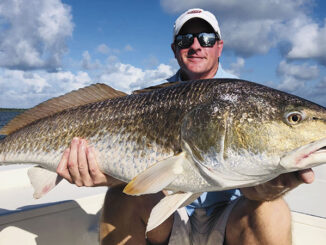
Bull redfish come in from the Gulf during October. Rock jetties marking where Calcasieu Pass flows into the Gulf hold bull reds, giant black drum, large speckled trout and other species. For bull reds and giant drum, fish whole crabs or crab halves. Live or cut mullet, croakers or pogies entice bull reds. Sheepshead stay anywhere with barnacles and want live or fresh shrimp, but they also eat small crabs and fiddlers.
“Redfish action is excellent in October,” Adams said. “Throughout the fall, we catch oversized reds with some slot reds in the mix. Bull reds hang around through November. Drum and sheepshead are underappreciated.”
Marshes throughout the estuary can produce good redfish and flounder action in the fall. During a falling tide, fish gather at the mouths of any small tributaries draining the marshes. When water levels drop, that pulls shrimp, crabs, baitfish and other morsels from the shallow ponds into deeper water.
“October is a great time to be on the water,” Adams said. “People can find abundant places to fish.”