A resolution urging the continued protection of easements in the Prairie Pothole Region was unanimously approved by the Louisiana Wildlife and Fisheries Commission (LWFC) during its Aug. 6 meeting.
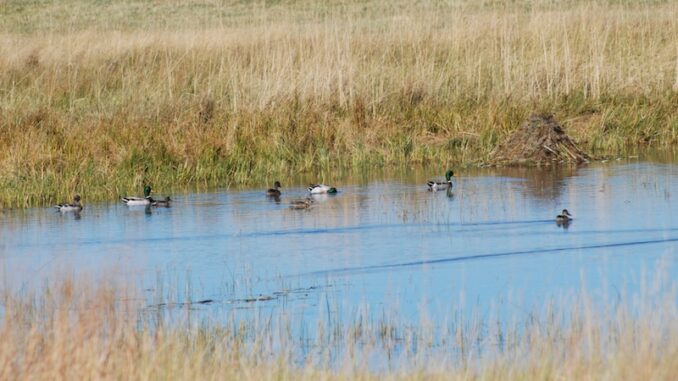
Often referred to as the “Duck Factory” of North America, the Prairie Pothole Region produces an estimated 50 to 80 percent of the nation’s waterfowl. The region spans parts of the United States and central Canada and features millions of small, shallow wetlands, known as potholes, that were formed by ancient glaciers.
The U.S. Fish and Wildlife Service has proposed using Natural Resources Conservation Service (NRCS) Swampbuster standards and could change the way drain-tile setbacks are calculated, a proposal commissioners oppose. Under the proposed changes, farmers could install tile drainage systems adjacent to easements. These systems, which use perforated pipes to redirect water, could potentially pull water away from protected wetlands.
“This potentially has the ability to be very detrimental to the Prairie Pothole Region, draining the wetlands,” said Thomas “Tommy” Tuma, assistant secretary of the Louisiana Department of Wildlife and Fisheries.
A big deal for Louisiana
For decades, the U.S. Fish and Wildlife Service has purchased easements on wetlands in the Prairie Pothole Region. These easements regulate what landowners can and cannot do on the property.
“Right now there is a certain distance. It is calculated for each soil type of how far away or near they can exist to these associated wetlands,” Tuma said. “This will change the way that is measured, and we feel that would be detrimental to the drainage of these wetlands.”
Although the wetlands periodically dry out depending on weather conditions, Tuma said lowering the water table around them could cause water to drain vertically from the wetlands, reducing waterfowl breeding and nesting habitat.
“It is a big deal for Louisiana,” Tuma said. “We disagree with some things nationally, but everybody agrees that we have to have ducks coming to Louisiana.”
Scott Durham, representing Ducks Unlimited, said the current drain-tile setback rule has worked for more than 60 years.
“DU supports the LDWF resolution as presented,” Durham said. “We believe this effort is critical to the future of prairie wetlands and protection of habitat in the future.”
Ducks Unlimited strongly supports the science-based 2024 U.S. Fish and Wildlife Service drain-tile setback regulations and opposes any rollback or switch to weaker standards, such as NRCS Swampbuster rules. The organization warns that inadequate setbacks could allow subsurface drainage systems to dry out critical breeding wetlands in the Prairie Pothole Region.
Proposed amberjack season
In other action, the commission unanimously approved a resolution supporting an Exempted Fishing Permit (EFP) that would allow state-managed recreational harvest seasons for greater amberjack.
According to the resolution, the permit could reduce fish mortality by establishing a predetermined fishing season during periods of high interaction with greater amberjack, reducing the number of fish caught and discarded out of season during warmer months.
Chris Schieble, Deputy Assistant Secretary of Fisheries, said the proposed season would run for 61 days, from June 1 through July 31, and would be similar to the state’s red snapper season.
Participating anglers would still be required to follow the federal minimum size limit of 34 inches fork length and a one-fish daily bag limit.
According to Schieble, the permit would allow the Louisiana Department of Wildlife and Fisheries to collect more reliable harvest data during peak fishing periods, reducing errors associated with fewer greater amberjack encounters. The permit would also provide opportunities to collect biological samples that are currently unavailable under the existing season structure.