A look at the foods deer were eating last season and what to keep an eye on this year
Henry Ford once said, “Anyone that stops learning is old, whether at 20 or 80. Anyone who keeps learning stays young.”
That pretty much sums up my life as a deer hunter/biologist. It is difficult for me to go out on our property and not look at the plants growing on the landscape to see what the deer are browsing on. It’s also difficult to kill a deer and not look at its stomach contents to see what it has been eating. It’s a nasty habit but one I can’t stop doing, thus validating the statement by Henry Ford. Seems like I am always learning something new.
When I worked for the Louisiana Department of Wildlife and Fisheries, I wrote the book on deer food plants in Louisiana. You would think I pretty much know it all, but the book was written to be added to, and hopefully some of the younger biologists have been looking at the deer browse and stomach contents, documenting what was overlooked. Since retirement, I have been keeping a list of plants that I did not
document in the publication.
Hard mast foods
It appeared to me the acorn crop in 2025 was somewhat spotty. On our property in East Feliciana Parish, there were a handful of water oak trees that made a decent acorn crop, and the chestnut trees produced a good crop of hard mast. But chestnuts fall early, much like sawtooth acorns, and by the time deer season opens they have pretty much been eaten up so you don’t find them in stomachs. But like sawtooth oaks, chestnut trees help draw deer onto the property before deer season, and if you have other foods available for them they will be around when the season opens.
Our annual old man hunt in Union Parish indicated a spotty acorn crop. Five deer were killed and only one had a moderate amount of white oak acorns. The other four had low amounts of white oak acorns. This is a highly preferred acorn of deer and is one a landowner should focus on with his or her habitat management program.
Cow oaks are also in the white oak group but none of the places I hunt have this tree. I focused on planting white oaks and cow oaks on our property, but we are still years away from these trees producing acorns.
One deer in Union Parish had a low amount of water acorns in its stomach and another deer had trace amounts of water oak acorns. One deer had winged sumac fruit in the stomach contents and another deer had been eating black gum fruit.
Deer that we killed in East Feliciana Parish had low to high amounts of water oak acorns in the stomach contents. My grandson, John, killed a 2 ½-year-old buck that was full of water oak acorns and a moderate amount of black gum fruit. A late season buck that I killed in Pointe Coupee Parish, where striped oak acorns are usually available, had zero acorn material in the stomach.
Corn should be considered a hard mast, and while deer do not feed on it on the property we hunt in Union Parish, corn was present in two of the deer. This shows how much deer move around during the season. They generally know where the corn feeders are. One of these Union Parish deer had a high amount of corn in its stomach. On a tract of land that I hunt in Bossier Parish, where hard mast is limited, corn was the major food mast and food item.
Food plot forage
Food plot forages are readily digested and can be difficult to identify in the stomach contents. However, deer that have just fed on food plot forage will have bright green plant material inside them; when rinsed in water the fragments will float, making identification of plants much easier.
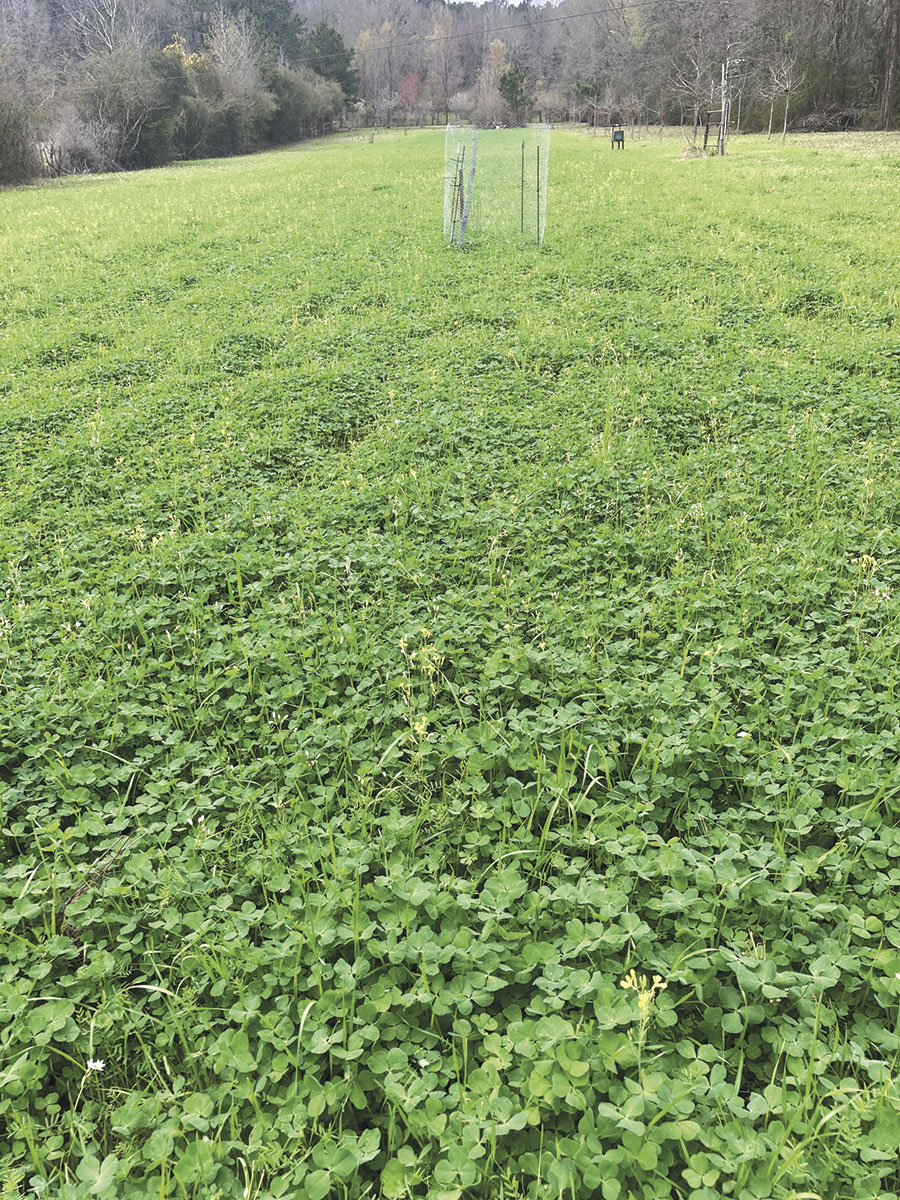
I killed a late season buck in Pointe Coupee Parish that had a rumen full of green plant material. Clover that had been planted in food plots was readily visible along with one of our native winter grasses, annual bluegrass (poa annua). This was the first time that I had seen this grass in the stomach contents, and the seed heads of this grass made it easy to identify. It was good to see firsthand that deer do eat it.
Most hunters plant food plots to attract deer for hunting, but if properly done, these will provide forage throughout the hunting season and well into spring and summer with adequate rainfall. In my opinion, clover should be the focus of the plantings, along with the various species of winter grass. The various species of mustards (rape) often found in seed mixes will be eaten by deer.
The deer populations in this state are fairly high, and most food plots probably are overbrowsed during the season. Wire cages will provide a visual picture of food plot utilization. I always measure the height of my food plot forages, which is another indicator of deer utilization. To provide deer with adequate nutrition during the winter, the height of food plot forage should not be less than three inches, otherwise it is probably not providing much nutrition for the deer.
Native plant browse
Native plant forage found in the deer we harvested in Union Parish included smilax (greenbrier), yellow jessamine, privet, oak leaves, blackberry and red maple. All of these plants are desirable deer browse plants, with smilax being a highly preferred deer forage. Smilax makes green thorny stems and can be overbrowsed; finding green clumps of smilax vines without leaves is an indicator of overbrowsing. Good food plots will help alleviate this heavy browsing and plants can catch up once green-out occurs.
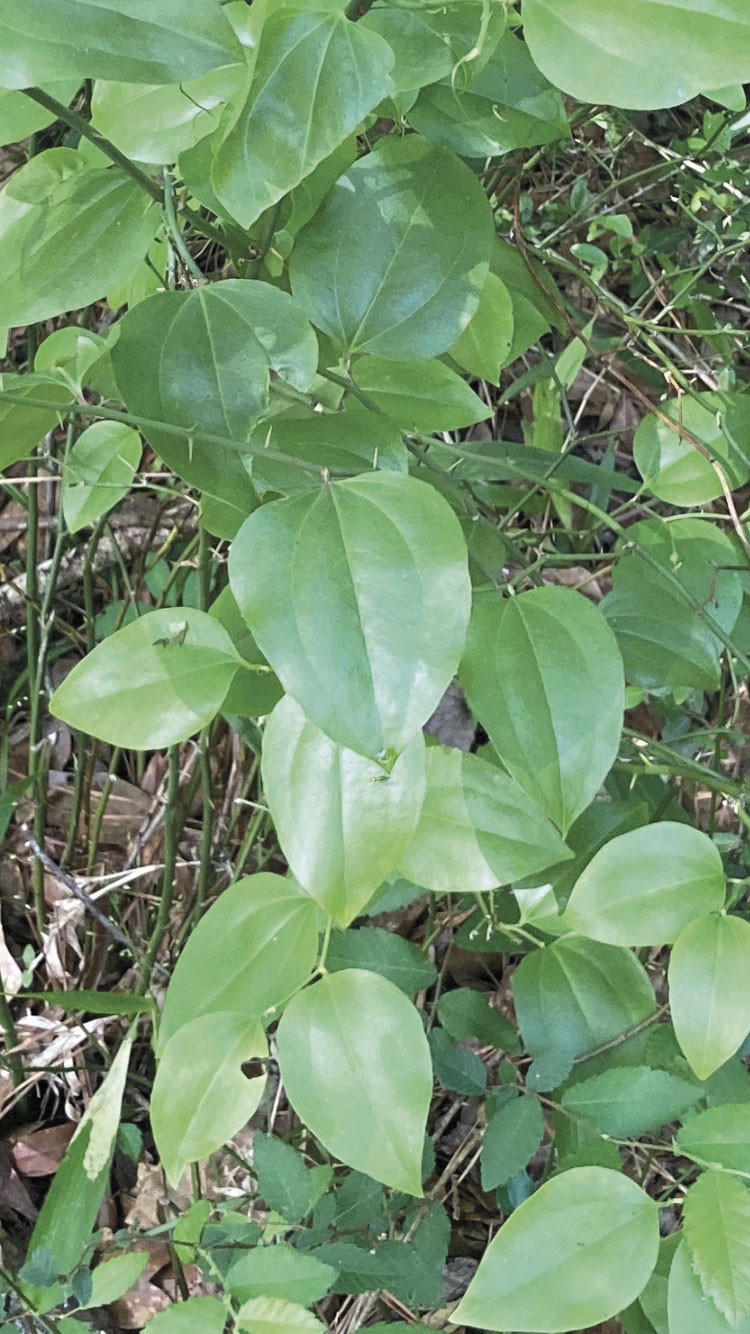
Deer killed on our property were eating the food plot forages along with privet, smilax, yellow jessamine, honey suckle and oak leaves. As the season and winter progressed, deer started browsing on the green cherry laurel leaves. Horse sugar is another shrub in Area 4 that keeps green leaves during the winter and will be eaten by deer. The deer in Bossier Parish where I hunted were overbrowsing the honey suckle and smilax and were even eating red cedar, a non-preferred forage.
Other plant forages
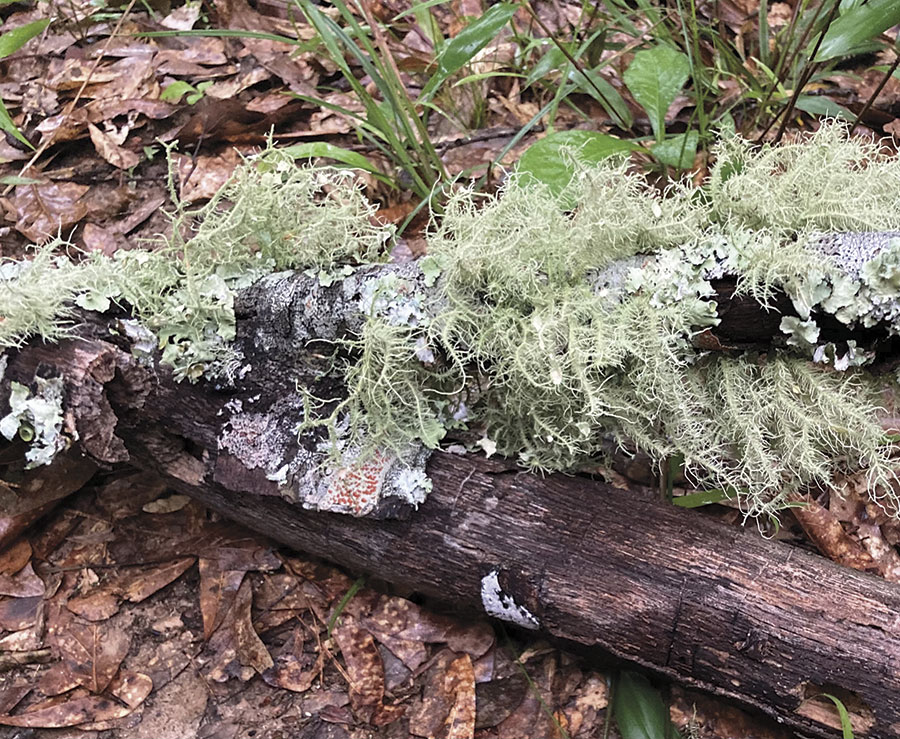
I found various fungi in some of these deer stomachs. One interesting find was lichens. These are interesting organisms that consist of a fungus and an algae and are often referred to as non-vascular plants. Most of you may be familiar with these as a food of reindeer and caribou. Lichens are rich in carbohydrates and other nutrients. I killed two bucks that had been feeding heavily on the old man’s beard lichen that is common on oak limbs.
The 2023 drought killed many hardwoods and stressed out other trees. Tree limbs full of lichens are common on the forest floor on our property and are readily accessible to deer, and it is evident they are taken advantage of it. Lichens were the dominant food item in one of the bucks I killed and my other Area 4 buck had low amounts.
Hopefully, this has given you an idea of what deer foods were being eaten during the 2025-26 deer season and maybe encourage you to get with a biologist and look at your landscape to see what is available for the deer. As I said, deer numbers are high in many parishes and these herbivores can readily eat up the landscape and eliminate desirable browse species. This is why it is important to get with a biologist or forester and look at your habitat, understand what is there, and develop a program to improve the deer forage if your goal is to have quality whitetails with nice antlers and good body weights.