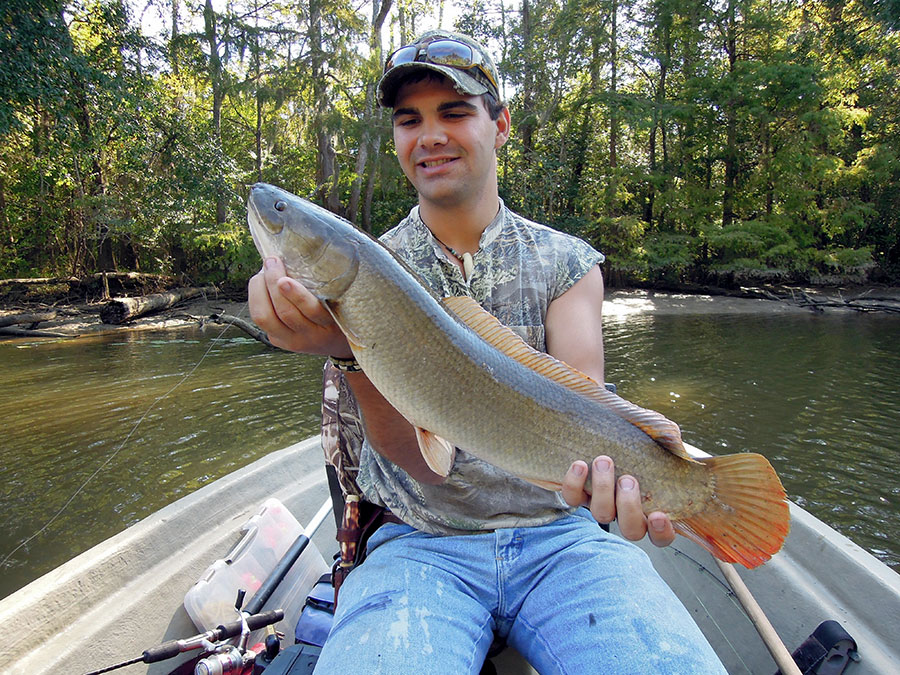
Much maligned ancient fish can provide great excitement
Something big swirled way back next to some flooded cypress trees in this murky backwater. I tossed a black and gold Snagless Sally in-line spinnerbait past the ruckus and slowly worked the bait just below the surface.
The gold blade churned merely inches below the surface, creating good flash and vibrations. I eased the bait over a sunken log and let it drop to the mucky bottom before resuming the retrieve. The spinnerbait barely moved a foot from that log when a cloud of brown silt suddenly erupted and the reel started screaming for relief.
Pulling drag, the powerful fish raced for deeper water in the small submerged ditch running between the flooded trees. Hoping for a new personal best largemouth, I finally landed the beast. Another bowfin!
Two species in Louisiana
Many people hold these remarkable ancient fish in contempt. Some people derisively call them mudfish. Other names include grinnel, dogfish, cypress bass and other names unfit to print in a family publication.
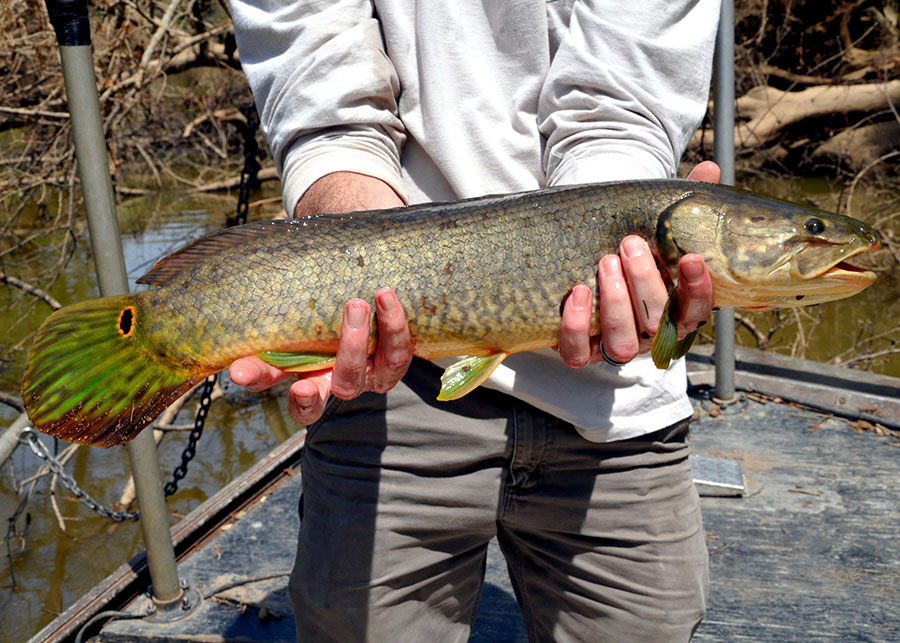
In South Louisiana, people normally call these prehistoric fish “choupique” (pronounced “SHOE pick”), an Anglicized version of a French translation of the Choctaw word “shupik” meaning mudfish. Biologists call them Amia calva, which means “bald or smooth fish” in Latin.
“We actually have two bowfin species in Louisiana,” said Robby Maxwell, the Louisiana Department of Wildlife and Fisheries inland fisheries technical advisor in Lake Charles. “We have Amia calva, or ruddy bowfin, that people catch in the Pearl River drainage. We also have Amia ocellicauda, or emerald bowfin. This species lives throughout Louisiana except for the Pearl River drainage.”
Ruddy bowfin range from the Pearl River system on the Louisiana-Mississippi line eastward throughout Florida and up to the rivers draining into the Atlantic Ocean. Emerald bowfin range from the Lake Pontchartrain system west into Texas and throughout the Mississippi River Valley, the Great Lakes, the St. Lawrence River system, Lake Champlain and the Connecticut River system.
“We’re just now realizing there are probably multiple bowfin species across the country,” Maxwell said. “That split between Amia ocellicauda and Amia calva might just be the beginning of naming multiple bowfin species. Ruddy bowfin get a little reddish. The males get some green in them, but not as much as the emerald bowfin. In Louisiana, if people are fishing the Pearl River Basin, they catch Amia calva. If they’re fishing anywhere else in Louisiana, they’re catching Amia ocellicauda.”
Females can exceed 40 inches long. Males don’t grow quite as big. In April 1976, Brian Fant set the Louisiana state record with a 20.50-pounder he caught at Toledo Bend.
Appearance
Regardless of the species, some people call them “cottonfish” because the texture of the white flesh looks similar to cotton. Some people claim the meat “tastes like cotton soaked in swamp mud.” However, others love to eat them fresh-caught and smoked, blackened, fried, caked, in stews or soups or prepared various other ways. Some people eat the roe, whimsically dubbed “Cajun caviar.”
Long, cylindrical and snake-like with a rounded tail, bowfin look similar to an eel, but thicker with olive green to brown scales and black splotches for good camouflage. Breeding males show much more and brighter green coloration. Juvenile males show something that looks like an eye on their tails. Never try to “lip” a bowfin. Its numerous small, yet sharp teeth can shred flesh.
“A bowfin has a bony plate under its chin and small raspy teeth,” Maxwell said. “They can deliver a nasty bite.”
One of the most primitive, yet remarkable fish, the bowfin’s ancestors date back at least 150 million years. Frequently dubbed living fossils, bowfin witnessed the destruction of the dinosaurs and the mass extinction of the Ice Age megafauna, yet they remain virtually unchanged to this day.
“They really haven’t changed much for millions of years,” Maxwell said. “In a museum in Houston, people can see a big bowfin fossil. It looks just like the ones today, but even bigger. They are definitely survivors. There’s still so much to discover about these amazing fish.”
Where they live
Bowfin can live in waters that would kill other fish. They like muddy backwaters, placid bayous, flooded swamps and oxbow lakes. They prefer lazy streams with thick vegetation, sloughs, beaver ponds and similar places with little to no current. They even venture into coastal marshes.
“People can find them in any places with sluggish water, like freshwater swamps,” Maxwell said. “In southern Louisiana, they are extremely numerous. Any cypress-tupelo swamp could be a bowfin honey hole. Bowfin can handle some salt. In the coastal zone, people catch them all through the marshes wherever they catch bass.”
These amazing fish can live in water with little to no oxygen because their swim bladders function as primitive lungs. If they keep their skin moist, bowfin can survive quite a while out of water. During droughts, people might find live bowfin in semi-dried ponds looking more like mud holes.
“Low-oxygen conditions don’t bother them because they can breathe air,” Maxwell said. “In Louisiana, especially the southern part of the state, water levels fluctuate greatly throughout the year. Low oxygen fish kills usually don’t affect bowfin. They bury themselves deep in the mud and wait for the water level to come back up. As long as they stay wet, bowfin can live a long time out of water.”
Bowfin usually start spawning in late February and March. Males build nests in shallow water around aquatic grasses or other cover. After hatching, tiny fry gather in large, tight schools that resemble clouds of miniature tadpoles.
“Like bass, bowfin make nests,” Maxwell said. “Males guard the nests. When the fry hatch, a cloud of baby fish will surround the male. The male will aggressively defend those babies. They are even very aggressive toward people who threaten the babies. They are great parents.”
Baits that work
Crappie anglers catch bowfin on jigs and live shiners. Bream fishermen catch them on worms, crickets and nightcrawlers. Catfishermen might catch them on shrimp, cut bait or live fish.
“Living in murky water, bowfin have a strong sense of smell,” Maxwell said. “They will hit any kind of stinky bait, like crawfish or shrimp. If I intentionally wanted to catch bowfin, cut shad would be my first choice.”
Because of a bowfin’s rather unsavory table reputation, most anglers ignore them or try to avoid them, but these powerful predators can deliver incredible action. Fast, agile, common and widespread with insatiable appetites, bowfin give tackle-busting fights. They attack baits with lightning strikes and fight with drag-pulling determination to the end.
“Bowfin are voracious carnivores,” Maxwell said. “They will eat anything and everything they can fit in their mouth. The list might include invertebrates like crawfish and shrimp, probably crabs in the coastal zone. They’ll eat any fish that they can grab. They will also eat any amphibians or reptiles they catch. Anything!”
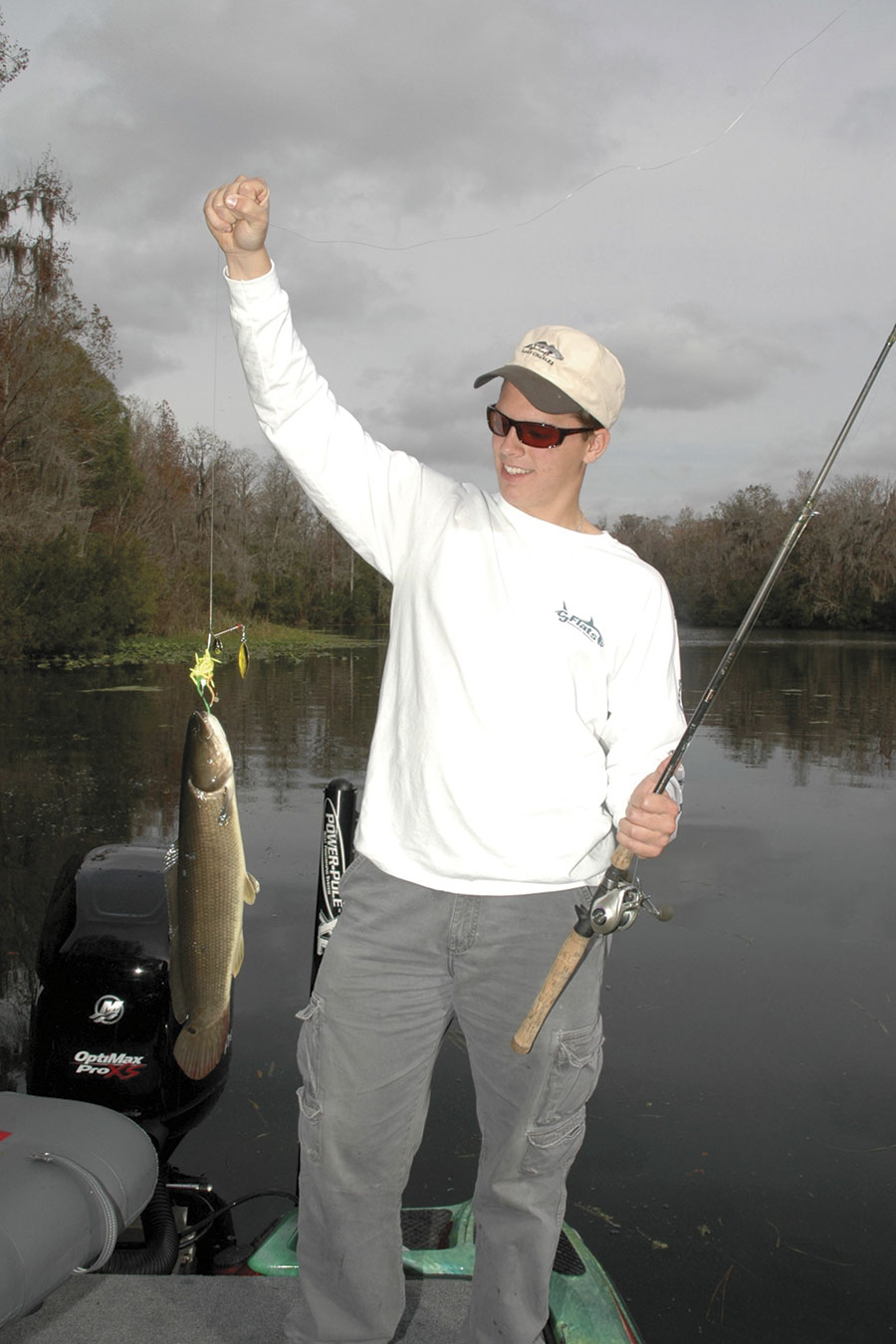
Few anglers intentionally fish for these terrifically exhilarating fish. Much to their chagrin, bass anglers fishing placid backwaters probably catch more bowfin by accident than anyone else. Because they prey upon the same creatures in the same waters as bass, bowfin might grab anything that would entice largemouth.
“Bowfin might hit anything that will tempt a largemouth bass,” Maxwell said. “They might hit anything that goes by them. For catching bowfin, people need some serious tackle. I recommend 40-pound braided line. Fish in areas with considerable woody debris and other cover.”
Targeting bowfin
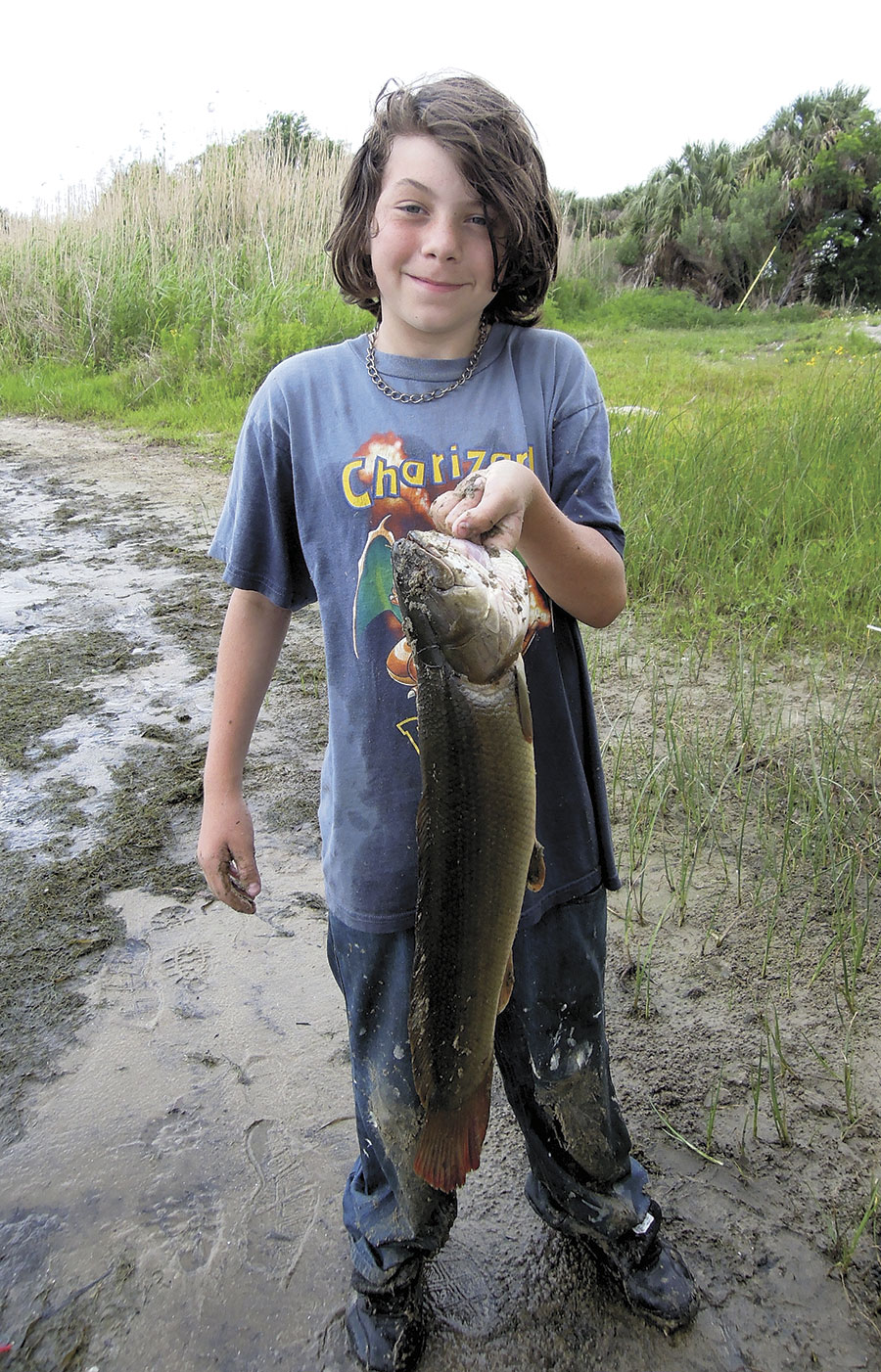
These prehistoric predators use their excellent camouflage patterns to sneak up on prey. Since bowfin typically like dank, murky water, anglers targeting bowfin should throw baits that give off good scents or that generate significant noise and vibrations. Spinnerbaits can go through weedy or woody cover and make a tremendous amount of vibrations. Anglers can even add scented soft-plastic trailers or drip some scented juice in spinnerbait skirts for more enticement. Throw spinnerbaits into the thickest cover and slow-roll them out.
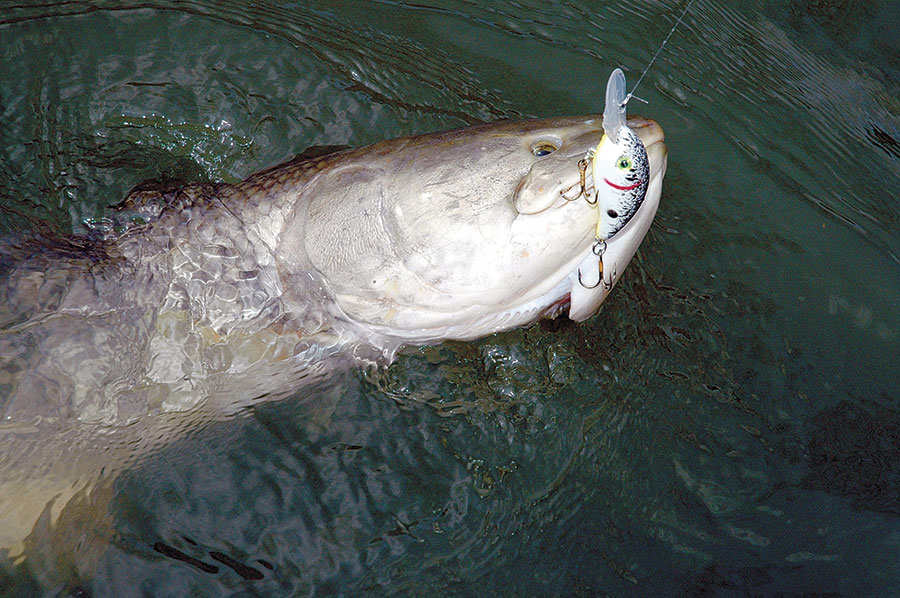
Rattling lipless or lipped crankbaits in shad, bream or crawfish colors also make great bowfin temptations. With broad lips, square-bill crankbaits dive shallow and make erratic wobbles that give off tremendous vibrations. Fish square-bills slowly, bumping the cover whenever possible.
Soft plastics, like Texas-rigged worms and tubes, also work. A weedless rattling jig sweetened with a craw trailer makes an almost irresistible temptation. The trailer mimics a crawfish. In the spring, crawfish emerge from the mud and comprise a large portion of any predatory fish’s diet. Anglers can add crawfish scents to soft-plastic baits. Toss jigs into the thickest cover, such as fallen trees, among cypress knees, lily pads, weed beds and drag them out toward deeper water.
“It’s a shame that people don’t take advantage of trying to target bowfin,” Maxwell said. “They are truly strong fighters that never quit. They are fascinating, amazing fish and highly adaptive to their conditions. They’re beautiful native fish.”
Practically any sluggish freshwater system in Louisiana holds these fierce living fossils. Anglers intentionally fishing for bowfin won’t face much competition. Hooking into tough toothy monsters that watched the dinosaurs die provides unbelievable excitement, even for people who don’t want to eat them.