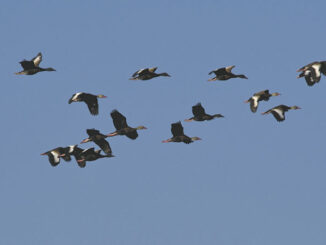
Biologists offer duck hunters guidance on the top Wildlife Management Areas in the state
No Wildlife Management Area in Louisiana gave up more ducks during the 2024-25 season than one along the central coast.
Atchafalaya Delta WMA waterfowlers harvested 8,432 ducks (mostly teal and gadwall) for a phenomenal season unmatched by any other public area in the Sportsman’s Paradise. That the Atchafalaya Delta WMA boasted the top harvest in the state surprised Lafayette Coastal Region biologist manager Tyson Crouch.
“Frankly, I didn’t realize it was so high relative to other WMAs,” Crouch said from his office in mid-September. “I don’t know why the Atchafalaya produces so well. I suspect it has to do with (the fact that) it has been so dry the last couple of years and that’s the most consistent source of freshwater inside the Basin.”
 Louisiana’s second-highest WMA harvest total last season was 6,451 ducks off Russell Sage WMA in the Monroe Region followed by the harvest of 5,339 ducks on Dewey W. Wills WMA in the Pineville Region. Those are gaudy numbers for public areas in any state.
Coastal Lafayette Region
Duck hunters, 2,993 of them, averaged 2.82 ducks per hunter effort on the Atchafalaya Delta WMA in 2024-25. The region’s next highest ducks per hunter effort was 2.64 on the Pass-a-Loutre WMA, where duck hunters downed 1,032 ducks last season.
“A lot of times, Pass-a-Loutre has the best average (ducks per hunter effort) but it was down a little,” Crouch said in his annual report for Louisiana Sportsman.
Habitat available at the mouth of the Atchafalaya River evidently remains the magnet that draws and keeps overwintering birds on and near the Main Delta of the 137,695-acre Atchafalaya Delta WMA in lower St. Mary Parish.
That WMA and the region’s other public areas produce plenty of high quality waterfowl foods to support migrating waterfowl, according to Crouch.
How’s the table being set for Nov. 15, opening date in the West Zone?

“We had marginal SAV production throughout most of last year’s growing season and into the 2024-25 season,” Crouch said. “Fortunately, for this year, rainfall patterns are average to above average and we expect SAV production to reflect the better growing conditions.”
The 14-year LDWF veteran biologist, a South Carolina native who graduated from Clemson and earned his master’s at Auburn, advised duck hunters to get on the public area before your trip(s).
“Do your homework. Go out and scout …. And remember, it’s a big area. Don’t encroach on others. Frankly, I’d look for concentrations of birds. Otherwise, try to see the habitat birds will be attracted to (or something similar),” he said, noting it also pays off to monitor weather conditions because when it’s inclement weather the ducks try to “tuck in.”
Most importantly, he said, be highly cognizant of the tides. Know where to go and when to go.
Atchafalaya Delta WMA and Pass-a-Loutre WMA duck hunting hours are from one-half hour before sunrise to sunset (duck hunting hours on all other WMAs in the region end at 2 p.m.).
Hammond Region
There’s plenty of excitement going into the 2025-26 season in the Hammond Region because there’s plenty of submerged aquatic vegetation (SAV) across the vast expanse of marsh on three of its WMAs.
Unless a hurricane smashes southeastern Louisiana in October, duck hunters should enjoy a season as good or improved over last season on Pearl River WMA, Manchac WMA and Biloxi WMA, according to WMA biologist supervisor Forest Burks. Those areas gave up the most ducks in 2024-25.
“SAV production at these WMA marshes looks good at this time,” Burks said.
How good was the region’s top WMA? The 35,619-acre Pearl River WMA in St. Tammany Parish gave up 3,326 ducks last season.
 Following closely in the duck production department was the much smaller Manchac WMA (8,328 acres) with 2,639 ducks, then Biloxi WMA with 595.
Burks reported the best time to hunt ducks is after a strong cold front that often pushes a fresh bunch of migratory birds. The first hour of legal shooting time tends to be the best in the region’s swamps and marshes.
Expect to see gadwall, green-winged teal and blue-winged teal, the most frequently harvested ducks on those WMAs, he said. Wood ducks can be found in the swamps on Pearl River, Joyce and Maurepas WMAs.
Lafayette Region
Avoyelles Parish is where Louisianians go to enjoy some of the most prolific duck hunting on public lands in the Sportsman’s Paradise.
No one knows that better than Lafayette Region WMA manager Schuyler Dartez, who pointed out Spring Bayou WMA, Grassy Lake WMA and Pomme de Terre WMA consistently are among the top WMAs in the Lafayette Region. Those public areas consistently feature good waterfowl habitat and large concentrations of overwintering waterfowl.
Spring Bayou WMA’s duck harvest totaled 3,224 ducks last season to lead the way over Grass Lake WMA, 1,327 ducks harvested, and Pomme de Terre WMA, 1,252 ducks bagged. Most of the ducks were green-winged teal, wood ducks, blue-winged teal and northern shovelers, according to Dartez.
A majority of the ducks are killed on the first and second openers when the migratory birds haven’t been pressured. More get gunned down after winter storms push in new ducks.
Dartez reminds hunters that duck hunting on all Lafayette Region WMAs ends at 2 p.m.

“The chaos of the first flight early in the morning can offer a hunter lots of opportunity,” Dartez said, “but as birds begin to settle down with sunrise they become easier to identify and easier to work if hunters can remain patient.”
He emphasized that WMA staffers use drawdowns and partner with aquatic spray crews to combat nuisance aquatic vegetation throughout the growing season in a continuous effort to maintain open waterways on the region’s WMAs.
Lake Charles Region
For duck hunters looking for the best and, frankly, only opportunity to knock down ducks this season on a public area in southwest Louisiana, the place to be is Sabine Island WMA. It’s hardly a secret in southwest Louisiana.
There’s nothing more exhilarating than a wood duck flight right at daylight on the WMA. No one knows that better than Kori Legleu-Buxton, the Lake Charles Region’s WMA biologist manager, who appreciates the pure beauty of the cypress tree/tupelo gum tree-filled swamp on the WMA. It’s accessible only by boat, Legleu-Buxton points out, and waterfowlers need to wear waders or hip boots to cross the numerous sloughs. Also, hurricanes, floods and any Sabine River rise influenced by water released from Toledo Bend make the 8,343-acre WMA more difficult to traverse.
“As a result, Sabine Island tends to receive minimal hunting pressure,” Lebleu-Buxton said, adding total rainfall amounts were above average this spring and early summer, which enhances waterfowl habitat. A stifling hot late summer period may delay the arrival of teal but, hopefully, cooler weather before the first split opens will bring more ducks down. There are more rewards than the scenery, she knows, considering 155 ducks, or 1.03 per hunter effort, were harvested last season on Sabine Island WMA.
“Waterfowl harvest was minimal at our other WMAs, although an honorable mention goes to Marsh Bayou WMA with a total of 10 waterfowl, 0.83 per effort…,” the veteran biologist said in her report.
While wood ducks usually are the dominant species taken, teal, mallards, gadwall and others can be found on larger ponds and waterways, according to Lebleu-Buxton. She encouraged duck hunters to thoroughly scout the WMA.
Minden Region
Northwest Louisiana WMAs typically don’t give up the eye-opening duck harvest totals of, say, the public areas in the Monroe Region or South Central Louisiana, but it provides ample opportunity for local outdoorsmen to make public land hunts.
Jeff Johnson, the Minden Region’s biologist manager, said as much in his annual waterfowl hunting report for Louisiana Sportsman.
“It can be OK at times,” he said.
Johnson pointed out the two top duck harvests last season in his region were at Bodcau WMA, where 1,132 ducks were reported killed, while 509 ducks were bagged on Loggy Bayou WMA.

There was no significant flooding this past spring to change the fair to good outlook for 2025-26, according to Johnson.
With WMA waterfowl shooting hours ending at 2 p.m. in the Minden Region, the obvious prime time is in the morning, particularly after a cold front has visited the region.
Wood ducks, mallards and gadwalls are the most frequently harvested species in the region, he said.
Monroe Region
What a difference a year makes.
After drought conditions prevailed in 2023 on two key WMAs in the Monroe Region, waterfowl harvest numbers dropped on Russell Sage WMA and Boeuf WMA. After the below average 2023-24 season, the total duck harvest rose 62.4 percent in 2024-25, with a whopping 6,451 ducks downed on Russell Sage WMA and 3,730 ducks bagged on Boeuf WMA. The former was the second-highest harvest on a WMA last season in Louisiana.
Good news is “prospects are currently looking good for the upcoming season” on both WMAs, WMA biologist Aidan Caruso reported.
“Combined, Russell Sage and Boeuf WMAs have 8,375 acres of moist soil/shallow water area units, which are managed year-round to control water levels and promote the germination of native plants favorable to waterfowl for valuable food and cover,” Caruso said.
More good news: LDWF completed a drawdown and application of aerial herbicide to Russell Sage WMA’s Wham Brake Impoundment, the state agency announced Sept. 15. The drawdown aimed to control giant cutgrass and promote desirable moist-soil vegetation. And water control structures were closed and boarded to catch early teal season water, if available. Water levels were extremely low before the boat ramp was reopened Sept. 20.
Wood ducks, green-winged teal, gadwall and mallards, which tend to show up in larger numbers toward the end of the season, account for most of the ducks taken every season on the two WMAs, according to Caruso.
Pineville Region
There’s a good reason Dewey W. Wills WMA’s duck harvest was one of the most prolific in the state last season. The 63,984-acre WMA that reaches into LaSalle, Catahoula and Rapides parishes has prime waterfowl habitat, i.e., sloughs, borrow pits, flooded oak flats, impoundments and 2,440 acres of moist-soil flats within the Little River Basin (formerly Catahoula Lake), according to Pineville Region WMA biologist supervisor Cliff Dailey.
Each early teal season can be excellent, as duck hunters proved again in September, and action can be nonstop the first and second splits for wood ducks, gadwall, blue-winged teal, pintail and mallards. Once the water depth increases in the LRB portion, plenty of divers hit the WMA, including canvasbacks, ring-necked ducks, lesser scaup and redheads, Dailey said.

The prime duck hunting period is late during the second split.
The veteran biologist advised Dewey W. Wills WMA duck hunters to set up before shooting time (30 minutes before sunrise) and to hunt until at least 9 a.m. (Duck hunters must be off the area before 2 p.m.)
“We are currently working to renovate the Muddy Bayou waterway north of the Diversion Canal by removing giant salvinia via herbicide and drawdown,” Dailey said.
He pointed out the severe drought in 2022 caused a large die-off of red oaks on the WMA, particularly nuttall oak. The result has been a reduced amount of hard mast available to wintering waterfowl.
Dailey pointed Alexander State Forest WMA duck hunters to Indian Creek Reservoir. He recommended using a kayak or pirogue while putting out decoys and retrieving ducks (preferably by using a retriever).